Showing posts with label southeast asia. Show all posts

Friday, January 24, 2014

Bonus Review: "Rawa" by Isa Kamari

Still no Faroe Island book, I'm afraid - haven't even started. Busy writing for What's Up and reading and writing for my MFA.

I did, however, finish Isa Kamari's Rawa a couple of weeks ago, which brings to a close the trio of his recently translated novels I agreed to review. (Click on the hyperlinks to look at my writeups on 1819 and Song of the Wind.)


Of the three, it's blindingly obvious that Rawa is the best. There's two big reasons, I suppose:

1) Focus.
This is the story of just one man, the eponymous Rawa. We see him both in his idyllic youth in a houseboat in the 1960s, as well as in the rootless, soulless HDB experience of the lower middle classes in the 1990s, shuttling between the two in alternating chapters, so that both past and "present"feel like two sides of the same coin. (Doing the story chronologically would've made the work feel like two different novels cobbled together, as in the case of Song of the Wind.)

2) Novelty.
Isa's previous historical novels have all actually dwelt on fairly canonical history, viewed from a Malay perspective - Intercession was about the life of the Prophet Muhammad (pbuh), 1819 was about the founding of colonial Singapore, Nadra was about the Maria Hertogh Riots, Song of the Wind was about kampung nostalgia, and One Earth was about the fifties and sixties - the turbulent birth of the nation.

Rawa's different because it looks at a truly marginal history - the now-vanished tribe of Orang Seletar who once lived as marine nomads around Singapore and Johor. The average Singaporean hasn't even heard of this community - only one of several (one of Rawa's friends, Ayong, is from the Orang Kallang community). So at first, we've got this unusual situation in which it's the Malay community that represents urbanity, modernity and social erosion, 'cos they've got jobs at the colonial barracks and permanent houses instead of pau kajang houseboats.


Rawa ends up marrying a Malay girl, Temah - even converts to Islam for her, abandoning his folk religion, which is nonetheless acknowledged as also recognising the divinity of Creation. At first, they live on the river, even taking their firstborn daughter, Kuntum, to see dugongs when she's a baby. But then Singapore separates from Malaysia, and they've got to choose a nationality. And you can't get an identity card until you've got a fixed address.

So, for Kuntum's sake, the couple settle in Singapore, at Kampung Wak Hassan. Things go downhill from there. By the time we're in the '90s, with Rawa staying at Kuntum's flat with her husband Lamit and their son Hassan, it's clear that they're just not happy anymore, with their constant worries about bills and factory jobs.

Their lives aren't portrayed as dead awful, which I think is a wise act of restraint on the author's part. There's a little MRT excursion to Ang Mo Kio, where Rawa's dazzled by the modernity of the city (he's been living in a kampung in Malaysia), and Hassan's a boy genius in a good school with a promising future ahead. But there's a real sense of loss, of disconnect from the land, with the old kampung demolished save for the mosque. Which is how the story of the Orang Seletar is still relevant - their dispossession parallels that of contemporary Singaporeans.

Are there flaws? Well, I guess Hassan's a bit of a know-it-all plot device, dumping loads of historical info on the reader in a less than graceful way. And honestly, I'm still a little confused by the sub-plot of Ayong and the ring.

The novel's actually very short, with brief chapters, so there's no time to get annoyed. Moving ending, too - he even manages to weave in the Malaysia-Singapore dispute over the island of Pedra Branca into the story! (UPDATE: Just noticed that the full title of this book in Malay is Rawa: Tragedi Pulau Batu Puteh - Rawa: the Tragedy of Pedra Branca Island. That's actually a little misleading.)


Thus: I recommend this! As do other sites. Believe the Sunday Times had a blurb as well before I left.


Anyhow, in the time I've taken to review this trio of books, Isa's pumped out yet another novel, Selendang Sukma, which means "scarf of the soul". He says it's about natural religion, i.e. the kind of animism/Hinduism that people of Malay descent practise in Bali. Should be interesting. Check it out if you read Malay - and if you don't, stay tuned for the translation.

Back to reading for class now. Hopefully I'll have my Heinesen ready for next weekend!

Tuesday, December 17, 2013

Bonus Review: "1819" by Isa Kamari

I'm back in Singapore! And it's high time to get moving on what I was asked to do a couple of months ago: review Isa Kamari's translated novels. I spoke about Song of the Wind two months ago, but in the past few days, I've neglected Scottish literature in favour of 1819, originally published in Malay in 2011 under the title Duka Tuan Betakhta (Your Sorrow Reigns). ("Tuan" can mean either "lord" or "you" in a super-polite way, so I'm iffy about that translation.)


This one's another historical novel, centred around the British colonization of Singapore in said year and its later effects. Every Singaporean kid studies this: how Sir Stamford Raffles arrives in the land with a heroic vision to develop it as a free port, and how he succeeds in his aim by double-crossing the Malay princes into giving him rights to the land. It's all presented in a rather dispassionate way - it's clear as day that he was doing some dirty dealing, but we're not inspired to patriotic fury over it.

I've seen a number of artistic interpretations of this story - children's books, Asiapac comics, Robert Yeo's play The Eye of History and Haresh Sharma's play Singapore, even a TV serial/movie I remember seeing as a kid. I've been party to this too - I wrote a play called The Last Temptation of Stamford Raffles, rebelling against the "civilising", "ordering" forces that the Brits sought to impose on us. A lot of my research actually relied on The Golden Sword by Nina Epton, a 1969 British novel about Raffles's life.

1819 gives us something new. It's a dramatisation of those times from a thoroughly Malay perspective: that is, it's drawing its historical materials primarily from Malay resources.  This means that alongside  British East India Company colleagues Colonel William Farquhar and Dr John Crawfurd, as well as colonial stooge sellouts like the Temenggong Abdul Rahman, Sultan Hussein and the scribe Munsyi Abdullah, we've got the Muslim saint Habib Noh, the silat warrior Wak Cantuk and the treacherous, queen-shagging royal advisor Abdul Kadir. These are figures who do not appear *at all* in our mainstream textbooks - whom even well-meaning non-Malay Singaporean history buffs like myself are ignorant of.

(That being said, I found out a bunch about Habib Noh and his miracles at a walking tour to his tomb, organised by the NUS Museum a few years ago. You should totally go there.)


I'd urge all Singaporeans to read this book, because the stories in here are incredibly important. They challenge the platitude that Singapore was "a sleepy fishing village" before colonisation, as well as the idea that the Malays were unified or led by noble Sultans (the nobles are opium-addled obese fools and the Malays of the Johor-Riau Empire are in a clandestine war with the Bugis). And we should learn about the miracles of Habib Noh and the murderous amok spree of Wak Cantuk, because they paint a picture of the strangeness and fractiousness that happens when societies go through rapid cultural changes, just like what we're experiencing today.

Now, I don't want to give you the impression that this is a wonderfully readable book - it's not, again due to cultural and aesthetic translation gaps. There's a ridiculous amount of historical *telling* that happens, especially in the first few chapters, as Isa is super-anxious to divulge all the details of history that he's gleaned. Even when it's plopped into dialogue, it's really heavy-handed. The Brits are cartoon villains who cackle at their nefarious plots, and the "common man" is represented by this buffoonish trio of kampung kids named Sudin, Ajis and Ramli, who gossip and piss in their sarongs in that silly distracting way that foolish peasants do in Shakespearean plays. Doesn't work, really - the average joe ends up looking dumb when he has the capacity for nobility.

And if we're gonna impose political agendas on this - and why shouldn't we? - I've also gotta point out that the constant name-calling of Abdul Kadir as a "half-breed bastard" because he's half-Indian is never challenged, not even by Munsyi Abdullah, who was 100% Tamil himself. (Abdullah seems to be a stand-in for the author himself - an intellectual who knows he has the brains to lead the Malay community, only he's been co-opted to the institutions, and only wants to be known as a writer anyway.)

Plus, there's way too little herstory in here - there's only passing reference to the wives of the players, and no acknowledgment that they too had influence on the development/devolution of Singapore: Sophia Raffles, Farquhar's half-Malay half-French concubine Nonio Clement, and the adulterous queen Tengku Perabu (okay, she does get a bit more screen time, because she's instrumental to the downfall of the Sultanate, but very little agency's portrayed). No appearance of that great independent businesswoman Hajjah Fatimah, either, even though she fits right into the time period. But I can't ask an author to be feminist, can I, especially after I've criticised his portrayals of women in his other books.

And the truth is, the imperfections of this book frustrate me to the degree that I want the right to adapt or expand the book to incorporate my own perspectives and historical tidbits - maybe this doesn't belong in a book, really; it should be its own TV serial on Suria or Channel Five, when Mediacorp actually grows a pair.

You see, the stories in this book - tales of betrayal, magic, revenge, cultural genocide - deserve a place in the wider collective imagination. There's only a limited number of eyeballs it can reach in print form, especially with this particular translation. What we need is a transcreation, that adapts with the aim of creating a work of art that stands by itself...

And I suppose I should volunteer to do such a thing, if only I'd the time. What I'll be up to instead is stealing a whole bunch of historical details from this for my own fiction.

Thanks, Isa! Will get round to reading that last book, Rawa, soon - just after my Scottish book. :D

Thursday, October 24, 2013

Bonus review: "A Song of the Wind" by Isa Kamari

Hey folks! Somehow I neglected to mention on this blog that I was dropping by Singapore for a weekend, to watch a closed-door reading of my new play SHEARES (and to be bombarded by constructive criticisms during a Q&A afterwards).

Of course, while I was there I took care to stock up on books:


Top row: Tse Hao Guang's Hyperlinkage, Amanda Lee Koe's The Ministry of Moral Panic, Jason Erik Lundberg's Lontar #01: Journal of Southeast Asian Speculative Fiction, Theophilus Kwek's Circle Line.
Middle row: Gwee Li Sui's The Myth of the Stone, 24 Flavours: Dolphin Meat, Best New Singaporean Short Stories (I'm in this!!!)
Bottom row: Cyril Wong's The Last Lesson of Mrs De Souza, Gregory Nalpon's The Wayang at Eight Milestone and Other Stories, Isa Kamari's The Tower.

A fair handful, I know. But today I'd like to focus on another book: a novel that was pressed into my hands shortly before my first departure from Singapore - A Song of the Wind (originally Memeluk Gerhana) by the stellar Malay-language poet, playwright, songwriter and fictionist Isa Kamari.


I've been following Isa's work for some time now: reading the novels he's had translated, trying to read his poems in Malay, watching his plays (okay, it was one play). Always, I've been intrigued by his perspectives, but also frustrated by his authorial decisions, the style he chooses for narration, the quality of his translations, and of course the pervasiveness of Islam in his works - not in a transcendental form but manifesting in the form of a structure of rules that often prevents his characters from doing and thinking truly interesting things.

These problems are here again in A Song of the Wind, but we'll focus on the positives first. Basically, this conveys more intimately than any other text I've read what it was like to grow up in a kampung in Singapore. It follows the story of Ilham, a kid who moves into Kampung Tawakal in 1967, playing war in the jungle with his friends, collecting spiders in matchboxes, building go-carts from shopkeepers' leftover crates, stealing chickens, peeping at the neighbour's wife in the bath hut. It's also fortuitous that the kampung in question is on Bukit Brown, the site of the largest Chinese cemetery outside of China, now threatened by development. (The Malaysian translator, alas, has mistakenly translated this as simply "Brown Hill").

But this isn't just a record of a vanished community. It's also a memoir of the political climate of the late '60s and '70s. Ilham listens in on discussions of current events: the moon landing, the Vietnam War, Nixon's impeachment. There's not much explicit related about the PAP, but there's National Service in army and the police, and there's also the resentment of some Malays, some of who wish they'd taken up Malaysia's 1965 offer of farmland in return for changing citizenship. Plus, *SPOILER ALERT!!!!* there's a clash between Ilham's religious study group and the ISA which happens in the last section of the book, which ultimately ruins his chances of advancing in society as a smart young Malay man.*SPOILERS END* There's definitely a degree of testimony going on here - Isa wants us to remember that all this happened.

Then there's the romance stuff. Sure, I get it, sexual/romantic feelings are going to be a major part of almost any boy's adolescence. There's a place for that in a book like this. What I don't understand is why it has to be such a huge part - why on earth does he end up with three different girls from different eras of his life by the time he's doing his A-Levels in Raffles Institution? There's an ideological reason why, I suppose - each one represents a different facet of his destiny - and inevitably there's the bad Muslim girl who refuses to wear her tudung (I don't think many girls did in the '70s anyway!) and (shock, horror) kisses another boy in public. Seriously, though, these girls do not come across as three-dimensional, independent characters with lives of their own. Also, having three suitoresses does not endear us to Iham - we're alienated 'cos that sure didn't happen to us, and anyway he's a namby-pamby goody-two-shoes who can't actually do good by any of them.

The real flaw of A Song of the Wind, however, is that it's trying to do too much. Perhaps this is all stuff that actually happened to Isa (don't think the spoiler bits above did, though). Very well: then he can write a memoir about it. Otherwise, the rise and fall of the kampung is one story; the romance is another; the downfall of a promising young Malay boy is (possibly) another. The whole does not cohere.

There are probably different standards in Malay literature that render these flaws inconsequential. But in the Anglophone tradition, the book's problematic. It's only fun to read for a while before you stop caring much about the characters.

Mind you, I'm glad I read the book. It's just that I'd be more inclined to recommend it for academic purposes than for entertainment ones. That's not a good thing.

I've also got Isa's other two recently-translated books, Rawa and 1819, to review - that is, unless the publisher stops me. In case you're still stoked, he's having a launch for them on 10 November, 11:30am at the Singapore Writers Festival, Festival Green. More on the SWF here.

Saturday, July 20, 2013

I'm doing a 24-Hour Reading of Singapore Literature!

I've set aside my international palate for a while to concentrate on domestic affairs. I'm involved in the Lit Up Indie Arts Festival this weekend - click here for the website.

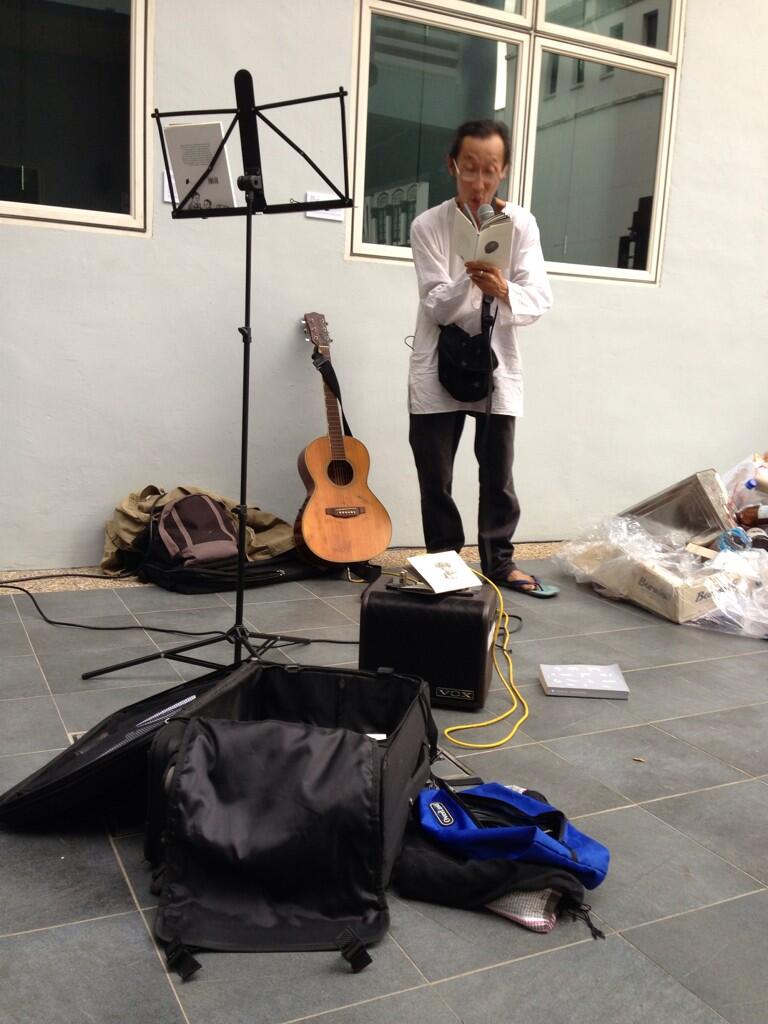
Basically, from Sat 20 Jul 7pm to Sun 21 Jul 7pm at the Aliwal Arts Centre Courtyard, I'll be doing a 24-hour reading of Singapore literature together with performance artist Lee Wen. We did a mike test yesterday (Friday):


We'll be taking loo breaks and sleeping in shifts and hydrating regularly. Don't worry, we'll pull through! But feel free to join us for a read if you like!

Lee Wen's also creating an installation made up of the 397 Singaporean books I'm bringing over from my personal collection, packed into five suitcases and a rucksack:


Below is a list of books we've decided to read from - there's stuff in English, Malay and Mandarin, as well as translations of all this stuff into English. We won't get through them all, of course, but we revel in the diversity represented!

Excerpts from the Sejarah Melayu
Shaus Frazer’s The Crocodile Dies Twice
Stella Kon’s Emily of Emerald Hill
Suratman Markasan’s Penghulu
Isa Kamari's Sumur Asia 
Singai Ma Elangkannan's Flowers at Dawn
Kuo Pao Kun's Two Plays: Descendants of the Eunuch Admiral & The Spirits Play
Haresh Sharma's Off Centre
Quah Sy Ren’s Invisibility
Russell Lee’s True Singapore Ghost Stories 2
Gopal Baratham’s Memories that Glow in the Dark
Elangovan's Talaq
Susie Lingham's Serpent Says from FOCAS 2
Lau Siew Mei’s Playing Madame Mao
Robin Loon’s Destinies of Flowers in the Mirror
Alfian Sa'at's Collected Plays I and Malay Sketches
Grace Chia’s Womango
Alfian Sa’at, Alin Mosbit and Noor Effendy Ibrahim’s Bisik
Lee Wen’s The Republic of Daydreams
Ng How Wee's 𣲙封赤道
Pooja Nansi's Stiletto Scars
Ethos Books's Our Thoughts Are Free
Cyril Wong's Satori Blues
O Thiam Chin’s Never Been Better
Muhammad Jailani Abu Talib’s Susur Pendekar
Reflecting On the Merlion
Chris Mooney-Singh's The Bearded Chameleon
Masturah Alatas’s The Girl Who Made It Snow in Singapore
Gene Sha Rudyn’s Al-Ikhlas
Tan Tarn How's Fear of Writing
Ho Rui An's Several Islands
Dave Chua's The Beating and Other Stories
Jee Leong Koh's The Pillow Book
Boey Kim Cheng’s Clear Brightness
Christine Chia's The Law of Second Marriages
Aziza Ali’s Sambal Days, Kampong Cuisine
Jerrold Yam’s Scattered Vertebrae
Tan Lixin’s Keeping Skeletons
24 Flavours: Sushi

Hope to see you there! If there's anything you'd really like to hear read, thrust it in our hands and we might indulge you!

Thursday, April 4, 2013

Bangkok books?

So I'm back from the ILGA Asia Conference in Bangkok! Will be writing a Fridae article about it, too. But it wasn't much of a holiday - didn't even make it to Chatuchak Weekend Market. Too busy blogging during the conference, and attending the ASEAN SOGI Caucus in the two days afterwards.

Thus, the only book I acquired during that sojourn was this:


The English title seems to be Violated Lives: Narratives from LGBTIQs and Internatioanl human Rights Law. I got it free from a table where goodies were being handed out.

Yes, it's mostly in Thai, but the annex is bilingual, and it covers the Yogyakarta Principles (and can I say right now how proud I am as a Southeast Asian that a landmark document on sexual orientation and gender identity rights was crafted in my own neighbourhood?).

What I actually spent most of my time reading, however, was this:


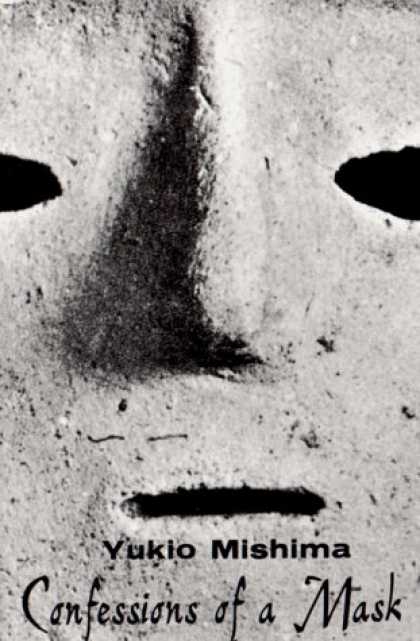
I'm doing an article on classic gay Asian lit now (not gay Asian American lit, thank you very much), so of course I've got to peruse Yukio Mishima's landmark tortured-gay-man-in-the-closet novel, Confessions of a Mask. 

Oh god, but I don't know if I should recommend it to the average reader. It's so dark and twisted and upsetting, perhaps even dangerous for the insecure gay man. And honestly, his other works, like his Noh Plays and The Sailor Who Fell With Grace From the Sea, are more transcendent and beautiful, presenting psychosis on a platter rather than being immersed in it.

I'll probably list it, anyway, due to its historical importance. Must live with the possibility that one of my future readers will end up committing hara-kiri because of me.

Too many deadlines now to even think of heading down to the library to read my Tokelau book, by the way. Maybe I can squish it in towards the end of next week.

Saturday, March 16, 2013

New Book: "Eastern Heathens", an anthology of subverted Asian folklore!

I know we're not really due for another segue, but Eastern Heathens is FINALLY going into print!


What is it? Well, it's an anthology of stories inspired by Asian folklore - there's realism, fantasy, historical fiction, oriental steampunk, horror, comedy, sex... and I'm one of the editors! Mind you, it's mostly drawn from the inspiration and the sweat of my co-editor Amanda Lee Koe - and from the contributors. (I tried submitting a story, but we agreed it wasn't good enough.)

We sent stuff to the print shop yesterday and we're holding the launch next Saturday, at the Arts House, aka The Old Parliament House. It's part of the Literally 9 festival to celebrate the arts centre's ninth anniversary. Alfian Sa'at, Cyril Wong and newcomer Bryan Cheong should be reading! I'm hosting, methinks.

Venue: Arts House, Living Room
Date: 23 Mar 2013
Event Timing: 6.30-7:30pm
Free admission
Facebook page: https://www.facebook.com/events/442375729179327/?fref=ts

The authors, btw, are:

Bryan Cheong (Singapore)
Hoa Pham (Australia)
Cyril Wong (Singapore)
Jeannine Hall Gailey (USA/Japan)
Alfian Sa'at (Singapore/Malaysia)
Amanda Lee Koe (Singapore)
Jon Gresham (Australia/Singapore)
Anila Angin (Singapore)
Chan Ziqian (Singapore/Poland)
Jennani Durai (Singapore)
Li Huijia (Singapore)
Abha Iyengar (India)
Zeny May Recidoro (Philippines)
Jason Erik Lundberg (USA/Singapore)

Seeya there!

Thursday, October 11, 2012

Holiday stash!

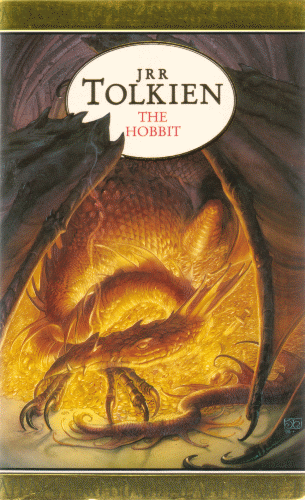
Haven't moved on to my Taiwanese book yet because I've gotta write an article about The Hobbit movie for the children's newspaper I work for. Trying to read the original novel in a hurry.


Of course, this just means it's a good time to take stock of the books I've accumulated over recent travels. A recent bus ride up to KL had me at Silverfish Books, where I was promoting the poetry collection I translated, The New Village. Also popped over to the Annexe at Sentral Market for Art For Grabs.

Here's my harvest after the events:


Look at 'em!

Silverfish Malaysian Classics Series: 
1. Marong Mahawangsa: The Kedal Annals
2. Sejarah Melayu
3. The Epic of Bidasari (and other tales)
4. Malaysian Fables, Folktales & Legends

Farish Noor's essays:
5. The Other Malaysia
6. From Majapahit to Putrajaya
7. From Inderapura to Darul Makmur: A Deconstructive History of Pahang
(-). What Your Teacher Didn't Tell You (actually I bought this ages ago, but added it to complete the set)

+
8. Salleh ben Joned's Adam's Dream
9. Bernice Chauly's Growing Up With Ghosts
10. Afi Noor's Ten Poems

I have rather fewer books from Laos, because of the bigger language divide. One British lady resident in Luang Prabang (who ran a book exchange) even told me there's a serious dearth of Lao literature, pre-colonial and contemporary, because they just aren't a very literate culture. Folks go back to the village and forget all the English they learned, she said; they even forget their own Lao alphabet.

Anyhow, Monument Books did supply me with a couple of treasures:


1. Outhine Bounyavong's Mother's Beloved
2. Steven Jay Epstein's Lao Folktales (published in Thailand)

There was even a book of condensed Lao epics, Volume 2 - but this was wafer-thin and the writing just wasn't very good. I figured I'd bug the National Library to buy Volume 1, or else just wait for a proper publication to come out.

In other news, I finished an awesome novel over the hols: Zhang Yueran's The Promise Bird, translated by my friend Jeremy Tiang. But that deserves a post of its own.

Sunday, September 16, 2012

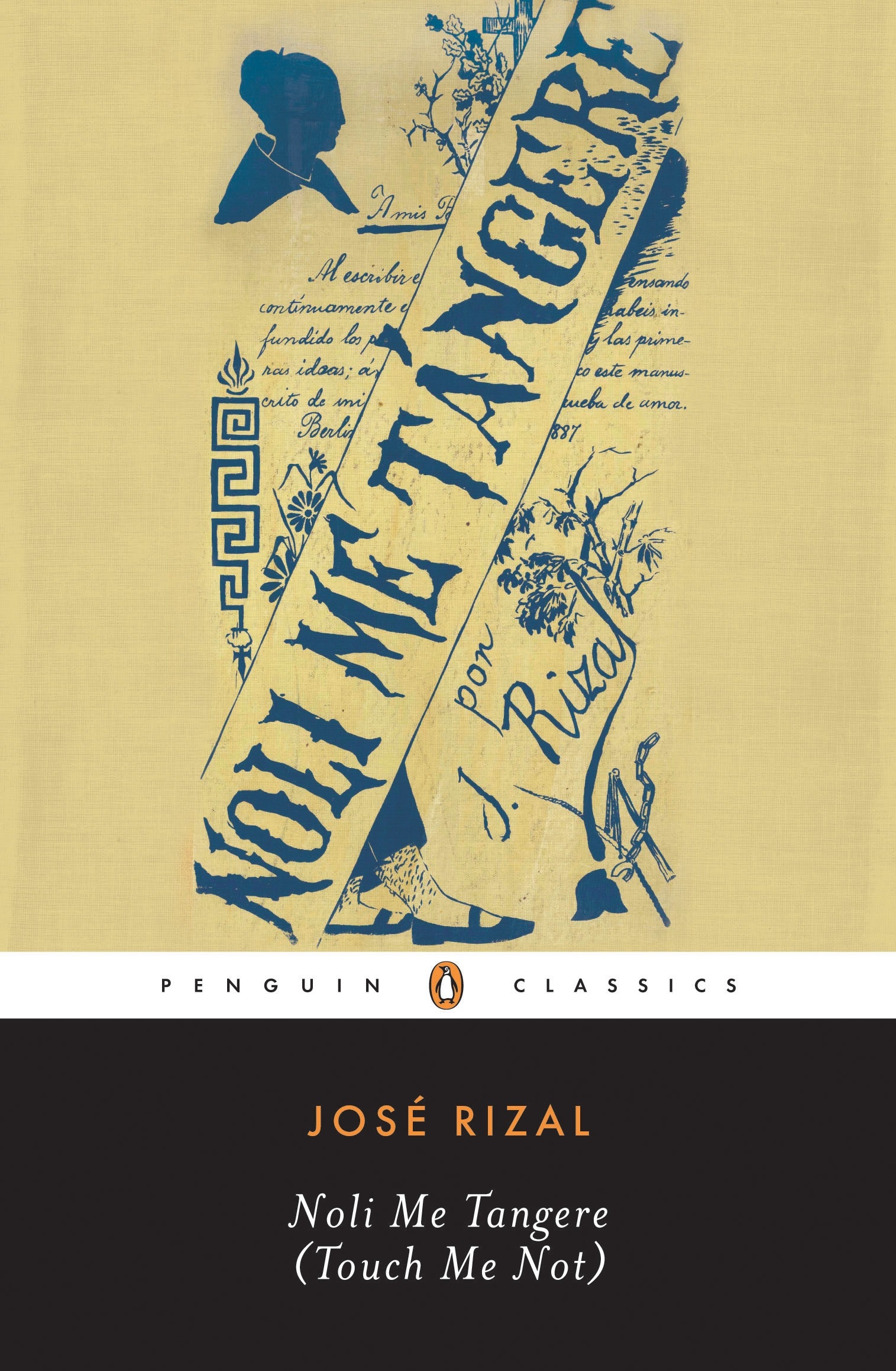
Book 105, the Philippines: "Noli Me Tangere" by José Rizal

In case you haven't heard of José Rizal, well, he was a freakin' genius, that's who he was. Look him up. Lived in Spain's most backwater colony in the 19th century but nonetheless learned 22 languages; found employ as "an ophthalmologist, sculptor, painter, educator, farmer, historian, playwright and journalist"; while also dabbling in "architecture, cartography, economics, ethnology, anthropology, sociology, dramatics, martial arts, fencing and pistol shooting".

Oh, and he did that all before he was executed at the age of 35 on 30 December 1896, thus igniting the Philippine Revolution. Way more than just a martyr: he was one of the great modern thinkers of Asia, in the league of Sun Yat-Sen and Tagore. Amazing. 


The way he fomented his ideas, of course, was through his novels, which are studied by every kid in the Philippines today (in English or Tagalog translation from the original Spanish). And the wonderful thing is that the Noli ages well: because he published it in Europe for the benefit of those who didn't know about colonial abuses, what he does is he provides a thorough ethnographic sketch of his homeland at the time, which is just as fascinatingly foreign to us 21st century people as it would've been to the Iberians. 

Y'see, seems that the Philippines was a friarocracy - its priests outranked the Spanish colonial officers in practice if not on paper. Rizal (an atheist!) highlights the crazy hypocrisy that this birthed: sales of indulgences, inflated fees for sermons in languages the laity can't understand, an utter lack of interest in uplifting the population in any way through education, and a sense of being an invulnerable caste - you don't tip your hat to them in the street, they excommunicate you, and the rest of the sheep-like population looks upon you with scorn.

No idea if the Franciscans and Dominicans and Jesuits were really as nasty as described in the book, but absolute power corrupts absolutely, so I've a feeling the answer's yup. 

There's deep shades of Uncle Tom's Cabin here: from the stock characters (the noble hero Don Crisostomo Ibarra, the virtuous heroine María Clara, the evil priests Father Dámaso and Fray Sibyla, the revolutionary Elías) to the sheer purpleness of the prose when tragedy strikes. But there's also a Dickensian joy in descriptions of the follies of people (Doña Victorina, who pretends to be Spanish and murders the language whenever she speaks it, and takes it all out on her actually Spanish husband by pulling the false teeth from his mouth). Also maybe a Wilkie Collins-esque touch of melodrama - the nail-biting death scenes, the apparition of the ragged nun on the convent rooftop - and remember, Rizal, the genius bugger, probably read all these guys and digested them.

Lor, no wonder the Philippines is so creative. If only our country was founded on the bulletwound of a polymath poet. One last note: this book is good, but it ain't light reading - might be a while till I move on to the sequel, El Filibusterismo.


View Around the World in 80 Books!!! in a larger map

Representative quote: "You're right, Elías, but man is a creature of circumstance. I was blind then, disgusted, what did I know! Now misfortune has ripped off my blinders. Solitude and the misery of prison have shown me. Now I see the horrible cancer gnawing at this society, rotting its flesh, almost begging for a violent extirpation. They opened my eyes, they made me see the sores and forced me to become a criminal! And so, just what they wanted, I will become a subversive, but a true subversive. I will call together all the downtrodden people, everyone who feels a heart beating in his heart, those how sent you to me... No, I won't be a criminal, you aren't a criminal when you fight for your country, just the opposite! For three centuries we have held out our hand to them, asked them for love, eager to call them brothers, and how do they answer us? With insults and mocking, denying us even the status of human beings. There is no God, no hope, no humanity, nothing more than the rights of power!"

Next book:  Henrique de Senna Fernandes's The Bewitching Braid, from Macau.

Monday, September 10, 2012

Singapore (and Malaysian) Comix!!!

So I spent last-last weekend at the Singapore Toy, Game and Comic Convention. Awesome fun, even if you're not an otaku. You could spend hours just checking out the hordes of cosplayers.


Only dared to ask one for a photo. She plays Jaafar, an assassin. She had daggers hidden in her sleeves! (And yes, I'm wearing cat ears. I had to blend in, somehow.)

But regarding books! I ended up spending some of my hard-earned money on some local/regional comics, which I've already finished:


It's all good stuff: Sir Fong's Adventures Vol. 4 by Otto Fong (zany sci fi adventures with actual science lessons embedded in them), When I Was a Kid by Boey Chee Ming (quirky Malaysian memoir of growing up in Johor) and Loti Vol. 1 by Troy Chin (a chronicle of a Singaporean kid's year in Primary 2).

I was hoping to spend even more, after my friend Mayo Martin advertised the release of the following graphic texts by Epigram:


But alas, it turned out these were just previews - just a few pages long, given out for free to tempt folks into buying the real thing. Which I'm gonna.

The books are:

Ten Sticks and One Rice by Koh Hong Teng and Oh Yong Hwee
The Girl Under the Bed by Dave Chua and Xiao Yan
Scenegapore by Prudencio Miel

By the way, I ended up giving my cat ears to a little girl at a Hari Raya party I went to that night.


I mean, look at how well it goes with that dress. She's pimpin' it, homies.  Awesome.


Saturday, August 25, 2012

Book 104, Brunei: "Modern ASEAN Plays: Brunei Darussalam"

Thus the second circuit of my Round-the-World voyage begins! For those of you not in the know, Brunei is a fabulously rich petrokingdom right next door to Singapore and Malaysia (surrounded by Malaysia, really). It’s not known for its literature, although it did inspire Anthony Burgess’s Devil of a State, Dale Brown’s Dreamland: Armageddon and Some Girls, a tell-all experience of former harem girl Jillian Lauren.

Thank god for the National Library’s Lee Kong Chian Reference Section then, which boasts poetry in translation, war memoirs, biographies of Sultans, caricatures and cartoons, Chinese fiction and English poetry from our neighbouring Sultanate. (Sadly, they don’t’ seem to have the Syair Awang Simawn, which is the national epic of the country, but we’ve had our fill of epics recently anyway.)

What to choose? I selected the most official-sounding of the writers: a certain Arif Karkhi Abudkhudairi, professor of Comparative Literature and Arabic, with various awards in English. I read his book The Abode of Peace, and mused over his style, which kinder critics might call “deceptively simple”; mostly love poems with a dash of praise poems for Sultan Bolkiah and his family.

Rushed back to the library today to write it up properly. And good lord, where’s the book gone? Not on the shelves. Would anyone else be reading it? What a mystery.


So I’m talking about drama instead. It’s been a while since I looked at a multi-authored play anthology: this one’s published in 1994, but it has no details on why the six plays within are considered canonical, nor when they were performed. (The Singapore version seems to be better annotated, and is actually mostly uploaded online.)

To be honest, the collection’s not very strong. Two plays are historical pantomimes: Haji Abdul Latif Chuchu’s The National Poet is a static dialogue between 19th century ministers in Sarawak over whether to give up a portion of the land to the white Raja James Brooke (the murder of the politician-poet Pengiran Shahbandar takes place offstage); Shukri Zain’s Seri Begawan I is a straightforward chronicle of old Bruneian history, from Marco Polo and Song Dynasty traders to the Venetian explorer Pifagetta and the Spanish conquistadores of the Philippines (no actual drama; there’s even a dry narrator character. Yawn).

There’s a moan-and-groan angsty I’m-rich-but-my-soul-is-fallen-into-moral-decay play, Haji Mahmud Haji Makyr’s The Chaffed [sic] Sky the Cracked Earth. There’s an amusing little drawing room drama, Haji Masri Haji Akip’s Guests, in which the rediscovery of a piece of pound sterling jewelry reunites lovers and mends community bonds between rich and poor, with only the moneyfaced father Kassim left grumpy in the end. Both of these are one-acts, over before you know it.

Then there are two plays which are actually of substance: both full-length, multi-act social realist dramas. Pengiran Haji Aji Pengiran Haji Tahir’s Ray of Hope tells of a starving, wife-beating fisherman named Dullah who refuses to join the fishermen’s cooperative; Haji Abdul Rahman Yusof’s Eye is about a blind man, Ardi, who receives an eye transplant in the days following independence, though this only opens his eyes to the injustices that persist in his nation and his family in the wake of merdeka.

Oddly enough, both of these feature Chinese men as the bad guys. They’re moneylenders, whose punitive interest rates are the ruin of the protagonists. But there’s some ambiguity here – there’s a long-term relationship of trust that’s allowed the interest rates to pile up, and while Ray of Hope paints the Chinamen as willfully encouraging destructive loans, Eye actually gives us a lender who’s cancelled loads of debts before finally insisting that this last mortgage be paid in full.

And both of them end with deus ex machinae – Dullah is saved by his wife (who’s been selling kuih and saving money) and the collective (that loves him so much that they’ll pay off the debts). Ardi is visited by a rich blind man, who wants to buy his eye for a million dollars – and he’s willing to give it up, so the rich guy can see all the shit around him that needs fixing, and can solve that shit.

Given that term’s begun and I’m telling my students to be inspired as writers by all they read, maybe I should take away this nugget of wisdom: however hackneyed and Ibsenite they might seem, social realist dramas have an epic power that you don’t get in lots of modern theatre. Pile up the debts of your hero, make him suffer, then rescue him.


View Around the World in 80 Books!!! in a larger map

Representative quote:
AYU: (Half screaming) Brother. The eye is the only present for you. Do you realise that if it is transferred to the wealthy Umardin, your vision will again be gone?

ARDI: I am disappointed to see the world. I do not wish to see destruction.

AYU: But, in the past you had expressed your keen desire to witness the auspicious moment of independence.

ARDI: The more the eye is opened wide, the more clear is the complexities and the shortcomings of mankind. It appears my desire to witness beauty is merely an imagination.

Next book: José Rizal's El Filibusterismo, from the Philippines.

Friday, August 17, 2012

Book 103, Malaysia: "The Epic of Hang Tuah"

Yesssss!!! Full circle, after precisely two years and three months! And with a book that was 1) a true classic, 2) a 600-page feat to finish, and 3) a rather good read, too!


Folks who follow Malaysian politics will know that the hero Hang Tuah's been given a bad name: he's famous for his declaration, "Malays will never vanish from the face of the Earth," making him an icon of keris-waving ethnic chauvinists of Malaysia.

And you know what? He really is a bit of an arse. He's fantastically gifted at martial arts, dance, languages and magic (all of which he studiously learned from various gurus), and yet squanders his talents by being the unswervingly loyal servant of his unnamed Raja (probably Parameswara aka Iskandar Shah, the founder of the Melaka/Malacca city-state).

The most glaring case of his arsery is when the Raja banishes him based on the idle gossip of his advisors (the trope of jealous courtiers keeps on coming up ad nauseam in the text). Instead of running off far far away to pledge allegiance to the court of a less stupid ruler, or even setting up his own dominion as a man with his gifts should, he embarks on a crazy, hyper-manipulative plan to win back the favours of the crown.

He remembers that his Raja was originally in love with a lady called Tun Teja, the Princess of Inderapura. (Turns out that's the old name of Pahang.) So he goes over to Inderapura and starts charming his way into the heart of the princess's old Governess, a sweet old lady who lives with a retinue of servants, and who comes to view him as her own son.

He uses the Governess as a conduit to make Tun Teja fall in love with *him*. It doesn't go well at first: the Governess comes back with a bloody scalp from a royal beating. But then he applies his magic ilmu, and lo and behold, Tun Teja's so in love with him that she's willing to board his ship along with her forty maidservants, off to Melaka - where she's horribly betrayed by his revelation that she's being offered up as a bridge for the Raja instead.

But no problem - the Laksamana (that's Hang Tuah's title) exercises a bit of magic and now Tun Teja hates him, and is in love with the Raja instead! And everyone's happy: the Governor gets a splendid house, and Tun Teja eventually becomes bosom friends with the Raja's first wife (he has concubines too, incidentally), never wondering how the hell she got brainwashed so easily, must be those pesky female hormones again, teehee.

You'll notice I'm not blaming Hang Tuah much for his role in the killing of Hang Jebat, his former sworn brother who rose against the Raja in revenge for Tuah's supposed execution - this guy's the classic Malay antihero. Truth is, the actual text makes Jebat sound like a royal prick: when he finds out that his sworn brother is alive, he doesn't run out of the palace to joyfully embrace him, he warns him that he has to give his keris a ritual bath and then goes and murders all the 700 maids and concubines who chose to stay with him instead of fleeing with the Raja.

And then he runs amok and kills another ten thousand citizens or so. But you can't fault him for that. Everyone's running bloody amok in this book. It's probably only due to censorship that they don't have the women launching into latah.

But the alternative readings of Hikayat Hang Tuah also work, y'know: Farish Noor says the warrior can also be seen as a figure of cultural openness and sensitivity, since the hero spends the second part of the epic as an ambassador, ooh-ing and aah-ing at the great riches of the kings and merchants he meets in Kalinga (India), China, Egypt, Jeddah, Makkah and Rome (which is actually Istanbul for some reason). It's in stark contrast to the matter-of-fact way Melaka's rival territories are described: Singapura, Inderapura, Majapahit.

Truth is, this book is a wiki: it's a collation of various stories of Hang Tuah told in different voices, with very different political agendas. It's also changed over the years: the version I've got is based on an 1860 version, but there are versions going back to 1758 at the latest. There are bits and pieces of other stories I've heard leaking in - the swordfish attack on Singapore is now described as happening again in Inderapura, with a similar bloody end to the story. When the Raja visits Singapura - surprise! - he loses his crown, not unlike Sang Nila Utama.

And oddly enough, the story closes with the Raja's daughter on the throne, the Puteri Gunung Ledang (which probably isn't related to the story, since Gunung Ledang actually is in Melaka). She rules wisely for a few years before the Portuguese come and completely screw her over and blast the city to bits with cannonfire. Then the Dutch come, yadda yadda, and Hang Tuah is still alive out there, waiting for the day he has to return to protect his people.

Boy, I've ended up writing a lot. Still don't know how to classify this book, by the way. It's not poetry, it's not a religious text, it's not a novel, it's not non-fiction. A new category perhaps? Proto-fiction? Or legend?

Whatever. I'm tuckered out now; time to turn in and prepare for the second leg of this reading journey. Northern Hemisphere, here I come!


View Around the World in 80 Books!!! in a larger map


Representative quote: The Laksamana asked, "Hai Si Jebat, do you have any regrets?"

Hang Jebat answered, "O Laksamana, I shall never regret my deeds nor shall I fear death, for I know my end shall be at your hands. How shall I avoid it? But, My Lord, look at Si Jebat, the traitor killing and for forty days thereafter Melakans will be busy clearing up the corpses so they do not have to endure their stench. Once embarked on an evil path never do it by halves, and I shall do it with all seriousness."

Next book: Arif Karkhi Abukhudari's The Abode of Peace, from Brunei.

Thursday, August 9, 2012

Happy National Day!

Not only is 9 August Singapore's National Day - Indonesia's Independence Day is on 17 August and Malaysia's Hari Merdeka is on 31 August!  Hooray Nusantara! (Of course, Brunei had to be clever and hold their National Day on 1 January. :P)

Still reading the Hikayat Hang Tuah, but it's good (or at least bizarrely interesting) stuff. Should be done by next week. In the meantime, here's a cropped photo from awesome bookstore/publisher Select Books:


On their Facebook wall, they said: 

"We brought 600 books related to SE Asia published over the past 100 years to a studio and took a photo with a high-res camera suspended from the ceiling. This is a cropped version with the larger version on display at our retail store. How many do you recognise? Does this not make one realise how rich a publishing history we have?"

And almost all these are English language books too - just imagine the full range of books in Thai, Lao, Khmer, Burmese, Mandarin, Tamil, Malay, Bahasa Indonesia, and the ridiculous panoply of languages the Philippines has.

The photo's also touching for me because there are so many books featured by people and institutions I know and love: Stella Kon, X'Ho, Dick Lee, Elangovan, Adrian Tan, Colin Goh, Richard Lord, Teo Soh Lung, the National Museum, the Singapore Art Museum. Why, there's even Haresh Sharma's Trilogy in the middle of the left-hand edge, the very book I began this blog with. 

My own book, GASPP, is slightly left of centre, upside-down. It's the one with the topless swimmer boy on the cover. :)

Haven't yet been to the shop to see the full shot. Expect it's even more amazing.

Wednesday, August 1, 2012

Malaysia deserves better.

Was hoping to report on A. Samad Said's Hujan Pagi today, but I've gone and left my copy at BooksActually's design room. And of course, I was gonna rush back and retrieve it, but then I thought, why bother?


At first I was blaming my difficulties with the book on the translation by the Institut Terjemahan dan Buku Malaysia, and yes, honestly, the state of the English is awful (they call letters of the alphabet "alphabets"!). But then I realised the reason why I couldn't tell what the hell was going on was that nobody can tell what the hell's going on.

The story's half set in the 1980s (young multiracial Malaysians who can quote Marshall McLuhan!) and half in a minor character's hallucination of the 1930s (Hitler attacks! Fight British colonialism). Which of course could be as awesome as Cloud Atlas, but there's no damn movement in the piece - it's all these dunderheaded men and women talking to themselves about philosophy and archaeology and Puteri Gunung Ledang and Hang Tuah. And the women characters are ridiculous: beautiful and talented yet girlishly obsessed with finding boyfriends; hugging stuffed toys and smacking their beautiful flanks. Yeah, I don't get it either.

I was only about halfway through the book when I lost it, and I do intend to finish the tome at some point, because it is oddly informative Googling all the references it pointlessly makes to Malay history. I'll let you know if it's any better.

Still, I've decided that for this blog, Malaysia deserves better. If I'm gonna read something weird and badly translated and senseless, it's damn well going to be an ur-Text, something of unimpeachable canonicity.

That's why I'm going straight for the source material - I'm gonna read the Hikayat Hang Tuah. It's 600 pages, from the same lousy translation institute and only available from the furthest-flung of public libraries, like Bedok, Tampines and Woodlands. But goddammit, it'll be an essential supplement to my meagre knowledge of Southeast Asian lore.

(I did in fact finish Ballad of the Lost Map, a poetry collection by Samad. Soulful and more digestible than Hujan Pagi, but frankly, not great. I want something that ends my first circuit of the globe with a verifiable BANG.)

Sunday, July 8, 2012

Book 102, Thailand: "The Story of Phra Abhai Mani" by Sunthorn Phu

The real Phra Abhai Mani is a 30,000-line epic poem that took 20 years to write: this is only a 111-page prose translation (available online!) that ends with suspicious abruptness. I shouldn't be doing it, really - I've tried to steer myself away from abridged texts, mostly because they don't feel real.

On the other hand, this translation was done by a Thai Prince, Prem Burachat, in 1952. My copy of the book was even printed in Thailand. So it's definitely authentically Thai, more so than stuff by recent emigres and expats. And it feels important to incorporate something pre-modern into my Southeast Asian reading list: something that shows that we had a culture even before the imported invention of the novel.


And by golly gosh, I'm glad I decided to read this. This story is trippy, no doubt about it. It's set in a magical timeless fantasy world wherein our princely hero Phra Abhai Mani, wanders from island to island, falling ridiculously in love with various hot women (a sea giantess, a mermaid and two warrior princesses, one of whom also does a stint as a nun).

He's armed only with his handsomeness and his magical ability to make everyone fall asleep when he plays his flute. (Don't pour scorn on this skill; it's extremely useful against invading armies.) He's also assisted by his two prodigious sons, Sin Samudr and Sud Sakorn, of giantess and mermaid stock respectively. They're pictured as ten year-old boys each with the strength of ten men: Sud Sakorn actually rides a magical beast with the face and tail of a dragon and the body of a horse, upon which he slays giant man-eating butterflies. Ripping stuff!

The crazy thing is, this book isn't from an antique age: it was composed from the 1820s to the 1840s, same time as Europe was colonising our part of the world and undergoing an Industrial Revolution and Byron was writing mock-epics like Don Juan and Mary Shelley was writing Frankenstein. Should we consider this extended court poem as a work of modern fantastika?

There's evidence of the modern in the text: the island of castaways includes "Chinese, Brahmins, Indians, Thai, Javanese, Englishmen, Hollanders and other Europeans", and even the princess Suvarnamali is threatened by an English pirate named Surang. Then there's all this interest in sciences and skills and cunning which allows the heroes to triumph over their enemies - no bloody duke-em-out battles here, as in The Iliad or Fengshen Bang. (Or is that modern? Plenty of sailing around and outsmarting people in The Odyssey and The Seven Voyages of Sindbad, too.)

But quibbling aside, here's what gets up my hackles: if this book is so good, so good that there are monuments and movies and comics and waxwork exhibitions and beach megaliths to commemorate it, then why isn't there a full-length English translation of the work yet? And why isn't the work more widely known outside Thailand? The country's full of people who speak English well; why can't they follow in the learned prince's footsteps and disseminate their culture to the world of earnest world literature junkies like myself?

I suppose the reason is the scale of the work - The Tale of Khun Chang Khun Phaen (which I believe Sunthorn contributed to) was translated two years ago, and that book's 984 pages long! That baby deserves a place on my reading list too, I suppose. Lord have mercy.


View Around the World in 80 Books!!! in a larger map

Representative quote: Once more, the hermit came to the aid of his ward. There was a deafening sound. Sud Sakorn looked up and saw the old man descending astride a rainbow. Gathering the bruised body of the boy up in his arms, the hermit took him aloft and gently laid him ont he mountain top. He then proceeded to teach the boy thus: "Put not your trust in any mortal, for their wiles are immeasurable. Even the most tortuous creepers round the hoariest tree are not as crooked as a man's heart. True love among mortals is only to be found in the love of a father or mother. The only support you can rely upon is yourself. So you must be careful and wise, my boy. There is no better armour than knowledge. Now you must go and recover your magic stick." As soon as he had said this, the hermit vanished from sight.


Next book: A Samad Said's The Morning Post, from Malaysia.

Saturday, June 30, 2012

Book 101, Myanmar: "Letters from Burma" by Aung San Suu Kyi

I'm in Southeast Asia again! Literally (flew home this morning) and bloggularly! Just in time to attend PinkDot tonight, where I'm manning the booth for IndigNation.

Speaking of human rights, I read this baby on the plane. Terribly fortuitous time to be covering such work, I thought, given the recent release of The Lady, not to mention the actual release of the Lady herself.


But the collection of essays begins oddly, more like a travelogue than a document of human rights violations: she describes a pilgrimage to Thamanya in Karen State to visit the holy teacher U Vinaya: the bumpy Pajero ride at dawn, the history of the district and the delights of eating vegetarian food at his monastery.

The letters weren't written during a period of house arrest at all, you see: they date from a one-year period from late 1995 to 1996 when she'd been recently released after incarceration for six years (she would later be held for nine more years, some in actual prison). Each one was published as a weekly column in a Japanese newspaper, and indeed she frequently makes direct reference to her Japanese audience, discussing their aesthetics of purity, their rapid economic development, her objections to their nation's investment in Myanmar despite its undemocratic regime.

I had fears at first that this was going to be another upper-class, spiritual encomium to the nation, not unlike Treasures of the Thunder Dragon. But of course the Lady weaves details of NLD's struggle for democracy amidst the charming descriptions of the Thingyan water festival and the changing of the seasons. To explain inflation, she gives us a mouthwatering account of traditional fried rice breakfasts, with meat, prawns or eggs, then reveals that today even the eggs are no longer affordable to many families, let alone the meat and prawns.

And then, of course, history invades the story. University riots cause further arrests among the NLD, blockades in front of her house and the houses of her co-leaders, the infamous incident where government-paid thugs fire into the windshield of her departing car.

The miracle of course is that there is so much good humour she describes in her accounts: how the gatherings each week at her door and the comedy performances at the NLD celebrations are threatened by violence and arrests and kangaroo trials, and yet people continue to turn up, laughing and singing so merrily that even the government spies start to join in. It makes me think of the cheerfulness at SDP rallies in Singapore, but we've never lived under as desperate conditions as the Myanmese (I will continue to use "Myanmar" until there is an official change; it is the word I have grown up with and I believe political realities deserve recognition).

One final note: I've occasionally played devil's advocate by pointing out that Aung San Suu Kyi is not in fact extraordinary in her endurance; that many of her fellow activists in Myanmar have suffered far worse than she. She's privileged by her parentage, her class, her ability to speak English, her sex, her beauty, her marriage. But she knows this. She recognises the terrible effect of incarcerations on the families of the politically imprisoned, and admits that she worries little about her own children, growing up guarded by the human rights protections of Europe.

I honestly don't know if she'd be an effective president of a democratic Myanmar, but truth is, reading this book gives you a sense that she's a great leader already - intelligent, compelling, but never vain, never less than compassionate.


View Around the World in 80 Books!!! in a larger map

Representative quote: Visitors to my country often speak of the friendliness, the hospitality and the sense of humour in the Burmese. Then they ask how it is possible that a brutal, humourless, authoritarian regime could have emerged from such a people. A comprehensive answer to that question would involve a whole thesis but a short answer might be, as one writer has put it, that Burma is indeed one of those lands of charm and cruelty. I have found more warmth, more wholehearted love, more tenderness, more courage and more caring concern among my people, as we hope together, suffer together and struggle together, than anywhere else in the world. But those who exude hate and vindictiveness ad rave about annihilating and crushing us are also Burmese, our own people.

Next book: Sunthorn Phu's The Story of Phra Abhai Mani, from Thailand.

Tuesday, June 12, 2012

Makassar International Writers Festival (13-17 June)

I'm flying off this afternoon for Sulawesi, Indonesia (the Celebes, for those of you stuck in colonial times), to take part in MIWF 2012!

I've been invited by Lily Yulianti Farid, whom I bonded with at festivals in Ubud and Singapore in 2009. She writes in Bahasa Indonesia: the volume below is Lontar's excellent translation.


Other folks I know (or have read) who'll be at the festival: slammer Omar Musa (AU), short story writer Xu Xi (HK), memoirist Bernice Chauly (MY), poet Jennifer Mackenzie (AU) and Elizabeth Pisani (US), the fabulous HIV activist and author of The Wisdom of Whores. I'm afraid I don't know the Indonesians. But I'll get to know them! (As long as they speak *some* English. Malu lah, gua tak boleh cakap bahasa nasional Singapura.)


Tuesday, May 15, 2012

LAN FANG CHRONICLES, 18 May to 2 June

Obviously not done with Tagore yet.  In the meantime, I'd like to advertise that I'm one of the collaborators for a multimedia-installation-performance arty-interactive theatre experience called THE LAN FANG CHRONICLES!

It's being performed from this Friday onwards as part of the Singapore Arts Festival. Please come!


Director: Choy Ka Fai
Date: Fri 18 May-Sun 2 Jun, 7pm (3:30pm matinees on selected dates)
Venue: Ying Foh Kuan (Shuang Long Shan) 9 Commonwealth Lane, Singapore 149551
Tickets: $25 from Sistic


The Lan Fang Republic was the first democratic state in Southeast Asia. It began as an independent settlement of Hakka Chinese gold miners in Western Borneo, and it lasted from 1777 until 1884. It bears more than a few similarities to another struggling republic that we're familiar with.

This performance, taking place on the grounds of a Hakka Clan Association, uses both historical fact and fiction to bring this forgotten civilisation to life.

It's arisen out of a project by acclaimed multimedia artist and theatre director Choy Ka Fai, a marvellous fellow with whom I've collaborated on the theatre projects V.I.S.T.A Lab and Reservoir. An early version of this was previously presented as an installation/project at the Singapore Art Museum.

There are loads of cool collaborators in this - playwrights Zizi Azah and Robin, director Fared Janial, actors Pat Toh, Loke Meng Chue, Najib Soiman, Rizman Putra, Yak Aik-Wee, Bright Ong, Serene Chen and Nora Samosir. (They're not all on stage on the same nights, so you may want to come multiple nights!)
Here's a Vimeo preview, and more info from Ka Fai's website.

Come come come come!
P.S. We're also doing a talk at Library@Esplanade, this Saturday 2-3:30pm!

Sunday, April 22, 2012

Two European films I have tangential relationships with

I've decided to do Bhutan before Nepal, and Treasures of the Thunder Dragon took me a little longer to pick up from the library. So I'll observe today with a plug for two European films.

1) The first one is Irish/British/Singaporean - Joe and Christine Lawlor's Civic Life: Tiong Bahru, documenting what's currently Singapore's hippest neighbourhood. The whole film's just been uploaded to Vimeo! (Sorry if the embed isn't working... don't know how to fix it on my display.)


TIONG BAHRU from Desperate Optimists on Vimeo.

2) The second one is My Name is Janez Janša, and it's by the three Slovenian artists who had their names legally changed to be the same as that of the right-wing Prime Minister of Slovenia. I got filmed by two of the Janezes at the last Flying Circus Project, in Cambodia. (This is why their lineup looks so multiethnic.)


My Name Is Janez Jansa (excerpt #11) from aksioma on Vimeo.

I've been informed by them that the film needs funding, because it's under attack by their government. Support it by donating money over here.

Thursday, March 29, 2012

I'm in Jakarta.

Trying to finish some damn writing. Not reading the Tibetan Book of the Dead, reading George Bernard Shaw and Lee Kuan Yew for research instead.


Incidentally the part of Jakarta where I'm staying (a swanky hotel which my boyfriend's company has booked 'cos he's doing real work here) looks eerily like Singapore's Orchard Road:


The shops have everything labelled in English, even. Uncanny.

Sunday, October 9, 2011

Eastern Heathens: An Anthology of Fiction Based on Asian Folklore

Guess what? National Library managed to track down their apparently "lost" copy of "Maps", so I'm reading it quite happily now. Not your typical African novel at all.

In the meantime, I'll advertise my own project:


Dear Writers,

We love Asian folklore. We grew up listening to Chinese legends, Arab fairy tales, Malay ghost stories and Indian sacred epics, and their fabulous images have continued to inhabit our imaginations ever since.

But as adults, we’re sometimes bugged by the moralistic, simplistic way these fables are told. We’re aching to hear these tropes subverted, perverted or simply adapted to reflect our times.

So, we’ve decided to reinvent our heritage. We’re putting together ‘Eastern Heathens’: an anthology of short stories based on folklore from our continent. We're looking for intelligent, imaginative myths, retold for adult connoisseurs.

We’d like you to base your story on a pre-existing Asian folktale. To help you out, we’ve included a list of our favourite traditional stories and sagas at http://easternheathens.tumblr.com. (Do feel free to interpret a story that’s from a culture other than your ‘own’.)

Our deadline is 31 January 2012. Entries should be in prose; poetry will not be accepted. Please include your name and your contact information in your submission. Also include the title of the original folktale that’s inspired your story, as well as a brief summary of that folktale for our reference.

Please e-mail easternheathens@gmail.com for enquiries and submissions.

Yours sincerely,


Amanda Lee and Ng Yi-Sheng
Editors

P.S. Both of us editors are based in Singapore, but we welcome international submissions.