Showing posts with label emigrant perspective. Show all posts

Thursday, April 13, 2017

Book 169, Romania: "The Land of Green Plums", by Herta Müller

I'm feeling a little bad for choosing this work. Yes, Herta Müller is a Nobel Prize winner who was born in Romania, and yes, The Land of Green Plums is set in that country, describing the experience of state surveillance and paranoia under the regime of the Communist dictator Nicolae Ceausescu.


However, the story doesn't represent the experiences of the average Romanian, but that of the Banat Swabians, i.e. the German minority. These guys were scapegoated in society, due to the role of Germany during World War Two—sometimes almost rightfully: the protagonist (and Müller herself!) had fathers who had loyally served in the SS.

And yet they were also privileged in a sense: Germany was an important political and cultural power, which they could (and did) escape to as refugees. Even ordinary Romanians wanted to learn German. So they had a double consciousness, rather like the Chinese or Jewish diaspora across the world.

The book itself is quite wonderful: it's a dreamlike, poetic vision of a nightmarish world, narrated from the viewpoint of Müller (it's partly autobiographical, and the protagonist is never named). She's a student in an academy where her wayward classmate Lola hangs herself—or is she murdered by the Secret Police? (That theme of suicide and/or political murder will return.)

She befriends three other boys, also Swabians: Edgar, Georg and Kurt, and they find themselves questioned and persecuted by the authorities, hiding their poems, writing letters in code to each other as they enter the working world, in factories and offices and schools across Romania. How they're losing their souls, losing their minds as they're questioned by the insidious Captain Pjele.

Their mothers write to them from their villages, where their bones are aching, chiding them for getting on the wrong side of the political system, reminding them of their suffering. Their other friends may or may not be informants or traitors. They find themselves fired, or so depressed they can't work, so they have to fake illnesses—not so difficult to do, since you can bribe doctors in the dysfunctional Communist economy.

It's a wrenching, Kafkaesque view of another world—and it's pretty damn strange to read, when under late capitalism, I have friends who are advocating a return to Communism as the ideology that will save us all. The Communist states of Eastern Europe and East Asia are bad examples, they say. A true Communist state has never existed yet, but that doesn't mean we shouldn't keep trying.

But then again, even today, in Singapore and Malaysia and Trump's USA, me and my friends rightfully fear persecution for our activism. I watched 1987: Untracing the Conspiracy recently, and afterwards I had to ask my boyfriend what should I do if the authorities took me in and cowed me with threats that they would harm him?

And how strange that Kafka was able to inspire an image of dystopia in Eastern Europe, even before the Communist revolutions took hold. Back when it was all a beautiful utopian dream that we thought might work.


Representative quote: 
As I wandered, I didn't only see the demented and their dried-up belongings. I also saw the guards walking up and down the streets. Young men with yellowish teeth standing guard at the entrances of big buildings, outside shops, on squares, at tramstops, in the scruffy park, in front of the dormitories, in bodegas, outside the station. Their suits fitted them badly; they were either too loose or too tight. They knew where the plum trees were in every precinct they policed. They even took roundabout routes to pass by the plum trees. The boughs drooped. The guards filled their pockets with green plums. They picked them fast, their pockets bulged. One picking was supposed to last them a long time. After they had filled their jacket pockets, they quickly left the trees behind. Plumsucker was a term of abuse. Upstarts, opportunists, sycophants and people who stepped over dead bodies were called that. The dictator was called a plumsucker too.

The young men walked up and down and reached their hands inside their jacket pockets. They took the plums out a fistful at a time, to attract attention less often. Only when their mouths were full could they close their fists. 

Because they always took so many plums at once, one or two always fell on the ground or rolled down their sleeves while they ate. The guards kicked the plums that fell on the ground into the grass, like little balls. They fished the other plums from the crooks of their elbows and stuffed them into their already bulging cheeks.

I saw the foam on their teeth and thought: You can't eat green plums, the pits are still soft, and you'll swallow your death.

Next book: The Physics of Sorrow, by Georgi Gospodinov, from Bulgaria.

Thursday, January 3, 2013

Book 113, Guam: "Attitude 13" by Tanya Chargualaf Taimanglo

I've just flown into Myanmar, where I'll be maintaining the Flying Circus Project Blog for the next two weeks. I'm terribly short of sleep, and I've just learnt that we're not gonna get the chance to meet Aung San Suu Kyi at the Freedom Film Fest.

So let's get this over with, shall we? (I want to invest in a nap now so I can live larger later.)


Honestly, Attitude 13: A Daughter of Guam's Collection of Short Stories isn't that great. The style has a strong whiff of the amateur and the plots tend to end anticlimactically. If I had to grade these, I might give a B+ if I were being kind (some are better than others, though: Chirika's Pepper Plant, which won the author a prize with Latte Magazine, isn't half bad).

But the content is what saves the day. Taimanglo's exploring what it means to be a Guamese Chamorro woman in the 21st century - no longer sarong-clad natives to be studied by anthropologists, but college students in Honolulu, expatriates in Seattle, army officers serving their terms of duty in Afghanistan while their daughters wail for them on their home islands, 88 year-old marathon runners in nursing homes with spiky pink and blue hair. Also explored is the condition of being biracial: the author is Chamorro-Korean, and she's described what it's like to be labelled a Jap in school and denied recognition of your true island heritage in the clumsily titled Yes I Am. And also a rather nice fantasy piece at the beginning: an encounter between a washed-ashore mermaid and a jeep-driving, zori-wearing, culturally deracinated Guamese girl in today's world. (Yes, there are stories about boys and men too, but it's clearly womanhood that takes centrestage.)

I suppose I'm drawn to this cultural testimony - not just because I love how foreign vocabularies collide with English: chenchule', pica, buñuelos aga', dinugan, donne', finadene', Hafa Adai - but also because so many texts from Oceania are written by outsiders. Immigrants, colonists, anthropologists, wayfarers - they have the resources to talk about these cultures, not the natives themselves.

Taimanglo happens to be an emigrant, though - she's lived in San Diego and now she's a military spouse in Washington, if the Internet's to be believed. Well, better brains draining out and speaking out than brains staying mute under scrutiny, I suppose.

Damn, I need sleep. Later!


View Around the World in 80 Books!!! in a larger map

Representative quote: I left the movie theater and the cold Washington air embraced me. It was almost midnight and I was out with my fiancé. This was the 18th movie I watched with a date. You can feel happy for me. This was my own doing. I didn't get to the age of 35, engaged and still a virgin, by accident. I am a Goddess on purpose. I am a beautiful Chamorro woman, on purpose. My fat is no longer my shield. 

Next book: Hiroshi Funasaka's Falling Blossoms, from Palau.

Friday, May 4, 2012

Book 96, Nepal: "Mountains Painted with Turmeric" by Lil Bahadur Chettri

Not much to say about this book, really. It's an iconic text of modern Nepali literature, mostly by virtue of having been written at a point where there was very little else in print - it actually got put on the lit curriculum of Tribhuvan University within a year of having been written!


Other interesting facts: its author was not in fact Nepali, but a son of Nepali immigrants into Assam - he'd just interviewed loads of hillside villagers when they came to his environs to trade. Also, this translation (with its rather silly title, drawn from a stray line of purple prose in the novella) was probably spurred on by the fact that the book was recently made into a rather successful movie, under its original title Basain. (The word means migration, referring to the fact that the protagonists all get the hell out of the village at the end of the story.)

 Other than that? It's hard to get excited about the book. It's got lush descriptions of village life, but it centres on characters who through little fault of their own end up screwed financially (in the case of the young impoverished farmer Dhané, who is forced off his land by bankruptcy and the landlord's buffalo destroying his crops) and literally (in the case of the virtuous young maiden Jhuma, seduced by a soldier then abandoned). Classic Marxist-influenced third world examination of how the rural economy is fundamentally unjust - shades of Ngugi's The River Between and Minfong Ho's Sing to the Dawn.

 Good translation, though. Lots of local feel, due to the fact that plenty of Nepali terms (e.g. specialised months of the year) have been left in - unobtrusive glossary at the end.

 
View Around the World in 80 Books!!! in a larger map


Representative quote: "The Creator? Is it the Creator who writes our fate?" Today for some reason his small brain was pursuing arguments that were full of hidden revolutionary facts. "Why would fate be so biased? The laborers who wear out their bones in sweat cry out for flour, while those who gather up their bones to suck have other pleasures. Is this what fate really is? No, the Creator is not so unjust! Fate is made by human arrangement. Fate depends on the good order of society, on cooperation in society, on the chances and facilities you can get in society." Today, if he had had even the smallest opportunity, if his society had cared to understand his plight, would his labors not have borne fruit? If society had not been so ready to mock Jhuma's small misdemeanor, would she have left the house today in such desperation? Was the fault hers alone? Was it not the fault of the soldier, who had taken advantage of an innocent girl to gratify his desires? But it is the helpless girl and her family who are punished by society. This was the sum of Dhané's argument with his conscience. Today his heart was rebelling.

  Next book: Rabindranath Tagore's Selected Short Stories, from Bangladesh.

Wednesday, March 14, 2012

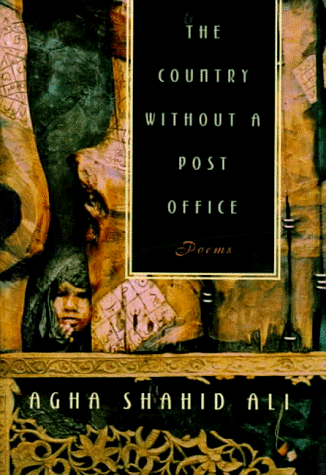
Book 93, Kashmir: "The Country Without a Post Office" by Agha Shahid Ali

News flash: I am sick. I've got one of those fevers that makes me feel hot and cold at the same time and I'm not getting anything productive done (updating this blog does not count as being productive). What makes this all the more ridiculous is that this is part of a cockamamie scheme I had to do non-UN-recognised states: Kashmir, Tibet, Palestine, Hong Kong, Macau, all in the hopes of pissing off some of my Indian and Chinese friends.


Plus, you've noticed that I decided not to do Salman Rushdie's Shalimar the Clown, didn't cha? I actually made that decision fairly early: I wanted someone genuinely Kashmiri, hell, and a highly praised Kashmiri-American emigré poet was just what the doctor ordered.

And seriously, Shahid is awesome. I picked up his posthumous book of ghazals, Call Me Ishmael Tonight, and I fell in love - then I realised this was a patchwork collection snatched from various bodies of work he'd published before. Didn't feel quite right.

So I pulled Rooms Are Never Finished off the shelves: a work mourning his mother, recording his journey from Amherst, Massachusetts to Srinagar to deliver her body for burial. Surprise, surprise: I did not like this one as much: way too many abstractions and allegories, real tragedy subsumed in Zainab's mourning over the martyrdom of Imam Husain and Radha crying out to the Dark Lord. Didn't help that Shahid had a penchant for extremely long poems, written in sections composed of prose poetry or terza rima or sapphics; only the ghazals and villanelles were a a breath of fresh air in between.

So I reserved The Country Without a Post Office from the repository used collection, and hallelujah, the anguish is way more direct and unfiltered: these pieces are written from 1991 to 1995, reflecting on the crazy bloodshed of that era. Thassa right: I combed through four books while enduring illness just for this bloody blog post.

Don't actually feel like analysing it now. Just wanna sleep.


View Around the World in 80 Books!!! in a larger map

Representative quote:

Ghazal

The only language of loss left in the world is Arabic -
These words were said to me in a language not Arabic.

Ancestors, you've left me a plot in the family graveyard -
Why must I look, in your eyes, for prayers in Arabic?

Majnoon, his clothes ripped, still weeps for Laila.
O, this is the madness of the desert, his crazy Arabic.

Who listens to Ishmael? Even now he cries out:
Abraham, throw away your knives, recite a psalm in Arabic.

From exile Mahmoud Darwish write to the world:
You'll all pass between the fleeting words of Arabic.

The sky is stunned, it's become a ceiling of stone.
I tell you it must weep. So kneel, pray for rain in Arabic.

At an exhibition of miniatures, such delicate calligraphy:
Kashmiri paisleys tied into the golden hair of Arabic!

The Koran prophesied a fire of men and stones.
Well, it's all now come true, as it was said in the Arabic.

When Lorca died, they left the balconies open and saw:
his qasidas braided, on the horizon, into knots of Arabic.

Memory is no longer confused, it has a homeland -
Says Shammas: Territorialize each confusion in a graceful Arabic.

Where there were homes in Deir Yassein, you'll see dense forests -
That village was razed. There's no sign of Arabic.

I too, O Amichai, saw the dresses of beauitful women.
And everything else, just like you, in Death, Hebrew, and Arabic.

They ask me to tell them what Shahid means -
Listen: It means "The Belovéd" in Persian, "witness" in Arabic.

Next book: "The Tibetan Book of the Dead", from Tibet.

Tuesday, February 28, 2012

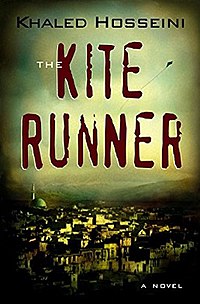
Book 91, Afghanistan: "The Kite Runner" by Khaled Hosseini

Wheeee!!! I'm finally back in the 21st century!!!

And in good old book club territory, too. Not kidding, despite my boyfriend's protestations that its commercialisation means this book isn't authentically Afghan. Stuff gets popular for a reason: I actually finished half of this 371-page baby just sitting at a mama shop just now.


This one's an emigrant's story of his lost country, not Julia Alvarez's story of the Dominican Republic and Carlos Eire's story of Cuba - there's even a similar focus on the gilded lifestyles of the pre-revolutionary aristocracy and their humiliation on becoming lower-caste American immigrants. Lovely immersive descriptions; the kind of stuff I wish us folks in Singapore were turning out.

The key dynamic is between our rich man's son protagonist Amir and his best friend/servant boy Hasan. And I'm not sure if I've ever read a story in which the main character acts so unforgivably cruelly towards another human being. This ends up being a novel about guilt, and ultimately redemption, as Amir returns to Kabul under the Taliban, witnessing its full horrors (and I was signing petitions against those guys BEFORE 9/11, thank you very much), and pulling off a climax that, while barely believable, is just intense enough to redeem everyone involved.

Weirdly enough, in the closing portions (I'm not going to reveal too much), one character becomes an allegory for Afghanistan's suffering and neglect: we all bear responsibility for not interfering more during the Soviet and Taliban occupations, and the crazily long dénouement is testament to the fact that way too much scarring has occurred; healing will take a hell of a long time and a hell of a lot of hope.

Yeah, that's all I have to say about this book, really. Except that it also made me think about Singapore's inhumanity to our own servant classes: foreign workers from the Philippines and Bangladesh and Indonesia who clean up our shit and build our houses.

(Also learned that Hindi music has always been popular in this country - we're definitely in South Asia now, kid.)


View Around the World in 80 Books!!! in a larger map

Representative quote:
"I became what I am today at the age of twelve, on a frigid overcast day in the winter of 1975. I remember the precise moment, crouching behind a crumbling mud wall, peeking into the alley near the frozen creek. That was a long time ago, but it's wrong what they say about the past, I've learned, about how you can bury it. Because the past claws its way out. Looking back now, I realize I have been peeking into that deserted alley for the last twenty-six years."

Next book: Mohammed Hanif's A Case of Exploding Mangoes, from Pakistan

Friday, November 11, 2011

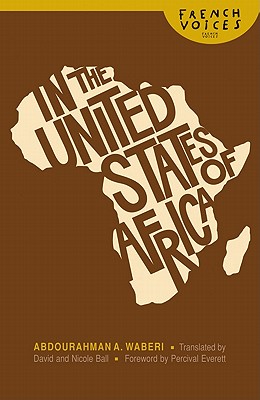
Book 81, Djibouti: "In the United States of Africa" by Abdourahman A. Waberi

And it’s my last book from East Africa! Was originally gonna do Elmore Leonard’s Djibouti, which would’ve been terribly informative about the contemporary culture and politics of the coastal nation; the book I’ve chosen is by an actual Djiboutian and tells me nothing at all.

You see, it’s set in an alternate reality where Africa, rather than the USA/European Union, is the dominant world power; where the West and Japan are lands of starving wartorn barbarians while fatcat consumerist Africans gorge themselves on Hadji Das ice cream and Haile Wade movies.

Plus, barely any of the tale takes place in Djibouti itself – the heroine’s an orphaned white girl called Malaika (née Marianne), adopted by an Eritrean doctor, growing up in the wealthy metropolis of Asmara. Shades of Hannah Pool, huh? There’s even a chapter where Malaika flies to backward, fly-infested France in search of her birth mother.

No idea why some critics call the book “hopeful”, because it's basically a dystopia: even with black and white roles reversed, the world is as exploitative and evil as ever. There's no glowing future presented, not even a sense of homecoming - instead, Malaika retches into the filthy waters of the Seine and absolves her guilt over the whole thing by stuffing her broken-toothed guide into a globalization-doctrine-themed university.

But, as said critics note, it's rare find such humour and satire in African lit. Waberi (and many Francophone African writers) eschew the realist, information-imparting agenda that Anglophone readers adore because they want to learn something about that distant impoverished region. Instead, he's grabbing every chance to show off his erudition, creating a vast mindscape of this new cultural world where there are bustling stock markets on Lumumba Street, where Robert Marley is revered as an established lyric poet, where human rights activists receive the Arafat Peace Prize and writers receive the Sisulu Award and Miriam Makeba is mauled by a giant gorilla in the movie King Kong. (There's a Maryse Condé Bookstore, too!)

Mind you, this isn't all about the workable alternate history: there's no rough what-if timeline presented as in Orson Scott Card's The Redemption of Christopher Columbus or Wong Hoy Cheong's Re:Looking. There's some reference to the imperial powers of Makonnen (an Ethiopian Emperor, surely) and the voyage of Mansa Musa, not to mention the devastation of the Nazi holocaust in Europe. But a clear timeline? Not there; it's all about the concept.

And you know what? It's fun. Waberi's playing such crazy mental gymnastics that he forces you to join in: you realise how hard it is to remember that Malaika is white and her well-to-do parents are black and that her impoverished wrinkled birth mother Célestine is white etc; it's hard to picture grungy France and Helvetian refugees wandering the streets of Tadjoura; we've a double-take when we think about the politics of penniless Eastern European waifs becoming sought-after prostitutes in Alexandria, partly because it's imaginable even in our world.

Of course all this subversion comes from Waberi's anger about the clichés of Africanness; save-the-world aid programs and starving children and wars. But how self-aware is he about the problematics of this reversal? But this is a pretty good way to round off the continent for the time being: a manic howl, twisting its received images into knots.


View Around the World in 80 Books!!! in a larger map

Representative quote:
Some of them cut and run, wander around, get exhausted, and then brusquely give up, until they are sucked into the void. Prostitutes of every sex, Monte Carlians or Vaticanians but others too, wash up on the Djerba beaches and the cobalt-blue bay of Algiers. These poor devils are looking for the bread, rice, or flour distributed by Afghan, Haitian, Laotian, or Sahelian aid organizations. Ever since our world has been what it is, little French, Spanish, Batavian, or Luxembourgian schoolchildren, hit hard by kwashiorkor, leprosy, glaucoma, and poliomyelitis, survive only with food surpluses from Vietnamese, North Korean, or Ethiopian farmers.
These warlike tribes with their barbaric customs and deceitful, uncontrollable moves keep raiding the scorched lands of the Auvergne, Tuscany or Flanders, when they're not shedding the blood of their atavistic enemies - Teutons, Gascons or backward Iberians - for the slightest little thing, for rifles or trifles because they recognize a prisoner or because they don't. They're all waiting for a peace that has yet to come.

Next book: Nujood Ali's I Am Nujood, Age 10 and Divorced, from Yemen.

Friday, November 4, 2011

Book 80, Eritrea: "My Fathers' Daughter" by Hannah Pool

Woo woo! I'm at the 80th book! And it's one that you guys helped me choose, too!


Granted, Pool isn't a very literary writer: she's mostly a fashion and lifestyle columnist at the Guardian, Eritrean by birth but adopted by a British academic as an infant. The memoir's about her first visit to her birth family at the age of 29, and it's actually annoying at certain junctures - she gets so damn weepy, she cries all over the place, she spends chapters agonising about the tortured moments before she dares to walk through a door to meet these people who abandoned her (did she even really confront them with this in the end?).

But you know what? She's honest. She's being Bridget Jones-ish because she IS Bridget Jones-ish, and she's painfully aware of the ironies in her reactions, the excruciating dumbness of the fact that she's actually jealous of the half-malnourished Eritrean kids she sees in her home village, just because they grew up in their own families, without the cultural angst of displacement. She leaves in the bits about how she doesn't fit in, how she makes unexpected alliances and experiences unforeseen alienation; how she has diarrhoea and nausea and crying fits all the time, because her normally cast iron stomach can't deal with the emotional shock and the different enzymes in the goat meat.

And it's so damn informative about the cultural quandary of being an orphan (never believe an orphan who says she doesn't long to trace her birth roots, she says), and about Eritrea itself - not just the folksy villages but also the rather beautiful Italianate capital of Asmara, full of the peeling works of Mussolini's architects, full of the returnees whose families fled during the war with Ethiopia, who speak Arabic or German or Amharic or English instead of Tigrinya: the forever displaced people with whom Pool feels most at home.

A quibble, though: given that Pool has made the book's title about both her fathers (look at where the apostrophe lies! Clever, innit? And so English), we've barely any description about her father, David Pool, the great Friend of Eritrea. I'd like to know a little more about this man, to hear his voice, hear how he tried to teach her about her roots (he did, but the teenage Pool would just tell him, "I'm not Eritrean, I'm just black,") and make him more than just a flat character, being benevolent and understanding in the background. Ditto for her white stepmother, brother and sister, who say they want to join her on a visit to the country in the future. (Have they gone yet? Maybe it says in her TEDx talk. Nah, watched it, and the only cool thing it supplies is the photos.)

Good read, anyhow. Nice to reach the 80-mark on a positive note - a tale about an outsider on a journey to discover who she is.


View Around the World in 80 Books!!! in a larger map

Representative quote: Every few moments I think how wonderfully different I will feel whenever I see the word Keren in my own passport from now on. I will be able to picture the mountains and the colours, instead of having a black hole where an image should be. I will be able to describe the haze of sunset and the smell of the market. I might even start adopting a wistful tone and a slight air of mystery as I look into the middle distance and say, 'Ah, Keren, it means mountain, you know. Beautiful place, beautiful people.' That'll put an end to those pitying looks I get when I give my usual response of, 'I don't know what it looks like: I left when I was a baby.'

Next book: "The United States of Africa" by Abdourahman A. Waberi, from Djibouti.

Thursday, June 16, 2011

Book 65, Zambia: "With Sword and Chain in Lusaka" by Richard Sampson

Given that I was actually travelling to Zambia and was not having that great a time with Malama Katulwende's Bitterness, I decided to switch to another work: something shorter and more informative, though not actually better written.


Richard Sampson was born in London in 1922, served in the British Navy in the Second World War, migrated to Zambia in 1948, and emigrated to California in 1972; specifically to La Jolla, which he claims has a similar climate.

In between, he was an entrepreneur in multiple fields, served as deputy mayor, and later mayor of the capital city, Lusaka, stood as a candidate for the UNIP - a party which was mostly African, because remember, this was before independence, when the country was called Northern Rhodesia.

Sounds like it should be rather good reading, no? Sadly, the most interesting bits are either previewed in the introduction (e.g. Sampson's negotiations to end the system where butchers could only sell meat to blacks through hatches in the wall rather than allowing them into the shop) or delivered in throwaway fashion (e.g. the sensational tales of local characters, or Indira Gandhi's lecturing to the Indian community that they treated their womenfolk in antediluvian style).

There's no real urgency, nothing to invite emotional investment in the narrative. He wasn't a freedom fighter; he was a responsible Brit who happened to think that his fellow whites were being irresponsible by not allowing more African involvement in politics in the run-up before independence. There's a lot of damning evidence against Roy Welensky, the last Prime Minister of Northern Rhodesia, who clung to the idea of a British presence despite the fact that he knew London wouldn't support it. But is there real, virulent, eloquent scorn? Not even that. Ho-hum.

Oh, and every now and then Sampson tries to make his story more dramatic by beginning a chapter in media res. What actually happens is that the reader just gets confused.

But the book's informative, yes indeed. Eye-opening to see what was happening at the time of African decolonisation: how various powers sabotaged the possibility of a more stable, more prosperous Zambia (though the drama's killed a little when Sampson congratulates the nation on not having any bloody civil wars since independence). Interesting too to realise that Zambia was richer than Zimbabwe, though right now the case is reversed: in spite of Mugabe's bad press, Zim is recovering and Zam's still in the slumps (as gathered unprofessionally from Wikipedia and my inquiries with tour guides on both sides of Victoria Falls.)

Also cool was my experience of reading this book concurrently with Long Walk to Freedom (which is actually turning into a good read), as the geographies and personalities overlap: Kenneth Kaunda, Haile Selassie, and of course the spectres of South African apartheid and the Zimbabwean civil war that Zambia actually managed to escape.

So basically, this book isn't recommended, unless you're going to Zambia and would like some background. The guy's evidently written other books, which I dare say may be better. Otherwise, go read some Archie comics instead.


View Around the World in 80 Books!!! in a larger map

Representative quote:
"For those interested in the subject, African beer is made from fermented corn and is very potent. To me it always had the colour of dirty milk and I never did try it."

Next book: Jack Mapanje's Beasts of Nalunga, from Malawi.

Monday, February 28, 2011

Book 50, Guyana: “Lovelines for a Goat-Born Lady” by John Agard

So originally I was going to read the Poems of Martin Carter, whom some website claims is Guyana’s greatest poet. Then I checked him out and discovered his writing is rubbish.

What’s a bibliovore to do? Fortunately, I’ve a personal Guyanese connection: way back at Singapore Writers’ Week ’97, I attended workshops and readings by the Guyanese-British husband-and-wife team John Agard and Grace Nichols, who got me jump-started on the idea of performance poetry before slam even came to town.


Agard and Nichols mostly write children’s poetry, but I’ve read some of their adult works before: Agard’s Mangoes and Bullets and From the Devil’s Pulpit; Nichols’s Sunris and The Fat Black Womans's Poems. Lovely stuff. Lovelines for a Goat-Born Woman was one I hadn’t seen before, though: it was part of the Edwin Thumboo bequest, so I had to sit in the library and read it a couple of goes, just like Leaves of the Banyan Tree.

Oh, but it was worth it. Bless me, these poems are sexy.

Agard’s nuts about Nichols and he finds every way of saying so. He calls her his beloved capricorn, his mudhead woman (Guyanese are called mudheads because of their low-lying silty coastland), de headmaster’s daughter, Miss Curling Toes, Gracey, his pink-eyed one. He eroticises her overcome by sleep, annoyed by allergenic pollen, in knickers, before mirrors, in a towel fresh out of the shower, plaiting her hair, pregnant, peeing behind a half-closed door.

He calls her body a ship bound for dreamland, a creature rooting in the soil of heaven, He calls her vulva her cunt, her other mouth, her wanton parts, her squeezing crab, her pum-pum. And he eroticises their homeland’s watermelon ladies, Antillean breezes, Kissing Rocks, rivers, zinc roofs, eels, crabs, hibiscus, hummingbirds and guenip seeds, star apples. Writes one poem entirely in Creole, too. (Damn, I’ve got to try eroticizing Singapore/Singlish in some of my slam poetry. Difficult, but I’m sure it can be done. Easier for him of course, since they’re émigrés missing their tropical disaster zone, “hugging her under dis quilt of England”.)

He also freely mentions the fact that she, too, is a poet. That’s worth something. It’s quite wonderful to read love poems, written from one creative person to another – one of the reasons why Sonnets from the Portuguese is so renowned. And oh my; after writing that I have visions of Robert Browning and Elizabeth Barrett doing it under the sun on a Caribbean coconut plantation. Freaky, but given Browning’s possible ancestry, not entirely far-fetched. First heard about that connection in Agard’s book We Brits, by the way. Just hope they’re still happy together.

(There's something fishy going on Google Maps: it seems to have been hacked by the Encyclopaedia Britannica, of all sites. Oh, it's fixed now!)


View Around the World in 80 Books in a larger map

Representative quote:

Invocation

Lord of Iron, Ogun,
grant me hardness
when and where it matters

Queen of waters, Yemanja,
bless my man-water
with good seed

Sacred harlot, Oshun,
bejwelled to the crotch
girdled with the moon
guide me to the slut
beneath my graceful lady

Sky-Serpent, Damballah,
may I inherit
your divine wriggle
when I lie on her

You there, Legba,
randy trickster,
keeper of the gateway
guardian of the centerpiece,
help me transfix her

While governments making plans
your vulva sparkles on my moustache
we guilty of a subversive trickle

Next book: Aphra Behn’s “Oroonoko”, from Suriname.

Friday, October 29, 2010

Book 30, Dominican Republic: "How the García Girls Lost Their Accents" by Julia Alvarez

You know what? I'm just not that impressed by this book. I know it's a best-seller and is included in loads of high school syllabi (something that's not too likely to happen to myself), but after reading truly fresh, epic voices like Janet Frame and Albert Wendt and even Alvarez's fellow refugee-American Carlos Eire, I can't get excited by the writing here.


True, it's structurally interesting: it's divided into three sections, tracing the lives of the four daughters, Carla, Sandra, Yolanda and Sofia, from 1989-1972 (adult life), then 1970-1960 (adolescence in America), then 1960-1956 (childhood in Santo Domingo). Each section's further divided into stories focussing on episodes in the girls' (or an individual girl's) life/ves. We creep back further and further into history, through the immigrant experience and the trouble with the dictator Rafael Trujillo, kinda like psychoanalytic regression, or the movie Memento, though there are no grand dénouements, as I'd hoped.

And some of the stories are good - the world seen through the eyes of a child (or a psycho lady) is generally pretty interesting. I liked Yoyo's tale of the WASP college boy named Rudy Elmenhurst III, and Sandi's perspective on going to a floor show in a Spanish restaurant in NYC, one year after fleeing the regime.

But the whole doesn't cohere. So what? Yes, Latin America is a bizarre place, and ethnic assimilation is hard. I get it. Was this really not talked about very much when the book made its splash in 1999?


View Around the World in 80 Books in a larger map

It's good, but I'm generally spoiled for quality on this tour. You could read better. I'm sure as hell gonna.

Representative quote:
Probably, if she had thought a moment about it, she would not have done what she did next. She would have realized her father had lost brothers and friends to the dictator Trujillo. For the rest of his life, he would be haunted by blood in the streets and late night disappearances. Even after all these years, he cringed if a black Volkswagen passed him on the street. He feared anyone in uniform: the meter maid giving out parking tickets, a museum guard approaching to tell him not to get too close to his favourite Goya.
On her knees, Yoyo thought of the worst thing she could say to her father. She gathered a handful of scraps, stood up, and hurled them in his face. In a low, ugly whisper, she pronounced Trujillo's hated nickname: "Chapita! You're just another Chapita!"

Next book:
Daniel Putkowski's An Island Away, from Aruba.

Wednesday, October 13, 2010

Book 27, Cuba: “Waiting for Snow in Havana” by Carlos Eire

What a joy to be reading English again!

Waiting for Snow in Havana was actually written in English, you see: the author was airlifted out of Cuba at the age of eleven in 1962 in the wake of Castro’s revolution. Thirty-eight years later, as a professor of history and religion at Yale (where my sister picked up this copy), he suddenly began writing down his memories of those years and the family history behind them.


And boy oh boy, I wish had a memory like Mr Eire. The stuff he can recall: the dirty pranks they used to play on the neighbours, the infernal threats of the Dominican monk schoolmasters, the chimpanzee in lederhosen who was kept as a pet next door, the rich kid who had his own working miniature sports car, the Chinatown man who sold them deadly firecrackers, and his family’s incredible antique collection, amassed due to his father’s conviction that he was the reincarnation of Louis XVI and his wife was Marie Antoinette.

And of course the post-revolutionary days: the parade where he saw Yuri Gagarin and Castro himself, and his own shock when exiled as a child to America: reduced to being a poor penniless spic washing dishes at night after school, after all those years of privilege in the Cuban aristocracy.

I’d heard the stories before in the abstract, which made me utterly unsympathetic to the plight of the Cuban-Americans, upholding the ancient blockade because their moneyed families were expelled during Communism, boohoo. But I’d never grasped till now the profound shame of this downfall, how these kids who grew up knowing they’d be multimillionaires ended up as good-for-nothing problem minority layabouts in the land they once worshipped for its Hollywood movies and cowboys and Coca Cola, soon banned by Castro of course.

And Eire writes so well: with irony, understanding the poetic justice of his being reduced to the state of those black kids he used to get to dive for pennies in shark-infested waters; and with mad eccentricity, jumping from year to year in his life based on free associations, returning to the same moments based on weird leitmotifs in his head: lizards, swimming pools, cases of molest, the icons of Jesus and the Empress Maria Theresa that used to haunt his dreams, and the philosopher he loathes most of all on this earth, Immanuel Kant.

It gives me faith in the potential richness of creative non-fiction. But such a memory, and such a voice! Such things are not provided to most of us mortals.

I do feel a little bad for not reading Alejo Carpentier’s Conversation in a Cathedral or the diaries of Che for this segment, but I’ve definitely had a great time – sped through this 387-page tome in no time at all, and felt culturally richer for it. You should try it too.


View Around the World in 80 Books in a larger map

Representative quote: In the past thirty-eight years I’ve seen eight thousand nine hundred and seventeen clouds in shape of the island of Cuba. I know this because I keep count, and the number is always etched accurately in my brain and in my heart. When I die, feel free to saw open my skull and paw through my brain. I bet you’ll find a spot that looks like a cloud in the shape of Cuba. Feel free to open my chest, too. I bet you’ll also find a scar on my heart that looks like a Cuba cloud.

Next book: Trevor Rhone’s Two Can Play and School's Out, from Jamaica.