Monday, May 20, 2013

Book 124, Cayman Islands: "The Firm" by John Grisham

So yeah, I tried reading Dr. Florence Goring-Nozza's One and One Is Two: Caribbean Thriller. First off: it's not a thriller: it's a dreary little self-centred memoir talking about how the Caymans were oh so nice before they became a rich international banking centre with no taxes. Second: it's incredibly badly written. Run-on sentences galore. No sense of self-awareness. What an idiot this author is - the doctorate, believe it or not, is from the Yale School of Divinity. Yep, she's a preacher. Sigh.

Of course I do favour the practice of reading from the national literatures of the nations I'm surveying, but this project is also about filling my brain up with the best lit the world has to offer. So why not a nice American thriller instead?


I haven't watched the 1993 film version of The Firm - rather mind-boggling to realise Tom Cruise has been an action star for twenty years now - but I have read Grisham's later novel The Runaway Jury, which I thoroughly enjoyed while in a backpacker inn, maybe in Tel Aviv or Brazil, not sure where.

The similarities between the two are striking. Thorough knowledge of the legal profession and practice, of course, but both also have young, handsome male protagonists on outlaw missions; invisible but kickass dames on the side, and a healthy distrust of big corporations - Runaway Jury is about a guy rigging a jury to convict a tobacco consortium in a class action lawsuit; The Firm is about a Memphis-based law firm that works for the Mob and ices every associate or partner that they think might blab to the FBI. Big money all over the place, destined to be brought down hard. Some relevance to the contemporary economy (which of course TV producers have attempted to take advantage of).

Honestly, one does develop a soft spot for Mitch McDeere early on in the book - a tall, athletic 25 year-old, born into poverty and crime but with the drive (and insomnia) to put himself through Harvard Law School, working in a convenience store to pay the bills, offered the job of his dreams with a six-figure salary and then suddenly discovering how deep in shit he is, with the firm (Bendini, Lambert & Locke is its name) blackmailing and surveilling and threatening to murder him on one side, and the FBI tailing and tantalising him and telling him that if he doesn't bend, he'll eventually be caught out and jailed forever, on the other. Oh, and he's got a pretty wife, too. Raises the stakes.

Some words about the movie, which I've read up about on Wikipedia. Tom is very pretty indeed in there, but I can't take him seriously in there after all the silly Scientology. Also, what irks me is how the ending's been made really happy, with all loose ends tied up and Mitch still able to practise law, not having broken his vow of client confidentiality, etc. The book's all about him as an individual on the run, breaking free of the bounds and escaping to... you guessed it: the Cayman Islands.

Nothing much to say about the islands themselves, except their status as a tax shelter, the snorkelling and diving, and I guess a bit of random info about the population of British whites and comfortable blacks (the book uses "Negros" on occasion, surprisingly) and pretty mulatto women and Jamaican Red Stripe beer and roast shark. Oh yeah, and the bit about the only KFC on the island catering to Americans, since no-one on the island actually rears any chickens - that was fun.

Some storytelling devices which I wouldn't have recommended my students, but I suppose I'd better digest them. It's not a bad thing to be able to write a bestseller, after all.

And I'm back in the Western Hemisphere again. Not an awful return trip, I suppose.


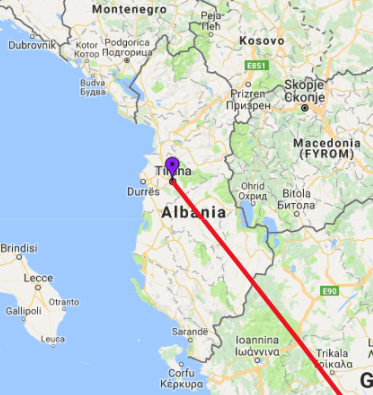
View Around the World in 80 Books!!! in a larger map


Representative quote: 
Avery wiped the sweat from his forehead. "This place has always attracted pirates. Once it was Blackbeard, now it's modern-day pirates who form corporations and hide their money here. Right, mon?"

"Right, mon," the driver replied.

Next book: Ron-Luc Nickell's Food Plane Soup: The Desert Island Letters, from the Turks and Caicos Islands.

Sunday, May 12, 2013

Book 123, Kiribati: "A Pattern of Islands" by Arthur Grimble

So it turns out that if I hadn't already covered Robert Louis Stevenson for the British Virgin Islands, I could've spent this past week reading his travel memoir In the South Seas. Alas! Instead I'm covering yet another British colonial administrator's jottings.


But I'm being facetious - once you get past the early bits about the Oxonian old-boy system of the colonial administration, and about cutting his teeth as an eager young 20something official on Ocean Island, we actually get to something quite remarkable: a thoroughly British man who engaged with the native lore of the Gilbertese to a degree unprecedented among those who didn't actually marry into the tribes. Even got himself ritually initiated into the Karongoa tribe through ritual tattooing without anaesthetic: a serpent going up and down his arms, a 15 year-old virgin on each side of him to scream out on his behalf while he manfully said it did not hurt.

And such stories - shark hunts, cursed stoves, roofs collapsing in on the family during hurricanes, ghost sightings (of both the dead and the not yet dead), mediums who could foresee the end of Japanese tuna trade, barehanded octopus fishing (which was particularly hard on Grimble, aka Kurimbo, as he had a phobia of octopi), fearsome feuds between Catholic and Protestant converts including an island-wide millenarian uprising which resulted in several deaths...

And as before, told with a considerable degree of respect towards the Gilbertese themselves; a condemnation of the heavy-handed missionaries who attempted to destroy their culture, dancing upon the shards of their ancestors' skulls; a trust that colonialism had improved things on the whole (they'd caused the land wars to cease, and Grimble quotes from a 94 year-old lady who is joyful that her great-granddaughters can travel the island without fear of robbery or rape), and that really, all shall be well, all shall be well.

There's also a clear message that colonial life wasn't a bed of roses - out in the islands, there was no fresh food; they had to subsist on breadfruit and tinned beetroot and the native cooks (only men were allowed to serve as cooks) were pretty awful, burning the rack of lamb the Governor brought specially, and making Grimble's wife Olivia weep. And having to build a house from scratch on Beru, when the previous Resident had made off with not only the furniture and the beds but even the verandah itself, and having the roof cave in on them and their three kids during a hurricane... There's even a wistful sonnet about the delights of the tropical sunset not being surpassed by the comforts of England, which is quite lovely.

Of course, this is all describing a fairly early stage of colonisation: during the 1910s, the Great War passing them by at a distance, rubbing shoulders with actual tribal kings and administrators that Robert Louis Stevenson met (he was a particular inspiration, and is referred to simply as RLS). Grimble went on to St Vincent, the Windward Islands and the Seychelles before going back to the UK and becoming a celebrated author and radio presenter, which was in the 1950s, when the empire was in an ineluctable stage of decline.

Given all those shifts of geography and fortune, how can we trust this text as anything genuine? But that's the point of non-fiction as literature, I suppose - the thing isn't the fact but the style, the voice, the way we use language to make things beautiful.

On another topic: one thing that isn't beautiful is my map. I miscalculated the location of my Kiribati marker (the country covers a huge swathe of ocean) so I'm criss-crossing myself, going northwards and westwards on my journey to the east.


View Around the World in 80 Books!!! in a larger map

But no matter - next week we'll be doing a big jump across the rest of the Pacific Ocean to the Americas. Toodle-pip, Oceania! It's been a blast!

Representative quote: So Tanoata had learned an age-old spell called 'The Spoiling of the Oven'. She had been finishing the third performance when I stumbled upon her. Here is a translation of the words she muttered:

I stab them north, I stab them west,
I stab them south, I stab them east,
The ashes of the oven of Mareve,
Spirits of fire, spirits of stone,
I stab, I confuse, I overturn.
Bring stinking, bring anger.
Be sick at the stomach, you Biribo, Birbo! Be enraged!
For the food of Mareve stinks and stinks:
It is tiiki - tiki - tiki

Next book: Dr Florence Goring-Nozza's One and One Is Two: Caribbean Thriller from the Cayman Islands.

Saturday, May 4, 2013

I think I'm turning Japanese!

I think I'm turning Japanese, I really think so...

Not really. But I've been on an odd little Japanese kick recently. Reading these two volumes, both for work purposes:


Ihara Saikaku's The Great Mirror of Male Love is research material for the new pan-Asian gay men's magazine Element. I'm including it in a list of gay Asian classic books, and it's really awesome for the purpose: it's a series of 40 short stories, all celebrating male-male romance/sex, published in 1687 by a landmark author of erotica, proof that there was an age when Asians weren't squeamish at all about homosexuality; when it was actually institutionalised, to an extent. (Not sure how I'll treat the fact that the "bottoms" were usually boys under the age of 16, and that a lot of the stories end in ritual seppuku.)

Ben Hills's Princess Masako: Prisoner of the Chrysanthemum Throne is the real-life tale of a modern-day Japanese lady who became a princess and did not live happily ever after; pressured by the imperial staff into a state of terrible depression. I'm reading it for an article for What's Up: News For Kids - I've been asked to write about how the princess has just been seen at her first overseas trip in 10 years, and I realised this volume would give me the background story more efficiently than snooping around on the web. (Quite a tinge of cultural imperialism in the authorial voice, imho.)

As such, my progress on my Kiribati book has been slow. Stay tuned!

Friday, April 26, 2013

Book 122, Niue: "Savage Island" by Basil Thomson

Every now and then, I'm intensely grateful for good writing. It doesn't need to be transcendent: something engaging in some way, something fun, is quite sufficient.

This week, I'd thought I was plum out of luck as I was flipping through an epub version of W.G. Lawes of Savage Island and New Guinea, a miserable hagiography of an early missionary in the Pacific, published in 1909 by the Reverend Joseph King. The title had sounded like a swashbuckler's story - how was I to know it'd be so long and dull? 

I was halfway through when I decided to ditch the bugger and turn over to this other virtual archived text, dating even earlier, to the year 1902:


And boy oh boy, I'm glad I did. Basil Thomson was a civil servant with the Colonial Office - in fact, this book describes an official visit to Niue to arrange for its formal annexation as part of the British Empire, as well as a stop at Tonga to formalise its status as a British Protectorate. But he was also a professional writer, and consequently he knew how to render his descriptions of exotic realms so amusing that even an ardent postcolonialist like myself is delighted at his words.

You see, unlike Rev. Joseph King, Thomson actually accords individual personalities to the people of the Pacific. Of course, he's laughing when he describes the fashion for fatness among the women, and King Tongia's pompous folly in dressing himself in hoop skirts and military hats - a flavour of that half devil and half child colonial mindset of the time. Yet he also acknowledges that these guys have a culture, and real motivations for what they do - e.g. the king had no small talent for being able to convince the elders that they needed a king at all after no-one had occupied the role for 80 years...

Of course, one of the reasons Thomson can afford to make light of the situation is that everything's peaceful. I hadn't known much about this side of colonial history: how some countries would, of their own accord, join the British Empire for the sake of protection, to avoid more destructive invasion and exploitation by the Germans or the French. This is why Tonga, for instance, has been able to hold on to its royal family, one of the few surviving systems of monarchy in the realm.

And then the whole matter of being modern - how these Pacific people, who had been part of a freaking Stone Age civilisation just a couple of generations ago, were now aware of the greater world around them, were consuming its cultural artefacts (Christianity, icons of Queen Victoria, whom they called Vika) and even building themselves Western-style houses. And then their participation in world trade - the Niueans are characterised as the most hardworking of Polynesian races, being actually eager to work overseas, to the detriment of their local industries of growing coconuts and weaving hats out of pandanus leaves. (Seems they've done pretty well for themselves since then - ten years ago, they became the world's first nation to be completely covered by free Internet wifi.)

Add to this the usual staples of colonial travel memoirs: documentation of the flora and fauna (they had crazy plagues of flies and hornets), some notes on national custom and myth (oral history for Niue only goes back 500 years, suggesting that they split off from some other island civilisation before then). Some notation of the music and dance of the islands, too, before a rather abrupt ending.

But once again, I'm bloody glad that this peripatetic journey is bringing me to books that are actually worth digging up and reading. It's not just about going around the world: it's about not having a miserable time doing it.


View Around the World in 80 Books!!! in a larger map

P.S. Why "Savage Island", you ask? Seems that when Captain Cook visited in 1774, the Niueans were one of the few Pacific peoples to refuse to engage in dialogue with him, answering him instead with spears and darts. Smart folks!

Representative quote: "The procession was headed by a dozen men in slop clothes and villainous, billycock hats set at a rakish angle. They all carried spears and paddle-shaped clubs in either hand, and a similar rabble brought up the rear. In the middle of this grotesque bodyguard walked the king and queen, both in petticoats, as befits the sex to which they belonged, for if the queen was a young woman, the king was assuredly an old one. To their united ages of ninety-four His Majesty contributed seventy-six, but what he lacked in youthful elasticity he made up in con- descension, for she had been but a beggar-maid or what corresponds therewith in Niue, where beggary is unknown when he had played Cophetua to her a few months before our visit. She wore a wreath of roses, he the soldier's helmet with the cock's plume, which was all that the officious Samoan teacher would leave him of his military uniform, and from which he refused to be divided, although it assorted ill with his petticoat. To tell the brutal truth, His Majesty was unsexed by the garments that had been chosen for him, and his appearance justified the remark of a friend who, holding the photo- graphs of Their Majesties in his hand and con- fusing them, exclaimed, "Why, the queen's got a beard!"

Next book: Arthur Grimble's A Pattern of Islands, from Kiribati.

Saturday, April 20, 2013

Book 121, Tokelau: "A Way With Words: Language and Culture in Tokelau Society" by Ingjerd Hoëm

On the plus side, we're finally reading something else by a female author in the Pacific region. On the minus side, she isn't native - she's from Norway. On the even more minus side, she's an anthropologist.

Yesiree, here's one of those dry, brain-numbing, jargon-filled texts (purism? doxic?) that I'd never waste my life reading if I wasn't doing this godforsaken project. It's even marginally about linguistics, which my PhD student sister has proven to be a headache of a pseudoscience, why oh why etc.


But really, this wasn't so bad - except for the bulk of the second half, which consisted of Hoëm consulting every person she could about the meanings of specific Tokelauan terms, from uluifa (spirits that possess people) to fatupaepae (a female authority figure), just to show the imbalance and instability of information between genders and classes. Major snoozefest.

You see, Tokelau's an odd place.  It's a territory of New Zealand, consisting of three atolls, with a combined population of 1,411 (that's today's figures, but the country's always dealt with overpopulation through emigration). Despite that teensy number, they've got a number of feuds and village dialects, exacerbated by the fact that missionaries converted some of them to Catholicism and some to Protestantism (the Catholics allowed more of the indigenous culture to survive, for which I suppose they deserve some thanks).

In the '80s, when the author was conducting her fieldwork, the Tokelauans had only recently adopted a written form of their native language and begun teaching it in schools. They'd previously been using English and Samoan - so they had the weird situation of kids being fluent in a traditional language, their twenty-something year-old parents recommending that they follow their elders for even greater mastery of the tongue, and of course the elders jabbering away in Tokelauan that was infected with Samoan words to begin with...

And that's just the background. The messy politics of how language is used is bewildering: characterised as the shyest of the Polynesian peoples, Tokelauans hold their fono (their ceremonial meetings) in near silence, wary of contradicting people and making enemies, sometimes postponing the most serious issues of each Women's Council or Council of Elders to the next fono, just so no-one's feelings will be hurt. 

(The example given was sorting out a feud so that one island's parents would stop barring their kids from attending school. As an Asian person I believe school is bloody important and they should've just trod on each other's feelings. But that's why I'm not an anthropologist.)

Details of the use of gossip as a sanctioning device, the strange disruptive appearances of older women as clowns, invading official events to mock the hierarchies that keep them bound (yet this is part of the culture that keeps them bound). And the syncretic lyrics of the fatele song and dance shows.

Yet believe it or not, the Tokelauans feel dreadfully insecure about their culture - they feel they're hybrid, westernised folk (many of them have studied or worked in NZ; there's a steady exchange of unruly offspring between Tokelau and the migrant families in Samoa and New Zealand). They even envy the Maoris for the strength of their identity, never mind that Maori culture has been reduced to a superficial display of hakas and carven masks in the midst of a mainstream pakeha culture. (In Tokelau, they call them palagis).

But aren't we in Singapore the same? Weirdly cultured and problematic and unsure if we can be proud of what we have? 

Ah, but Yi-Sheng, the world does not exist for the sake of your reflections. Here's a fatele text.


View Around the World in 80 Books!!! in a larger map

Representative quote:
Fakalogo atu

Fakalogo atu kite leo e sau
Tena e sau
sau mai i ko
pati tokoto ko te toeina
ko te uto kua tini, tini, tini O.

Listen to the sound coming
That is coming
coming from there
applauding [while] lying down, the Elder
The young sprout of the germinating coconut [i.e. the young people] have finished, finished, finished.

Next book: Reverend Joseph King's WG Lawes of Savage island and New Guinea, from Niue.

Friday, April 12, 2013

Sorry, no Tokelau yet!

Been busy marking, writing miscellaneous new articles... and organising lit nights!


Tonight was Young and True, an NTU non-fiction reading - seven students from my non-fiction class went up shared their work at BooksActually. Great buzz, attentive audience (and the truth is, with a floorspace that small, *any* attendance feels like a crowd), and some very moving work.


This weekend's gonna consist of marking and finishing up my MFA application to East Anglia. Wish me luck!

Thursday, April 4, 2013

Bangkok books?

So I'm back from the ILGA Asia Conference in Bangkok! Will be writing a Fridae article about it, too. But it wasn't much of a holiday - didn't even make it to Chatuchak Weekend Market. Too busy blogging during the conference, and attending the ASEAN SOGI Caucus in the two days afterwards.

Thus, the only book I acquired during that sojourn was this:


The English title seems to be Violated Lives: Narratives from LGBTIQs and Internatioanl human Rights Law. I got it free from a table where goodies were being handed out.

Yes, it's mostly in Thai, but the annex is bilingual, and it covers the Yogyakarta Principles (and can I say right now how proud I am as a Southeast Asian that a landmark document on sexual orientation and gender identity rights was crafted in my own neighbourhood?).

What I actually spent most of my time reading, however, was this:


I'm doing an article on classic gay Asian lit now (not gay Asian American lit, thank you very much), so of course I've got to peruse Yukio Mishima's landmark tortured-gay-man-in-the-closet novel, Confessions of a Mask. 

Oh god, but I don't know if I should recommend it to the average reader. It's so dark and twisted and upsetting, perhaps even dangerous for the insecure gay man. And honestly, his other works, like his Noh Plays and The Sailor Who Fell With Grace From the Sea, are more transcendent and beautiful, presenting psychosis on a platter rather than being immersed in it.

I'll probably list it, anyway, due to its historical importance. Must live with the possibility that one of my future readers will end up committing hara-kiri because of me.

Too many deadlines now to even think of heading down to the library to read my Tokelau book, by the way. Maybe I can squish it in towards the end of next week.