Showing posts with label 1960s. Show all posts

Tuesday, December 12, 2017

Book 172: The General of the Dead Army, by Ismail Kadare

I'm kind of flabbergasted. How did I neglect this blog for over half a year?

Yes, yes, I've been busy: I've published a new collection of poetry and started on a PhD programme. But the truth is, I finished this novel in July, and just got distracted from blogging about it—partly because it was due at the library and I had to return it, and out of sight, out of mind... 


And it's a pretty interesting book: the author's first novel, written in 1963, not from the viewpoint of Albanians but from their former oppressors: our protagonist's an unnamed Italian general returning to the country to recover the bodies of his World War II soldiers who were slain there.

It's a pathetic, Sisyphean task, dealing with unlabelled coffins and stadiums built on top of graveyards and angry locals and memories of weeping mothers and sexy lady-friends and his own grumbling wife—but while he's from a nation defeated in the war, he has reason to disdain the Albanians too, this hickish uncivilised collectivist farmers on the wrong side of the Iron Curtain. He travels with a priest, whose remarks on faith just underscore how hollow the ritual of recovery is. He even meets a German general on the same mission, and they bond, two losers stuck in the middle of nowhere.

And there are the voices of the dead here too: stories of shame and betrayal and dumb heroism, last thoughts in italics intruding on the narrative and loose diary pages from a defector hiding out in a farm, at the mercy of both sides of the war. We might be in Southern Europe, but there's a deep sense of Eastern European fatalism suffusing this text.

It makes me think of the books I've been reading for my PhD: postcolonial works of the Indian and Atlantic Ocean diasporas, Amitav Ghosh and Michael Ondaatje and Olive Senior and Derek Walcott and Caryl Phillips. They're writing about history, how the long shadow of colonialism refuses to go away even after the promised liberation of independence. And that's happening here, too. The scars of the war alive two decades later. The dead soldiers still haunting the land.

Of course, now it's seventy years later, and Fascists and Nazis are no longer ghosts, but walking and legislating among us. Sympathy for the losers of history is all well and good, but dead ideologies have a habit of becoming undead. Which spells some mighty trouble for those of us who just wanna stay alive.
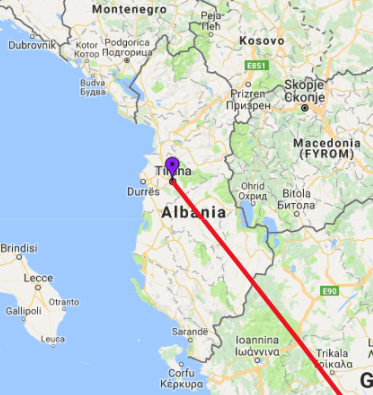
(From My Maps)

Representative quote: 

I have a whole army of dead men under my command now, he thought. Only instead of uniforms they are all wearing nylon bags. Blue bags with two white stripes and a black edging, made to order by the firm of "Olympia". And those bags will now be inserted into their coffins, tiny coffins of precisely determined dimensions, of a size stipulated in the contract signed with the local governments' association. At first there had been just a few sections of coffins, then, gradually, companies and battalions were formed, and now we are on our way to completing regiments and divisions. An entire army clothed in nylon.

"And what shall I do with it, my army?" he said between his teeth.

Next book: The Legend of Kalesh Andja, by Stale Popov, from Macedonia.

Wednesday, December 10, 2014

Book 163, Belarus: "King Stakh's Wild Hunt" by Uladizimir Karatkevich

Somehow the National Library never processed my request for Nancy Richler's Your Mouth Is Lovely, which left me stranded in terms of Belarusian lit. (Richler is Canadian, anyway, and the story might take place in Russian Siberia. :/)

My options included Nechama Tec's Defiance, a non-fiction work about a Jewish resistance army during World War Two (available in the library) and Vladimir Kozlov's Number Ten: A Novella In Translation (available for 99 cents on Kindle).

Luckily, I managed to Google up a free pdf of this:


And I'm glad I chose it. I knew from the description it was gonna be kinda up my alley: a bit of a fantasy thriller about a modern man facing down the phantom of a cursed king, riding for eternity. But in fact, the background's a little more complex than that.

This book was written only in 1964, but it's a Gothic novel - the events take place in the autumn of 1888, with the first-person protagonist Andrey Bełaretski recounting the events as a 96 year-old man. He's an ethnographer (which I hadn't really thought was much of a profession in Europe in the nineteenth century) and his mission is to venture into remote parts of Belarus and document the dying legends, folktales and epics of his people to publish back in Minsk.

So you see we've got a theme of identity formation going on: the rise of a nationalist bourgeois class who want to go back to their peasant roots to understand what their culture is. Unfortunately, that culture is kind of horrifying - we've got horribly impoverished gentry (descended from the Polish, it seems) starving in their broken-down castles and burning their antique furniture for warmth, and thousands of muzyk (that's the word they use for serfs) who're living on even less. 

Andrei's pretty gloomy about all this at the beginning of the book. Then he gets lost in an undisclosed area of his country during an expedition, almost dies from falling into a swamp (a quagmire, they call it), and seeks refuge in the rain in the castle of Marsh Firs, where he's greeted by the Countess - an ugly little 17 year-old thing named Nadzieja Janouskaja, who's plagued by the doom of her noble line, unfamiliar with concepts of sunshine and friendship, and convinced that she, as the twelfth and last of the Janouski dynasty, is fated to die from the curse of King Stakh, whom her ancestor betrayed in his uprising many generations ago.

And of course our modern, Minsk-educated ethnographer pooh-poohs it all, and is determined to discover a rational explanation for why he hears the invisible footsteps of the Blue Lady outside the corridor, not to mention the apparition of the Little Man, and all the other strange phenomena out of folklore that have come out of the mouths of goodwives to haunt him in real life.

As the tale unfolds, however, we realise this is more than a Dracula story, for the main players are actually the various impoverished nobles who are battling over the lands she stands to inherit - some good at heart, like young pure-minded suitor Sviecilovic; some evil, like the impetuous Varona, and some with plenty to hide, like Nadzieja's garrulous uncle, the huge, supremely jovial Rubatouk.

And [SPOILER ALERT!!!] we soon see that this is a book of the Soviet era indeed, because the phantoms are indeed revealed to be the work of jealous nobles, and our working-class descended hero is able to use his wits and strength to defeat them, with the aid of a peasant uprising, complete with pitchforks and a gruff hunter named Ryhol who's able to smack some sense into him every time he wants to take *pity* on one of these leeches of society. (It's kind of like a Scooby-Doo episode - the real monsters aren't the undead, but simple money-grabbing mortals, who'll cloak themselves in masks and darkness to fool the superstitious into believing they cannot be defeated.)

But there's a fairy-tale ending after all - Nadzieja grows in beauty and maturity throughout the story (though she's pretty passive even by the end), enough for Andrej to fall in love with her and marry her and live happily ever after, which frankly made me a little cross, because everything in the novel had been indicating that the story ended in tragedy. Did Karatkevich do this for the censors, the pleasure of his readers, or because his moral compass bade it so? I do not know. [SPOILERS END.]

If you wanna check out this book, it really is loads of fun - a bilingual PDF is for some reason available here, so you can check the English against the Belarusian (which I did not know was a language up till now).

Oh, and by the way, I can't figure out how to embed Google maps properly, so it's already zoomed in on the region I'm talking about. Any advice?


Representative quote: 
"Nothing," she answered dryly. "But it's too late. Everything comes too late in the world. You are too much alive. Go to your people, to those who are alive, who go hungry and can laugh. Go and conquer. And leave the graves to the dead."

"But aren't you my people?" I exploded. "And these people, frightened and hungry, aren't they my people? And Sviecilovic, whom I shall have to betray, isn't he of my people? And these god-forsaken swamps where abominable things occur, aren't these swamps my land? And the children crying at night, when they hear the hoofs of the Wild Hunt, trembling with fright all their lives, aren't they my brethren's children? How can you even dare suggest such a thing to me?"

Next book: Leo Tolstoy's War and Peace, from Russia.

Monday, November 24, 2014

Book 162, Poland: "Collected Poems: 1956-1998" by Zbigniew Herbert

One of my favourite poets in the whole wide world is Polish!

I discovered the works of Nobel Lit Prize Winner Wisława Szymborska as a secondary school kid, back in the nineties – loved them so much; huge influence on me, etc. Unfortunately, her output wasn’t huge, so there wasn’t an extra tome of her works I could check out for this project. And I’d already used Czesław Miłosz - Poland’s other Nobel Lit laureate – for my Lithuania book.

Fortunately, there are lots of famous Polish poets. Such as this guy:


I’d heard his name bantered about amongst my friends, so I figured, yeah, why not read something of his? (Yeah, yeah, he was born in Lwow, which is now part of Ukraine, but it was Polish while he was a kid.)

This was the library’s only volume of his works – ye compleat edition, running to 571 pages. But mirabile dictu, it’s good. So good. (I’d considered abandoning it for Adam Zagajewski’s Eternal Enemies, a convenient, skinny little codex, but when I leafed through that, I found myself longing for the lambent voice of my man Herbert.)

We’ve nine different volumes of his poetry packed into this tome:

Chord of Light (1956)

Hermes, Dog and Star (1957)

Sudy of the Object (1961)

Inscription (1969)

Mr Cogito (1974)

Report from a Besieged City (1983)

Elegy for the Departure (1990)

Rovigo (1992)

Epilogue to a Storm (1998)

So we get to follow this man from a post World War to a post-Cold War era; from youth; from the age of 32 to 78. And over the five decades we see his voice develop, shift from focus to focus, intensify and mourn himself.

And it is the same voice throughout – a melancholy, erudite voice, haunted both by the horrors of his own Communist (and pre-Communist) society and the ghosts of classical history. He invokes Hermes, Apollo, Athena, Marsyas, the Minotaur, Elektra, Claudius, Marcus Aurelius, Nefertiti – also Mary Queen of Scots, George Orwell and the Emperor Meiji, come to think of it – but not in a show-off-how-smart-I-am way, but to invoke archetypes of eternal drama to show that the tyranny and torture of his land (of all lands) have ever been thus.

Loads of specific references to his childhood and his Polish contemporaries, too, which were a little harder to get. He calls himself Mr Cogito (therefore he is?) in the latter half of his career, documenting what he sees as his loserly life. But fundamentally, he’s engaged in the same Szymborska-esque mission of mourning for the entire world, for the whole of history.

That hits me, you know? This is poetry that makes me want to write more poetry. To join in the chorus as a testament. Gah.

(Though I personally do like Szymborska better still, because she also finds joy in the senselessness of the universe. But it’s not a competition. Is it?)


Representative quote:

I probably like his prose poems best, but this piece spoke of nation in a way that resonates a lot with me.

TAIL OF A NAIL

For lack of a nail the kingdom fell
- our nannies’ wisdom teaches us – but in our kingdom
there haven’t been nails for a long time nor will there be
neither those handy little ones used for hanging pictures
on a wall nor the big ones with which coffins are sealed

but in spite of this and perhaps precisely because of it
the kingdom endures and even gains others’ admiration
how is it possible to live without nails paper and string
bricks oxygen freedom and whatever else you like
evidently it is possible because it endures and endures

people in this country live in houses and not in caves
factories smoke in the steppe trains cross the tundra
and on the cold ocean a ship blows its bleating horn
there is an army and police a seal an anthem a flag
on the surface it’s just like the rest of the world

it is only on the surface because this kingdom of ours
is not a creation of nature or a creation of humanity
seemingly enduring built on the bones of mammoths
in reality it is weak as if suspended between
the act and the thought existence and nonexistence

a leaf and a stone fall so do all things real
but ghosts live a long time stubbornly despite
sunrise and sunset revolutions of celestial bodies
on the disgraced earth tears and things fall

Next book: Uladzimir Karatkevich's "King Stakh's Wild Hunt", from Belarus? Or Vladimir Kozlov's "Number Ten: A Novella In Translation"? Not sure yet.

Thursday, May 15, 2014

Book 149, Lithuania: "Beginning with My Streets: Essays and Recollections" by Czesław Miłosz


We’re at the last of the Baltic states – and the end of Northern Europe! Woohoo!

Now, I know what you’re thinking. Miłosz is a Polish poet – he wrote in Polish, lived in Warsaw (before his defection to the USA) and was a cultural attaché for Poland, for crying out loud.

But it turns out that he always identified as both a Polish and a Lithuanian. He was born in Vilnius, which he knew as Wilno, at a time when the city was under the Polish government. Polish-speakers and Lithuanian-speakers lived alongside each other in his youth (along with Russian and Hebrew and Yiddish speakers), attending different schools and participating in different communities. And the memory of that city haunted him throughout his entire poetic career.

Miłosz wasn’t an obvious choice, of course. Back in Singapore, I thought I was going to do Ričardas Gavelis’s novel Vilnius Poker; scanning WorldCat in Norwich I thought I’d do an inter-library loan for Selected Lithuanian Short Stories from the University of Essex.

But he was a Nobel Prize winner and one of the Righteous Among the Nations (he saved a bunch of Jews during World War Two), plus I’d never read anything by him before.

And there were loads of other Polish writers I could read for Poland. Why not choose this, a volume of essays named for his memory of his childhood in the boulevards of Vilnius/Wilno?


Well, the reason why not is because the book’s effing boring.

I don’t think I was the right reader for it – it seems to be for die-hard fans of Milosz’s poetry, who want every last scrap of wisdom from his mind, and so are willing to wade through esoteric monologues by him about obscure writers (Dwight Macdonald? Robinson Jeffers? Aleksander Wat?) just because they’re there.

And while the fragments of Miłosz’s poems scattered throughout the volume seem nice enough (I don’t quite grasp their transcendence, but that’s true of my relationship with many a great poet), his prose style is just so ambling and leached of any sense of humour or urgency or passion that I come away from it quite uncharmed.

Not that all the pieces here are without interest. You do get an awful lot of the texture of Vilnius/Wilno from the titular essay, “Beginning With My Streets”, and his dialogue with the Lithuanian poet Tomas Venclova. 

Details of his own life leak through in the various transcripts of interviews with him, in “A Poet Between East and West”, and “The Sand in the Hourglass” – his discomfort with Californian hippie mysticism in the ‘60s and ‘70s; his simultaneous comfort with his role as a university lecturer to the same young Californians; his childhood pathos upon reading a condensed volume of James Fenimore Cooper’s works wherein he saw Natty Bumppo age from being a young vigorous Deerslayer to an old man Leatherstocking, bereft of his friends and the wilderness he loved so well. Also his constant surprise when amongst Nobel Laureates, expecting them to be otherworldly higher beings, as he suddenly remembers that he is one himself.

And some of his literary musings are pretty cool – his insistence that Dostoevsky must have been influenced by Swedenborg (he notes that Svidrigailov from Crime and Punishment has a Lithuanian name). Plus his ruminations on the in-betweenness of culture for Central Europeans during the Cold War, caught between Russification and Americanisation.

Ah, but I suppose it’s his Nobel Lecture which is most moving and lucid. Go read it. In it, he considers this terrible tension in his role as a poet, wherein he desires to describe reality from an abstract distance yet with utter detail, rather as the hero of Nobel laureate Selma Lagerhof’s The Wonderful Adventures of Nils does when he flies above the earth. The brutality of the real world keeps getting in the way, he sighs – the horror of the Holocaust and the double horror that there are still those who deny it; the misery of exile and of the human rights crimes for whom dictators remain unpunished. “I hope you will forgive my laying bare a memory like a wound,” he says. “It is possible that there is no other memory than the memory of wounds.”

Ah, but I won’t leave you with just the pithy bits of Milosz. Here’s the end of his essay “On Creators”, which is both infuriatingly opaque and also inspiring with its last two sentences.


View Around the World in 80 Books!!! in a larger map Representative quote:

Some fifty years ago anyone who took a stand against ritual in praise of ritual, observing that, after all, it would lead only to sterility, to intellectual chaos, would have been labeled a reactionary, a defender of old-fashioned “content”. Alas, today one can prove to oneself experimentally what happens to the language of symbols and myths when it is deprived of its deepest reason for being and yet is honored as if nothing had gone wrong. He pursuit of a truth that is otherwise impossible to express used to be its raison d’être, and whatever names that truth might have borne, however much it may have been valued, a language that speaks to itself, with symbols and myths that mean nothing outside a particular closed system (a poem, a painting), gradually loses all its charm and receives its just deserts: indifference. The indifference of others – let us assume not of the creator himself. Thus, the result of the activity ceases to be its goal (for a result is in some sense objective and thus destined for others); the goal becomes the activity itself. It, too, is supposed to be rewarded by society.

“What then must we do?”
“Rethink everything from the beginning.”

Next book: Goethe’s Sorrows of Young Werther, from Germany.

Monday, December 9, 2013

Book 139, Northern Ireland: "Death of a Naturalist" by Seamus Heaney

One of the great things about having access to a university library is the fact that I can read a lot of poetry in its original collections, not in Compleat Works or Selected With Annotations stuff. I kinda wanna see how a writer's oeuvre was originally presented to the public, warts and all.

The Spirit Level is of course widely available - but after I'd picked it up, I realised:

1) I might've read it before, back when I first started getting curious about Heaney.

2) It wasn't actually written while Heaney was living in Northern Ireland (where he did in fact spend the first thirty-three years of his life).

3) I just wasn't connecting with the poems. 

Call me shallow, but the pieces in The Spirit Level all seemed messy and disperse and referring to incidents and people I wasn't familiar with, which is in itself not an unfamiliar sensation during this project. But I do want to honour great writers by saying nice things about their work, and to have a good time reading myself.

So I've decided to go back to the volume that started everything off: Heaney's very first collection, published by Faber and Faber back in 1966:


It's easy to like Death of a Naturalist. Most of these poems are these wonderfully earthy things, reflecting on what it means to be a poet who's grown up in the country as the son of a farmer, hence you've got schoolkid classics like Digging, wherein he imagines himself digging with his pen into his heritage, just as his forefathers dug with their spades for potatoes. Also the scary frogspawn of the titular poem, his mother's dairy alchemy in Churning Day, the tragedy of a child's death in Mid-Term Break, the assumption of adulthood and responsibility around the horse-plough of Follower. And of course the weird Thomas Wyatt-esque loss of innocence in Blackberry-Picking, another piece we kept on seeing on our literature worksheets, and which someone told me actually referred to the Eucharist.

All very sensual, all very real, all very lovely on the ears and accessible. In fact, quality actually goes sideways towards the end of the book when we just start getting fluffy love songs and nature poems, whose depth can in no way compare to the stuff in the first half. But if I'd wanted depth, I'd have gone with The Spirit Level, no? My own damn fault for being stupid and impatient.

Since we're on the topic of Northern Ireland, however, we've gotta mention The Troubles. And though the violence only peaked in the seventies (during which time Heaney wrote works like Wintering Out, which I personally find a tad forgettable), we do actually have a threatening yet thoroughly human figure of a Protestant activist whose "fist would drop a hammer on a Catholic" in The Docker. "Oh yes, that kind of thing could start again", the poet says, and sure enough it did.

Things have been peaceful enough since the nineties, thank god, and I'm planning to visit Belfast next year. Still, it did drive Heaney to Dublin, where he spent the rest of years until his death in April (which I shamefully didn't remark upon in this blog). What's the relationship between Northern and Republic of today? I've heard of people switching nationalities just to get their university fees slashed. Will find out through travel, not literature, I dare say.

Anyhow, Singapore's experiencing troubles of its own right now. Not sure how I could (should?) turn that into literature.


View Around the World in 80 Books!!! in a larger map

Representative quote: 


"From A Potato Digging"
III.

Live skulls, blind-eyed, balanced on
wild higgledy skeletons
scoured the land in "forty-five,"
wolfed the blighted root and died.

The new potato, sound as stone,
putrefied when it had lain
three days in the long clay pit.
Millions rotted along with it.

Mouths tightened in, eyes died hard,
faces chilled to a plucked bird.
In a million wicker huts
beaks of famine snipped at guts.

A people hungering from birth,
grubbling, like plants, in the bitch earth,
were grafted with a great sorrow.
Hope rotted like a marrow.

Stinking potatoes fouled the land,
pits turned pus into filthy mounds:
and where potato digger are
you still smell the running sore.

Next book: Sir Walter Scott's Waverley, from Scotland. Or shall I do Robert Burns?

Wednesday, October 16, 2013

Book 136, Jersey: "Menagerie Manor" by Gerald Durrell

During my primary and secondary school holidays, my English teachers had a habit of prescribing Durrell - and why not? Kids love animals, and a bit of light, classic British humour is always a delight. Never got round to reading him, though, so it was only when I conceived this project that I realised he was the founder of a zoo in Jersey; the very first zoo to have an interest in sustaining endangered species through captive breeding pairs, in fact.


The image above isn't of the copy I read, I'm afraid - I ended up with the UEA's mammoth compendium of Durrell's writings: My Family and Other AnimalsThe Bafut BeaglesThe Drunken ForestEncounters with AnimalsA Zoo in My Luggage and The Whispering Land, as well as this baby. Didn't feel compelled to consult the other books - they're all about his growing up amidst wildlife in Corfu, or collecting creatures in Cameroon or Argentina.

But I might read 'em someday, The animal yarns here are loads of fun - little adventure tales about escaped tapirs, nail-biting stories of charismatic gorillas on the brink of death, blunder-after-blunder anecdotes of attempting to work with live reptiles and primates on TV (for some reason, he had to crate up his animals and send them to Bristol for the recording).

And yeah, it does make you want to visit. Singapore's zoo is often ranked as the best in the world, and the scenes in the Manor of des Augres aren't a hundred percent charming - there are cages and chicken-wire mentioned a-plenty. But this was back in 1959, when Singapore was still getting its own self-rule - Durrell couldn't even figure out the sex of his lizards, and everyone in Europe was still killing their New Zealand tuataras by putting them in tropical greenhouses. Makes you want to see how they've moved on - this book was written just five years after the zoo's opening; think how many more stories have bred since then.


View Around the World in 80 Books!!! in a larger map

I'll leave you with one of the more alarming descriptions of animal behaviour Durrell managed to catalogue, regarding that most loved of Singapore Zoo animals, the orang-utan:

Representative quote: It is unfortunate that, like many apes, Oscar and Bali have developed some rather revolting characteristics, one of which is the drinking of each other's urine. It sounds frightful, but they are such enchanting animals and do it in such a way that you can only feel amused to see Oscar sitting up on his iron ladder urinating copiously, while Bali sits below with open mouth to receive the nectar, and then savours it with all the air of a connoisseur. She puts her head on one side, rolling the liquid around her mouth as if trying to make up her mind from which vineyard it came and in what year it was bottled. They also, unfortunately, enjoy eating their own excreta.

Next book: William Shakespeare's Henry IV (Parts I & II), from the United Kingdom.

Friday, January 25, 2013

Book 114, Palau: "Falling Blossoms" by Hiroshi Funasaka

Really shouldn't be wasting more time on my blog, given that there's still a script and several articles and a lesson plan I should be working on. But this reading list does give me direction, dammit, and those directions take me in awfully surprising places sometimes.

F'rinstance, I can't find a native author from the nation of Palau (independent in 1994, bitches!). But I do know that it's the site of one of the most horrific battles of the Pacific War, one in which the Japanese - rather than other Asian races - ended up doing the most suffering.


There are already established popular history books looking at this war from the American perspective. But who knew that Singapore had published a translation of a Japanese perspective - with a foreword from Yukio Mishima, no less! Seems Hiroshi Funasaka was Mishima's kendo instructor - even gave him the very sword that Mishima used to commit harakiri in 1970.

This book was first released in 1965 as 英霊の絶叫 (Eiri no zekkyo), which actually translates into "scream of remembrance". Indeed, it's this very angst, the rawness and bloodiness of the account that probably drew Mishima to the material. "This is not a novel, nor a literary work, nor even a kind of autobiographical record," he wrote. "It is the manifestation of his cries, the roar of his life proclaiming a long unnoticed reality.

We begin the story with Funasaka's visit to the island of Angaur in 1965, discovering the bones of his comrades still clutching helmets and swords and the flag of the rising sun - then back to 1944, when the Americans are attacking their base on the island while the soldiers strengthen themselves by singing songs of the sakura while the coconut trees around them explode with napalm and machine-gun fire. Over the course of the battle, Sergeant Funasaka gradually loses almost all of his men but three, then loses the functions of his legs and his right arm, then loses even those three comrades, and lies starving and dying of thirst and heat in a cave with the other Japanese, still loyal, still angry, still deadly: able to launch katana and pistol and grenade attacks on American soldiers by crawling up to them through the bushes.

It's awful stuff. And not just because of the gore - the Japanese soldiers are so hungry, they eat the maggots from one another's wounds - but because of the depth of the indoctrination; how Funasaka recounts his drive to exterminate the Americans from the island, regardless of their superiority of numbers and resources and firepower and technology, just because he believes it is shameful to survive, not to return with his friends as ashes in Yasukuni Shrine. (This stuff's narrated in the thick of it, so it's hard to tell till a few paragraphs later that this is an ideology he's actually abandoned now.)

But the hero of the story - at least according to Funasaka - is Corporal Forrest Crenshaw, the American GI who takes care of him after he's captured as a POW. A former truck driver, Crenshaw learned to speak Japanese in the barracks and made a concerted effort to reach out to this guy who was obsessed with accumulating enough matches to go out in a huge suicide attack, trying, trying to bridge their cultures without obligation. The story zips between past and present, so we see them still at loggerheads 20-somethings in one paragraph, and genteel successful 40-somethings visiting the shrines of Kyoto in another. And still trying to bridge differences, to make their ideals understood.

According to this text, Funasaka actually converted to Christianity in 1972 - Crenshaw had bugged him to accept the defeat of Japan as God's will - and I can't help noticing that this was seven years after the book's initial release and two years after Mishima's act of sepukku. Could Mishima have been inspired by the spirit of bushido in this book, missing in capitalistic Japan - and could Funasaka have been driven by this terrible action to absolutely repudiate his culture, turning instead to a foreign god to sever his connection to the Yamato spirit?

Idle speculation. Seriously, though, this book should be put back into print - a wonderful comparative resource for war buffs.


View Around the World in 80 Books!!! in a larger map


Representative quote: I am so close to death, my body is broken and filthy, I thought, but at least I should die with a clean heart. Hana ga sakura, minyen wa bushi. (A warrior among men is like the cherry blossom among flowers.) These are words which I love. Up to the moment I die, I want to live courageously, with a heart free from fear. This is the Way of the Warrior - to give one's life selflessly in the line of duty. I completely believe this. I was going to have to ignore the fact that I was going to die dirty, starving and full of bugs.

Next book: Oliver Sacks's The Island of the Colourblind, from Micronesia.

Wednesday, September 7, 2011

Book 76, Uganda: “Song of Lawino & Song of Ocol” by Okot p’Bitek

I’ve actually read a bit of Song of Lawino before, in my sister’s old secondary school English textbook, if you can believe it. It was an extract from Chapter 5: “The Graceful Giraffe Cannot Become a Monkey”, in which Lawino sings of how her natural springy Afro do is different but equal to the silky straight locks of a white woman. The textbook illustrator had a fine time drawing the safari animals of her proverbs, drawing the scene where Lawino’s rival has her wig torn from her head by the spirit of a dead white woman.

Commonwealth literature, baby! It’s what us Singaporean poets were raised on.


Turns out, though, that the extract were expurgated – there’s loads of verses and lines in the original that were excised for the sake of children’s tender minds. The poem’s full of stuff that’d shock an innocent schoolkid: excremental imagery of shit and piss and vomit, tribal values that are utterly other: acceptance of polygamy, scorn of Christianity and book-reading and Westernised medicine, even some positive fetishisation of shit and piss and vomit. Who but a witch would love a homestead where the compound is not strewn with the excreta of children, she cries. Oo-er.

Oh, and the whole poem’s about anger – Lawino’s the scorned wife, calling out her Westernised intellectual husband, Ocol, who verbally abuses her for her love of tradition, for her lack of education, for her ignorance. At first the poem’s attacking Clementine aka Tina, Ocol’s Westernised lover, she of the white woman’s wig. But soon she goes on to cover every dimension of the colonized mind: her husband’s political career, his love of ballroom dance, his Christian name (Melchizedek Gregory, no wonder, she’d rather stick with Ocol). Sure, she stops herself now and then to say folks can do what folks choose to, just don’t make her change, but really, it’s invective – there’s a bit where she conjectures that Tina’s aborted her twins into the latrine, where she enumerates all the varieties of human dung to be found at the dance hall (gawd, so excremental).

Basically, it’s a rather thrilling read. Not as brief as you’d expect a book of poetry to be. The introduction makes a good case for the level of ressentiment: after so many European writings had denigrated African tradition, most African writers went on the defensive, saying, “We’re not that bad! If you forget the infibulation-y stuff,” whereas Song of Lawino is on the offensive, written from the viewpoint of an uneducated woman who nonetheless sure as hell knows what she likes and what she doesn’t. Same reason it became an international success, even on the African continent – village folks recognised what she was saying as common talk; the only shock was seeing it in print.

The last bit of Lawino is especially good: she entreats the husband to return to his culture, giving a step-by-step account of the rituals of vomiting and rattle-shaking he should conduct to exorcise the white spirits. After all that, Song of Ocol is actually a disappointment: our poet Okot p’Bitek isn’t interested in giving us a balanced viewpoint, but is making Ocol out to be a supervillain, throwing Lawino out of the house, blustering to the constituents who elected him into office, vowing to blow up Kilimanjaro and fill in the Rift Valleys and execute the shamans, longing to be white. Not a coherent piece; Ocol’s too psycho, shuttling from his nightmares to his proclamations, not even consistent in his villainy when he points out how downtrodden “proud Africans” are.

But there’s an odd logic to the chaos, y’know: three years after this piece was published, the Scots-loving colonial gentleman-dictator Idi Amin came into power; Ocol personified. Song of Ocol is thus a prophecy of the madness that would follow.

Interestingly enough, Lawino was written first in Acoli and Ocol in English. Wondering if I should zap some of the former to show my writing students the effective incorporation of foreign language idioms into English language poetry.


View Around the World in 80 Books!!! in a larger map

Representative quote:


My husband’s house
Is a mighty forest of books,
Dark it is and very damp,
The steam rising from the ground
Hot thick and poisonous
Mingles with the corrsive dew
And the rain drops
That have collected in the leaves.

They choke you
If you stay there long,
They ruin your nose and tongue
So that you no longer
Enjoy the fresh smell of of simsim oil
Or the taste of malakwang;

And the boiling darkness
Bursts your eye balls
And the sticky juices
That drop form the gum trees
Block the holes of your ears,
And when ten girls
Standing on the hillock
In the moonlight
Sing oyele songs,
Throwing stones of abuse
At the rough-skinned ugly old men
Chosen for them as husbands
By their money-loving fathers,

Or when your daughter
Sings a lovely lullaby
To her baby brother
Strapped on her back,
And she sways forwards and backwards
As she sings

O baby
Why do you cry?
Are you ill?
O baby stop crying
Your mother has fried the
aluru birds
In ghee!


When the girls sing cycle songs
And the nurse sings her lullaby
You hear only noises,
Noises that disturb you
Like a brick
Thrown on top of the iron roof.

Next book: Ngugi wa’Thiongo’s Devil on the Cross, from Kenya.

Wednesday, May 25, 2011

Book 63, Botswana: "When Rain Clouds Gather" by Bessie Head

I actually really enjoy Alexander McCall-Smith’s No. 1 Ladies’ Detective series – even met the man at a literary reading in Singapore and found him delightful; not a snooty British ethnologist but a guy who really cares about and genuinely likes the country he sets his stories in.

Still, I’m really glad I’ve found a work by an author who’s actually from Botswana – a work that’s regarded as one of the top 100 African books of the 20th century, no less!


(Though to be precise, Head is from South Africa, the fruit of a clandestine liaison between a black man and a white woman who fled to Botswana as a refugee during apartheid. Whatevs: she actually took up citizenship and died in the nation. That makes her Batswana enough for me.)

Truth is, however, When Rain Clouds Gather isn’t that great a read. It’s clumsily written (her first novel), with weird motivations and structuring, and it’s didactic as all hell – spends an awful lot of time blathering about what agricultural and economic policies would most benefit the villagers of Golema Mmidi.

The plot’s okay, I guess. Makhaya, a forward-thinking and magnetically handsome young South African revolutionary, illegally crosses the border to become a refugee in the village. He’s discovered by a kindly old man and enlisted as the assistant to a young blue-eyed British economist intent on transforming the feudal agricultural system through collectivism, with tobacco as a cash crop, which kinda goes against our current PC thinking.

Oddly enough, the white folks in the book are good guys – very different in culture and perspective, certainly, but actually bearing the best of intentions for this bit of empire they’ve just lost. This thoroughly disorients Makhaya, who’s used to seeing white men as the enemies of liberation.

The real enemies turn out to be the chiefs: Matenge, who exploits the people by shorting them when he sells their cattle; also the two-faced opposition politicians paid by the CIA to bring down the elitist chief’s sons who’re ruling the nation now as elected officials, having turned against their fathers in the name of the people…

And this is where we link back to the No. 1 Ladies’ Detective Agency series again, because you’ll remember the books are full of Mma Ramostwe’s praise for Sir Seretse Khama, the first president and the founder of independence, who really was sincerely a good man and a good ruler.

In effect, Bessie Head is narrating the conflicts between the tradition-bound chiefs and the populist reformers who would eventually manage to change the land into a completely respectable modern state, a country that would be exemplary in the African continent if it weren’t for its raging rates of HIV.

Also of interest is the way it reveals how South Africa really underwent development before its neighbours: how Makhaya remembers the vast urban complexes of the country he’s abandoned for the droughty dusty deserts of Botswana, and then realises he doesn’t miss that stuff very much at all.

That’s enough for this post then! I’m flying to New York tomorrow and I must pack.


View Around the World in 80 Books!!! in a larger map

Representative quote: There were two such destinies which faced Africa – that of the followers of Solomon and that of a man with no shoes. But the man with no shoes had been bypassed, scorned, and ridiculed while the Solomons stalked the land in their golden Chevrolets. Who would eat then if all the gold and pomegranates went into the house of Solomon? Who would bathe if all the water went into his forty bathrooms? Who would have time to plough if everyone had to join the parade to watch Solomon pass by in his Chevrolet of molten gold, his top hat and silk shirt, glittering in the African sun?”

Next book: Nozipo Maraire’s Zenzele, from Zimbabwe.

Saturday, March 12, 2011

Book 52, French Guiana: "Pigments - Névralgies" by Léon-Gontran Damas

Confession time: I didn't understand most of this book. I took French a long time ago, and while I can still read fiction, the surreal poetry of the Négritude movement is a little beyond me.


However, I had the hubris to go out and order a copy of this book via the French department of Kinokuniya bookstore, based on the premise that it's probably good for my brain to read other languages a little more often. Cost me $22.50 in SGD - not bad for an esoteric classic, hein?

And Pigments is actually okay - I used it as casual toilet reading, since the poems are short and a lot of it's about being a black and angry colonial intellectual in 1930s Paris. Loads of stuff about Antillean rhythms and "masques africaines" alongside mentions of Gauloises and the Le Monument aux Morts; civilisation and its discontents. Even some urgent pleas about what Herr Hitler's doing to les juifs en Allemagne, because he can tell that kind of politics don't look good.

Névraglies (trans. = neuralgias) is another story - longer poems, quite a few of them love/sex pieces, but far less political (even though it was published in 1966, a plenty political time as well), so it's harder to figure out the context of these pieces, or really what's going on, given my limited vocabulary. Less of that vivid, obvious imagery I liked so much in the previous section:

But oh, it's good to read. The delicious legato of the French language combined with Damas's magic rhythms: ostinatos of brevity and repetition, odd flourishes of concrete poetry as lines don't cross the page but tumble down it - and then those vivid, visceral images that I don't know how to process: flesh, blood, curtains - although flipping through the book again, there's an awful lot of pieces overloaded with abstract nouns instead. No wonder I'm so confused.


View Around the World in 80 Books in a larger map

And sleepy! Was attending the Singapore Biennale opening today, as well as the opening of Michael Corbidge's show Jus, plus teaching at NTU, then came home to behold the tsunami footage in Japan and helped my mother to rework her Blackberry message to the Tokyo branch of her company in perfect English - nothing compared to what some of you do for a living, but it tires me out.
I think I'll accept my French poetry in translation from now on.

Representative quote:

LA COMPLAINTE DU NÈGRE

Ils me l'ont rendue
la vie
plus lourde et lasse

Mes aujourd'hui ont chacun sur mon jadis
de gros yeux qui roulent de rancœur
de honte

Les jours inexorablement
tristes
jamais n'ont cessé d'être
à la mémoire
de ce que fut
ma vie tronquée

Va encore
mon hébétude
du temps jadis
de coups de corde noueux
de corps calcinés
de chair morte
de tisons
de fer rouge
de bras brisés
sous le fouet qui se déchaîne
sous le fouet qui fait marcher la plantation
et s'abreuver de sang de mon sang de sang la sucrerie
et la bouffarde d commandeur crâner au ciel.

Next book: Augusto Boal's Theater of the Oppressed, from Brazil.

Wednesday, February 9, 2011

Book 48, Trinidad and Tobago: “A House for Mr Biswas” by V.S. Naipaul

Yet another Nobel Prizewinner from the Caribbean. How the hell do they churn out so many? Been ploughing through this 642-page monster all through my promotional trip to London.


Truth is, I’m not a huge fan. At first I was in awe of how Dickensian it was: the way Naipaul paints his characters in a simultaneously comic and tragic light, with that air of distance – Mr Biswas is named Mr Biswas by the narrator even when he’s a newborn, having his ill fortune told by the pundit.

But as the book goes on, the tragedy turns into farce. Biswas is a Born Loser, failing as a son, failing as a trainee pundit, failing as a husband (and really, no matter how obnoxious the Tulsi family is, his surliness to his benefactors and abuse of his wife is inexcusable), failing in half his jobs as well (though he’s okay as a journalist and sign-painter and just mediocre as a civil servant), also failing as a buyer and builder of houses, which is the whole point of the book: owning a house of one’s own, where one can die with some dignity.

What’s odd amongst all this depressing fuckuppery is that Biswas actually improves his material goods and status over the course of his life: he starts out as a plantation worker’s barefoot son and ends off as a journalist who has his own place, never mind that it’s rickety and it’s left him 4,000 bucks in debt. Is Naipaul saying that development doesn’t count for that much? Or is the idea of the flawed house of one’s own an analogy for Trinidad’s independence (achieved one year after the publication of the book): a mitigated triumph, purchased at unreasonable cost but to be cherished nonetheless? Or maybe it’s just biographical: according to the Wikipedia entry, a lot of it’s based on the life of Naipaul’s own father.

I guess it’s still amazing that a book from Trinidad was able to break into the world market all the way back in 1961. Aside from that, I can’t say it’s worth your time.


View Around the World in 80 Books in a larger map
Oh boy, but that's the entire Caribbean archipelago finished and done with! Now back to South America.

Representative quote: How terrible it would have been, at this time, to be without it: to have died among the Tulsis, amid the squalor of that large, disintegrating and indifferent family; to have left Shama and the children among them, in one room; worse, to have lived without even attempting to lay claim to one's portion of the earth; to have lived and died as one had been born, unnecessary and unaccommodated.

Next book: Rómulo Gallegos's Doña Bárbara, from Venezuela.

Thursday, January 20, 2011

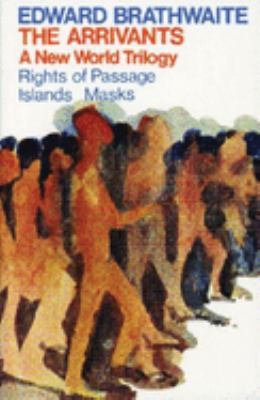
Book 46, Barbados: "The Arrivants: A New World Trilogy" by Edward Kamau Brathwaite

Rather amazing that Brathwaite and Derek Walcott are of the same generation (seriously, they're born four months apart in 1930), yet they have such radically different strategies for excavating and mythologising their cultural heritage in their most famous books.


In Omeros, Walcott's all lofty and epic with his terza rima and bombast, yet specifically ties everything back to the island of Saint Lucia; but here Brathwaite uses the language of the common man, bordering on slam lyrics, but dwells far longer on the pre-modern African settlements of Axum and Timbuktu and Volta and the emigrant communities in Brixton and Chicago and Paris than on Barbados itself.

It's a great book, though: in fact, I really dig the first two sections of the trilogy, Rights of Passage and Masks, surveying the grand scope of black heritage from drum-making to sweating in sugar and cotton plantations to standing in the shipyards and airports waiting to migrate. Less wild about the third section, Islands, which deals a little more specifically with Caribbean problems of robber politicians who sell their homelands to casino landlords and hotel magnates and cruise companies. But perhaps it was just my poetry fatigue?

Couple more notes. It's cute that all the poet's Afrocentrism only pushed him to change his name from Edward to Kamau after his trilogy's ultimate compilation in 1973 (and possibly after my edition was printed in 1981). And it's intriguing how the recurrent motif in the volume is Uncle Tom, of all figures.

Also, the Yoruba glossary at the back is woefully inadequate. What the hell's a poe? Who's Asase Yaa? What's bambalula bambalulai?


View Around the World in 80 Books in a larger map

Representative quote:

Drown the screams, shore
cool the lashed sore,
keep the dream pure

for we who have achieved nothing
work
who have not built
dream
who have forgotten all
dance
and dare to remember

the paths we shall never remember
agan: Atumpan talking and the harvest branch-
es, all the tribes of Ashanti dreaming the dream
of Tutu, Anokye and the Golden Stool, built
in Heaven for our nation by the work
of lightning and the brilliant adze: and now

nothing
nothing

Next book: Jacob Ross's Pynter Bender, from Grenada.

Saturday, July 31, 2010

Book 16, Peru: "The Time of the Hero" by Mario Vargas Llosa

Gah! Yes, It’s been a while since I made progress on the map, but I was out of Singapore, swamped with work, and then chose a 400-pager to complete.

I’ve read Vargas Llosa before: Who Killed Palomino Molero and In Praise of the Stepmother, both of which were good, but not thrilling. Still, he’s universally regarded as Peru’s greatest novelist (and I’d already read César Vallejo's Black Angels, so I couldn’t quite switch to the greatest poet), so I figured I might as well read one of his more acclaimed works – Death In the Andes seemed popular, but in the end I decided on the book that launched his career as a vital author of the Latin American boom (and got him in shit with the military government), The Time of the Hero.


And it’s really good. I didn’t take to it straight away: after all, it’s one of the malest books I’ve read in a while, set in the Leoncio Pradio Military Academy: all the savagery of teenage boys in a monosocial environment plus the pressures of boarding school plus the pressures of the military, a dog-eat-dog-then-bugger-a-chicken-to-death environment soaked in pisco spirits and cigarette smoke and blood; barely a sympathetic character in sight. Plus the stream-of-consciousness, who’s-in-first-person-now? narrative style is a little hard to follow.

But the story draws you in – Alberto the Poet’s twisted crush on the penniless girl Teresa and his weird power relationship with Arana the Slave and Jaguar, the head honcho of the dorm, who organised their collective resistance to the Year Fives when they were being hazed. And through a bizarre chain of events (I won’t spoil it for you), you end up not knowing which of the characters is the greater hero – which one of them, for all his rottenness, has the more admirable qualities that drive them to resist the system for at least one point in their lives.

Rather nice that I’m able to recognize the cities and ethnic differences they talk about after my trip to Peru this year: Lima, Callao, Puno, Juliaca, Arequipa, and the Japanese/Chinese/African/European/Indian mestizaje that happens in the society, yielding all sorts of racist comments that really aren’t the same as North American racism because it really all comes down to class in the end. Also interesting is the realisation of Faulkner’s profound influence on Latin America, how his Modernism was reinterpreted decades later for the rejuvenation of another section of world literature.

Worth the read. Unfortunately, there’s only one copy in stock at Central Lending. I’ll return it pronto.


View Around the World in 80 Books in a larger map

Representative quote: The chicken was on the ground, gasping. That peasant Cava, can’t they see what he’s doing with his hand? He likes to play with himself, but it’s dead, the Boa’s the one who gets a hard-on even when he’s marching. We’ve drawn lots, everything’s ready, screw her or we’ll screw you like the llamas in your village. Don’t you know a story? What if we get the Poet here to tell us one of those stories that make your cock stand up? But that’s horseshit, I can get a hard-on just by thinking about it, it’s all a matter of will power. What if I get a dose? What’s the matter, loverboy, what’s got into you, peasant, don’t you know the Boa is cleaner than your mother ever since he’s been screwing Skimpy? Where did you get those crazy ideas, haven’t they told you chickens are more sanitary than dogs?

Next book: Luis Sepulveda’s The Old Man Who Read Love Stories, from Ecuador.

Monday, July 19, 2010

Book 15, Chile: “Fulgor y muerte de Joaquín Murieta” by Pablo Neruda

Yessss!!! Finally in South America! (Though in the real world, I’m currently in Munich. How did that happen?)

I’m doing an obscure play by Nobel laureate Pablo Neruda in the original Spanish, not to show off my erudition, but simply because I picked up a second-hand copy in Brazil a few months ago, and I’d never finish it otherwise, despite the volume itself being so slim. Truth is, I have doubts about its validity, given that the story mostly takes place in California during the Gold Rush – Murieta himself was a hstorical bandit whose origins may not even have been Chilean, but Mexican.


And yet! Neruda’s piece is so full of patriotism that it hella qualifies. (Plus we’ve got a big opening section about the departure from the port of Valparaíso, a location the miners long for throughout the play – when they’re not talking about their own villages and districts.) And according to Neruda’s account, Murieta was a hero who retaliated to the gringo Americans’ constant lynching of Chileans and Mexicans – specifically to the murder and rape of his wife Teresa – by going on a rampage and slaughtering white guys and gals willy-nilly (that’s the “fulgor”, me hearties), before getting mowed down himself (that’s the “muerte”).

It’s a psychedelic trip – most of the play’s performed as an oratorio, with choruses of men and women in poetry, and for some reason Murieta and Teresa never appear on stage, portrayed only by their voices offstage, refusing to embody the great idols of this legend, until the final scene when Murieta’s decapitated head speaks to us from its resting place on Teresa’s tomb – and then the audience breaks out in pre-distributed song decrying the war in Vietnam (this is another 1960s piece) and how people of colour will overcome. Strange, considering that Chileans themselves are pretty white.

But there’s also surrealism – el Caballero Tramposo, a devious trickster figure, who steals everyone’s watches for the gringo establishment, and even the Galgos (gringos) themselves, who gather in secret to recite a catechism of how they’re uniting to keep the coloured folks at bay. Not subtle, man.


View Around the World in 80 Books in a larger map

And there’s also slapstick, with the hardened miner character of Tresdedos bumping heads with the customs official Reyes, who demands loads of paperwork only to decide none of this matches up to the prospect of gold, leaves his job, and spends the rest of the play (quite sensibly) moaning about when they’re going back to Chile.

Rather fun. Haven’t seen Neruda so political before – all we read is poems by him about how gloriously beautiful women are, or panthers, or artichokes, or socks.

I’ll read Isabel Allende another time. Seriously, though, I haven’t read a single work by her. Shameful.

Representative quote:
Canción masculine

Así como hoy matan negros
antes fueron mexicanos,
así matando chilenos,
nicaragüenses, peruanos,
se desataban los gringos
con instintos inhumanos
hasta que por la vereda
pasa un caballo de seda,
hasta que por los caminos
galopa nuestro destino
y como dos amapolas
se encendieron sus pistolas.
Quién les disputa el terreno
y quién de frente los reta?
Es un bandido chileno!
Es nuestro Joaquín Murieta!

Next book: Some novel by Mario Vargas Llosa from Peru.. Screwed if I know.

Friday, June 25, 2010

Book 9, New Zealand: "Owls Do Cry" by Janet Frame

Woot! Finally in New Zealand, with what's purported to be New Zealand's greatest book ever, according to this list.


And we're back in kickass-ville too: the strangeness and poetry of this book is Joycean, reminiscient of "Portrait of the Artist as a Young Man", only less academic, more democratic. Basic story is simple: four dirt-poor kids, Francie, Daphne, Toby and Chicks Withers, grow up exploring a rubbish dump near their home in the provincial town of Waimaru. Everyone looks down on them: they're covered with crud and Toby's epileptic.

Twenty years later, Francie's dead, Daphne's mad, Toby's actually functional as a blue-collar worker and Chicks is an upper middle-class housewife who worries about making intelligent conversation about classical composers and Picasso.


View Around the World in 80 Books in a larger map

But Janet Frame writes them all with spellbinding voices: in the midst of the most mundane suburban actions of riding the train or staring at mountains or deciding whether to make chocolate or coffee cake for the guests, this stream-of-consciousness flow of dreamlike images and symbols and bits of poetry - ah, this is where the post-colonial comes in, for the characters are hard at work learning and misremembering bits from the Maori Wars and the Bronte Sisters and WH Auden and Ariel's Song from the Tempest (hence the title: "In a cowslip's bell I lie;/There I couch when owls do cry").

And oh yes the evolution of New Zealand English, which writers have told us about: the reclamation beginning with words for plants: manuka, toi-toi, kauri. Also constant references to the thick pancakes called pikelets. I spent ages looking for the paragraph in the book where they talk about finding moa bones in the dump, but it was not to be discovered.

Thoroughly recommended. Unfortunately the Library didn't have it; my boyfriend Mohan had to nick me this copy from the NUS Library. Significant other FTW!

Now I also know where Lloyd Jones got his literary ancestors from when he wrote the also very NZ poetic novel "The Book of Fame".

Isn't my map irregular though? And I'd sincerely thought when I started out that I could hop straight from Australia to New Zealand to Chile. Quite a few more Melanesian/Polynesian excursions before we become Columbus, I'm afraid.

Representative quote: Then the limping woman whom the nurse addressed as Mrs Flagiron, spread a plastic cape over Daphne's shoulders and began to cut her hair until the floor was covered with hair, and Mrs Flagiron seemed not to know when to stop. Once Daphne put her hand up to feel how much was left, but Mrs Flagiron gripped her arm and thrust it under the cape.

- She guesses, Mrs Flagiron whispered to the nurse.

Daphne sat still then, waiting for the limping woman to finish. She thought, This woman is from Greece. No, she has come from the underworld. I can tell from her thick arms that she has rowed herself across many rivers of the underworld, snipping the hair from the floating bodies and collecting it in her stainless white cloth, and storing it in her home that has many many rooms, yet she is able to use only one room, and soon will have nowhere to live for every room is filled with hair. I know her. I know her.

Next book: Konai Helu Thaman's "Hingano" from Tonga.

Friday, June 11, 2010

Book 5, Papua New Guinea: "Two Plays from New Guinea: Cry of the Cassowary by John Wills Kaniku and Kulubob by Turuk Wabei"

It must have been amazing to have been young in the sixties. Never mind the Beatles and Woodstock and Stonewall and the Pill: I’m talking about decolonization.


View Around the World in 80 Books in a larger map

“Cry of the Cassowary” and “Kulubob” were both performed on the evening of 14 August 1969 in Goroka, Papua New Guinea, at Goroka Teachers College, by the College Players. They’re both works created and presented by young Anglophone Papuan intellectuals, caught between the worlds of native heritage and the wealthy, civilizing West.


“Cry of the Cassowary” describes a family in which educated children are alienated from adults – Sela, the mother, threatens her crippled son Pima with superstitions about shape-shifting lizards and skulls and witches, while her daughter Mebo retorts that she can wear her skirts as short as she likes and choose to marry whatever man she loves, white or black.

Then at night – a night of darkness so threatening that Wasa brings his knife out to guard against the evil – the cry of the cassowary is heard, and Pima dies. It’s unclear whose fault this is – that of angry, fable-spouting parents for ignoring him or for the young rebels for bringing about the wind of change. In a time like this, something has to be sacrificed.

“Kulubob” retells a Papua myth of the creator god – but is he a creator god? – Kulubob, arriving in the village with gifts of rain and sun and meat and galip nuts and breadfruit and mangoes. He leaves his younger brother, Manub, to take care of the land, and one day he returns, announcing that he’s found a bride (taken from a faraway tribe, as per tradition). Manub publicly denounces his brother, revealing that the bride is none other than his daughter Sagila – and Kulubob emigrates in shame.

The colonial element only pops up in an optional Scene V: centuries later,
a missionary appears in the same spot, his canoe laden with mirrors, axes, knives, cloth, bibles. The villagers herald him as Kulubob, and cry out for gifts – the founding of the cargo cult.

Implication: the colonists are a double-edged sword: one day, they will also try to steal your children. And one day, exile?

I’m being rather generous, really: both of these pieces end rather suddenly, without that clean feeling of satisfaction you get from a well-made play. In “Cry of the Cassowary”, there’s all this social commentary that suddenly gets cut short by the arrival of ominous night omens and death – no clear connections. In “Kulubob”, there’s no character development: a huge elaborate scene to illustrate Kulubob’s arrival and then some makeshift bits that lay down the plot of his Oedipus-esque epiphany (or did he know she was his niece all along? It’s unclear).

Still, I love the earnestness of the ideas being thrown around, and the celebration of what’s Papuan amidst the impeccable English – pidgin terms like kaikai (food) and maski (never mind); old wives’ tales of fireflies hovering over doorways. I’ve read plays like this in Singapore, like “The Moon Is Less Bright” by Goh Poh Seng and “A White Rose at Midnight” by Lim Chor Pee, works by young amateurs who're nonetheless intellectual pioneers of their people, bravely reclaiming colonial language to celebrate their own cultures.

Representative quote:
SELA:
You are lost. Stolen by the whiteman. You are not our children anymore.

Next book: James A. Michener’s “Tales of the South Pacific”, from… well, let’s say Vanuatu. But in fact it’s the New Hebrides: the area covered today belongs to a pretty wide range of nations and protectorates.