Showing posts with label memoir. Show all posts

Thursday, May 18, 2017

Book 170, Bulgaria: "The Physics of Sorrow" by Georgi Gospodinov

I had a few options for Bulgaria: the 1981 Nobel Prize-winning Elias Canetti (who didn't write about Bulgaria much, as far as I could tell); or Ivan Vazov, whose 1888 novel Under the Yoke is considered the greatest classic of Bulgarian literature.

However, I ultimately decided on someone more current, who also happened to be stocked in the National Library of Singapore: the poet Georgi Gosponidov. Surely, I thought, reading a book of poetry could be speedily done, putting me back on track for my round-the-world trek.

Alas, the book the library had 283 pages. And it's experimental. Is it a novel or a memoir or both? I dunno.


What I do know is that it's good. Gospodinov looks back at his life—he was born in 1968, stayed in village basements as a child because his dad earned too little on his veterinarian's salary, and witnessed as a young man the fall of Communist Bulgaria and the birth of a new globalised, capitalist nation—and he tries to find in his biography, his father's biography, his grandfather's biography, a meaning for the loneliness and sorrow that have haunted him all his life.

And in that basement he finds the Minotaur. A myth of the Greeks—who are of course neighbours to the Bulgarians—and who was not just a monster but also an abandoned child, a freak left to wander through a darkened labyrinth. He latches on to his grandfather's memory of a funfair full of sideshows in 1925, including (fictionally?) a young, abused Minotaur; he sees innocence in that vegetarian head and his lustful mother Pasiphaë who forsook him and the pages of classical authors who never once gave him words or empathy.

(Empathy is key to all this: he claims that as a child he immediately would go into spells where he would empathise so much with characters in stories, with voices, with animals, that he would tunnel into their lives and it would always be a long time before he could find his way back to his own body. Catatonic. Stopped happening when he was a teenager, which he regrets: not growing up and healing, but growing old and losing a special gift, a faculty of the imagination.)

His life's related in a nonlinear fashion, shifting from his meeting with his grandfather's Hungarian lover from World War II to his memories of burying time capsules and playing cowboys and Indians in the 1980s with the neighbourhood kids (did you know the East Germans made Westerns, but always made out the Indians to be the good guys?) and how the nostalgia for that has faded today, and his own flight from Bulgaria in 1995 after his countrymen attacked him for writing an op-ed about them being, according to a survey, the saddest place in the world, and wandering through the obscure cities of Europe, writers' festival after festival, his daughter being born, and himself growing older and foreseeing his death through his father's death...

Life as a labyrinth. And himself either the Minotaur or Theseus, determined to slay the monster.

It's strange how a writer's story of success ends up being one of sorrow as well (true to the title he considers the physics of it all, the infinite possibilities of the universe, God as a boson or a neutrino). And we've seen this strange way what's externally a good life is summed up with regret in VS Naipaul's A House for Mr Biswas, but the strangeness of this all seems uniquely Eastern European, a thing of Kafka or Gogol or Herta Müller.

The Eastern Europeans really have had an inheritance of the bizarre. I wish to learn from them. But alas, this is the last book from the region we'll be doing.

On to Southern Europe next!


Representative quote: It hurts right here, something down on the left, maybe it's my appendix.
Stop with the self-diagnoses, if you please. The appendix is on the right. There's nothing that could be hurting there on the left.
What do you mean nothing?
Just that. There's nothing there.
Well, it's precisely that nothing that's hurting me.

Next book: Hesiod's Theogony and Works and Days, from Greece.

Tuesday, February 28, 2017

Book 168, Transnistria: "Siberian Education" by Nicolai Lilin

Yup, we're doing another contested nation: Transnistria, aka the Pridnestrovian Moldavian Republic! The UN claims it's part of Moldova, and only three other contested states recognise it: Abkhazia, South Ossetia and Nagorno-Karabakh. (Lord knows if I'll be able to find literature from or about those nations.)

But you know what? I'm hella glad I tried to find an author from this country that doesn't even send delegates to Miss Universe, because Siberian Education is pretty damn amazing.


It's a memoir (with admitted creative licence) written by a young writer who grew up in the organised criminal society of Bender, descended from gangsters and other outcasts deported to Siberia during the Soviet Union. He describes its intricate culture, with all its codes of honour and formality about guns and crucifixes and taboos against speaking directly to cops and its own effing criminal language—a culture which makes rival gangs, such as the oft-maligned Black Seed, seem like barbarians in comparison.

There’s several chapters to this story, detailing the gifting of his ceremonial pike (switchblade) at the age of six, his harrowing journey into enemy territory on his thirteenth birthday, a stint in a filthy juvenile detention facility, a teenage mission into other neighbourhoods to destroy the perpetrators of the rape of a neurodivergent girl (he claims that his society always respected the crazy and disabled as God’s children)—and it’s not in strict chronological order because he keeps diverging into other memories and family legends and folktales before returning to the main thread, Arabian Nights style, so that the whole thing’s a series of nested matryoshka-style tales. It’s really incredibly well told.

…In fact, the whole thing may be a little too incredible, full stop. He does come across as a bit of an all-star Mary Sue, an excellent fighter with a natural brain for poetry and archaic religious Russian, not to mention his phenomenal skills as a tattoo artist (which are legit; Lilin runs a tattoo parlour IRL). And Donald Rayfield, a professor of Russian and Georgian, straight-up calls the whole thing "a fantasist's ravings". Huge factual holes are being found in Lilin's sequel to this book, Free Fall: A Sniper's Story, about his military service in Chechnya—and the odd thing is, Lilin replies to most of these objections with an admission that he made most of it up for literary effect.

So how much of the core of these tales is true? Maybe not much—he wrote these tales in Italy, in the Italian language, far from his hometown, and he says that the Moldovan invasion's destroyed the society he documented. So there aren't that many people around who can directly contradict him.

And told up—upon further Googling, I've discovered that the book was never translated into Russian (although it was into about 40 other languages) and has been dismissed by a Russian journalist as a hoax. And even after that hullabaloo,  a 2013 film was made. Now I'm starting to wonder if Lilin actually is Transnistrian.

Ah well, it's still a hell of a book. If nothing else, it's a tale of what happens on the fringes of Russian culture, making it clear that the former Soviet Union was never as united as it seemed, with huge rivalries between those from the western, Moscow and St Petersburg-dominated side and Georgians, Armenians, Ukrainians and—of course—the Siberians. Makes you wonder about that upcoming superhero movie, Guardians, with heroes from different former republics, including a bear-man from Siberia. Would they all really have been friends?


Representative quote: "And now tell me why we should trust those who have spent their whole lives killing our brothers, locking us up in prison, torturing us and treating us as if we didn't belong to the human race? How is it possible, tell me, to trust those who live thanks to our deaths? Cops are different from the rest of humanity, because they have an innate desire to serve, to have an employer. They don't understand anything about freedom, and they're scared of free men."

Next book: Herta Müller's The Land of Green Plums, from Romania.

Sunday, June 26, 2016

Book 165, Chechnya: "I Am a Chechen!" by German Sadulaev

I know Chechnya isn't a recognised state by any international bodies. But while Russia and the UN don't recognise self-determination, that's no reason I shouldn't.

And anyway, this book is amazeballs.


Interesting fact: German Sadulaev didn't even mention the Chechens in his first book, Radio Fuck. And why should he have? He was a lawyer in St Petersburg, writing in his first language, Russian. He passed as Russian; indeed, his mother's ethnically Russian.

But he was born in Shali, a village in Chechnya. And he only escaped the violence there because he'd gone off to study in Leningrad at the age of 16. From a distance, he watched his idyllic hometown descend into war and chaos, brought on by the onslaught of heartless Russian bombers...

It's hard what to make of the text, actually. The first few chunks are written as dreamlike memoirs, clearly using autobiographical material, but with tonnes of magical realism thrown in: he claims all these portents of madmen and bleeding cattle that foretold the destruction; empathises with the agony of the swallows who saw their nests bombed to bits (the souls of unborn children, according to Chechen tradition), associates the race of the Chechens with the kshatriyas who were expelled from India in the age of the Upanishads... yet always returning to the detail of the "I" whose biography corresponds with that of his own: half-Chechen, half-Russian, suffering from the survivor's guilt and the weight of traditional machismo that prevents him from weeping out his pain.

And as the book progresses, we get more into the realm of fiction: in "When the Tanks Awoke", he confesses to the common childhood fantasy of having a twin, which eventually develops into a tale of himself as two boys, Zelik and Dinka, one with a Russian father and a Chechen mother, one with a Chechen father and a Russian mother, playmates and rivals who eventually end up facing one another on the battlefield. Later, clear fictions: "Victory Day", about an old Chechen World War II Soviet soldier who beats up a Neo-Nazi in Lithuania; "Snuff", about a phantom lover in New Orleans.

But always the sadness, always the sense of exile, always the sense of a kingdom lost—not just the Shali of his childhood, but the Soviet Union that he grew up proud to be part of.

It's strange to be reading this as Chechen literature, really. He's from Chechnya but not part of it, able to separate himself from the horrors of the war. But his family has suffered through it, been nearly killed by the sniper fire; he's had to demand that Russian flight crew allow his paralysed sister the right to stay on a plane because Russians have only read the state media that claim only terrorists have been attacked, when in reality, it's everyone, all the innocents, all those who once believed they were one people.


Representative quote: In the combat report from the front I heard that during the battle of Urus-Martan the Shali tank regiment had been eliminated. An enemy formation. When Russians die, they talk of 'losses', or even say they've 'fallen'. When Chechens die, they describe them as 'eliminated'. Because Chechens are the enemy. I too am Chechen: the enemy. And when I die, they'll describe me as 'eliminated'.

Next book: The Collected Tales of Nikolai Gogol, from Ukraine.

Saturday, August 9, 2014

Book 154, France: "In Search of Lost Time, Vol I: Swann's Way" by Marcel Proust

Boy oh boy. I still can't figure out if I made a mistake with this one. I mean, I could've read an action-packed classic novel for this segment - Victor Hugo's The Hunchback of Notre Dame, Alexandre Dumas's The Three Musketeers, Gaston Leroux's The Phantom of the Opera - and no-one would've thought less of me for it.

But instead, I decided I had to go with the major work of world literature I was least likely to get around to reading otherwise. But the one I chose was only one volume of the seven-volume In Search of Lost Time, and not even the most acclaimed volume, either (which I believe is In the Shadow of Young Girls in Flower). 

Still, it is the one with the famous madeleine scene in it!


TBH, the book's not bad, if you know you're diving in for some experimental writing - you can put up with the long sentences and the endless introspection and the utter lack of plot, and enjoy the sketches of the ridiculous grandmothers and maidservants and aunts, not to mention the absurdly lovestruck M. Swann and his coquettish peacock of a lover/wife Odette, who may or may not be cheating on him, we have no idea. The most beautiful prose pops up in the section Names of Places, when he's reflecting on the many towns and landscapes he might have chosen to visit as a child had his health been better:

"...between Bayeux, so lofty in its noble coronet of rusty lace,w hose highest point caught the light of the old gold of is second syllable; Vitré, whose acute accent barred its ancient glass with wooden lozenges; gentle Lamballe, whose whiteness ranged from egg-shell yellow to a pearly grey; Voutances, a Norman Cathedral, which its final consonants, rich and yellowing, crowned with a tower of butter; Lannion with the rumble and buzz, in the silence of its village street, of the fly on the wheel of the coach; Questambert, Portorson, ridiculously silly and simple, white feathers and yellow beaks strewn along the road to those well-watered and poetic spots; Benodet, a name scarcely moored that seemed to be striving to draw the river down into the tangle of its seaweeds; Pont-Aven, the snowy, rosy flight of the wing of a lightly poised coif, tremulously reflected in the greenish waters of a canal; Quimperlé, more firmly attached, this, and since he Middle Ages, among the rivulets with which it babbled, threading their pearls upon a grey background, like the pattern made, through the cobwebs upon a window, by rays of sunlight changed into blunt points of tarnished silver?"

But I'm also rather lucky that I was concurrently reading David M. Halperin's incredibly insightful book How To Be Gay, that examines how there is a gay culture of irony and beauty-worship despite activist claims that this is mere stereotype. Halperin points towards Proust's work as an exemplar of his ideas - how, even in the early reaches of the 20th century, even in a work that does not explicitly declare its author's sexuality, we still have this tale of a terrible longing to be loved by one's mother (Proust's mum believed that over-excessive displays of love were unhealthy, and tried to restrict her warmth, clumsily) and the sheer camp surrounding the depictions of the absurd men and (especially) women of upper middle-class French society. Hell, even his childhood crush on a girl called Gilberte doesn't redeem him orientation-wise.

Nonetheless, I do think reading Hugo or Dumas would have been better for my writing. Another day!


View Around the World in 80 Books!!! in a larger map


Representative quote: The reality that I had known no longer existed. It sufficed that Mme Swann did not appear, in the same attire and at the same moment, for the whole avenue to be altered. The places that we have known belong now only to the little world of space on which we map them for our own convenience. None of them was ever more than a thin slice, held between the contiguous impressions that composed our life at that time; remembrance of a particular form is but regret for a particular moment; and houses, roads, avenues are as fugitive, alas, as the years.

Next book: John Glatt's The Ruling House of Monaco : the Story of a Tragic Dynasty, from Monaco.

Thursday, May 15, 2014

Book 149, Lithuania: "Beginning with My Streets: Essays and Recollections" by Czesław Miłosz


We’re at the last of the Baltic states – and the end of Northern Europe! Woohoo!

Now, I know what you’re thinking. Miłosz is a Polish poet – he wrote in Polish, lived in Warsaw (before his defection to the USA) and was a cultural attaché for Poland, for crying out loud.

But it turns out that he always identified as both a Polish and a Lithuanian. He was born in Vilnius, which he knew as Wilno, at a time when the city was under the Polish government. Polish-speakers and Lithuanian-speakers lived alongside each other in his youth (along with Russian and Hebrew and Yiddish speakers), attending different schools and participating in different communities. And the memory of that city haunted him throughout his entire poetic career.

Miłosz wasn’t an obvious choice, of course. Back in Singapore, I thought I was going to do Ričardas Gavelis’s novel Vilnius Poker; scanning WorldCat in Norwich I thought I’d do an inter-library loan for Selected Lithuanian Short Stories from the University of Essex.

But he was a Nobel Prize winner and one of the Righteous Among the Nations (he saved a bunch of Jews during World War Two), plus I’d never read anything by him before.

And there were loads of other Polish writers I could read for Poland. Why not choose this, a volume of essays named for his memory of his childhood in the boulevards of Vilnius/Wilno?


Well, the reason why not is because the book’s effing boring.

I don’t think I was the right reader for it – it seems to be for die-hard fans of Milosz’s poetry, who want every last scrap of wisdom from his mind, and so are willing to wade through esoteric monologues by him about obscure writers (Dwight Macdonald? Robinson Jeffers? Aleksander Wat?) just because they’re there.

And while the fragments of Miłosz’s poems scattered throughout the volume seem nice enough (I don’t quite grasp their transcendence, but that’s true of my relationship with many a great poet), his prose style is just so ambling and leached of any sense of humour or urgency or passion that I come away from it quite uncharmed.

Not that all the pieces here are without interest. You do get an awful lot of the texture of Vilnius/Wilno from the titular essay, “Beginning With My Streets”, and his dialogue with the Lithuanian poet Tomas Venclova. 

Details of his own life leak through in the various transcripts of interviews with him, in “A Poet Between East and West”, and “The Sand in the Hourglass” – his discomfort with Californian hippie mysticism in the ‘60s and ‘70s; his simultaneous comfort with his role as a university lecturer to the same young Californians; his childhood pathos upon reading a condensed volume of James Fenimore Cooper’s works wherein he saw Natty Bumppo age from being a young vigorous Deerslayer to an old man Leatherstocking, bereft of his friends and the wilderness he loved so well. Also his constant surprise when amongst Nobel Laureates, expecting them to be otherworldly higher beings, as he suddenly remembers that he is one himself.

And some of his literary musings are pretty cool – his insistence that Dostoevsky must have been influenced by Swedenborg (he notes that Svidrigailov from Crime and Punishment has a Lithuanian name). Plus his ruminations on the in-betweenness of culture for Central Europeans during the Cold War, caught between Russification and Americanisation.

Ah, but I suppose it’s his Nobel Lecture which is most moving and lucid. Go read it. In it, he considers this terrible tension in his role as a poet, wherein he desires to describe reality from an abstract distance yet with utter detail, rather as the hero of Nobel laureate Selma Lagerhof’s The Wonderful Adventures of Nils does when he flies above the earth. The brutality of the real world keeps getting in the way, he sighs – the horror of the Holocaust and the double horror that there are still those who deny it; the misery of exile and of the human rights crimes for whom dictators remain unpunished. “I hope you will forgive my laying bare a memory like a wound,” he says. “It is possible that there is no other memory than the memory of wounds.”

Ah, but I won’t leave you with just the pithy bits of Milosz. Here’s the end of his essay “On Creators”, which is both infuriatingly opaque and also inspiring with its last two sentences.


View Around the World in 80 Books!!! in a larger map Representative quote:

Some fifty years ago anyone who took a stand against ritual in praise of ritual, observing that, after all, it would lead only to sterility, to intellectual chaos, would have been labeled a reactionary, a defender of old-fashioned “content”. Alas, today one can prove to oneself experimentally what happens to the language of symbols and myths when it is deprived of its deepest reason for being and yet is honored as if nothing had gone wrong. He pursuit of a truth that is otherwise impossible to express used to be its raison d’être, and whatever names that truth might have borne, however much it may have been valued, a language that speaks to itself, with symbols and myths that mean nothing outside a particular closed system (a poem, a painting), gradually loses all its charm and receives its just deserts: indifference. The indifference of others – let us assume not of the creator himself. Thus, the result of the activity ceases to be its goal (for a result is in some sense objective and thus destined for others); the goal becomes the activity itself. It, too, is supposed to be rewarded by society.

“What then must we do?”
“Rethink everything from the beginning.”

Next book: Goethe’s Sorrows of Young Werther, from Germany.

Wednesday, October 16, 2013

Book 136, Jersey: "Menagerie Manor" by Gerald Durrell

During my primary and secondary school holidays, my English teachers had a habit of prescribing Durrell - and why not? Kids love animals, and a bit of light, classic British humour is always a delight. Never got round to reading him, though, so it was only when I conceived this project that I realised he was the founder of a zoo in Jersey; the very first zoo to have an interest in sustaining endangered species through captive breeding pairs, in fact.


The image above isn't of the copy I read, I'm afraid - I ended up with the UEA's mammoth compendium of Durrell's writings: My Family and Other Animals, The Bafut Beagles, The Drunken Forest, Encounters with Animals, A Zoo in My Luggage and The Whispering Land, as well as this baby. Didn't feel compelled to consult the other books - they're all about his growing up amidst wildlife in Corfu, or collecting creatures in Cameroon or Argentina.

But I might read 'em someday, The animal yarns here are loads of fun - little adventure tales about escaped tapirs, nail-biting stories of charismatic gorillas on the brink of death, blunder-after-blunder anecdotes of attempting to work with live reptiles and primates on TV (for some reason, he had to crate up his animals and send them to Bristol for the recording).

And yeah, it does make you want to visit. Singapore's zoo is often ranked as the best in the world, and the scenes in the Manor of des Augres aren't a hundred percent charming - there are cages and chicken-wire mentioned a-plenty. But this was back in 1959, when Singapore was still getting its own self-rule - Durrell couldn't even figure out the sex of his lizards, and everyone in Europe was still killing their New Zealand tuataras by putting them in tropical greenhouses. Makes you want to see how they've moved on - this book was written just five years after the zoo's opening; think how many more stories have bred since then.


View Around the World in 80 Books!!! in a larger map

I'll leave you with one of the more alarming descriptions of animal behaviour Durrell managed to catalogue, regarding that most loved of Singapore Zoo animals, the orang-utan:

Representative quote: It is unfortunate that, like many apes, Oscar and Bali have developed some rather revolting characteristics, one of which is the drinking of each other's urine. It sounds frightful, but they are such enchanting animals and do it in such a way that you can only feel amused to see Oscar sitting up on his iron ladder urinating copiously, while Bali sits below with open mouth to receive the nectar, and then savours it with all the air of a connoisseur. She puts her head on one side, rolling the liquid around her mouth as if trying to make up her mind from which vineyard it came and in what year it was bottled. They also, unfortunately, enjoy eating their own excreta.

Next book: William Shakespeare's Henry IV (Parts I & II), from the United Kingdom.

Tuesday, May 28, 2013

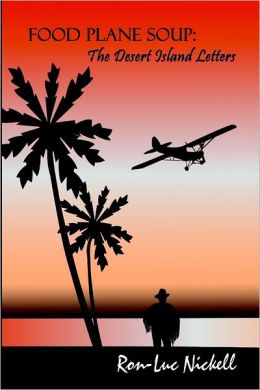
Book 125, Turks & Caicos Islands: "Food Plane Soup" by Ron-Luc Nickell

Once again, I've eschewed a domestically-written book: Charles Palmer's Living in the Turks & Caicos Islands: From Conchs [sic] to the Florida Lottery. Hard to access, and most indicators suggest that it's written very badly.

In its place, I've downloaded something from the Amazon Kindle shop: a memoir by a Texan guy who spent three months on the island in 2001. Sounds spurious? Perhaps so, but it's more than decent reading.


It's not unlike my own soon-to-be-published university memoir, Diary of a Stone Monkey. It's made up of a series of letters by a young Austin computer programmer who got retrenched in 2001, and ended up offering to be an assistant to a friend's retired dad on Grand Turk.

Nickell ended up staying on the island for three months. Rather than writing back about the pleasures of tropical living, he found himself gripped by culture shock. He was lonely, and hated the litter-filled streets and the noisy children and the bars and aerobics classes that played nothing but bad Jamaican remixes of 1980s American soft rock. He even got sick of the food - of course there was conch and coconut, but almost everything else had to be flown in on special market days, hence the title: food plane soup is the soup you make on the day the food plane arrives.

What makes this more than just a bag of whines is Nickell's writing style: a former film major, he's endlessly eloquent (and a little hysterical to the point of surrealism) in his acerbic descriptions of the world around him, And not in a neo-colonial way, either - he mocks himself, racked by flu and food poisoning and isolation, as much as he does the bad taste of Cockburn Town. And when 9/11 happens while he's off course, he's flabbergasted and disgusted at the US's draconian response (which would only get worse, over the course of the 2000s). Feels the tension in the air at immigration, when he finally checks back into the US, Greyhounding his way back home.

I'm still working on essays, so won't say much else. Brief and niche, but not a bad read at all, I'd say. His profile on Google+ suggests he's decent-looking, too, in a weird ageing hipster way.


View Around the World in 80 Books!!! in a larger map


Representative quote: My oft-lamented misgivings concerning the state of Caribbean Popular Music continue to amaze and confound me. In a revelation that surprises even me, I've found that the Cher song doesn't even come close to the aneurysm-invoking potential of the ubiquitous "If Loving You Is Wrong" remake. In fact, I find that I will happily take ten of the Cher songs over one listen of this never-ending travesty. And here's why: the Cher song is only played at the rec center. I cannot, however, escape the latter monstrosity. It's as if my ears have been forced open with clamps and granny's hearing aid megaphones jammed into each canal, whereby I'm subjected to a sort of Ludwig van/ultraviolence sensory onslaught and sent staggering out into the streets with the appearance of a ram that sleepily put his horns on backward one morning. The song oozes and slithers from every window, doorway, car stereo and bar loudspeaker on the island, seeping into my every pore and distressing the jangling nerve endings of my largest organ. Indeed, I am the unwitting victim in a "Conchwork Orange" nightmare. In my peripheral vision I spy a horse by the side of the road. Is she merely involved in the mastication of grass, or do I swear I see her mouthing along with the words? Suddenly, I get the distinct feeling I may snuff it.

Next book: Wendy Coakley-Thompson's Triptych, from the Bahamas.

Sunday, May 12, 2013

Book 123, Kiribati: "A Pattern of Islands" by Arthur Grimble

So it turns out that if I hadn't already covered Robert Louis Stevenson for the British Virgin Islands, I could've spent this past week reading his travel memoir In the South Seas. Alas! Instead I'm covering yet another British colonial administrator's jottings.


But I'm being facetious - once you get past the early bits about the Oxonian old-boy system of the colonial administration, and about cutting his teeth as an eager young 20something official on Ocean Island, we actually get to something quite remarkable: a thoroughly British man who engaged with the native lore of the Gilbertese to a degree unprecedented among those who didn't actually marry into the tribes. Even got himself ritually initiated into the Karongoa tribe through ritual tattooing without anaesthetic: a serpent going up and down his arms, a 15 year-old virgin on each side of him to scream out on his behalf while he manfully said it did not hurt.

And such stories - shark hunts, cursed stoves, roofs collapsing in on the family during hurricanes, ghost sightings (of both the dead and the not yet dead), mediums who could foresee the end of Japanese tuna trade, barehanded octopus fishing (which was particularly hard on Grimble, aka Kurimbo, as he had a phobia of octopi), fearsome feuds between Catholic and Protestant converts including an island-wide millenarian uprising which resulted in several deaths...

And as before, told with a considerable degree of respect towards the Gilbertese themselves; a condemnation of the heavy-handed missionaries who attempted to destroy their culture, dancing upon the shards of their ancestors' skulls; a trust that colonialism had improved things on the whole (they'd caused the land wars to cease, and Grimble quotes from a 94 year-old lady who is joyful that her great-granddaughters can travel the island without fear of robbery or rape), and that really, all shall be well, all shall be well.

There's also a clear message that colonial life wasn't a bed of roses - out in the islands, there was no fresh food; they had to subsist on breadfruit and tinned beetroot and the native cooks (only men were allowed to serve as cooks) were pretty awful, burning the rack of lamb the Governor brought specially, and making Grimble's wife Olivia weep. And having to build a house from scratch on Beru, when the previous Resident had made off with not only the furniture and the beds but even the verandah itself, and having the roof cave in on them and their three kids during a hurricane... There's even a wistful sonnet about the delights of the tropical sunset not being surpassed by the comforts of England, which is quite lovely.

Of course, this is all describing a fairly early stage of colonisation: during the 1910s, the Great War passing them by at a distance, rubbing shoulders with actual tribal kings and administrators that Robert Louis Stevenson met (he was a particular inspiration, and is referred to simply as RLS). Grimble went on to St Vincent, the Windward Islands and the Seychelles before going back to the UK and becoming a celebrated author and radio presenter, which was in the 1950s, when the empire was in an ineluctable stage of decline.

Given all those shifts of geography and fortune, how can we trust this text as anything genuine? But that's the point of non-fiction as literature, I suppose - the thing isn't the fact but the style, the voice, the way we use language to make things beautiful.

On another topic: one thing that isn't beautiful is my map. I miscalculated the location of my Kiribati marker (the country covers a huge swathe of ocean) so I'm criss-crossing myself, going northwards and westwards on my journey to the east.


View Around the World in 80 Books!!! in a larger map

But no matter - next week we'll be doing a big jump across the rest of the Pacific Ocean to the Americas. Toodle-pip, Oceania! It's been a blast!

Representative quote: So Tanoata had learned an age-old spell called 'The Spoiling of the Oven'. She had been finishing the third performance when I stumbled upon her. Here is a translation of the words she muttered:

I stab them north, I stab them west,
I stab them south, I stab them east,
The ashes of the oven of Mareve,
Spirits of fire, spirits of stone,
I stab, I confuse, I overturn.
Bring stinking, bring anger.
Be sick at the stomach, you Biribo, Birbo! Be enraged!
For the food of Mareve stinks and stinks:
It is tiiki - tiki - tiki

Next book: Dr Florence Goring-Nozza's One and One Is Two: Caribbean Thriller from the Cayman Islands.

Friday, April 26, 2013

Book 122, Niue: "Savage Island" by Basil Thomson

Every now and then, I'm intensely grateful for good writing. It doesn't need to be transcendent: something engaging in some way, something fun, is quite sufficient.

This week, I'd thought I was plum out of luck as I was flipping through an epub version of W.G. Lawes of Savage Island and New Guinea, a miserable hagiography of an early missionary in the Pacific, published in 1909 by the Reverend Joseph King. The title had sounded like a swashbuckler's story - how was I to know it'd be so long and dull? 

I was halfway through when I decided to ditch the bugger and turn over to this other virtual archived text, dating even earlier, to the year 1902:


And boy oh boy, I'm glad I did. Basil Thomson was a civil servant with the Colonial Office - in fact, this book describes an official visit to Niue to arrange for its formal annexation as part of the British Empire, as well as a stop at Tonga to formalise its status as a British Protectorate. But he was also a professional writer, and consequently he knew how to render his descriptions of exotic realms so amusing that even an ardent postcolonialist like myself is delighted at his words.

You see, unlike Rev. Joseph King, Thomson actually accords individual personalities to the people of the Pacific. Of course, he's laughing when he describes the fashion for fatness among the women, and King Tongia's pompous folly in dressing himself in hoop skirts and military hats - a flavour of that half devil and half child colonial mindset of the time. Yet he also acknowledges that these guys have a culture, and real motivations for what they do - e.g. the king had no small talent for being able to convince the elders that they needed a king at all after no-one had occupied the role for 80 years...

Of course, one of the reasons Thomson can afford to make light of the situation is that everything's peaceful. I hadn't known much about this side of colonial history: how some countries would, of their own accord, join the British Empire for the sake of protection, to avoid more destructive invasion and exploitation by the Germans or the French. This is why Tonga, for instance, has been able to hold on to its royal family, one of the few surviving systems of monarchy in the realm.

And then the whole matter of being modern - how these Pacific people, who had been part of a freaking Stone Age civilisation just a couple of generations ago, were now aware of the greater world around them, were consuming its cultural artefacts (Christianity, icons of Queen Victoria, whom they called Vika) and even building themselves Western-style houses. And then their participation in world trade - the Niueans are characterised as the most hardworking of Polynesian races, being actually eager to work overseas, to the detriment of their local industries of growing coconuts and weaving hats out of pandanus leaves. (Seems they've done pretty well for themselves since then - ten years ago, they became the world's first nation to be completely covered by free Internet wifi.)

Add to this the usual staples of colonial travel memoirs: documentation of the flora and fauna (they had crazy plagues of flies and hornets), some notes on national custom and myth (oral history for Niue only goes back 500 years, suggesting that they split off from some other island civilisation before then). Some notation of the music and dance of the islands, too, before a rather abrupt ending.

But once again, I'm bloody glad that this peripatetic journey is bringing me to books that are actually worth digging up and reading. It's not just about going around the world: it's about not having a miserable time doing it.


View Around the World in 80 Books!!! in a larger map

P.S. Why "Savage Island", you ask? Seems that when Captain Cook visited in 1774, the Niueans were one of the few Pacific peoples to refuse to engage in dialogue with him, answering him instead with spears and darts. Smart folks!

Representative quote: "The procession was headed by a dozen men in slop clothes and villainous, billycock hats set at a rakish angle. They all carried spears and paddle-shaped clubs in either hand, and a similar rabble brought up the rear. In the middle of this grotesque bodyguard walked the king and queen, both in petticoats, as befits the sex to which they belonged, for if the queen was a young woman, the king was assuredly an old one. To their united ages of ninety-four His Majesty contributed seventy-six, but what he lacked in youthful elasticity he made up in con- descension, for she had been but a beggar-maid or what corresponds therewith in Niue, where beggary is unknown when he had played Cophetua to her a few months before our visit. She wore a wreath of roses, he the soldier's helmet with the cock's plume, which was all that the officious Samoan teacher would leave him of his military uniform, and from which he refused to be divided, although it assorted ill with his petticoat. To tell the brutal truth, His Majesty was unsexed by the garments that had been chosen for him, and his appearance justified the remark of a friend who, holding the photo- graphs of Their Majesties in his hand and con- fusing them, exclaimed, "Why, the queen's got a beard!"

Next book: Arthur Grimble's A Pattern of Islands, from Kiribati.

Saturday, February 2, 2013

Book 115, Micronesia: "The Island of the Colorblind" by Oliver Sacks

Got an extension on my playwriting project! So I don’t have to feel absolutely guilty about updating here. FYI, we’re now moving into the territory of the subaltern who cannot speak: a region where there are incredibly few internationally available books actually written by citizens/residents of the countries described. 

This, of course, is problematic, but for now I’m going to revel in the opportunity to write about Oliver Sacks, famed neurologist and author of classics such as The Man Who Mistook His Wife for a Hat. (I haven’t read any of his other books, mind you – just read about them on Boing Boing. But I’ve watched his TED talk!)


Seems I oughta read his other books. Sacks is one of those effortlessly eloquent British science boffins who’s not only passionate about his field but about life itself, and the words we use to describe it – in his preamble to this account of his neurological research voyages to the Pacific, he details his early love for explorer narratives: Captain Cook, Magellan, Dampier, Melville, even Professor Challenger and Dr Moreau.

There isn’t even that much science stuffed in here, especially in Book I, which involves his trip to the island of Pingelap in Micronesia, where a 19th century tsunami has left an island inbred enough to harbour a significant population of achromotopes (folks who are completely colourblind, not just the common red-green condition. Only rods in their retinae, no cones).

Easy enough to understand – the story therefore focuses on the pleasures (and occasional displeasures) of flying towards and living on this isolated tropical isle of imported spam and phosphorescent algae; also an unofficial anthropological study of what it means to be an achromotope (they call it “maskun”), aided by the experiences of Knut Nordby, a Norwegian psychologist and fellow achromotope who gasps in delight at finally finding his own tribe, as it were: a population of people who grow up understanding the condition of being oversensitive to light yet being mentally acute in every other way, able to spy the dimmest stars and night and tell which bananas are ripe, not from the colour, but from texture and smell.

There’s more science stuff in Book II: Cycad Island, which talks about a separate trip to Guam to investigate a form of quasi-Parkinson’s disease called lytico-bodig, whose cause has not yet been fully determined (though there’s a high chance it’s to do with eating food baked from the seeds of the cycad plants, which grow in abundance). Because of the medical mystery remaining here, there’s lots of explaining to do.

Consequently or nevertheless, it’s Book I: The Island of the Colourblind that’s more joyous to read – after all, it’s about a community of people who’re technically physically disabled but have little trouble rising above this, versus a story of old folks randomly going paralysed or catatonic (don’t worry too much: no-one born after 1962 seems to get lytico-bodig).

Wonderful little segue as well, when Sacks leaves Pingelap for the larger Micronesian island of Pohnpei, where he and his friends explore the thousand-year old ruins of the civilization of Nan Madol, which I only learned about last year from the forum discussion pages of Civilization V, and how it makes him consider:


Never heard of any of these before. How amazing, no, to excavate these obscure histories? Moments like these, the world seems so fantastically big.


View Around the World in 80 Books!!! in a larger map

Representative quote: Knut took out the cowrie necklace which Emma Edward had given him on Pingelap and, turning it over and over in his hands, started to reminisce about the trip. “To see an entire community of achromats has changed my entire perspective,” he said. “I am still reeling from all of these experiences. This has been the most exciting and interesting journey I will ever make in my life.”

When I asked him what stayed in his mind above all, he said, “The night fishing in Pingelap… that was fantastic.” And then, in a sort of dreamlike litany, “The cloudscapes on the horizon, the clear sky, the decreasing light and deepening darkness, the early luminous surf at the coral reefs, the spectacular stars and Milky Way, ad the shining flying fishes soaring over the water in the light from the torches.”

Next book: Jonathan M. Weisgall’s Operation Crossroads: the Atomic Tests at Bikini Atoll, from the Marshall Islands.

Friday, January 25, 2013

Book 114, Palau: "Falling Blossoms" by Hiroshi Funasaka

Really shouldn't be wasting more time on my blog, given that there's still a script and several articles and a lesson plan I should be working on. But this reading list does give me direction, dammit, and those directions take me in awfully surprising places sometimes.

F'rinstance, I can't find a native author from the nation of Palau (independent in 1994, bitches!). But I do know that it's the site of one of the most horrific battles of the Pacific War, one in which the Japanese - rather than other Asian races - ended up doing the most suffering.


There are already established popular history books looking at this war from the American perspective. But who knew that Singapore had published a translation of a Japanese perspective - with a foreword from Yukio Mishima, no less! Seems Hiroshi Funasaka was Mishima's kendo instructor - even gave him the very sword that Mishima used to commit harakiri in 1970.

This book was first released in 1965 as 英霊の絶叫 (Eiri no zekkyo), which actually translates into "scream of remembrance". Indeed, it's this very angst, the rawness and bloodiness of the account that probably drew Mishima to the material. "This is not a novel, nor a literary work, nor even a kind of autobiographical record," he wrote. "It is the manifestation of his cries, the roar of his life proclaiming a long unnoticed reality.

We begin the story with Funasaka's visit to the island of Angaur in 1965, discovering the bones of his comrades still clutching helmets and swords and the flag of the rising sun - then back to 1944, when the Americans are attacking their base on the island while the soldiers strengthen themselves by singing songs of the sakura while the coconut trees around them explode with napalm and machine-gun fire. Over the course of the battle, Sergeant Funasaka gradually loses almost all of his men but three, then loses the functions of his legs and his right arm, then loses even those three comrades, and lies starving and dying of thirst and heat in a cave with the other Japanese, still loyal, still angry, still deadly: able to launch katana and pistol and grenade attacks on American soldiers by crawling up to them through the bushes.

It's awful stuff. And not just because of the gore - the Japanese soldiers are so hungry, they eat the maggots from one another's wounds - but because of the depth of the indoctrination; how Funasaka recounts his drive to exterminate the Americans from the island, regardless of their superiority of numbers and resources and firepower and technology, just because he believes it is shameful to survive, not to return with his friends as ashes in Yasukuni Shrine. (This stuff's narrated in the thick of it, so it's hard to tell till a few paragraphs later that this is an ideology he's actually abandoned now.)

But the hero of the story - at least according to Funasaka - is Corporal Forrest Crenshaw, the American GI who takes care of him after he's captured as a POW. A former truck driver, Crenshaw learned to speak Japanese in the barracks and made a concerted effort to reach out to this guy who was obsessed with accumulating enough matches to go out in a huge suicide attack, trying, trying to bridge their cultures without obligation. The story zips between past and present, so we see them still at loggerheads 20-somethings in one paragraph, and genteel successful 40-somethings visiting the shrines of Kyoto in another. And still trying to bridge differences, to make their ideals understood.

According to this text, Funasaka actually converted to Christianity in 1972 - Crenshaw had bugged him to accept the defeat of Japan as God's will - and I can't help noticing that this was seven years after the book's initial release and two years after Mishima's act of sepukku. Could Mishima have been inspired by the spirit of bushido in this book, missing in capitalistic Japan - and could Funasaka have been driven by this terrible action to absolutely repudiate his culture, turning instead to a foreign god to sever his connection to the Yamato spirit?

Idle speculation. Seriously, though, this book should be put back into print - a wonderful comparative resource for war buffs.


View Around the World in 80 Books!!! in a larger map


Representative quote: I am so close to death, my body is broken and filthy, I thought, but at least I should die with a clean heart. Hana ga sakura, minyen wa bushi. (A warrior among men is like the cherry blossom among flowers.) These are words which I love. Up to the moment I die, I want to live courageously, with a heart free from fear. This is the Way of the Warrior - to give one's life selflessly in the line of duty. I completely believe this. I was going to have to ignore the fact that I was going to die dirty, starving and full of bugs.

Next book: Oliver Sacks's The Island of the Colourblind, from Micronesia.

Wednesday, December 26, 2012

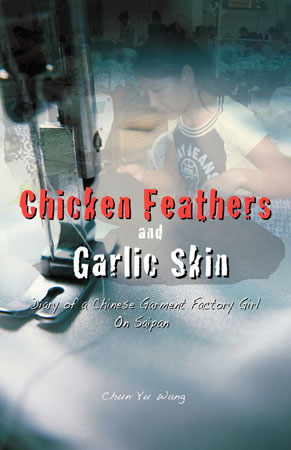
Book 112, Northern Mariana Islands: "Chicken Feathers and Garlic Skin" by Chun Yu Wang

Happy Boxing Day! Oh, I know it's still Christmas for some of you guys in the Western Hemisphere, but I'm well in the East, both physically and literarily. In fact, I've drifted all the way out to the Pacific, back to Oceania, where there's an obscure US territory called the CNMI, full of Chamorro-speakers, known primarily for its nearby trench.   


What most folks don't know is that the biggest island of the Marianas spent the first decade of the 21st century trying to get into the industrial age, importing loads of low-cost Chinese and Filipina women to work in garment factories so they could turn out Osh Kosh B'Gosh products printed "Made in the USA".

Hence the story above: a true-life tale of a 25 year-old Wuxi woman who went to Saipan to spent nine years of her adult life breaking her back over sewing machines. It's a weird kind of memoir: one of those situations in which a guy tries to make the subaltern speak (the initiator and editor of the book is the Jamaican-American-Saipanese journalist Walt F. J. Goodridge).

But Wang (yes, her surname is Wang, not Chun) is no hick either: she left her video-game playing husband in her home country because factory work in the Marianas was marginally better-paying, and took enough English courses to be able to translate her Mandarin manuscript to Goodridge, one-to-one.(He was fascinated by the Chinese idioms she used - the title, of course, is a transliteration of 鸡毛蒜皮 - even though these sound a tad hackneyed, even clichéd, to bilinguals.)

Frankly, the book isn't a must-read. It's an interesting look at the world of contemporary Chinese migrant labour, showing their aspirations and their sweat and their abuse from crooked overseers and their losses from burglars and accidents at home and worthless husbands and cops who claim they'll get them a green card and then disavow ever having received any payment.

Of course Americans are shocked by the suffering. But as a Singaporean, who's descended from and surrounded by migrant Chinese labour, I'm often thinking, "Meh. I've heard worse."

Which is horrible of me of course - recent events have thrust these marginalised workers into the spotlight, and we have to do something about it, if only to show that we're a society that treats people with humanity. But specifically regarding this book: Wang had her own home, free English lessons and the ability to quit her nasty factory jobs and search for new (usually equally bad) ones. Blue-collar foreign workers in Singapore just don't have those rights.

The interesting thing about a situation like this is that it shows how the oppressed masses aren't necessarily just victims. Wang and many other workers protest, walk out, steal and shag around to get what they want. And even when all the factories close (towards the end of the 2000s, costs rose and competitors like Vietnam became more attractive), Wang and her sisters realised they wanted to stay on, because they'd experienced freedom from their families and their obligations on this tiny, tropical island, and even if their sons were waiting for them at home, the only way to live for themselves was to be bad mothers, staying alive in the foreign sun.

Also - unrelated to workers' rights - one does get the sense that Wang isn't a particularly nice person. In her home, and at virtually every workplace, she's fighting with people, she's dissatisfied. Wherever you go, there you are, as they say.


View Around the World in 80 Books!!! in a larger map

Representative quote: Little by little, over the years and because of my trusting and kindness, I have lost most of my money. In all the years I worked, and all the money I earned, I accomplished nothing. In China, we would say, I added frost to snow. Adding frost to snow means "engaging in a futile, meaningless action that adds no visible benefit." That's what all my years of work on Saipan have been.

Next book: Tanya Chargualaf Taimanglo's Attitude 13: A Daughter of Guam's Collection of Short Stories, from Guam.

Thursday, December 20, 2012

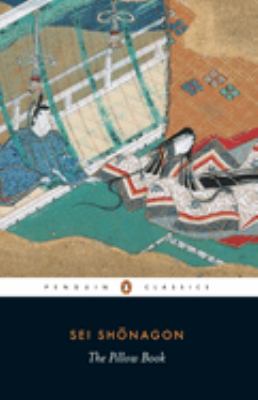
Book 111, Japan: "The Pillow Book" by Sei Shonagon


I’m back in Singapore! ILGA and the Scandinavian winter were amazing, consciousness-expanding experiences – I’ve written about some bits of ‘em on the ILGA Blog, and I might upload my e-mails to my folks to my personal site, The Paradise of Flowers and Fruit. Doing this project turned out to be pretty useful for socialising too - if I met a guy from Samoa, why, I could just mention that I'd read Albert Wendt and we'd have something to talk about straight off.

As for The Pillow Book, oh my: it took me all holiday to read. Surprising, considering how lightweight it is as a text, but Kindle for Mac had me clicking the screen all the time for the endnotes – it’s not a conducive medium to skimming at all.

But it was rather nice, absorbing these Japanese aesthetics of nature and seasonal change while trundling through the snow-covered mountainscapes of Norway. As much as Sei delights (this is a word used often) in the floral colours of court dress, she’s also in love with the images of winter: the snow on a gentleman visitor’s cloak, a lady holding a lighted coal to a letter to read it in the darkness.

Much has been made of the lists in this book – refined and elegant things, things that make your heart beat fast, things that make you nostalgic – but as translator/annotator Meredith McKinney notes, the literary form was quite established by 994, when Sei received the gift of paper which formed The Pillow Book. In fact, she deviates from standard lists, distracted by personal memories and commentaries.

And so much of this text is made of memories: little episodes in court that show off the pageantry of Emperor Ichijo and Empress Teishi, that are evidence of her wit as she bests the male courtiers in their games of quoting the Chinese classics – though a refined woman was not supposed to be able to read Chinese; thus her exhibitionism was necessarily veiled by sly self-effacement.

And what a strange world for women this was: where it was proper for court ladies to remain behind screens when addressing men, yet extra-marital affairs were not frowned upon. (A disproportionate number of these East Asian texts I’m reading are by women; have you noticed?)

Of course the whole work’s made more poignant because you know this gilded world was not to persist: Teishi fell from favour and died two days after childbirth, after which Sei left the court and by tradition died an impoverished crone; a couple of centuries later and the empire was transformed into the wartorn battlefield of The Tale of the Heike.

But for a while, this beauty, this perfection. And how grand that these moments of delight were captured well enough to remain on the shelf of world literature, perennial amidst the changing seasons.


View Around the World in 80 Books!!! in a larger map

Representative quote: 
[71] Rare things – a son-in-law who’s praised by his wife’s father. Likewise, a wife who’s loved by her mother-in-law.

A pair of silver tweezers that can actually pull out hairs properly.

A retainer who doesn’t speak ill of his master.

A person who’s without a single quirk. Someone who’s superior in both appearance and character, who’s remained utterly blameless throughout his long dealings with the world.

You never find an instance of two people living together who continue to be overawed by each other’s excellence and always treat each other with scrupulous care and respect, so such a relationship is obviously a great rarity.

Copying out a tale or a volume of poems without smearing any ink from the book you’re copying from. If you’re copying it from some beautiful bound book, you try to take immense care, but somehow you always get ink on it.

Two women, let alone a man and a woman, who vow themselves to each other forever, and actually manage to remain on good terms to the end.

Next book: Chun Yu Wang's Chicken Feathers and Garlic Skin: Diary of  Chinese Garment Factory Girl on Saipan, from the Marianas.