Showing posts with label caribbean. Show all posts

Wednesday, June 5, 2013

Book 126, Bahamas: "Triptych" by Wendy Coakley-Thompson

Didja know that one of Hemingway's posthumous novels (he was working on it when he died) is partially set on the island of Bimini in the Bahamas? Alas, Islands in the Stream is only available in the National Library's reference section, so I ended up going with full-on chick lit.


Wendy Coakley-Thompson was born in the US and works in the US, but she's ancestrally Bahamian, and spent a bunch of her childhood there. In her foreword, she talks about reading Robert Wilder's The Wind from the Carolinas, and yearning to read more fiction set in the Bahamas. "Little did I know that I would have to write that book myself!" she giggles.

And let's be frank - this isn't great literature. It's escapist writing. All the characters are Mary Sues: the Cuban hospital financier Jonathan Cruz, his gorgeous Bahamian surgeon wife Alexandra and his Afro-Cuban-Canadian psychology professor cousin Timothy Lamb. All wealthy professionals in their 40s or early 50s; Tyler-Perry-esque people of colour. All religious and (trying hard to be) virtuous. All living the life in the tropical paradise of Nassau. All of them ridiculously good looking, more so in middle age than in their youth, with crazy sex drives to boot.

So no, I'm not getting much of an insiders' view of the Bahamas (although people do seem to be pretty well off there: it's the second-highest Caribbean nation on the Human Development Index, after Barbados). A few mentions of Conchy Joes and fish stew and seagrapes and androsia and Camp Discovery. Not great prose, either - very transparent, needy, black and white. 

Was actually tempted to stop reading and head over the library's reference section, but then the story started to grip me a little. It's a sappy business, about Jonathan getting a brain tumour, and not being able to get it up anymore, and then letting his cousin sexually satisfy his long-suffering wife because he can't anymore. It's all described with lush urgency, and Tim actually deflowered Ally when they were in their teens, and they're longing for each other anyway, and there's a huge pot-fueled threesome (one realises that Coakley-Thompson chose "triptych" because it was a classier way of saying "threesome"), and then people start dying and crying, et cetera, and then Tim and Ally shack up in the end. That kind of story, but with the characters feeling bad about all the moves they make, beating themselves up religiously, but doing them anyway, because hey, they're red-blooded Caribbean middle-aged people, and they gotta bone.

Chick lit, like I said. But there's nothing wrong with a book like this existing. My only big problems are with the fact that Ally, a fully qualified surgeon, believes in homeopathy, and that there's no real justification for Jonathan never straight up *telling* her that he's fine with her bonking on the side. Oh, and maybe there's a little too much drama in the characters' background (rape! kidnapping! baby murder! a perfect wife killed by a car crash!).

And that's it for the Caribbean! Unless anyone can recommend a good book about Bonaire, Sint Eustatius or Saba. Now we're on to the rich developed world: North America... and, not long afterwards, Europe!


View Around the World in 80 Books!!! in a larger map

Representative quote: Before her mind could catch up, Tim leaned in and brushed his lips against hers. Every synapse in her body cried out for him. He kissed her repeatedly, and her pussy flooded. She felt her blouse opening and falling away. She felt her bra hooks opening, saw Jonathan toss her bra across the room out of the corner of her eye. Tim cupped her breasts, and she cried out. From behind hr, she felt Jonathan's hands pulling down her Capris and panties. She felt a draft of air across her bare buttocks. Instinctively, she raised her ass in the air. In her fog, she felt the tip of Jonathan's tongue invading her pussy, licking her vibrating clit with just the right pressure to make her lose it. Above her, she realized that Tim was stroking her head, her shoulders, her back, parting her ass cheeks to improve her husband's view. Tim's hands massaged her breasts, gently tweaking her sensitive nipples. The double onslaught was too much for her to handle. The orgasm snuck up on her, surprising her, shocking her raw. She collapsed face down onto the pillows, her breathing ragged into the soft cloth.


Next book: Ralph Ellison's Invisible Man, from the USA.

Tuesday, May 28, 2013

Book 125, Turks & Caicos Islands: "Food Plane Soup" by Ron-Luc Nickell

Once again, I've eschewed a domestically-written book: Charles Palmer's Living in the Turks & Caicos Islands: From Conchs [sic] to the Florida Lottery. Hard to access, and most indicators suggest that it's written very badly.

In its place, I've downloaded something from the Amazon Kindle shop: a memoir by a Texan guy who spent three months on the island in 2001. Sounds spurious? Perhaps so, but it's more than decent reading.


It's not unlike my own soon-to-be-published university memoir, Diary of a Stone Monkey. It's made up of a series of letters by a young Austin computer programmer who got retrenched in 2001, and ended up offering to be an assistant to a friend's retired dad on Grand Turk.

Nickell ended up staying on the island for three months. Rather than writing back about the pleasures of tropical living, he found himself gripped by culture shock. He was lonely, and hated the litter-filled streets and the noisy children and the bars and aerobics classes that played nothing but bad Jamaican remixes of 1980s American soft rock. He even got sick of the food - of course there was conch and coconut, but almost everything else had to be flown in on special market days, hence the title: food plane soup is the soup you make on the day the food plane arrives.

What makes this more than just a bag of whines is Nickell's writing style: a former film major, he's endlessly eloquent (and a little hysterical to the point of surrealism) in his acerbic descriptions of the world around him, And not in a neo-colonial way, either - he mocks himself, racked by flu and food poisoning and isolation, as much as he does the bad taste of Cockburn Town. And when 9/11 happens while he's off course, he's flabbergasted and disgusted at the US's draconian response (which would only get worse, over the course of the 2000s). Feels the tension in the air at immigration, when he finally checks back into the US, Greyhounding his way back home.

I'm still working on essays, so won't say much else. Brief and niche, but not a bad read at all, I'd say. His profile on Google+ suggests he's decent-looking, too, in a weird ageing hipster way.


View Around the World in 80 Books!!! in a larger map


Representative quote: My oft-lamented misgivings concerning the state of Caribbean Popular Music continue to amaze and confound me. In a revelation that surprises even me, I've found that the Cher song doesn't even come close to the aneurysm-invoking potential of the ubiquitous "If Loving You Is Wrong" remake. In fact, I find that I will happily take ten of the Cher songs over one listen of this never-ending travesty. And here's why: the Cher song is only played at the rec center. I cannot, however, escape the latter monstrosity. It's as if my ears have been forced open with clamps and granny's hearing aid megaphones jammed into each canal, whereby I'm subjected to a sort of Ludwig van/ultraviolence sensory onslaught and sent staggering out into the streets with the appearance of a ram that sleepily put his horns on backward one morning. The song oozes and slithers from every window, doorway, car stereo and bar loudspeaker on the island, seeping into my every pore and distressing the jangling nerve endings of my largest organ. Indeed, I am the unwitting victim in a "Conchwork Orange" nightmare. In my peripheral vision I spy a horse by the side of the road. Is she merely involved in the mastication of grass, or do I swear I see her mouthing along with the words? Suddenly, I get the distinct feeling I may snuff it.

Next book: Wendy Coakley-Thompson's Triptych, from the Bahamas.

Monday, May 20, 2013

Book 124, Cayman Islands: "The Firm" by John Grisham

So yeah, I tried reading Dr. Florence Goring-Nozza's One and One Is Two: Caribbean Thriller. First off: it's not a thriller: it's a dreary little self-centred memoir talking about how the Caymans were oh so nice before they became a rich international banking centre with no taxes. Second: it's incredibly badly written. Run-on sentences galore. No sense of self-awareness. What an idiot this author is - the doctorate, believe it or not, is from the Yale School of Divinity. Yep, she's a preacher. Sigh.

Of course I do favour the practice of reading from the national literatures of the nations I'm surveying, but this project is also about filling my brain up with the best lit the world has to offer. So why not a nice American thriller instead?


I haven't watched the 1993 film version of The Firm - rather mind-boggling to realise Tom Cruise has been an action star for twenty years now - but I have read Grisham's later novel The Runaway Jury, which I thoroughly enjoyed while in a backpacker inn, maybe in Tel Aviv or Brazil, not sure where.

The similarities between the two are striking. Thorough knowledge of the legal profession and practice, of course, but both also have young, handsome male protagonists on outlaw missions; invisible but kickass dames on the side, and a healthy distrust of big corporations - Runaway Jury is about a guy rigging a jury to convict a tobacco consortium in a class action lawsuit; The Firm is about a Memphis-based law firm that works for the Mob and ices every associate or partner that they think might blab to the FBI. Big money all over the place, destined to be brought down hard. Some relevance to the contemporary economy (which of course TV producers have attempted to take advantage of).

Honestly, one does develop a soft spot for Mitch McDeere early on in the book - a tall, athletic 25 year-old, born into poverty and crime but with the drive (and insomnia) to put himself through Harvard Law School, working in a convenience store to pay the bills, offered the job of his dreams with a six-figure salary and then suddenly discovering how deep in shit he is, with the firm (Bendini, Lambert & Locke is its name) blackmailing and surveilling and threatening to murder him on one side, and the FBI tailing and tantalising him and telling him that if he doesn't bend, he'll eventually be caught out and jailed forever, on the other. Oh, and he's got a pretty wife, too. Raises the stakes.

Some words about the movie, which I've read up about on Wikipedia. Tom is very pretty indeed in there, but I can't take him seriously in there after all the silly Scientology. Also, what irks me is how the ending's been made really happy, with all loose ends tied up and Mitch still able to practise law, not having broken his vow of client confidentiality, etc. The book's all about him as an individual on the run, breaking free of the bounds and escaping to... you guessed it: the Cayman Islands.

Nothing much to say about the islands themselves, except their status as a tax shelter, the snorkelling and diving, and I guess a bit of random info about the population of British whites and comfortable blacks (the book uses "Negros" on occasion, surprisingly) and pretty mulatto women and Jamaican Red Stripe beer and roast shark. Oh yeah, and the bit about the only KFC on the island catering to Americans, since no-one on the island actually rears any chickens - that was fun.

Some storytelling devices which I wouldn't have recommended my students, but I suppose I'd better digest them. It's not a bad thing to be able to write a bestseller, after all.

And I'm back in the Western Hemisphere again. Not an awful return trip, I suppose.


View Around the World in 80 Books!!! in a larger map


Representative quote: 
Avery wiped the sweat from his forehead. "This place has always attracted pirates. Once it was Blackbeard, now it's modern-day pirates who form corporations and hide their money here. Right, mon?"

"Right, mon," the driver replied.

Next book: Ron-Luc Nickell's Food Plane Soup: The Desert Island Letters, from the Turks and Caicos Islands.

Wednesday, February 9, 2011

Book 48, Trinidad and Tobago: “A House for Mr Biswas” by V.S. Naipaul

Yet another Nobel Prizewinner from the Caribbean. How the hell do they churn out so many? Been ploughing through this 642-page monster all through my promotional trip to London.


Truth is, I’m not a huge fan. At first I was in awe of how Dickensian it was: the way Naipaul paints his characters in a simultaneously comic and tragic light, with that air of distance – Mr Biswas is named Mr Biswas by the narrator even when he’s a newborn, having his ill fortune told by the pundit.

But as the book goes on, the tragedy turns into farce. Biswas is a Born Loser, failing as a son, failing as a trainee pundit, failing as a husband (and really, no matter how obnoxious the Tulsi family is, his surliness to his benefactors and abuse of his wife is inexcusable), failing in half his jobs as well (though he’s okay as a journalist and sign-painter and just mediocre as a civil servant), also failing as a buyer and builder of houses, which is the whole point of the book: owning a house of one’s own, where one can die with some dignity.

What’s odd amongst all this depressing fuckuppery is that Biswas actually improves his material goods and status over the course of his life: he starts out as a plantation worker’s barefoot son and ends off as a journalist who has his own place, never mind that it’s rickety and it’s left him 4,000 bucks in debt. Is Naipaul saying that development doesn’t count for that much? Or is the idea of the flawed house of one’s own an analogy for Trinidad’s independence (achieved one year after the publication of the book): a mitigated triumph, purchased at unreasonable cost but to be cherished nonetheless? Or maybe it’s just biographical: according to the Wikipedia entry, a lot of it’s based on the life of Naipaul’s own father.

I guess it’s still amazing that a book from Trinidad was able to break into the world market all the way back in 1961. Aside from that, I can’t say it’s worth your time.


View Around the World in 80 Books in a larger map
Oh boy, but that's the entire Caribbean archipelago finished and done with! Now back to South America.

Representative quote: How terrible it would have been, at this time, to be without it: to have died among the Tulsis, amid the squalor of that large, disintegrating and indifferent family; to have left Shama and the children among them, in one room; worse, to have lived without even attempting to lay claim to one's portion of the earth; to have lived and died as one had been born, unnecessary and unaccommodated.

Next book: Rómulo Gallegos's Doña Bárbara, from Venezuela.

Friday, January 28, 2011

Book 47, Grenada: “Pynter Bender” by Jacob Ross

I’ve just touched down in London, where I’ll be promoting my book GASPP (come to my events!) The past week’s been mad, but being compulsive about this whole project, I did manage to polish off this 452-page tome before I left.


It’s a weird book. It’s got the standard tropes of a Caribbean postcolonial novel: dialect, voodoo, politics, an intelligent young person, strong mothers and absent fathers. And yet it’s utterly unlike them in terms of style – it’s dreamlike, rather, giving you the impression that you’re observing events from a great, unfathomable distance while being quite intimately connected with everything that’s going on.

Pynter Bender’s the smart kid in question, and he excels in school and is brave in the resistance and is handsome enough to have any girl he likes of course, but his secret talent is hard to pin down – born blind but with sight restored via Santay’s healing magic, he perceives things before anyone else does, they call him Jumblie Boy, but that’s hardly all there is to it. He’s filled with an undying anger towards the world; he’s utterly unafraid; he has none of the human weaknesses that should make a character tender.

He’s intense. And yet he has no real idea where he’s going. The setting’s similarly uncertain – not sure if it’s really Grenada or some made-up isle, since I can’t find the villages of Old Hope or the town of San Andrews on Google; the argot contains words from French and Spanish as well as English; don’t know what civil war’s going on, surely the American military intervention should’ve been mentioned; I’ve read Audre Lorde describing its devastating effects in her essay Grenada Revisited: An Interim Report.


View Around the World in 80 Books in a larger map

And the family – the society, really – it’s a matriarchal dystopia. The women don’t expect their husbands to stick around for life. And sure they support and feed each other, but they also hurt one another, they make attempts on each other’s life, they go mad and have to send each other to the asylum.

And the bucolic landscape is also the oppressive canefields which the women work in, bearing heavy loads, never mind if they’re pregnant. Which is also the source of beautiful sugar water for the manufacture of rum.

Okay, enough of all that. Need a nap to get over my jetlag and sniffles.

Representative quote:
He stood on the water’s edge and shouted down the long leaf gloom, shouted Birdie’s name and then his Uncle Michael’s. He said everything he wanted to say to Deeka Bender, including what a bad-minded, wicked so-an’-so she was. He called John Seegal Bender a son-a-va-biiitch and liked the sound of it so much he said it eight more times. And still he wasn’t satisfied, so he told John Seegal what a foolish fool he was to walk, and lose ‘imself in swamp mud, and leave his wimmen with so much don’-know-what-they-want-to-do confusion. He’d cackled at the dark ahead of him and stuck his tongue out at Old Hope, danced and stomped on the riverbank and dared the soft, wet mud to suck him in. then he’d called his father’s name and felt himself go quiet.

Next book: V.S. Naipaul’s A House for Mr Biswas, from Trinidad and Tobago.

Thursday, January 20, 2011

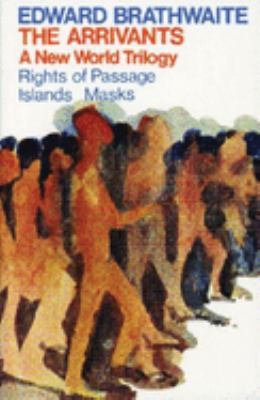
Book 46, Barbados: "The Arrivants: A New World Trilogy" by Edward Kamau Brathwaite

Rather amazing that Brathwaite and Derek Walcott are of the same generation (seriously, they're born four months apart in 1930), yet they have such radically different strategies for excavating and mythologising their cultural heritage in their most famous books.


In Omeros, Walcott's all lofty and epic with his terza rima and bombast, yet specifically ties everything back to the island of Saint Lucia; but here Brathwaite uses the language of the common man, bordering on slam lyrics, but dwells far longer on the pre-modern African settlements of Axum and Timbuktu and Volta and the emigrant communities in Brixton and Chicago and Paris than on Barbados itself.

It's a great book, though: in fact, I really dig the first two sections of the trilogy, Rights of Passage and Masks, surveying the grand scope of black heritage from drum-making to sweating in sugar and cotton plantations to standing in the shipyards and airports waiting to migrate. Less wild about the third section, Islands, which deals a little more specifically with Caribbean problems of robber politicians who sell their homelands to casino landlords and hotel magnates and cruise companies. But perhaps it was just my poetry fatigue?

Couple more notes. It's cute that all the poet's Afrocentrism only pushed him to change his name from Edward to Kamau after his trilogy's ultimate compilation in 1973 (and possibly after my edition was printed in 1981). And it's intriguing how the recurrent motif in the volume is Uncle Tom, of all figures.

Also, the Yoruba glossary at the back is woefully inadequate. What the hell's a poe? Who's Asase Yaa? What's bambalula bambalulai?


View Around the World in 80 Books in a larger map

Representative quote:

Drown the screams, shore
cool the lashed sore,
keep the dream pure

for we who have achieved nothing
work
who have not built
dream
who have forgotten all
dance
and dare to remember

the paths we shall never remember
agan: Atumpan talking and the harvest branch-
es, all the tribes of Ashanti dreaming the dream
of Tutu, Anokye and the Golden Stool, built
in Heaven for our nation by the work
of lightning and the brilliant adze: and now

nothing
nothing

Next book: Jacob Ross's Pynter Bender, from Grenada.

Friday, January 14, 2011

Book 45, St Lucia: “Omeros” by Derek Walcott

Epic poem FTW!

Oddly enough, I think I’ve heard Omeros being talked about more as a novel in verse, like Dorothy Porter’s The Monkey’s Mask, rather than a Homeric epic as its title obviously suggests.

Methinks the epic title is much more justly deserved: after all, the narrative line here is constellated and mysterious as only the laws of poetry would allow. The characters are humble in profession but are based on figures from the Iliad and the Odyssey, and the poet insistently claims these ebony descendants of slaves are the equals of the marmoreal Hellenes, and indeed they undergo spirit quests and epiphanies and ritual battles and are the most beautiful women in the world all the same.


(Yeah, we’ve had a stretch of boring covers these past few weeks.)

Truth is, I can’t quite match every character to its corresponding figure in Greek Myth: Achille, Hector, Philoctete and Helen are easy, of course, and Ma Kilman must be Circe and Maud Plunkett Penelope because of their witchery and quilting respectively.

But Ulysses corresponds to Seven Seas, Major Plunkett and the narrator himself, each of whom are wanderers of the globe: yes, Walcott intrudes in first-person, expounding on racism in Concord and imperialism in London before making it back to St Lucia to attend one of his own characters’ funerals. Good of him to intrude, really: not quite the self-indulgence you get in Vikram Seth’s The Golden Gate, but instead a kind of humility, recognizing the artificiality of him, a Dante-spouting globalised academic, daring to represent the subaltern mackerel fishers in their pirogues and village huts.

Oh, and the American tourists are the parasitical suitors of Penelope in Ithaca. Took me a while to figure that out.

Warning to those of you who’ll pick it up yourselves: the beginning’s mighty confusing, so give it time. You’ll be rolling with the maritime illogic of the poem in a few dozen pages.

And how nice that Walcott specifically sets his story in St Lucia, with all its geographical features intact, never mind that no-one’s heard of Castries and Gros-Îlet and Soufrière. Somehow the way a few other writers set their tales in generic or fictional localities depresses me a little. We citizens of small countries find it difficult to take pride in where we come from sometimes.


View Around the World in 80 Books in a larger map

And ah, he makes metered slant rhyme look so easy.

Representative quote:

I sang of quiet Achille, Afolabe’s son,
who never ascended in an elevator,
who had no passport, since the horizon needs none,

never begged nor borrowed, was nobody’s waiter,
whose end, when it comes, will be a death by water
(which is not for this book, which will remain unknown

and unread by him). I sang the only slaughter
that brought him delight, and that from necessity –
of fish, sang the channels of his back in the sun.

I sang our wide country, the Caribbean Sea.

Next book: Kamau Brathwaite’s The Arrivants, from Barbados.


Sunday, January 9, 2011

Book 44, Martinique: "Black Skin, White Masks" by Frantz Fanon

I also had to read extracts from Fanon's Wretched of the Earth in college. But I remember nothing from it, except that he was angry.

Black Skin, White Masks was his first work: in fact, it was supposed to be his doctoral thesis while he was studying psychology in Lyon, but of course it got rejected and ignored till maybe the '80s when it became an important text on racial liberation worldwide.

The title's actually misleading. Sure, some of it's about black folks trying to appear white. But really, it's about the entire caboodle of fucked-up psychology that's emerged in the world due to the interaction of black and white people after colonialism: something few psychologists cared to consider before then.


Fanon's alarmed by how the popular unconscious has ended up swallowing a particular negative image of the black person: the Negro = the genital, the Negro = everything base and deadly and evil when it appears in your dreams. He documents cases where white folks suffer from such neuroses, rape phobias/fantasies and tormenting delusions of tom-tom drums; images of cannibals and Bushmen in the Pathé documentaries; barbarians and faithful servants in comic books. Then he talks about how these images have twisted even the colonised Antillean peoples, who have no alternative mythology: they dream of themselves as white, as young people it is with a rude shock that they realise they are black and thus forever the shit of the earth.

Obvious stuff, you may think. Maybe it was original when he wrote it back in 1952, but today we know all this stuff: we've read in Malcolm Gladwell's Blink how insidiously racial types have imprinted even the most well-meaning of us, causing even black students to do worse in standardised tests if they're reminded of their race beforehand.

And yet Fanon says it with such passion, such anguish, and such poetry, in between his overloaded Freud-and-Lacan-quoting academese that it's different: it does awaken insights once again to the slippages of race that happen even today, even for me as a majority race Chinese Anglophone in a successful Asian technocracy.

Which brings me to three bizarre things:

1) According to Wikipedia, Black Skin, White Masks has been hugely influential even among Tamils and Palestinians. And yet Fanon clearly states that he wrote the book specifically with the Antillean black person in mind, and the educated, upper-class Antillean black person in particular, one with the wherewithal to actually go to France and make a fool of himself trying to fit in.

Antilleans aren't prototypical blacks, he notes: they see themselves as far whiter than, say, the fearsome Senegalese soldiers, and thus feel superior. Which is of course nonsense, but that's how colonisation's warped everyone's minds.


View Around the World in 80 Books in a larger map

2) The book is surprisingly sexy. Chapters Two and Three are all about the cultural clashes that result when black women shack up with white men, and black men shack up with white women: the desire to whiten oneself through sexual conquest and/or codependency. But of course, the delusions work the other way, too: Fanon reports the case of a French prostitute who would experience an orgasm at the very thought of making love to a black man, until she actually started to have sex to black men, and discovered them to be pretty much the same as white men.

He ultimately concludes that the archetypal equation of the black race with sexuality means that all white women who fear black men ( as well as all white men who hate black men) secretly want to snog them. He doesn't approve of homosexuality much, by the way. Product of his times.

3) The book is surprisingly literary. As evidence for his described neuroses, Fanon quotes at length not just from psychiatrists but also from Aimé Césaire and Léopold Sédar Senghor and Léon Damas and Jean-Paul Sartre's L'Orphée Noir and even autobiographies by hack writers.

Is this good science? Maybe not. But it's also through the literary language of spiritual liberation that he voices the courage necessary for the black man to discover selfhood and dignity in the closing chapters. Really beautiful stuff: maybe I should've reread Césaire's Cahier d'un Retour au Pays Natal for this country segment after all.

Representative quote: I, the man of color, want only this:

That the tool never possess the man. That the enslavement of man by man cease forever. That is, of one by another. That it be possible for me to discover and to love man, wherever he may be.

The Negro is not. Any more than the white man.

Next book: Derek Walcott's Omeros, from St Lucia.

Monday, January 3, 2011

Book 43, Dominica: "Sleep It Off, Lady" by Jean Rhys

Do I know why the Singapore National Library has a first edition of Jean Rhys's last work before her death? No I do not.


But I'm glad all the same, because this is a lovely book - arguably more beautiful than her more famous novel Wide Sargasso Sea, which I only liked on a second read.

There's a distant, interior style, characteristic of an earlier, more genteel age - I kept thinking of Eudora Welty - and indeed, Rhys (it's pronounced Rees) began writing in Paris in the '20s, soaking up the culture of refined Modernism while never quite shedding her Caribbean roots and accent.

Another thing I love is how this series of fictions carries us through the line of Rhys's life, from her childhood in Dominica to her boarding school blues in rural England to her London musical-hall and Parisian demimondaine days, up till her senescence, retirement (and afterlife). The cover sleeve claims the stories are based on her own life, and indeed there are tales narrated in first person, and little mysterious details that cohere more with the randomness of true living than with the ideal contours of plot.

But the truth is, most of the female characters (often mildly to wildly neurotic) have names of their own: the molested Phoebe, the spiteful Daisie, the untouchable Margaret, the obsessive Audrey and the pathetic Miss Verney. So their lives are cut short as each story ends, and we're left with that beautiful sense of mystery as we move into another woman's life.

It's also pretty refreshing to see the tropics portrayed so coolly and dispassionately, by one for whom the experience of snowy England was far more bizarre than a land of rainforests and volcanoes. Sure, there's voodoo and murders and miscegenation, but that was part of the course of life as they viewed through the distant windows of childhood.

Quite different from most colonial narratives. She even makes fun of the exoticisation of the Indies in "The Insect World", which ends up comparing sandflies to London subway passengers in the war, to the ticking biological clock of a single woman in a city about to swallow her whole.


View Around the World in 80 Books in a larger map

Representative quote: Well there was one thing. Now she felt very wise, very grown-up, she could forget these childish worries. She could hardly believe that only a few weeks ago she, like all the others, had secretly made lists of her trousseau, decided on the names of her three children. Jack. Marcus. And Rose.

Now goodbye Marcus. Goodbye Rose. The prospect before her might be difficult and uncertain but it was far more exciting.

Next book: Frantz Fanon's "Black Skin, White Masks", from Martinique.

Tuesday, December 28, 2010

Book 42, Guadeloupe: "Who Slashed Celanire's Throat?" by Maryse Condé

This is a brilliant page-turner - a tale of bad-ass supernatural revenge from one of head honchas of postcolonial literature. Ripping stuff.


I chose it over Victoire: My Mother's Mother, which came out this year, because that's a family memoir just like Mr Potter, and anyway the first few pages of Celanire pretty much grab you by the throat.

I'd read about it on the Net before: it's inspired by a piece of news the author heard in her childhood, about the discovery of an infant with her throat slashed in the street: how she decided to take this horrific news and turn it into an almost burlesque thriller, by no means denying the oppression of Afro-Caribbean history but also venturing into the realms of aristocracy and early 20th century international travel: there's episodes that take place on Côte D'Ivoire and Montserrat and French Guiana and Peru as well as Guadeloupe. (Paralleling Condé's own international meanderings, may I add.)

And oh, what a wonder of a character Celanire is - yes, she evokes pity as the sacrificed infant, and she grows up to be a brilliant and beautiful (and bisexual!) educated and enlightened woman who seduces white fascist Governors and reduces them to Africanist opium sots; plus she has utterly contemporary ideas about liberated sexuality and women's education and infibulation bans. (Even quotes that Klingon saying about revenge being a dish best served cold.)

But she's also the vehicle for demons: just watch how she executes her revenge and rains down doom on whoever wronged her, however innocuous they may be.

Very much recommended. In other news, my good friend Shelbi only has two books left to go till she completes her reading challenge for the year! Go Shelbi!

Also, I have way too much translation and journalism work I should be doing, so I'd better stop distracting myself. Toodle-oo.


View Around the World in 80 Books in a larger map

Representative quote: In the meantime, Amarante stared at the dark curtain of trees beyond the illuminated podium. Darkness had locked the palace in its grip and would not let go fro some time. Not until throngs of seabirds, messengers of dawn, had begun to flock across the sky. Darling little Celanire, darling little Celanire. That evening she had been revealed to her, and her beauty struck her like the flash of a frigate bird. Svelte yet strong. Good-humoured yet serene. Knowing what she wanted in life and determined to get it. The glow in her eyes betrayed the passion burning deep down. Was it so that they could meet that fate had brought Celanire back to Guadeloupe?

Next book: Jean Rhys's Sleep It Off Lady, from Dominica.

Thursday, December 23, 2010

Book 41, Montserrat: "The Three Suitors of Fred Belair" by E. A. Markham

Yeah, I'm done with this book now. Don't read it.


Not that it's entirely unenjoyable. But it's basically the rather autobiographical scribblings of an old, very erudite, very privileged man making his way through an international academic world: Dublin and Paris and London and Boston and Amherst and DC, a few memories of the south of France.

The main character's a poet called Pewter (who somehow morphs into the author himself by the end of the book, with a eulogy to his brother etc). Bits about sestinas and Pliny the Elder. Not entirely uninteresting but he supplies very little reason for us to care about him. Pfah. The eponymous Winifred Belair appears at the beginning, a 40-something bachelorette French teacher who's lived in Martinique and Paris who puts ads in literary journals to meet some serious suitors: there's some nice fictional high-jinks involving strong, spirited women at the beginning, but then we're in the world of intellectual aristocrats again. Yawn.

(We never even hear what happened to her in the end, after she's held hostage in Martinique by her family when she announces her desire to adopt an African child. Really, you'd think this should have been resolved? But then Markham died a year before the book was published, so maybe this is just a scrap-heap of a volume?

I might have been much better off with his other volume, Meet Me in Mozambique, which seems to include a little more time in the West Indies, and actually precedes the events of this book. But then I didn't like the opening pages, so.)

Ah, something interesting: I couldn't tell what race Pewter and Fred Belair were for a lot of the book: they're just incredibly *white* in terms of their education and family status: tweed and hors d'oeurvres and quiet senescent neurosis and only the odd comment about Henry Louis Gates Jr or Ayaan Hirsi Ali thrown in. But they're black; that's made quite clear by the end. Odd that we're still at a point in our culture that we can't quite reconcile the image of the black man and the stuffy old fogey of a writer.

Also interesting, of course, is the fate of the fictional island of St Caesare, where Fred Belair lives. It's based on what happened in Montserrat: the capital was utterly destroyed in 1995, buried under volcanic ash, people evacuated to five continents and only returning in fits and starts, newly cosmopolitanised: a tale of international alienation happening on a not entirely developed tropical island in the Caribbean.

No tropical idylls here. Just post-apocalyptic exile and meanderings towards death.

And I don't mean that in a sexy way. Seriously. The book's not worth it.


View Around the World in 80 Books in a larger map

Representative quote: She still had friends, of course; from the good time that was pre-volcano. Now - well, now, was it something in the air; was it the volcanic ash that was addling their brains? Was it the sense that suddenly so much that you valued was taken from you, and you not exactly living in a war zone, you not being subject to some brutal human dictator with the sexual habits of a prophet? Suddenly, you had to reassess your life lived above the ash.

Next book: Maryse Condé's Who Slashed Celanire's Throat, from Guadeloupe. Next five authors are all world-famous literary heavyweights. It's gonna be good. :)

Sunday, December 12, 2010

Book 40, Antigua and Barbuda: "Mr Potter" by Jamaica Kincaid

Surprise! I finished this book just before I left Singapore, leaving me with just three hours' sleep before I took the plane to Indonesia. But I'm glad I pushed through: a book like this is too good to break into two sittings.


(Yeah, it's a lousy scan from elsewhere on the Net. When I get home I'll make a better one.)

Anyway! We're out slavery now, and into the realm of the contemporary in several senses of the word: Mr Potter himself lived from 1922 to 1992 and yes he really existed because he's Jamaica Kincaid's father; an absent father as his father was before him, scattering girl-children throughout the land but never even registering recognition when they stop him in the street and plead for money for textbooks. Not to say that he's cast as the prototypical bastard, though, because he's fundamentally a loser: no love in his life, no prospects, no wisdom: he didn't even know how to read.

(Also, he didn't leave Kincaid's mother. She left him, and stole all the money he'd saved up to buy a car of his own so he could set himself up with an independent business. I'd deep-six you too if you did that to me.)

Kincaid barely knew him, but she's created this creative non-fiction metanarrative based on this weird gap that lies between them, opening like a semi-traditional narrative on an average day in his working life around the time he met her mother, but spun only from the loose bits of oral history and conjecture she's gathered from family stories and interviews with folks on Antigua: the same details returned to over and over again, the way thoughts spin washing machine-style in your brain. Lovely prose, but how many new writers would get away with it?

Reads like a notebook, a rough draft of an unfinishable memoir more than the well-made novel, and that is the way it must be and it is good. It's like Virginia Woolf or Gertrude Stein in the Caribbean: entering and stepping back from/into other people's minds and her own: Mr Shoul, his Lebanese employer; Dr Weizenberger, the dentist he ferried back and forth in his car; his own mother who walked into the sea forever when he was five.

And of course the sorrow/angst/emptiness of being cut off from this logical part of your heritage: the same but different way so many of us Singaporeans are cut off from our own.

Didn't expect quite this from the author of the much more traditional (but still engagingly alienating) novel Lucy. Of course, that's about coming to America: coming home is always more bizarre.

And what fun not to be there for a while!


View Around the World in 80 Books in a larger map

Representative quote:
And Mr Potter died, so simple a thing, he died and will never be heard from again, except through me, for I can read and I can write my own name, which includes his name also, Elaine Cynthia Potter, and like him and his own father before him, I have a line drawn through me, a line has been drawn through me.

Next book:
E A Markham's The Three Suitors of Fred Belair, from Montserrat.

Wednesday, December 8, 2010

Book 39, St Kitts and Nevis: "Cambridge" by Caryl Phillips

We might have a bit of a gap for a while, since I'm going to Jakarta/Bandung/Yogjakarta for a week come Friday, and I don't really feel like lugging my hardcovers with me. East Indies is East Indies and West Indies is West Indies, and never the twain shall meet.

And really, "Indies" is a good term to use in the case of this book, since Kittitian-British author Caryl Phillips never names the island where it takes place - it's some fictional spot in the Caribbean, in the mid to late 19th century, between the abolition of the slave trade and the actual abolition of slavery itself.


The truly awesome thing about this book, however, is that it's not just a historical novel: it's a historical novel written with the distinctive style of the documents of that era with astonishing verisimilitude of language and style. Sorry, Jean Heyn, this guy blows you out of the water.

Part One's told from the viewpoint of Emily Cartwright, the 29 year-old plantation owner's daughter who makes the sea crossing to manage her father's property, both in terms of land and human livestock. She fancies herself an intellectual: her diary records her anthropological observations of the slaves and their overseers - not unlike Isabella Bird's travel narratives, which I'm reading on my iPhone - and it's lengthy and verbose and flowery and terribly coloured by prejudice, but in the complacent, well-intentioned manner of a person who cannot fathom the idea of a black person as an equal: no demonstrations of excessive hatred, and observations objective enough that damn the slave community as uncivilised in our eyes. It makes us uncomfortable: we want to hate this woman as an oppressor, she even has thoughts of a future lecture tour around the British Isles defending slavery. But we can understand her discomfort and her inability to peer beyond the limits of her class and era.

Then Part Two - better put up a [SPOILER ALERT] sign, because we now find out the unfathomable truth behind a rather minor character, the old slave Cambridge. His section's written in the style of the old slave narratives: think Olaudah Equiano, Frederick Douglass, Mary Prince: eloquent and demonstrative of intellect, but brief, summarising everything from his abuction in Guinea as a child to the present in a tiny pamphlet-sized section - but what a story it is! As a young man he becomes a slave in abolitionist England, learns to read and write and converts to Christianity, gains his master's respect, his freedom on his master's death, and gets married to his fellow servant, a white woman, becomes an abolitionist preacher - all the while mingling with the wide array of 19th century black British society, beggars and fops and doxies and merchantmen, barely conceivable to us except that we know that this historical research has been done, that there've been peoples of African descent in the British Isles since the Romans.

And then, when he's kidnapped and sold back into slavery in the Indies, it's his damnable Christian values and principles of propriety that prevent him from being the true rabble-rouser and rebel that the whites believe he is - reading this section we're screaming, don't be a dumbfuck, just kill your master, or at least tell everyone how educated you are, what happened to you! - but no.

And because of that, the tragic ending occurs without Emily even understanding the remarkable figure who's been at her side, who could have knocked some sense into her brain if they'd only talked for more than five minutes. [SPOILERS END]

There's a Section Three as well, but I won't bore you.


View Around the World in 80 Books in a larger map


Representative quote:
O lucky Isabella that she never lived to see these shores, never lived to witness the treachery of the negro that some would set free to wreak havoc upon our persons. Their lying subservience, their sly pilfering, their murderous violence, mark them out as very like the Irish, but of an even more childish character. If this overworked land possesses a soul it has indeed been profoundly abused and made to endure much that is evil.

Next book:
Jamaica Kincaid's Mr Potter, from Antigua and Barbuda.

Friday, December 3, 2010

Book 38, US Virgin Islands: "The Governor-General's Lady" by Jean Heyn

I'm a little tired, so I'll give this book a speedy review. It's a lightweight historical romance novel by an obscure American author; not really the kind of thing I'd have picked up if I'd understood what it was properly before reserving it at NLB, nor the kind of thing I'd have checked out if there'd been any better options.


Still, it is informative: it's based on the life of real-life 19th century Virgin Islander icon Anna Heegaard, a descendant of slaves and Danish colonists who passed through the hands of many men before ending up with a comfortable fortune of property and the love of Governor-General Peter von Scholten (of course he had a wife and kids back in Copenhagen, though, so he couldn't actually marry her).

Scholten also ended up emancipating the slaves of the entire island, providing the thrust of the story after Anna's well set up for herself. I'd had no idea of how tricky the business of freeing the unfree was: the different stages in history as slaves began to buy (or whore) themselves out of bondage, some reaching middle-class status on par with the whites, while being forced to carry letters proving their free status for generations in case they were stopped in the street; first a ban on the import of new slaves, then a proclamation that all those newly born to slaves would be free, and the institution of slavery falling in neighbouring island after island, with petition after petition by the Governor to the Danish crown before the proper rebellion broke out, birthing the declaration of freedom.

It's pretty entertaining, too: some bodice-ripping sex scenes, even as Anna and Scholten age into their fifties, and lush descriptions of architecture and clothing, jalousies and coral earrings, and a bit of native dialect too. But it's not truly well written - there's amateurish adverbs and excessively painstaking narration of historical fact in between the saintly portrayal of Ms Heegaard herself as a paragon of history.

Ambitious stuff, nonetheless. Pulp isn't necessarily easy to do. Would that I could write something as sensational.


View Around the World in 80 Books in a larger map

Representative quote: His voice suddenly grew soft and sinister. "These are perilous times, Madam, when accidents easily occur. I swear to you that one way or another, if he sides with the blacks, you will find yourself alone on your hilltop, your home in ruins. And what will you be then? I ask you. Not the respected widow of a Virgin Islands governor. No indeed. You'll be nothing but an elderly black whore! I suggest you use your influence."

Anna clenched her fists in outrage. Her voice was icy cold and carefully controlled as she answered him. "You were quite right, Mr Grimes, when you said your visit need not be long. I suggest you leave at once. Good day, Sir." She turned her back on him. With head held high she walked toward her villa. Not once did she deign to look back.

Next book: Caryl Phillips's Cambridge, from St Kitts and Nevis.

Wednesday, November 24, 2010

Book 37, St Maarten: W. R. Groman's "Oasis of the Sea: Sint Maarten Sonnets"

Blogger has stats now, so I know what countries my readers come from (Singapore=453; USA=425; Brazil=22; UAE=13), and that my all-time most popular page is my review of the unknown, younger-than-me, just-published-this-year-on-Kindle-author Ze Lin Xiao from American Samoa.

Who'd've thunk? But now I'm gearing up for another hitstorm, because I'm reviewing another unknown, younger-than-me, just-published-this-year-on-Kindle-author, W.R. Groman from... well, I don't know where he's from, really.


He has a poetry blog, where he writes in both English and Spanish. He's one degree of separation from me via Facebook, so I know he's Brown '04 and Harvard grad school. But that's it in terms of biography. I could assume he's American, but who knows for sure? Ze Lin's Samoan, and she's at Stamford.

His poems are verbose, cerebral and weirdly archaic (they're Shakespearean sonnets after all; slant-rhymed, but still!). None of the expected paeans to the sun and the sea; instead we've got lizards and satyrs and dusty streets with discordant jazz music, but not in a social realist style either - no, the true nation of the 28 sonnets in this chapbook is Groman's head. He occasionally lights on a theme directly related to the setting: oil slicks, orange blossoms, Spanish vocabulary, black boatmen - but certain sonnets are simply about his mind wandering, trying to find its place in the universe between flesh and ether and "the panorama/of sand and lizards and children and streets/washed over by the goats' glaze and drama".

Honestly, I'm not engaged. There's no hook - the language is unexpected but not fresh, obscure but not musical, not magical. I can't find a good reason to follow him on his quest for truth.

Structurally, the poems are rather fine, of course: this isn't a Creative Writing 101 emo-fest, but real products of skill. Plus, I rather like the fact that he's dwelling on grunge rather than rose-tinted tourist brochure shots.

(What's rather odd is that he does pepper the text with rose-tinted tourist brochure shots of the beaches and landscapes of St Maarten. Very odd effect. It's like throwing in photos of the Lake District or Guilin into the folder notes of a Nine Inch Nails album. This is one of the clues that makes me think he's not an actual native of St Maarten... but who knows, really? Maybe he's estranged.)


View Around the World in 80 Books in a larger map

Small grumble, though: if I'd been thinking properly when I read A Trip to the Beach, I would've realised that only the southern half of this island is the Dutch country of Sint Maarten, part of the former Netherlands Antilles; the upper half is the French collectivity of Saint Martin, administered by Guadeloupe.

So by coming directly here from Anguilla, I'm actually violating one of my own rules about crossing other nations on the way between stops. Bugger. The god of literary blogging will forgive me, I'm sure.

I'm including one of the few poems in the the chapbook that I really like. I know the fair use claim is iffy here, so I'll take it down if he asks me.

Representative quote:
12

The rain has softened into fresh linen,
but these bloodshot eyes still remember,
on this island of goats, fruit and venom,
in this month six months before December:
the porch was on fire, the hammock singed
down, and the lovely light green almost grayed
away into nothing - a light bulb binged
and purged on its own power and sprayed:
This whole island is purgation, vomit-
even the waves spew forth firewaters,
and certain hooves dance on tails and dumb it
down, and the lights leak lies made of fathers:
This must be the oasis of the seas,
where sand and salt and steel forge reveries.

Next book: Jean Heyn's The Governor-General's Lady, from the US Virgin Islands.

Sunday, November 21, 2010

Book 36, Anguilla: "A Trip to the Beach" by Melinda and Robert Blanchard

Back south again to the Leeward Islands now! This book's another chance discovery: I was convinced the library didn't have any books on Anguilla for the longest time, simply because I kept misspelling it like the Arabic surname, Angullia.


View Around the World in 80 Books in a larger map

Discovered the error of my ways and settled down with the Blanchards' self-help book Live What You Love: Notes from a Passionate Life, which I was fully prepared to hate, since it's a about them being an American power couple fulfilling their dreams by opening their own restaurant on a Caribbean island and thus inspiring others to live out their aspirations too; something I suspected I'd find infuriatingly kyriarchical after reading a 19th century Bermudan slave narrative.

Not so. I actually enjoyed the book quite a bit. I'm sure another reader would find it seething with unexamined privilege, but I guess I needed that shot of positivity and gung-ho-ness; I appreciated the levels to which they really showed love for their Anguillian staff, flying them all the way to Vermont to ski with their friends; and of course I was drawn in by the descriptions of the food: from Belgian waffles and devilled eggs to jerk chicken and endless Caribbean lobsters.

What bugged me was that there wasn't much about the experience of living of Anguilla itself. Not the Blanchards' fault, though. More the National Library's fault for not having copies of their original memoir, describing how they'd set up their resto to begin with.

What's a bibliovore to do? BUY THE FLIPPIN' BOOK OVER AMAZON KINDLE STORE, that's what.


And yes, I'm glad I spent the US$9.29, because this book hits the spot: descriptions of gorgeous floury sand, turquoise beaches, a workable alternative political and economic system (allowing for far fewer social problems than the casino and crime-ridden neighbouring islands nearby), boat races, hurricane devastation, and loads and loads of talk about FOOD.

Conch chowder, calf's foot stew, guava and passionfruit ice cream, barbecued ribs, johnnycakes, baby green beans, fried plantains, cornmeal pap, Thai red snapper, mahimahi, banana bread, salt fish, portobello mushrooms, dorado, crayfish, veal chops, sweet potato wrapped in sea grape leaves, tuna steaks with coconut rice cakes, ginips, wahoo, gumbo, mango, rum: yum.

Yet at the same time the memoir reveals how simplistic it is to read their story as a "follow your dream" narrative, because the tale includes all the anguish the couple go through when things go wrong - everything's more expensive for a non-Anguillian to rent, customs is a bitch, everything but the seafood has to be airflown in from St Martin or Miami (seriously, the carbon footprint of a gourmet meal at Blanchard's must be horrendous), and Melinda keeps on crying. Seriously.

But the writing's casual, with everything described from Mel's point of view, so it's pretty bizarre how this weeping never leads to soul-crushing depression the way it would for me and many of my friends. Just a glance at the gorgeous palm trees or a fat lady shopkeeper friend makes everything better.

(Was going to write "fat black lady shopkeeper", but that just throws in a bunch of weird racial tension into this mix which isn't really there. The way the Blanchards tell it, they're pretty damn integrated into the island's society, and treat folks as equals, though they themselves are rather richer equals, who get to fly back and forth between Vermont and Anguilla willy-nilly.)

(And really, the most fascinating postcolonial reading of the book lies in Anguilla itself. It's a laid-back hick country that's scared of losing its exclusive charm and native economic benefits, and it's willing to make sacrifices to keep its way of life at the expense of huge tourist and tech investments. This isn't a lazy native inheritance but a system engineered by a generation of revolutionary founding fathers in the sixties, one of which dies in the book, refusing to let the island be sidelined by the political administration out of St Kitts and Nevis. And meanwhile the people are happy and healthy and live to the age of 85 with the bodies of bronzed thirty year-olds. An alternative utopia, indeed. Or so they say.)

Gah, this writeup's going all over the place. Bottom-line is: this book's a good read. Don't take it as literal fact, though: the authors admit that they condensed the stories of ten years and two restaurants into the space of maybe 24 months and a single shack on Mead's Bay. Caveat lector.

Representative quote: Anguillians had watched St. Martin lose its innocence. Over twenty short years, the arrival of giant resorts and casinos combined with a poorly managed immigration department had made it a haven for unemployment, crime, and a population that had lost control over its own destiny. "Not in Anguilla," Joshua always told me. "Daughter, we will never let that happen here," he would say. "Never."

Next book: W. R. Groman's Oasis of the Sea: Sint Maarten Sonnets, from St Martin.

Monday, November 15, 2010

Book 34, British Virgin Islands: “Treasure Island” by Robert Louis Stevenson

Yes, I’m a hypocrite. I made fun of Shelbi for doing Dracula for her Romanian book, and now I, too, am interpreting a country through the Victorian fantasy thereof. What to do? I scoured the library and Kindle catalogues and couldn’t find a single writer who was a British Virgin Islander him/herself.

Stevenson never actually visited the Caribbean, but he based the story off his mariner uncle's tales of Norman Island and Charles Kingsley's memoir, At Last: Christmas in the West Indies. So it kinda counts. And anyway, I’ve never read me this classic. The only film version I’ve seen is Disney’s Treasure Planet (haven’t even seen the Muppet Treasure Island!). And this is ur-text for pirate lore itself: the fount of peglegs, parrots yelling pieces of eight and yohoho and a bottle of rum.


It’s a marvelous distraction, surprisingly better toilet reading than New Malaysian Essays 2 (although maybe it’s the Kindle that makes it so convenient to dip into), and man do I love all that archaic language and elevated, unself-conscious prose - after all, it's narrated by the virtuous yet bad-assedly heroic teenage boy Jim Hawkins, with occasional interjections by the Doctor Livesey, both of whom believe ardently in the virtuous of good Christian faith and the damnededness of rum.

Of course, having watched Pirates of the Caribbean: Dead Man's Chest, you do have to give some leeway for the fact that in this book swashbuckling hadn't yet been pushed to its psychedelic, octopus-bearded limits. I mean, all the pirates get spooked out about on Skeleton Island is a single skeleton and the voice of the half-idiotic Ben Gunn (ah, the wild man archetype!). On the other hand, the book presses home the fact that it is by no means easy for Long John Silver to get about as a middle-aged man on a wooden leg - he stumbles on uneven ground and roars at the Captain when he refuses to give him a hand up when they're both sitting on the sand - a touch of realism which isn't quite grit, but which makes bloody sense.

Another thing about Long John Silver. He's perhaps the only really Caribbean character of the lot, given that it's mentioned that his wife is "a woman of colour". (I'd thought this was perhaps an idiom of the time for a scolding wife, a woman of choler, as it were, but later on Jim says "I dare say he met his old Negress, and perhaps still lives in comfort with her and [his parrot] Captain Flint. It is to be hoped so, for his chances of comfort in another world are very small."

There really is very little mention of Caribbean culture in the book, other than the name of the ship (HISPANIOLA) and a stopover in Spanish America, where young Jim is "immediately surrounded by shore boats full of Negroes and Mexican Indians and half-bloods selling fruits and vegetables and offering to dive for bits of money. The sight of so many good-humoured faces (especially the blacks), the taste of the tropical fruits, and above all the lights that began to shine in the town made a most charming contrast to our dark and bloody sojourn on the island." They take on a few hands there, but the ones we meet on the journey are all Englishmen, picked up on the docks themselves.

On the other hand, there is that old ruse of the dangers of the tropics - the pirates' great misstep is camping out in a malarial bog, after all. Bah, not completely inclined to do an entire post-colonial reading of the book. Though it does bear mentioning that this is the same guy who wrote, in A Child's Garden of Verses:

Little Indian, Sioux or Crow,
Little frosty Eskimo,
Little Turk or Japanee,
O! Don’t you wish that you were me?


The poem's deliberately ironic. Let's the embrace hipster culture and love it for being so.


View Around the World in 80 Books in a larger map

Representative quote: "The score!" he burst out. "Three goes o'rum! Why, shiver me timbers, if I hadn't forgotten my score!"

And falling on a bench, he laughed until the tears ran down his cheeks. I could not help joining, and we laughed together, peal after peal, until the tavern rang again.

"Why, what a precious old sea-calf I am!" he said at last, wiping his cheeks. "You and me should get on well, Hawkins, for I'll take my davy I should be rated ship's boy. But come now, stand by to go about. This won't do. Dooty is dooty, messmates."

Next book: Jean Heyn's The Governor-General's Lady, from the US Virgin Islands.

Saturday, November 13, 2010

Google tells me it's Robert Louis Stevenson's 160th birthday.


Ain't that a coincidence, given that I'm reading Treasure Island right now?

Wednesday, November 10, 2010

Book 33, Puerto Rico: “Macho Camacho’s Beat” by Luis Rafael Sánchez

Back to some genuine World Literature now: this is one of those novels that that takes the tropes of European modernism and makes them groove (with shocking success) to a more equatorial, phantasmagorical beat.


Written stream-of-conscious style with internal rhyme after rhyme, block repetitions and neologisms and multiple points of view over a single day, by author Sánchez, alias Wico, all to the tune of a genuine musicial guaracha beat. Shame upon shame that they had to alter the original title: La Guaracha de Macho Camacho, which really condenses the rhythms of this wonderful book into a single utterance.

Even though the character of Macho Camacho never appears: he’s merely the author of the song that permeates the airwaves in the story, his rhythms infecting every other character from whose perspective we view life in the brokedown American semicolony of Puerto Rico; neurotic figures like the nymphomaniac megalomaniac Senator Vicente Reinosa (Vince is a prince and his ideas convince); his Donald Duck-tantrum wife Graciela Alcántara y López de Montefrío; their good-for-nothing Ferrari-sexual son Benny; the wise woman cooking tripe on her stove Doña Chon; and of course the idiot boy The Kid, normal at birth but something went wrong, who gets spat on and abused by the other kids, the symbol of Puerto Rico herself.

Once again, as in the case of so many texts in this series, I say: I want to write like this. (Or at the very least, translate like this. Gawd, Gregory Rabassa, how did you do it? Such an epic smoosh of Gabo and Joyce and Spike Lee, hey-prestoed from island dialect to Anglophone noise. Qué padre!)

Many thanks to the Puerto Rican poet Jorge Acevedo for recommending this book to me out of all the Puerto Rican books in the National Library: sorry that we don’t stock Luis Palés Matos’s Selected Poems/Poesía Selecta, which you similarly lauded.


View Around the World in 80 Books in a larger map

That’s it for the Greater Antilles, though: now we progress to the Lesser. Slower progress down the chain of islands.

Representative quote: “The sun like an onion will beg your pardon and do its best to give you a hard-on,” said the Mother: conclusively, going to the door, letting Macho Camacho’s guaracha take up residence in her waist, twisting and twisty, guarachose and triumphant in imaginary cabarets, surrounded by a focus of lights that made the imprecise lines of her vivid makeup precise, guarachose and triumphant and trapped by waves of applause: life is a phenomenal thing, giving the microphone to the MC.

Next book: Robert Louis Stevenson’s Treasure Island, (sort of) from the British Virgin Islands.

Thursday, November 4, 2010

Book 31, Aruba: "An Island Away" by Daniel Putkowski

Yep, we're doing a detour from the Greater Antilles to the former Netherlands Antilles! And I say former, because regardless of what FIFA codes and World Wide Web drop-down forms indicate, the Netherlands Antilles no longer exist: on 10 October they were dissolved into the countries of Curacao and St Maarten, as well as the municipalities of Bonaire, Saba and St Eustatius.

So I've decided to cover a few of these countries on my tour. Aruba kind of qualifies because it was once part of the Netherlands Antilles (gosh, it's irritating typing that out over and over again) but gained autonomy back in 1986.


And honestly, I'm rather glad I made this detour. Although it's written by an American author whose politics I find both ludicrous and dangerous (look at the Universal Healthcare horror novel he published last year), it's a thoroughly good read.

Though it's got loads of scenes from the viewpoints of guys drinking themselves silly in bars, and the expected snapshots of tourists and luxury hotels and gorgeous beaches, the heart of the tale is the rake's progress of Luz, a Colombian prostitute trying to get by a sanely and classily as she can in the red-light district of Rembrandtstraat. Hawser Press claims that the book reveals how prostitution cannot be called a victimless crime, but of course it's more complex than that - the women in the story are abused by some, but use their intelligence to survive and even prosper, coming out with far more dignity and power than their pious sisters and mothers sitting at home in Bogotá, praying to be rescued by their wayward menfolk.


View Around the World in 80 Books in a larger map

Great characters too: the young shipwrecked American tugboat captain Beck, the hard-partying fifty-something Sam, the rotten-toothed but polyglot beggar Frankie, the evil procuress Marcela and the backstabbing whore Inez. But be forewarned: the book's thick. Didn't quite register for me at first 'cos I bought the Kindle version.

Representative quote: "You know what some of the Americans say?" Inez asked as if Luz had a dozen American friends. "They say the only thing better than Colombian cocaine is Colombian pussy. That's what they think of us. Coca y cuca."

Next book: Valerie O. Patterson's The Other Side of Blue, from Curaçao.

P.S. And yes, I changed the template of the blog. Realised the old pattern wasn't very easy on the eyes. Like this one much better - I'm riding on the waves from nation to nation, looking through the window literature. Something liddat.