Showing posts with label 1930s. Show all posts

Monday, April 21, 2014

Book 148, Latvia: "Selected Poems" by Aleksandrs Čaks

So the copy of this book I found at the UEA Library is pint-size. Small as the palm of my hand, and published back in 1979, when Latvia was still part of the Soviet Union! Still, it's got a decent number of poems in it, along with a helpful intro, so it should serve our purposes for discussion.

Some background: Aleksandrs Čaks (how do you pronounce that last name?) was born in 1901 and was active mostly in the 1920s and '30s, influenced by revolutionary Russian poets like Mayakovsky. Prior to him, pretty much all Latvian poetry had centred on the countryside: he diverted attention instead to the capital city of Riga instead, its income divide, its beauty and its squalor, and its later recovery from the ravages of World War Two.

The Soviets investigated him in 1949, which was ironic, because he'd always thought socialism was cool. He died in 1950. :(

But the poems themselves!


Oddly enough, most of these are horny-boy love poems - they're pieces written to beautiful bourgeois women, complaining that they won't look at him since he's a penniless poet, and are instead gonna go shag handsome aristos in tail coats instead. 

There's some wonderful leaps of the imagination in these love-songs, as in "My Ensemble of Cockroaches", in which he promises to "go to Tibet as an ass" for his love, and says he's bought her twelve cockroaches to give her a thrill, while she just smiles and keeps filing her nails. But there's a certain kind of romantic earnestness in all of them that doesn't chime well with my cynical sensibilities.

Ah, but it's not all affairs of the heart. There's descriptions of the city - as in "City Night", where he tells of "old tyres and perished rubber lie about lie firewood in the yard/and send their smell aloft on every breeze...At times the watchman, loudly sighing, unlocks/with jangling keys/for people late at night returning here,/and now and then/a car goes rushing by, a tea-rose shining either side in front,/and with a red carnation at its rear." He's got a lovely human sketch in "The Sailor With Patent Leather Shoes", and a hymn to the revival of the city after the war in "Riga". Loads and loads of things about trams.

A few poems about nature, too, oddly enough. He describes in "Nature", one of the last poems in this collection, how "There came a summer/When my heart felt prodigiously strange,/And I left for the country... For days on end/I wandered through meadows and forests/Drinking from puddles/Feeding on bilberries,/And the soles of my feet grew coarse like the bark of an oak..."

But perhaps it's just a metaphor? A number of the pieces here are just ways of speaking about the creative process. Will leave you with one such piece.


View Around the World in 80 Books!!! in a larger map

Representative quote:


THREE BOOKS

I published a beautiful book
on eternity
    art
        and the sol,
I published it, but
all the bookshops
in unison
sternly
rejected
my book.

Did I plunge into grief?
No!

I published another,
written with frvour -
a book
on brotherhood,
    helping one's neighbour,
        the grandeur of cutlure,
            and the future of man.

In vain
did I look for it, though,
in the bookshop's windows,
among novels sumptuously bound,
modernistic inkstands
and lean-limbed stars of the screen,
in vain.
And then,
When I entered the shop
and asked for my book
which I wrote with such fervour,
the salesgirl, fragrant
like a noble cigar
and with gentle madonna-liek featured,
smiled:
"Mister, this isn't a charity
nor a society for the protection of animals."

And then,
on that foggy autumnal evening
when under the lime-trees on boulevards
no longer the flowers
but streetwalkers
scented the air,
when cars rushed out of the dark,
two shimmering suns on their fronts,
I,
coming home,
pulled off my boots and threw them out of the window,
and sold my coat to the landlady
in lieu of rent for my room,
and sat down
and
started to write:
    "Practical hints
        for men who rob the exchequer,
            murders,
                couples living in sin,
                    inexperienced writers,
                        students who fail their exams,
                            drivers of cars,
                                and people awkward at dancing."

Twenty tycoons
fought as bitterly over my book
as over a government grant.

And when it was published
thousands
of bright
lights
proclaimed its title
to all the nation.

Side by side
with world-famous Dunlop tyres,
excitign Houbigant powder
and Chlorodont toothpaste,
n every corner and hoarding,
in every showcae,
there loomed before you
my face
shrunken and lean
from sleepless nights
and meals only eaten in dreams.

The publisher's agents
promoting my book
shouted:
"Three cheers!"

Seeing my picture,
idlers and schoolboys
wondered: "Is he a yogi,
has he broken all hunger-strike records,
is he wanted for murder,
or is he a boxer, a Japanese
who'll be fighting Jack Dempsey?"
While all the girls sighed:
"He is the saviour, ah, of our souls!"

But
a progressive
tobacco firm
put on the market
a high-grade cigar
made of their poorest tobacco
and gave it my name.

Next book: Czesław Miłosz's Beginning with My Streets: Essays and Recollections, from Lithuania.

Tuesday, March 4, 2014

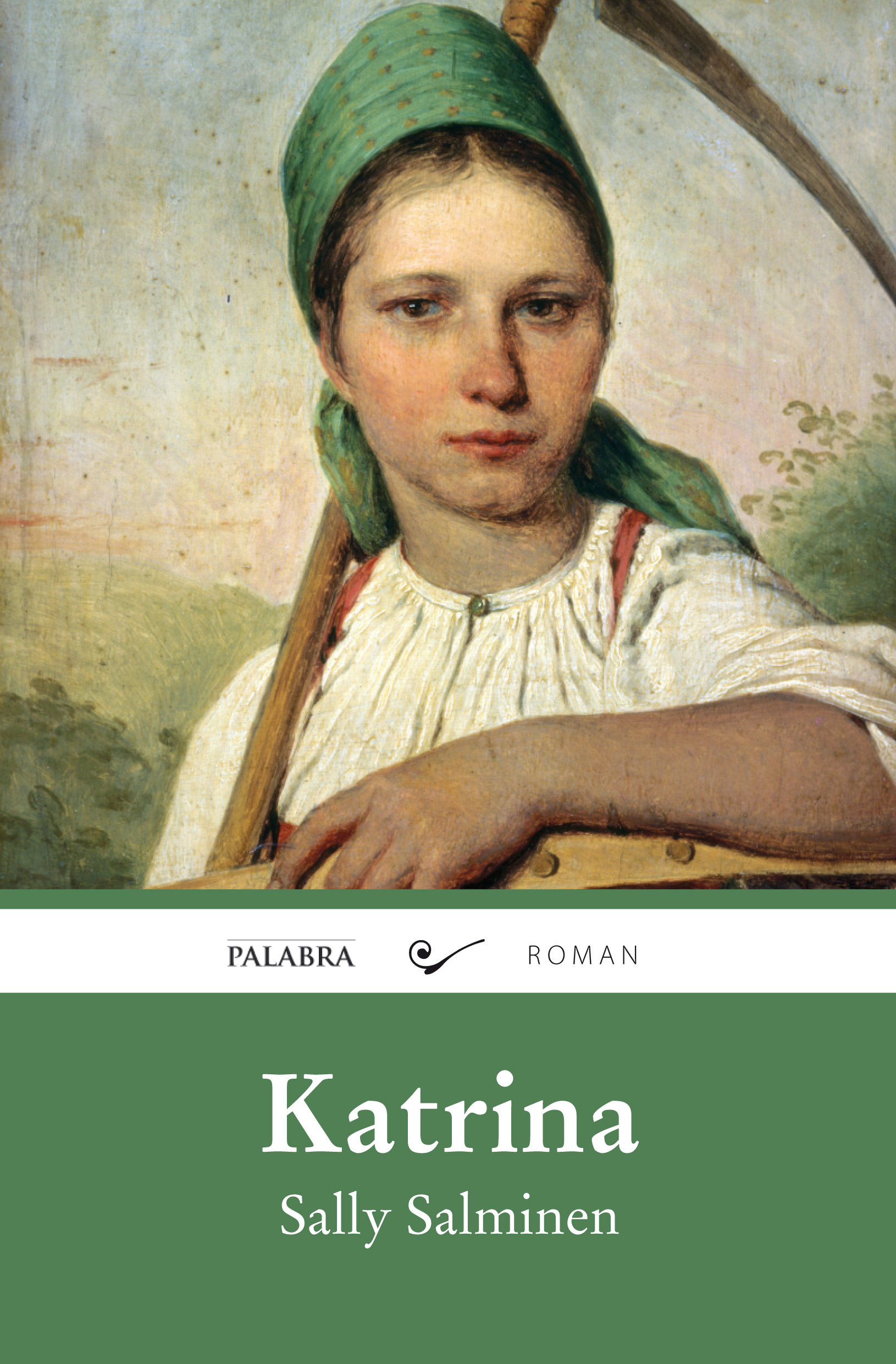
Book 145, Åland: "Katrina" by Sally Salminen


I’m writing this from Colchester, where I’m staying at the home of Suzanne Pemberton. She teaches English as a Second Language at the University of Essex here, and she had me visit her classes on as a guest. Turns out that Kazakh and Iraqi students are ridiculously smart and motivated. Citizens of BRICS and MINT countries, you’d better watch out.

Ah, but why am I at U of E? Because I had to track down a book at the Albert Sloman Library (via SCONUL Access), hailing from one of the most obscure is-it-a-country-or-not-a-country geopolitical entities. I’m talking of course about Åland (pronounced AW-land), the autonomous Swedish-speaking islands to the west of Finland, home to fewer than 30,000 people and the 1936 runaway hit novel Katrina – which was, believe it or not, translated into twenty different languages in its time.

And although the copy of the book I’ve got hasn’t been checked out since forever, I can see why it was popular – hell, I had little tears jerking out of my eyes by the end.


The eponymous Katrina starts off the story as a proud, beautiful 23 year-old farmer’s daughter in northern Österbotten (a region of Finland now called Ostrobothnia). She’s seduced by a young Ålander called Johan, who lures her into marriage with the promise to take her to his mansion on his island, where they grow exotic, luxurious things like wheat and apples. (Seriously.)

Of course, once she arrives she discovers that he’s been lying his ass off, that in fact he’s the town liar and his home is just a rented shack with only nettles in his garden (wheat and apples do grow on other people’s property, though), and he has to sail off that very night, because that’s what sailors do, don’t they, and meanwhile the powerful landlords Captain Nordkvist and Captain Svensson expect her to do indentured labour on the farms for them, paid in kind, not cash. Slavery, she thinks in despair, lying desolate in her cot, exhausting from her days in the field with a psyche or on the mudflats pulling up rushes.

And you figure maybe you know what’s coming: she’s gonna liberate herself, pack up and leave behind this good-for-nothing trickster, maybe with the baby in her belly, because she’s strong and spirited and can even beat down Svensson with her fists when he comes knocking on her door for sex.

And yet she doesn’t. I suppose we’re going into spoiler territory here, but this 381-page book isn’t the tale of a young woman but the tale of a woman – it follows her all the way to her death, the years rolling by quickly, child after child, famine and flu, tragedy and triumph, even learning to love her childlike, fabulist, happy-go-lucky husband on the way. And so it goes, till the time she’s an old woman with her children dead or scattered in Australia or Marienhamn, and the islands now separate from Finland after World War One (which means the bulk of the story must have taken place in the nineteenth century), her descendants actually living bourgeois lives with servants and fine china in the city while she scrimps by in her hut, immobile, too stubborn to move to get out of the cold, only one apple tree she planted herself left in the yard upright and unwithered.

It’s kind of instructive when you think of it in terms of novel-length writing, because it doesn’t consist of overarching quests so much as how a woman copes with all the challenges facing her, how she reacts or rebels or falls into depression but is above all strong, despite the faithlessness and follies of her husband and sons. She’ll face down the landlords to get money for her husband’s medicine, bully her kids into going back to school, drown her son’s dog, take in her son’s retarded baby momma, climb out of the broken ice, chew ferns as she sits stranded on an islnad, anything to survive, even when her own children curse her for her Österbotten accent.

And in the end, she’s just a poor country woman on the doorstep of her son’s house, whose own grandchildren can’t even recognize her. This is a woman’s epic, told from the viewpoint of the one who stays at home, holding it all together while the men board ships and disappear into the distance. A Penelopiad, if you will.

Honestly, it’s like the Scandinavians wrote great developing-nation novels before we even thought of the term “developing nation”. Cf. The Kingdomof the Earth, cf. Independent People.

Most of Katrina actually takes place in a village called Västerby on an island called Torsö, but I can't seem to track them down. Wonder if Salminen cooked them up, or the names of the places just changed?


View Around the World in 80 Books!!! in a larger map

Representative quote:
They both kept their courage, though the effort was great. Once outside, Gustav slung his bag on his back, and waved from right to left at the little cabins as he went whistling down the hillside. Katrina stood by the window and watched him disappear.

He was so like Johan – so unsteady and reeling in his walk, and already he held his body bent forward. An infinite sadness filled Katrina. Years seemed to have rolled backwards, and she herself was a young woman, standing there saying good-bye to her husband. It had been good-bye, good-bye while life endured.

Next book: The Kalevala, from Finland.

Wednesday, August 21, 2013

Book 132, Iceland: "Independent People" by Halldór Laxness

And I've finally finished this book! Despite early declarations that I'd be opening my European journey with this Nobel Prize-winner's masterwork, I honestly had my doubts - tried reading the collected Viking poetry of the Poetic Edda, but realised pretty soon that its obscure references were just gonna make my head hurt.


Reason I tried switching over to that book was because I wasn't having such a great time with this one. Sure, my friend Dmitri loved it, and I rather liked the opening paragraph too, with its invocation of the curse of the cannibal witch Gunnvor who has cursed the land in collaboration with the demon Kolumkilli (who is, according to Wikipedia, actually Saint Columba).

But then we enter the real world, and there isn't a single character to empathise with. Bjartur of Summerhouses, our newly debt-free peasant farmer protagonist, is an absolute bull-headed asshole with his desire to be an Independent Person, spouting Icelandic poetry on the spot to show off his cleverness and refusing helping hands from anyone. Meanwhile, his new wife Rosa is always mooning around and doing nothing in her depression - sure, she's enduring horrible squalor and hardship in the dump of a farm she's stranded in, but she just lies there sleeping in instead of actually struggling. [SPOILER ALERT!!!] When she died in childbirth, I thought, well, good riddance. [SPOILERS END.]

It's only in Part Two that we start getting some likeable characters - Bjartur's second wife and kids and mother-in-law, who have to suffer under the affable tyranny of their pioneer dad who deprives them of schooling and meat and milk. There's a particularly moving dramatisation of his daughter Asta Sollija's sexual awakening, the shame and desire wrapped up in this, and her severely compromised liberation in the end. Not a comforting closure at all: everything's about the doom of striving to be independent under unfair capitalist structures, and the sheer stupidity of idealising the lives of oppressed peasants (which quite a few Icelandic writers did!).

There's also an awful lot of nationalism wrapped up in this - the whole story is set around the 1890s to the 1920s, at the very birth of the Icelandic independence movement. But economics forms the centre of the tale: debt bondage, the rise of cooperatives, the financial boom caused by demand for Icelandic mutton and wool during World War I, the bust and the labour strikes that came afterwards. Shades of the prosperity of the Cod Wars followed by the 2008 economic crisis - cycles of riches and poverty, loans and mortgages, comfort and cold.

So yeah, this is a pretty interesting book in terms of the info and ideas presented. But while the cover blurbs talk about writers loving it for its sardonic wit et cetera, I'm just not that much of a fan. It's just another rambling epic novel of the common man. So what?

I'm actually pretty disappointed, because there's so much else in lit that Iceland should have to offer - they say that one out of every five persons there has written a book. And the country's pretty trippy as well - visited back in 2005 with my sister, and I'd love to go back. Maybe I will when I'm doing my UK course.


View Around the World in 80 Books!!! in a larger map


Representative quote: In foreign books there is a holy story which tells of a man who was fulfilled by sowing his enemy's field one night. Bjartur of Summerhouses' story is the story of a man who sowed his enemy's field all his life, day and night. Such is the story of the most independent man in the country. Moors; more moors. From the ravine there came an eerie echoing rumble as the headstone crashed its way down, and the bitch sprang to the brink and stood there barking wildly.

Next book: James Joyce's Ulysses, from Ireland.

Sunday, July 10, 2011

Book 69, Madagascar: “24 Poems” by Jean-Joseph Rabearivelo

Unfortunately I can’t get my paws on the recent English translation of this guy’s poems, Translated from the Night. This bunch forms just a thin volume – more of an illustrated pamphlet, really – and was published by les Amis de Rabearivelo in Ibadan, 1962. (It’s only in the National Library’s reference section because of good ol’ Edwin Thumboo’s donation. That’s a good laureate!)


Rabearivelo’s historically important because he’s widely viewed as Africa’s first modern poet. This is why folks doing a reading project like this should pick his work instead of trashy, viciously reviewed novels like The Sapphire Sea.

But he’s also aesthetically important because he’s really a rather good poet. True, I’m reading the stuff in English rather than in French/Malagasy, but there’s a dreamlike grace and vibrancy to his images that you don’t see everywhere – complete beauty and ambivalence of feeling, yet clear strength.

Oh, and he’s clearly a nature poet. Barely a breath of the city in these pieces: some Christian/Muslim village life, a black glassmaker, an artist who plucks bamboo to shape it into zithers in town.

This is nature in a very European sense, though: not jungle but a sedate, stellar, almost astronomical view of lianas and birds and pomegranate bushes, kissed with passionate dispassion by the sun. (Astronomical is quite right; there’s a lot of talk of stars and moonbeams and the movement of the Earth: he calls the Southern Star the white bull, as the Arabs do.)

Some cool modernist paintings in this edition too, by M.E. Betts: they look like what Picasso might make with Chinese ink, only they’re black and white and from Africa, so maybe they’re something quite other.

Sorry, not much else to say. Teeny-tiny book!


View Around the World in 80 Books!!! in a larger map

Representative quote:

X

There you stand
erect and naked
you are a lime tree and remember;
but truly you are the child of this fertile shadow
that feeds on lunar milk;
slowly you take the shape of a pillar
on this low wall over which dreams of flowers drift
and the perfume of a relaxed summer.

To feel to believe that roots sprout at your feet
and move and twist themselves like thirsty snakes
towards some underground source
or that clench the sand
and make you part of it, you, living one,
unknown tree, unnamed tree
that develops fruit
which you must pluck yourself.

Your crown,
in your hair dishevelled by the wind,
conceals a nest of transcendant birds,
and when you will come to sleep in my bed,
and I will recognise you, my errant brother,
your touch, your breath, and the odour of your skin
will provoke the rustling of mysterious winds
even to the frontiers of sleep.

Next book: Michael Steane’s The Last Colony: An Experience of Reunion Island from Réunion.

Saturday, April 30, 2011

Book 58, Antarctica: "At the Mountains of Madness" by H.P. Lovecraft

Gah! Taking a bus to Kuala Lumpur in three hours, so this post is also going to be rushed. But what a treat, in the middle of this survey of serious world literature, to be able to get at some pulpy horror fiction! (That's why I'm doing this, Mohan, so shut your trap about how Antarctica isn't really a country.)


I'm only semi-familiar with the Lovecraftian canon: I've read a collection of short stories and been initiated into his twisted universe via spin-offs like the Campus Crusade for Cthulhu and Li'l Cthulhu. This here volume is supposed to contain his first systematic summation of how all his monstrosities fit into history and geography: the Elder Things, the Shoggoths, the Mi-Go, and the Star-Spawn of Cthulhu Him/Itself.

It's a ruddy good read - it's less than a hundred pages, so you can go slow, following Lovecraft's baroquely ornamented language (he sure does love the word "eldritch"!) in the guise of the geologist William Dyer's documentation of the doomed Miskatonic expedition. Folks say this author doesn't care much about plot, but the twist really hits me, just as it did in The Shadow Over Innsmouth.

*SPOILER ALERT!!!!!!!*

Dyer moans and groans throughout most of the narrative about the unspeakable and unbelievably ancient horror that is the city of the Elder Things. But once he starts exploring the city properly and examining its murals, he somehow gathers enough information to (improbably) piece together a cogent gazillion-year history of the race, focussed on how their artistry and knowledge declined over time, depriving them even of their means of escape from this planet on their space-traversing wings.

The real advent of their downfall, of course, is the rise of the very creatures they chemically evolved as semi-sentient labour: the blob-like, amorphous Shoggoths. They lead a revolt, gain some traction, get defeated, and then rise again by the end, even mastering some crude understanding of writing, and certainly possessing themselves of enough fury that they eviscerate any Elder Things they see in their path.

Dyer actually ends up *identifying* with the tentacle-headed aliens who slashed apart his fellow researchers, as they're by no means as barbaric and hideous as the Shoggoths (an opinion no doubt helped by the fact that one said Shoggoth is ravenously chasing him through a tunnel at the end).

Take a step back for a second and consider that Lovecraft is writing this in 1930s America. That's right: all this talk about slave uprisings and barbaric culture is precisely a reaction to the rise of black Americans and their contributions to mainstream culture: the Jazz Age, the Harlem Renaissance, Josephine Baker in the cabaret halls of Paree. There's a confirmation of this subtext in the introduction by China Miéville (which I thoroughly recommend). Creepy.

*SPOILERS END*

Miéville also talks about how the blank slate of the frozen continent serves as a screen on which writers can project their wildest fantasies. But evidently, the slate isn't so blank anymore - the story's had enough of an impact that paleontologist John Long's done a book titled Mountains of Madness: A Scientist's Odyssey in Antarctica . And inevitably, someday, someone's gonna get the funding to do a film version. (It almost happened!)

So when enough ice melts and Antarctica gets settled, this book is gonna be part of their heritage. Hell, they might even erect an Elder Things city theme park! Wouldn't you go there? Maybe in the summer.


View Around the World in 80 Books in a larger map

Yeah, the placemarker's thrown my whole map out of whack. I'll figure out how to fix it eventually.

Representative quote:
The effect was that of a Cyclopean city of no architecture known to man or to human imagination, with vast aggregations of night-black masonry embodying monstrous perversions of geometrical laws and attaining the most grotesque forms of bizarrerie. There were truncated cones, sometimes terraced or fluted, surmounted by tall cylindrical shafts here and there bulbously enlarged and often capped with tiers of thinnish scalloped disks; and strange beetling, table-like constructions suggesting piles of multitudinous rectangular slabs or circular plates or five-pointed stars with each one overlapping the one beneath. There were composite cones and pyramids either alone or surmounting cylinders or cubes or flatter truncated cones and pyramids, and occasional needle-like spires in curious clusters of five. All of these febrile structures seemed knit together by tubular bridges crossing from one to the other at various dizzy heights, and the implied scale of the whole was terrifying and oppressive in its sheer giganticism.

Next book: James Hall's Sangoma, from Swaziland. I think.

Saturday, March 12, 2011

Book 52, French Guiana: "Pigments - Névralgies" by Léon-Gontran Damas

Confession time: I didn't understand most of this book. I took French a long time ago, and while I can still read fiction, the surreal poetry of the Négritude movement is a little beyond me.


However, I had the hubris to go out and order a copy of this book via the French department of Kinokuniya bookstore, based on the premise that it's probably good for my brain to read other languages a little more often. Cost me $22.50 in SGD - not bad for an esoteric classic, hein?

And Pigments is actually okay - I used it as casual toilet reading, since the poems are short and a lot of it's about being a black and angry colonial intellectual in 1930s Paris. Loads of stuff about Antillean rhythms and "masques africaines" alongside mentions of Gauloises and the Le Monument aux Morts; civilisation and its discontents. Even some urgent pleas about what Herr Hitler's doing to les juifs en Allemagne, because he can tell that kind of politics don't look good.

Névraglies (trans. = neuralgias) is another story - longer poems, quite a few of them love/sex pieces, but far less political (even though it was published in 1966, a plenty political time as well), so it's harder to figure out the context of these pieces, or really what's going on, given my limited vocabulary. Less of that vivid, obvious imagery I liked so much in the previous section:

But oh, it's good to read. The delicious legato of the French language combined with Damas's magic rhythms: ostinatos of brevity and repetition, odd flourishes of concrete poetry as lines don't cross the page but tumble down it - and then those vivid, visceral images that I don't know how to process: flesh, blood, curtains - although flipping through the book again, there's an awful lot of pieces overloaded with abstract nouns instead. No wonder I'm so confused.


View Around the World in 80 Books in a larger map

And sleepy! Was attending the Singapore Biennale opening today, as well as the opening of Michael Corbidge's show Jus, plus teaching at NTU, then came home to behold the tsunami footage in Japan and helped my mother to rework her Blackberry message to the Tokyo branch of her company in perfect English - nothing compared to what some of you do for a living, but it tires me out.
I think I'll accept my French poetry in translation from now on.

Representative quote:

LA COMPLAINTE DU NÈGRE

Ils me l'ont rendue
la vie
plus lourde et lasse

Mes aujourd'hui ont chacun sur mon jadis
de gros yeux qui roulent de rancœur
de honte

Les jours inexorablement
tristes
jamais n'ont cessé d'être
à la mémoire
de ce que fut
ma vie tronquée

Va encore
mon hébétude
du temps jadis
de coups de corde noueux
de corps calcinés
de chair morte
de tisons
de fer rouge
de bras brisés
sous le fouet qui se déchaîne
sous le fouet qui fait marcher la plantation
et s'abreuver de sang de mon sang de sang la sucrerie
et la bouffarde d commandeur crâner au ciel.

Next book: Augusto Boal's Theater of the Oppressed, from Brazil.