Showing posts with label south america. Show all posts

Sunday, July 28, 2013

Book 131, Falkland Islands: Carlos Gamerro's "The Islands"

Okay. This is weird. I decided to do a mega-detour to South America, because the Falkland Islands now fit my criteria for inclusion in my project. Previously I'd figured they were too sparsely populated, but they're home to 2,932 people, twice as much as Tokelau or Niue. More importantly, I found a really cool book about the country.


Strange how whenever we talk about the Falklands War/Guerra de las Malvinas, we always hear about the British perspective: Margaret Thatcher as a patriotism-stirring warrior queen, et cetera. Carlos Gamerro tells us about the even more messed-up Argentinean side: a world of byzantine power struggles and sociopathic generals and torture victims, and above all an inability to let go of the shameful defeat. As the narrator says, it's not the criminal who returns to the scene of the crime, but the victim.

The War took place in 1982 and the story's taking place in 1992 - not just the 10-year anniversary, but also the 500th year since the colonisation of the Americas by Christopher Columbus. Aforementioned narrator is Felipe Félix, hacker and Falklands War veteran, employed by the mad Sr Tamerlán to track down the witnesses of a murder committed by his son.

And everything's mad in that delightfully Borgesian manner - magical realist but in an urban, technologically-equipped setting: Tamerlán's office has one-way mirrors as floors and ceilings so that the boss on the upper floor can be the master of a Panopticon; fellow veteran Ignacio spends years creating a fabulously detailed scale miniature model of Puerto Argentino/Stanley, supposedly to aid in plans for a counter-attack but in fact for the purposes of turning back the clock; Felipe creates a video game that enables General Verraco to play at winning the war, ending with him being blessed by the Pope in the middle of Buenos Aires and conquering the British Isles, and so on, and so on.

God, I've missed you, South America. And it's an education to learn how awful, how soul-robbing the war was for the Argentineans - the vets really didn't get decent care taken of them by the state - as the story shuttles between 1982 and 1992 like an acid trip or PTSD.

So yes, this was a positive experience. But harrowing. And also a bit of a betrayal to my friend Dmitri Aronov, who was at first delighted that I was reading Laxness at the same time he was, in preparation for a trip to Iceland. Never you mind, I'll be conquering that epic novel while travelling this coming week, in Bali.


View Around the World in 80 Books!!! in a larger map


Representative quote: He began stomping about the classroom cowboy-fashion, with legs akimbo and fist clenched on groin. 'Argentina is an erect prick ready to breed, and the Malvinas, its balls. When we recover them, fertility shall return to our lands and we shall become the great nation our founding fathers once dreamed of! A potent country! Our wheat shall flower anew, and our cattle shall ply our oceans of grass; our trains shall run laden with the produce of the land to every corner of the country. Buenos Aires shall be the new Paris, the envy of all the cities of the globe. The Argentine name of the Argentineans shall ring pristine in the ears of the world with peals of welath and progress! From our recovered Islands an Argentinean sun of unimaginable grandeur shall mark the day on which the former colony becomes the world power we all long for!'

Next book: Halldor Laxness's Independent People, from Iceland. 

Sunday, July 17, 2011

Lord have mercy.

A couple of days ago, Frank Chipasula e-mailed me about my Malawian poetry post.

Tonight, I discovered Nestor Amarilla is following me on Twitter.

The world's getting too small...

Tuesday, April 26, 2011

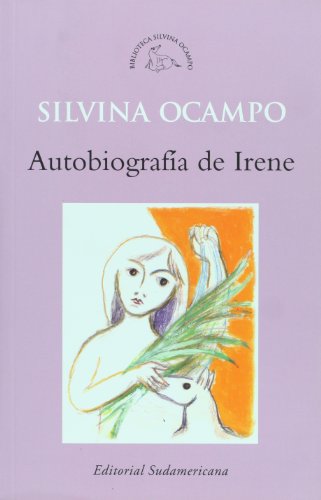
Book 57, Argentina: "Autobiografía de Irene" by Silvina Ocampo

I'm actually feeling kinda sick, so I'll try to do this quickly. But but but HOORAY, we're done with South America!

And what a pleasant way to go out (I'm honestly feeling guilty about crossing borders and doing Uruguay before Argentina, but it would've sucked to leave the continent with Ariel). This is a collection I actually picked up in Buenos Aires, by one of Borges's lesser-known and barely translated contemporaries.

I've blogged all about this funky lady here.


And hurrah: the funky lady does indeed write well. The pieces in this book have the same realm of paradoxical, paranoiac phantasy as the works of Borges or her husband Adolfo Bioy Casares. But they're tenderer, less strictly logic-based - and as much as women continue to appear as objects, they're also subjects.

There's the beautiful Flavia, whose three alternative reactions to the ministrations of her psycho husband Claudio Emilio is the key to Epitafio Romano. There's Kêng-Su, who goes utterly mad when pursued by a vengeful, literate butterfly in La Red. Even El Impostor, which is mostly focussed on its dual male protagonists Heredia and Maidana, involves the agency of the love interest María in its film summary version (why that's in there, I have no clue). And of course, there's the titular story, about a precognitive woman, serenely relieved on her deathbed of the mind-bending contradictions of her gift.

And come to think of it, even Fragmentos del Libro Invisible begins and returns to the womb of the prophet's mother. Yeah, you're getting an idea of how beautifully mad this book is, aren't you? Don't think it's translated yet, but the Spanish is pretty lucid (especially if you have a smartphone translation dictionary at your side).


View Around the World in 80 Books in a larger map

Enough of South America then! You realise that this is only the second continent, after Oceania, that I've actually completed? Lots more to come.

Representative quote:
Pasé por muchas puertas transparentes, como de hielo, en cuyas transparencias se veían ciertos colores que los mortales no alcanzan a ver; por muchas puertas altísimas, silenciosas, cubiertas de follajes, de frutos y de pájaros cuyas alas trémulas irradiaban luz en las maderas labradas. Pasé por muchas puertas horribles - algunas eran diminutas, algunas tenían una mano de jierro o de bronce, a un lado, o la cabeza de un león mordiendo un aro en el centro - antes de hallar el otro mundo en un paisaje complicado, entre edificios y objetos heterogéneos, entre camas, cuadros, armarios, arcos, estatuas, columnas, glorietas, miniaturas, látigos, sistros, tabernáculos, aureolas, espadas, baldaquines, linternas mágicas, barajas, astrolabios, cariátides, mapamundis.

Next book: H.P. Lovecraft's At the Mountains of Madness, from Antarctica.

Monday, April 18, 2011

Book 56, Uruguay: "Ariel" by José Enrique Rodó

This here's one of the iconic texts of Latin America, composed in the age of Modernismo as a manifesto for the emergent 20th century. There's an English translation in print out there but the Amazon Kindle download turns out to be in Spanish, which is why I'm this tardy in finishing my read of a mere 100ish-page essay.


And good lord, this is another of those weird texts - my Spanish is shaky, so I may be mistaken in many of my impressions - but first of all Rodó is characterising Latin America as Ariel, the blithe spirit of Shakespeare's Tempest, while the United States is Caliban - an idea that runs completely counter to postcolonial readings of Ariel as the neocolonial native whom Prospero uses to rule by proxy, with Caliban as the indigenous figure whose fate under either government is to be oppressed. We'd normally associate the rich, white and comparatively sophisticated USA with Ariel, surely?

But Rodó's all about the idea of Ariel as the spirit of youth and culture and moral philosophy, emblematic of the greatest achievements of Athens (yes, the guy is the ultimate Hellenomaniac). This is the path that he insists that turn-of-the-last-century Latin America has the choice to pursue.

North America, meanwhile, is corporate, corrupt, debased by that foulest of systems... DEMOCRACY. Yes, true enough, Rodó shows utter disdain for democracy, claiming that rule by the masses will lead to a decline in artistic and cultural standards, yadda yadda. He seeks instead a rule by the elite - not a hereditary elite, but a chosen elite, an aristocracy in the original sense of the word.

Democracy, he says, is only conscionable if it's democracy geared towards a spiritual uplifting of the population - awakening the populace to the higher things in life.

The net effect is that the text seems simultaneously stuck in the 5th century BCE and the late 20th/21st century: there's all this poetic invocation of the Golden Age of the Greeks with a similar disregard for their slave-owning atrocities, but the direct attacks on American politics and pop culture seem drawn directly from Theodor Adorno and Chomsky (although Rodó, the poor sap, thinks that the USA is foolish to believe it can really become a hegemonic political power without going through centuries of development as the nations of Europe have).

The thought occurs to me that Rodó would love Singapore, since our government does very much believe in a system of philosopher-king autocracy and elitism more than democracy by numbers. But then how would he look at the strained relationship between the state and the arts? Ah, he'd probably be okay with it. Moldy old bastard probably wouldn't give two hoots about freedom of speech and gay sex.


View Around the World in 80 Books in a larger map

Representative quote:
¿No la veréis vosotros la América que nosotros soñamos; hospitalaria para las cosas del espíritu, y no tan sólo para las muchedumbres que se amparen a ella; pensadora, sin menoscabo de su aptitud para la acción; serena y firme a pesar de sus entusiasmos generosos; resplandeciente con el encanto de una seriedad temprana y suave, como la que realza la expresión de un rostro infantil cuando en él se revela, al través de la gracia intacta que fulgura, el pensamiento inquieto que despierta?...—Pensad en ella a lo menos; el honor de vuestra historia futura depende de que tengáis constantemente ante los ojos del alma la visión de esa América regenerada, cerniéndose de lo alto sobre las realidades del presente, como en la nave gótica el vasto rosetón que arde en luz sobre lo austero de los muros sombríos.

Next book: Silvina Ocampo's La autobiografía de Irene, from Argentina.

Tuesday, April 12, 2011

Book 55, Paraguay: "Saved by a Poem" by Nestor Amarilla

I was bugged by the fact that I wasn't reading enough plays in this project - after all, I'm a playwright, and I oughta be developing that.

So imagine my delight when I read about Nestor Amarilla, a young Paraguayan playwright (my age!), nominated for the Nobel Prize for Literature last year. Of course he didn't get it, but damn, I wanted to find out what made this kid so good.


Naturally the library didn't have his book (but they've accepted my suggestion to purchase it), so I ordered a copy via Book Depository, which delivers dirt-cheap books to pretty much any country in the world with zero shipping charges. Only problem is, you go a little crazy waiting for the damn package to arrive...

But truth is, the play's nothing phenomenal. It's a three-hander, set in the boondocks during the Stroessner dictatorship, when a woman named Mariana decides to write a poem in praise of the tyrant in order to win her activist son clemency. It has rather good character dynamics, and you could use it as a great vehicle to talk to kids about power and the business of not speaking truth to it because it already knows the truth and will get you if it realises you know it to. But it's not a shade on Lorca. Sappy dénouement, too. Maybe you have to see it on stage.

It's a short piece, too - the book's a bilingual edition, but I couldn't read the original because it's a mix of Spanish and Guaraní, Paraguay being one of the few countries in South America that's really held on to an indigenous linguistic tradition by virtue of its ethnic composition. Guaraní's an amazing language to try and decipher, though - "The sun is not waiting for me" translates into "Umi ñanáko nachera'ãrõihína".


View Around the World in 80 Books in a larger map

Representative quote:
MARIANA: If you don't close your mouth on your own, they will. Why do you wish death so much? Next time you disappear, I am not going to wait with a glass of salt and water anymore. I will just sweep. I will sweep the living room, the kitchen, the front of the house, I will sweep the whole house, and do you know for what? I'll make it ready for your funeral. That's what I'll do.

Next book: José Enrique Rodó's Ariel, from Uruguay.

Saturday, April 9, 2011

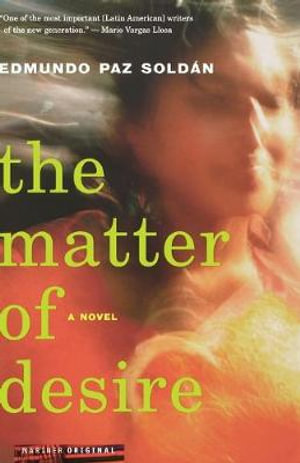
Book 54, Bolivia: "The Matter of Desire" by Edmundo Paz Soldán

This is a freaking good read. It covers all your bases: literary, political, and semi-historical with a nice dose of mystery. (Did I mention the sex?)


One of the coolest things about the novel is that it's contemporary - it takes place in an age of Internet stock trading and iBooks, where the imaginary Bolivian city of Río Fugitivo is shown to have intimate links with all the other Latin American countries plus the USA.

Even the novel that the characters are obsessed with is named Berkeley, after the branch of UCLA, written by the protagonist Pedro Zabalaga's father, gunned down as a revolutionary hero, leaving a text full of cryptic clues which the scholars and rock groups alike continue to decode and encode through their papers and crosswords and music videos.

Paz Soldán is clearly writing in the shadow of the Latin American Boom (he makes reference to Cortázar and Borges a-plenty), and he's established himself as the leading spokesperson for the McOndo movement (cf. García Márquez's imaginary hick town of Macondo, cf McDonald's) which disregards the magical realist movement in favour of solid descriptions of cosmopolitan city life.

So it's quite different from the other Latin American novels we've read so far: no crazy narrative tricks here: it's a first-person past-tense narrative all the way through - though there are two plot strands in alternating chapters, one describing the Latin American Studies department at Madison University, where Pedro teaches (and sleeps with) well-meaning academically-inclined gringos; the other centred in Río Fugitivo itself where he tries to worm out information about his deceased father from his uncle David and the soon-to-be-extradited drug lord Jaime Villa.

But of course, the crossword clues and Rashomon-esque games of intrigue do monkey their way into the story, so cosmopolitanism schmosmopolitanism; we've got a tale that fits into the Latino tradition anyhow.

Thoroughly recommended! But be warned: there's enough Spanglish in here to frustrate you if you're a non-Hispanophone.


View Around the World in 80 Books in a larger map

Representative quote:
I walked home to Uncle David's. I felt as if I were walking down the streets of Berkeley, just as Dad had described them, and got lost on Telegraph only to find myself on Unzueta, while geese - six? seven of them? - flew all around me and then all of a sudden there were shots and a salamander was following me and someone was shouting "All dead" and blood was flowing on the floor and a glass eye exploded. Anguish, agony. There was also a desperate sense of unreality. The barely lit streets and I both become ghost-like, suffered from a lack of substance.

Next book: Nestor Amarilla's Saved by a Poem, from Paraguay.

Friday, April 1, 2011

Book 53, Brazil: "The Devil to Pay in the Backlands" by João Guimarães Rosa

Yes! I’m finally done with this juggernaut of a novel!

And let me tell you, my friends, it is strange. It’s entirely written without chapters or section breaks, and is entirely narrated in first person by an aged jagunço, a turn-of-the-last-century outlaw soldier, describing his troop’s peregrinations across the state of Minas Gerais (which appears tiny on the map, but in the book appears to have the surface area of, say, the Moon): the eponymous backlands, the sertão, that appear in the Portuguese title, Grande Sertão: Veredas.


We go from stream-of-consciousness babblings about the nature of the devil to memories of guerrilla warfare with rival armed bands, finally coaelescing into a linear narrative which makes up the bulk of the book about fighting alongside his beloved companion-in-arms, Diadorim, and just in case you think there’s an implicitly homoerotic character arc going on I’ll have you know it is explicit, with moony longing for each other carnally (Diadorim is utterly fearless, with a slender body and gorgeous green eyes) while they’re waiting in deserted mansions for the armies to come, only they never actually jump into each other’s tents Brokeback-style: instead, constant craving has always been.

And then four fifths of the way into the book Riobaldo goes to the crossroads, promises his soul to the devil, and is thoroughly put out when the devil doesn’t arrive, but somehow gets into circumstances shortly thereafter which make him the leader of this pack of men’s men, with the confidence and charisma to back him up, with a sack of random homicidal (and equicidal, and canicidal) tendencies to boot.

[SPOILER ALERT!!!!!] And then ninety-nine hundredths of the way into the book, Riobaldo wins the war against Hermogenes, but Diadorim gets killed and guess what? He’s actually a woman. A gorgeous one too.


View Around the World in 80 Books in a larger map

Shades of Doña Bárbara: an androgynous female incarnation of the wild Brazilian landscape, not to be fucked with. WTFFFFF???? [SPOILERS END]

So yeah, this is one of those crazy precursors to magical realism, in the same experimental tradition that emerged with Joaquim Maria Machado de Assis’s The Posthumous Memoirs of Bras Cubas through Mário de Andrade’s Macunaíma and Clarice Lispector’s The Hour of the Star. Brazilians be trippin’, man.

Gawd, I miss doing capoeira.

Representative quote: We could hear loud shouts and firing: it was Fafafa and his followers destroying the enemy's vanguard. This had begun in the same instant, but even so I had had time in which to feel ashamed of myself, and to realize that Diadorim was not indispensable to me. And that by his mere presence he was not obeying me. I know: one who loves is always a slave, but he never truly obeys.

Next book: Edmundo Paz Soldán's "The Matter of Desire", from Bolivia.

Sunday, March 20, 2011

The 100 Greatest Books in the History of Literature

I'm afraid I'm not yet done with Brazil. I had a change of heart, you see: Augusto Boal's Theatre of the Oppressed was returning to the roots of Western philosophy for its essay and telling me very little about the nation itself.


After a few pages, I began to think, yeah, maybe an epic novel would be better. And what better epic novel could I pick than João Guimarães Rosa's Grande sertão: Veredas, aka The Devil to Pay in the Backlands?

Don't worry if you've never heard of this before. I hadn't either, till I started snooping around. However, you should know that the book appears on this amazing list of the 100 Greatest Books in World Literature, compiled by the Norwegian Book Clubs through a poll of 100 great world authors, many of them Nobel Laureates:

http://www.bokklubben.no/SamboWeb/side.do?dokId=65500&klubbid=WB

There's loads of other lists like this, but they're extremely Anglo-Americentric: Time Magazine has one, and so do Guardian and Modern Library. Goodreads has one that's topped by Stephenie Meyer, for gods' sake. (See what I did with that apostrophe there? Heheh. Animist pride.)

Anyhoo, I'm trying to read Boal while I'm indoors and Guimarães Rosa while I'm outdoors, plus I've a bunch of deadlines coming up, so things are going a little slowly.

And what the hell; while I'm here I'll advertise an event I have coming up. I'll be speaking on a panel at the Singapore launch of Man/Born/Free: Writings on the Human Spirit From Singapore.

Image and video hosting by TinyPic

It was put together for Spotlight Singapore, an event that's currently going on in Cape Town, South Africa. Haven't seen it yet, but the tone seems to be human rights-based (at a government-sponsored event, no less!). Both editor Gwee Li Sui and publisher Ethos Books have been involved in activism and commentary, btw. I'm stoked.

Launch of "Man/Born/Free: Writings on the Human Spirit From Singapore"
Friday 26 March, 11am-12pm
Living Room, Level Two, Arts House

For my other gigs, click here. For more book commentaries, wait a week and I'll see what I can do. :)

Saturday, March 12, 2011

Book 52, French Guiana: "Pigments - Névralgies" by Léon-Gontran Damas

Confession time: I didn't understand most of this book. I took French a long time ago, and while I can still read fiction, the surreal poetry of the Négritude movement is a little beyond me.


However, I had the hubris to go out and order a copy of this book via the French department of Kinokuniya bookstore, based on the premise that it's probably good for my brain to read other languages a little more often. Cost me $22.50 in SGD - not bad for an esoteric classic, hein?

And Pigments is actually okay - I used it as casual toilet reading, since the poems are short and a lot of it's about being a black and angry colonial intellectual in 1930s Paris. Loads of stuff about Antillean rhythms and "masques africaines" alongside mentions of Gauloises and the Le Monument aux Morts; civilisation and its discontents. Even some urgent pleas about what Herr Hitler's doing to les juifs en Allemagne, because he can tell that kind of politics don't look good.

Névraglies (trans. = neuralgias) is another story - longer poems, quite a few of them love/sex pieces, but far less political (even though it was published in 1966, a plenty political time as well), so it's harder to figure out the context of these pieces, or really what's going on, given my limited vocabulary. Less of that vivid, obvious imagery I liked so much in the previous section:

But oh, it's good to read. The delicious legato of the French language combined with Damas's magic rhythms: ostinatos of brevity and repetition, odd flourishes of concrete poetry as lines don't cross the page but tumble down it - and then those vivid, visceral images that I don't know how to process: flesh, blood, curtains - although flipping through the book again, there's an awful lot of pieces overloaded with abstract nouns instead. No wonder I'm so confused.


View Around the World in 80 Books in a larger map

And sleepy! Was attending the Singapore Biennale opening today, as well as the opening of Michael Corbidge's show Jus, plus teaching at NTU, then came home to behold the tsunami footage in Japan and helped my mother to rework her Blackberry message to the Tokyo branch of her company in perfect English - nothing compared to what some of you do for a living, but it tires me out.
I think I'll accept my French poetry in translation from now on.

Representative quote:

LA COMPLAINTE DU NÈGRE

Ils me l'ont rendue
la vie
plus lourde et lasse

Mes aujourd'hui ont chacun sur mon jadis
de gros yeux qui roulent de rancœur
de honte

Les jours inexorablement
tristes
jamais n'ont cessé d'être
à la mémoire
de ce que fut
ma vie tronquée

Va encore
mon hébétude
du temps jadis
de coups de corde noueux
de corps calcinés
de chair morte
de tisons
de fer rouge
de bras brisés
sous le fouet qui se déchaîne
sous le fouet qui fait marcher la plantation
et s'abreuver de sang de mon sang de sang la sucrerie
et la bouffarde d commandeur crâner au ciel.

Next book: Augusto Boal's Theater of the Oppressed, from Brazil.

Friday, March 4, 2011

Book 51, Suriname: “Oroonoko” by Aphra Behn

I tried at first to get find some indigenous Dutch writing from Suriname. No dice! So instead, let’s use an early modern colonial text that’s hot in the fields of women’s and cultural studies.


(I may in fact have read this before and forgotten most of it. I was reading a number of androgynous 17th century gals in college for my own edification: Margaret Cavendish, Sor Juana Inés de la Cruz, Catalina de Erauso, Madame de La Fayette.)

Frankly, this book’s bloody strange. A novella written before the age of the novel; a first-person narrator who describes the horrors of slavery and understands nothing about it; even the sexes of the tigers slain by Oroonoko change sex mid-paragraph – these are what the academics call slippages, signals of the competing agendas in Behn’s 77-page yarn.

A guide for the perplexed: Oroonoko is a prince royal of Coramantien, a trading post in what is present-day Ghana. Because Behn knows next to nothing about Africa, the details of his heroic life here are based on medieval romances a la Orlando Furioso: i.e. they bear utterly no resemblance to historical/anthropological fact.

However, he gets captured as a slave and sent to Suriname – and here’s where things get truly interested. Behn had actually lived in this territory with her former husband, so she can describe the native and colonial habits and flora and fauna with some accuracy – there’s even mentions of Inca-style quipus among the indigenous tribes, and a sequence describing an electric eel.

Behn arranges her tale so neither Oroonoko nor his beloved consort Imoinda have to suffer the back-breaking work of enslaved labourers: the European townspeople actually take to them kindly instead upon discovering their noble origins, inviting them regularly for coffee and discoursing with them on Ancient Roman history (I do not kid: there’s a section where they discuss Hannibal).

But certain details are precisely the things you couldn’t make up: the proud scarification marks on the Africans, the imposition of slave-names, the refusal to convert to Christianity, the automatic assumption that any child of an enslaved woman must also be a slave, the escape into the mountains, the savage tortures and executions that awaited those captured.

Behn – and even Oroonoko himself – are pretty cool with the institution of slavery for lesser mortals. He even offers his sympathetic master 300 slaves of his own in return for his manumission. But the horrors of the tragic ending – seriously, it’s grosser than the way Beowulf amputates Grendel – ultimately prove how the author understood something terribly wrong with this institution that allowed us to dehumanise others, to claim men as objects regardless of their dignity.

Puzzling book. Man, we’re dealing with a craploud of books about slavery, aren’t we? Mary Prince, Cambridge, the Arrivants, and then this.


View Around the World in 80 Books in a larger map

Representative quote:
And why, said he, my dear friends and fellow sufferers, should we be the slaves to an unknown people? Have they vanquished us nobly in fight? Have they won us in honourable battle? And are we by the chance of war become their slaves? This would not anger a noble heart, this would not animate a soldier’s soul. No, but we are bought and sold like apes or monkeys, to be the sport of women, fools and cowards and the support of rogues, runagades that have abandoned their own countries for raping, murders, theft and villainies.

Next book: Léon-Gontran Damas’s "Pigments – Névralgies", from French Guiana.

Monday, February 28, 2011

Book 50, Guyana: “Lovelines for a Goat-Born Lady” by John Agard

So originally I was going to read the Poems of Martin Carter, whom some website claims is Guyana’s greatest poet. Then I checked him out and discovered his writing is rubbish.

What’s a bibliovore to do? Fortunately, I’ve a personal Guyanese connection: way back at Singapore Writers’ Week ’97, I attended workshops and readings by the Guyanese-British husband-and-wife team John Agard and Grace Nichols, who got me jump-started on the idea of performance poetry before slam even came to town.


Agard and Nichols mostly write children’s poetry, but I’ve read some of their adult works before: Agard’s Mangoes and Bullets and From the Devil’s Pulpit; Nichols’s Sunris and The Fat Black Womans's Poems. Lovely stuff. Lovelines for a Goat-Born Woman was one I hadn’t seen before, though: it was part of the Edwin Thumboo bequest, so I had to sit in the library and read it a couple of goes, just like Leaves of the Banyan Tree.

Oh, but it was worth it. Bless me, these poems are sexy.

Agard’s nuts about Nichols and he finds every way of saying so. He calls her his beloved capricorn, his mudhead woman (Guyanese are called mudheads because of their low-lying silty coastland), de headmaster’s daughter, Miss Curling Toes, Gracey, his pink-eyed one. He eroticises her overcome by sleep, annoyed by allergenic pollen, in knickers, before mirrors, in a towel fresh out of the shower, plaiting her hair, pregnant, peeing behind a half-closed door.

He calls her body a ship bound for dreamland, a creature rooting in the soil of heaven, He calls her vulva her cunt, her other mouth, her wanton parts, her squeezing crab, her pum-pum. And he eroticises their homeland’s watermelon ladies, Antillean breezes, Kissing Rocks, rivers, zinc roofs, eels, crabs, hibiscus, hummingbirds and guenip seeds, star apples. Writes one poem entirely in Creole, too. (Damn, I’ve got to try eroticizing Singapore/Singlish in some of my slam poetry. Difficult, but I’m sure it can be done. Easier for him of course, since they’re émigrés missing their tropical disaster zone, “hugging her under dis quilt of England”.)

He also freely mentions the fact that she, too, is a poet. That’s worth something. It’s quite wonderful to read love poems, written from one creative person to another – one of the reasons why Sonnets from the Portuguese is so renowned. And oh my; after writing that I have visions of Robert Browning and Elizabeth Barrett doing it under the sun on a Caribbean coconut plantation. Freaky, but given Browning’s possible ancestry, not entirely far-fetched. First heard about that connection in Agard’s book We Brits, by the way. Just hope they’re still happy together.

(There's something fishy going on Google Maps: it seems to have been hacked by the Encyclopaedia Britannica, of all sites. Oh, it's fixed now!)


View Around the World in 80 Books in a larger map

Representative quote:

Invocation

Lord of Iron, Ogun,
grant me hardness
when and where it matters

Queen of waters, Yemanja,
bless my man-water
with good seed

Sacred harlot, Oshun,
bejwelled to the crotch
girdled with the moon
guide me to the slut
beneath my graceful lady

Sky-Serpent, Damballah,
may I inherit
your divine wriggle
when I lie on her

You there, Legba,
randy trickster,
keeper of the gateway
guardian of the centerpiece,
help me transfix her

While governments making plans
your vulva sparkles on my moustache
we guilty of a subversive trickle

Next book: Aphra Behn’s “Oroonoko”, from Suriname.

Friday, February 25, 2011

Book 49, Venezuela: "Doña Bárbara" by Rómulo Gallegos

This is going to be a rushed entry, because I’m seriously sleepy. But man oh man, am I proud that I’ve finished this book: the most famous Latin American novel prior to One Hundred Years of Solitude, one of those classics my Spanish literature profesora talked about back in college when it was assumed we were gonna be polyglot intellectuals for life.


(It’s weird. I couldn’t find any Venezuelan authors in Central Lending: I was going to choose between an Edwardian proto sci-fi thriller, a German Enlightenment travel memoir and a Norwegian romance. When I’d decided on this title, I had to Amazon it over to my friend in London – thanks Simon! The above copy was ultimately from the discard heap of the Houston Public Library.)

Doña Bárbara is epic, not just because it’s a sweeping romance of the prairies, complete with rough-and-ready cowboys, crocodile hunting, evil gringo capitalists, drunkards, deadly family feuds and romantic tension between the strapping country-born, city-bred, horse-taming lawyer Santos Luzardo and the gorgeous 15 year-old virgin Marisela.

No, what sticks with everyone is the eponymous character herself, the tempestuous mestiza villainess who’s seduced Luzardo’s cousin out of his fortune, running her ranch like a tyrant, a cacica or female Indian chief. The contemporary soap opera makes her out to be a heroine, a woman before her time, but she’s quite the antagonist in the novel: a destroyer of fine, virtuous men and a witch with regular communications with the Devil.

Oh, but she’s a marvelous figure. Gallegos says in his preface that she’s a mere personification of the savannahs, beautiful and deadly and a deadly threat to civilization itself, but he humanizes her with a past story of heartbreak and betrayal and a tragic infatuation with Luzardo himself, which is all the more fucked-up when the girl who’s really going to get him is her illegitimate daughter, Marisela (who is herself a cousin once removed from Luzardo, which is nuts, but this was the outback. Get over it).

She’s actually perceived as monstrous for her androgynous costume and her ability to do men’s work – her very name means not just Dame Barbara, but also the Barbarous Lady. But on the other hand, she provided a strong female Wild West archetype for Spanish America that's endured to this day. All North America has is Annie Oakley and Dr Quinn, Medicine Woman. I'll take the bad-ass fictional lady over either of those real-life chicks.

Marisela’s pretty fascinating, too. Sure, she has her girlish foolishness as she pines for her man, but she’s discovered by Luzardo living in grunting, mud-smeared poverty in the middle of nowhere, growing into sophistication and beauty as he educates her in the ways of etiquette and grammar. She isn’t just an embodiment of the land to be conquered: we’re reminded time and again of her native intelligence that makes her a matching helpmeet to our hero –
Well, okay, I take it back. She is basically the native who must be civilized, but she’s reared to be an equal, not a servant.

Mind you, my Spanish is rusty and the text is full of 1920s country colloquialisms, so I only understood about, say, four words out of every five. There’s a lot to this book that didn’t get through my skull. There’s an English translation somewhere out there in the world. Maybe I’ll read it someday.


View Around the World in 80 Books in a larger map

In the meantime, enjoy some contemporary music from Venezuelan/American pop star Devendra Banhardt! Man, it's good to be back in South America.

Representative quote: Tal era la famosa doña Bárbara, lujuria y superstición, codicia y crueldad, y allá en el fondo del alma sombría una pequeña cosa pura y dolorosa: el recuerdo de Asdrúbal, el amor frustrado que pudo hacerla buena. Pero aun esto mismo adquiría los terribles caracteres de un culto bárbaro que exigiera sacrificios humanos: el recuerdo de Asdrúbal la asaltaba siempre que se tropezaba en su camino con un hombre en quien valiera la pena hacer presa.

Next book: John Agard’s Lovelines for a Goat-Born Woman, from Guyana. (I think.)

Friday, October 8, 2010

Hey! Mario Vargas Llosa just won the Nobel Prize for Literature!

First time Peru's won it, too. Click here for the news, and here for my reaction to his first novel,The Time of the Hero.


Still slogging away at fellow Nobel Laureate Octavio Paz... and at the layouts of my latest book, GASPP!

Monday, August 9, 2010

Book 18, Colombia: "Delirium" by Laura Restrepo

Lesson learned: do not read a stream-of-consciousness book about desperate insanity when you are feeling sick and headachey and depressed yourself. It can only end badly.


But even though this book made me feel like dung, I'll have to acknowledge it's a masterpiece - three or four different parallel tales describing the psychosis of the aristocratic Agustina Londoño and her extended family and in turn the whole rotten oligarchy/kleptocracy that's poisoned Colombian society in total. Even though the blurb talks about how delirium becomes a metaphor for love itself, I think it's far more powerful as a description of the social illogic of the decadent upper classes and the entrepreneurial middle classes who try to exploit them and occasionally go nuts and blow them up with bombs in the most chi-chi of restaurants, and the good-natured helpless Marxism of our intellectual protagonist, Aguilar, who tries to control his wife's delusions to no avail.

You're going to ask why I'm not reading Gabriel García Márquez, of course. Here are my reasons:

1) I've read everything he's written except maybe Leaf Storm, which doesn't sound super-thrilling to me. (My fave is Autumn of the Patriarch, which you'll understand if you know something about Singapore.)

2) I haven't read a single other Colombian writer other than him.

3) I want to move out of the period of the Latin American boom (1960s to '80s), which didn't involve any women writers, thank you very much, although you can make a case for Clarice Lispector and Jean Rhys.

4) Restrepo's won crazy awards. What's not to like?

She even has the rational Aguilar cast disdain on magical realism and Gabo's novels, which the crazy Agustina adores together with feng shui and batik and palmistry and annoying the hell out of her dead father.

There's no clear break between Restrepo's writing and magical realism, however - she's still using the same Faulknerian techniques, still incorporating magic ritual and hyperbole and epic family sagas and madness, madness, madness. But this, unlike Gabo's writing, is urban and contemporary, making reference to student riots of the late 20th century and actually being specific about which city this is taking place in - not the steamy semi-rural Macondo, but the gloomy city with the twelve steeples that Fernanda del Carpio came from in One Hundred Years of Solitude, Bogotá itself.

I'm also rather happy that there's a queer character in here: Bicho, Agustina's beautiful but abused little brother who sets off the psychological bomb that breaks up the Londoño family and leaves triumphantly for Mexico with his Aunt Sofia, where he gets a boyfriend, and never comes back home till a few pages after the end.

Come to think of it, Gabo and Restrepo both live in Mexico City too. One of the world's intellectual and cultural capitals, I guess. When will Singapore get there?


View Around the World in 80 Books in a larger map

Representative quote: My father tries to explain that my mother didn’t want my little brother and me to be upset, and that’s why she wouldn’t let me see the students running between the cars, bleeding, with their heads smashed. But I know it isn’t true, I know that the lepers have come at last. Thousands of lepers have left Agua de Dios and invaded Bogotá; Sacred Hand of my Father, protect me from the invasion of the lepers.

Next book: John LeCarré’s The Tailor of Panama from (well actually, set in) Panama.

Sunday, August 1, 2010

Book 17, Ecuador: "The Old Man Who Read Love Stories" by Luis Sepúlveda

Couldn't find an Ecuadorian writer at the National Library. Who've we got instead? A Chilean living in Germany. He'll do!


This book is a real treat to read - 131 pages of easily swallowable, widely spaced print: a novella really. And such a beautiful tale - a man who loses his wife in the attempt to settle the Amazon jungle, and ends up going native with the Shuar tribe instead, learning all the secrets of the animals, and then betrayed by old age, the creeping advance of civilisation and a spate of mysterious ocelot attacks...

To tell the truth, I'm not sure if the love stories take centrestage enough in the novel - yet the fact that the man finds solace in reading purple romances set in exotic European cities is the one thing that problematises the anti-urbanisation idyll of co-existence with nature. There's surprisingly little revealed about the novel he's reading - something involving gondoliers kissing maidens in Venice, when he's unfamiliar with gondoliers, Venice and the act of kissing itself.

But then there's journey of self-discovery as he realises he can read, the way these substitute fantasies of love make up for his widowerhood, the way that love is paralleled in the figure of the man-eating female ocelot he hunts (barely any other female figures appear in the book: there's reference to the black prostitute who recommends the romances via the dentist and a schoolmistress with a library and the dead wife and a temporary Shuar wife and a Jibaro lady who vomits at being kissed by a white prospector... but no direct speech from any of these).

Rather sudden ending, too. But I shouldn't give too much away. Shades of Hemingway's "The Old Man and the Sea", quite obviously.


View Around the World in 80 Books in a larger map

Representative quote: Sometimes the snake was quicker than Antonio José Bolívar, but that didn't worry him. He knew he would swell up like a toad and be delirious with fever for a few days, but then his moment of revenge would come. He was immune, and liked to swagger about in front of the settlers showing off his scar-covered arms.

Next book: Laura Restrepo's Delirium from Colombia.

Saturday, July 31, 2010

Book 16, Peru: "The Time of the Hero" by Mario Vargas Llosa

Gah! Yes, It’s been a while since I made progress on the map, but I was out of Singapore, swamped with work, and then chose a 400-pager to complete.

I’ve read Vargas Llosa before: Who Killed Palomino Molero and In Praise of the Stepmother, both of which were good, but not thrilling. Still, he’s universally regarded as Peru’s greatest novelist (and I’d already read César Vallejo's Black Angels, so I couldn’t quite switch to the greatest poet), so I figured I might as well read one of his more acclaimed works – Death In the Andes seemed popular, but in the end I decided on the book that launched his career as a vital author of the Latin American boom (and got him in shit with the military government), The Time of the Hero.


And it’s really good. I didn’t take to it straight away: after all, it’s one of the malest books I’ve read in a while, set in the Leoncio Pradio Military Academy: all the savagery of teenage boys in a monosocial environment plus the pressures of boarding school plus the pressures of the military, a dog-eat-dog-then-bugger-a-chicken-to-death environment soaked in pisco spirits and cigarette smoke and blood; barely a sympathetic character in sight. Plus the stream-of-consciousness, who’s-in-first-person-now? narrative style is a little hard to follow.

But the story draws you in – Alberto the Poet’s twisted crush on the penniless girl Teresa and his weird power relationship with Arana the Slave and Jaguar, the head honcho of the dorm, who organised their collective resistance to the Year Fives when they were being hazed. And through a bizarre chain of events (I won’t spoil it for you), you end up not knowing which of the characters is the greater hero – which one of them, for all his rottenness, has the more admirable qualities that drive them to resist the system for at least one point in their lives.

Rather nice that I’m able to recognize the cities and ethnic differences they talk about after my trip to Peru this year: Lima, Callao, Puno, Juliaca, Arequipa, and the Japanese/Chinese/African/European/Indian mestizaje that happens in the society, yielding all sorts of racist comments that really aren’t the same as North American racism because it really all comes down to class in the end. Also interesting is the realisation of Faulkner’s profound influence on Latin America, how his Modernism was reinterpreted decades later for the rejuvenation of another section of world literature.

Worth the read. Unfortunately, there’s only one copy in stock at Central Lending. I’ll return it pronto.


View Around the World in 80 Books in a larger map

Representative quote: The chicken was on the ground, gasping. That peasant Cava, can’t they see what he’s doing with his hand? He likes to play with himself, but it’s dead, the Boa’s the one who gets a hard-on even when he’s marching. We’ve drawn lots, everything’s ready, screw her or we’ll screw you like the llamas in your village. Don’t you know a story? What if we get the Poet here to tell us one of those stories that make your cock stand up? But that’s horseshit, I can get a hard-on just by thinking about it, it’s all a matter of will power. What if I get a dose? What’s the matter, loverboy, what’s got into you, peasant, don’t you know the Boa is cleaner than your mother ever since he’s been screwing Skimpy? Where did you get those crazy ideas, haven’t they told you chickens are more sanitary than dogs?

Next book: Luis Sepulveda’s The Old Man Who Read Love Stories, from Ecuador.

Monday, July 19, 2010

Book 15, Chile: “Fulgor y muerte de Joaquín Murieta” by Pablo Neruda

Yessss!!! Finally in South America! (Though in the real world, I’m currently in Munich. How did that happen?)

I’m doing an obscure play by Nobel laureate Pablo Neruda in the original Spanish, not to show off my erudition, but simply because I picked up a second-hand copy in Brazil a few months ago, and I’d never finish it otherwise, despite the volume itself being so slim. Truth is, I have doubts about its validity, given that the story mostly takes place in California during the Gold Rush – Murieta himself was a hstorical bandit whose origins may not even have been Chilean, but Mexican.


And yet! Neruda’s piece is so full of patriotism that it hella qualifies. (Plus we’ve got a big opening section about the departure from the port of Valparaíso, a location the miners long for throughout the play – when they’re not talking about their own villages and districts.) And according to Neruda’s account, Murieta was a hero who retaliated to the gringo Americans’ constant lynching of Chileans and Mexicans – specifically to the murder and rape of his wife Teresa – by going on a rampage and slaughtering white guys and gals willy-nilly (that’s the “fulgor”, me hearties), before getting mowed down himself (that’s the “muerte”).

It’s a psychedelic trip – most of the play’s performed as an oratorio, with choruses of men and women in poetry, and for some reason Murieta and Teresa never appear on stage, portrayed only by their voices offstage, refusing to embody the great idols of this legend, until the final scene when Murieta’s decapitated head speaks to us from its resting place on Teresa’s tomb – and then the audience breaks out in pre-distributed song decrying the war in Vietnam (this is another 1960s piece) and how people of colour will overcome. Strange, considering that Chileans themselves are pretty white.

But there’s also surrealism – el Caballero Tramposo, a devious trickster figure, who steals everyone’s watches for the gringo establishment, and even the Galgos (gringos) themselves, who gather in secret to recite a catechism of how they’re uniting to keep the coloured folks at bay. Not subtle, man.


View Around the World in 80 Books in a larger map

And there’s also slapstick, with the hardened miner character of Tresdedos bumping heads with the customs official Reyes, who demands loads of paperwork only to decide none of this matches up to the prospect of gold, leaves his job, and spends the rest of the play (quite sensibly) moaning about when they’re going back to Chile.

Rather fun. Haven’t seen Neruda so political before – all we read is poems by him about how gloriously beautiful women are, or panthers, or artichokes, or socks.

I’ll read Isabel Allende another time. Seriously, though, I haven’t read a single work by her. Shameful.

Representative quote:
Canción masculine

Así como hoy matan negros
antes fueron mexicanos,
así matando chilenos,
nicaragüenses, peruanos,
se desataban los gringos
con instintos inhumanos
hasta que por la vereda
pasa un caballo de seda,
hasta que por los caminos
galopa nuestro destino
y como dos amapolas
se encendieron sus pistolas.
Quién les disputa el terreno
y quién de frente los reta?
Es un bandido chileno!
Es nuestro Joaquín Murieta!

Next book: Some novel by Mario Vargas Llosa from Peru.. Screwed if I know.