Saturday, November 8, 2014

Speakeasy #16: Featuring George Szirtes and Ng Yi-Sheng

I've got another event coming up next next Wednesday! It's a duo poetry recital organised by my friend Pooja Nansi:


Speakeasy #16: Featuring George Szirtes and Ng Yi-Sheng
Date: Wednesday, November 19
Time: 8:00pm
Venue: Artistry, 17 Jalan Pinang, Singapore 199149
Website: https://www.facebook.com/events/836486609705776/

A refugee from the Hungarian Uprising of 1956, George Szirtes moved to England as a child. His first book of poetry, The Slant Door (1979), was joint winner of the Faber Memorial Prize. In 2004, he won the T.S. Eliot Prize for his 12th book of poems, Reel. He was shortlisted for the prize again in 2009 (The Burning of the Books) and 2013 (Bad Machine). His translations of Hungarian writings have won various awards. He is a Fellow of the Royal Society of Literature (UK) and the Széchenyi Academy of Letters and Arts (Hungary).

Ng Yi-Sheng is a poet, fictionist, playwright, journalist and activist. He is the youngest winner of the Singapore Literature Prize (for his debut poetry collection, last boy). His second collection, Anthems (2014), consists of slam poetry works. His other publications include the bestselling non-fiction book, SQ21: Singapore Queers in the 21st Century, and a novelisation of the Singapore gangster movie, Eating Air. He also co-edited GASPP: A Gay Anthology of Singapore Poetry and Prose and Eastern Heathens: An Anthology of Subverted Asian Folklore. He has recently completed his MA in the University of East Anglia’s creative writing programme.

I'll also have a couple of my poems in the new anthology, A Luxury We Cannot Afford. (It's poems inspired by Singapore's old political patriarch.)


A Luxury We Cannot Afford + SingPoWriMo 2014 Anthology Launch
Date: Sunday, November 23
Time: 4:00pm
Venue: Arts House
Website: https://www.facebook.com/events/728439027239028/

Friday, October 31, 2014

Singapore Writers Festival

Happy Halloween and Day of the Dead!

For the time being, I'm still in Mexico City, updating the SOGI News page about events happening in the ILGA World Conference 2014. But I'll soon be in Singapore for this:


I'm currently involved in three events:

"All Art is Quite Useless"
1 Nov, Sat 7:00 PM - 8:00 PM
Singapore Art Museum, Glass Hall
Featured authors: Ng Yi-Sheng, Darryl Wee, Lutfi Ishak
Moderated by: Edith Podesta

Reprising last year’s popular panel inspired by Oscar Wilde’s quip, we delve into the role of the arts in our daily lives. A source of insight, a distraction or a nice-to-have? You decide.

Loud Mouth Vol 1
3 Nov, Mon 8:30 PM - 9:30 PM
SMU, Campus Green, Makeover Tent 

Loud Mouth Vol 1 celebrates eight dynamic spoken-word artists that have risen through the ranks of Singapore’s poetry slam scene during the past few years: Stephanie Chan, Jennifer Champion, Deborah Emmanuel, Nabilah Husna, Victoria Lim, Marc Nair, Ng Yi-Sheng and Charlene Shepherdson. These poets speak intimately and stridently, as they follow the traditional oral culture. 

Off the Page - Reads: Coffee Reads
9 Nov, Sun 10:00 AM - 11:00 AM
SMU, Campus Green, Gazebo

Start the day with piping hot coffee and literary readings. Today’s reading puts the spotlight on Divya Victor, Ng Yi-Sheng, Chen Yu Yan, Latha, Golden Point Award winner Gu Xing Zi and Man Asian Literary Prize winner Miguel Syjuco.

Hope you can come! And yes, I will be using every opportunity I can to talk about homophobia and censorship.

Thursday, October 23, 2014

Book 160, Slovakia: "Rivers of Babylon" by Peter Pišt'anek

Boy oh boy. See, when I first started looking for books on Slovakia, I got referred to US author Michael Genelin’s detective novel Siren of the Waters, and the memoirs of Alexander Dubček (who is a Slovak politician, but who is known for having engineered the Prague Spring in the present-day Czech Republic, which was then of course part of Czechoslovakia).

But then I goofed around on Amazon and found this: 


(This is not the Amazon cover, mind you. It's from this site. But the Amazon cover is BORING, and I give myself a lot of leeway when I read from the Kindle.)

That guy on the cover is our protagonist, Rácz, who starts off as a penniless orphaned ex-soldier and farmer's son, who vows to leave the village and return as a rich man after seeking his fortune in Bratislava.

When he gets to Bratislava, he just so happens to encounter the stoker of a grand hotel - the Hotel Ambassador, a SIX-storey building (wow wow wow) who's about to retire after milking the corrupt Communist system of hiring more workers than necessary in the basement to supply the central heating. And so he takes over, learning how the century-old pipes work, shovelling coal and turning valves to keep the hotel warm.

But it's 1989, the time of the Velvet Revolution (which was what they called it in the Czech Republic - in Slovakia that called it the Gentle Revolution), and that means the whole Communist system of governance in coming apart. And that leaves room for the bad-asses to take power.

So when the hotel manager decides to punish Rácz for daring to enter the hotel by its front door in his dirty worker's overalls and boots - well, our scruffy underdog takes charge and starts turning off the heating in everyone's rooms. And this is Eastern Europe, with autumn settling into winter, so it HURTS.

Up to now, we've had something like a realist novel. But here, things take a slide into the magically real, because not only does Rácz manage to force everyone, from the cooks and the maids and the cabaret girls and the drivers and every single tourist and travelling businessman to bribe him into turning on their radiators, receiving gifts of soup and sex and Chivas Regal (which he pronounces as hee-vas ree-gal, of course) - but he actually starts climbing the social ladder, earning the respect and power through his ruthlessness that the manager never really had, and the poor old manager is reduced to starving and shivering frostbitten in his office - and yes, it gets weirder from there on.

This is a fun book. Thrilling. Socially insightful. It skips perspectives from character to character, so we get a pretty wide range of Slovakian society - there's Video Urban, the wannabe video artist-cum-currency exchanger-cum-taxi driver; Freddy Piggybank, the fat loser everyman parking lot attendant who goes spectacularly mad; Silvia, the wannabe ballet dancer-cum-cabaret girl-cum-kept woman who lives only for money; her girlfriend Edita (who's bisexual, and pretty hot for Silvia's undies, in fact); the Lawyer who tries to jockey Rácz for power; the former Secret Police Officers who're trying to stay relevant in this age of change through abusing their old warrants... And damn, crazy shit goes down.

All while you can pat yourself on the back for urbanely researching post-Communist Eastern Europe! Hurrah! (Shades of Alaa-Al-Aswany's The Yacoubian Building from Egypt, which I'd also recommend.)

What makes this all the more remarkable is that Pišt'anek's style was unprecedented in Slovakia - their literature previously made them out to be "a nation of wise bee-keepers and virtuous matriarchs", according to the preface. Damned if this isn't more fun to read. And there are sequels, too!

(Trigger warnings for anti-Gypsy racism and rape, though. Our underdog becomes more than an antihero; maybe something of a monster.)


View Around the World in 80 Books!!! in a larger map

Representative quote: Hurrenson found out about the existence of this nation only because of its ridiculously cheap prostitutes, willing to put up with anything that doesn't leave visible traces. Only then did he find out from the residents of this nation about the apparently famous artists, astronomers, and inventors whom he'd never heard of before. But so far Hurrenson has only been able to meet cheap whores, black market hustlers, arrogant waiters and taxi drivers, lazy room-maids and venal policeman. However, Hurrenson does not condemn anyone outright. He believes that the milieu in which he circulates as a bisexual tourist has shaped his opinion. He has no doubt that this nation is composed not merely of parasites and fools, but also of honest and educated working people. The point is that Hurrenson has never yet met such people, nor even found a trace of their existence.

Next book: Franz Kafka's The Castle, from the Czech Republic.

Wednesday, October 15, 2014

Book 159, Hungary: "Fatelessness" by Imre Kertész

So, while bumbling through the train systems of Spain and Portugal, I've been reading this:


It's a novel about the Jewish Holocaust. By an actual concentration camp survivor. Huge bummer. 

And yet and yet and yet... it is worth reading. Kertész is a Nobel Lit Prizewinner, after all (they sure do churn 'em out in central Europe), so this is a tale with a difference, not simply autobiographical and documentarian, but also a commentary on human existence - how we are all, in a way, stuck in concentration camps of our own. (Yes, I know that trivialises the experience of the holocaust. But he has the right to trivialise it if he wants to.)

It follows the experience of a 15 year-old, György Köves, who's living in the Budapest ghetto, viewing the events of his father's deportation to a "work camp", his own placement in a teen bricklaying brigade, and everyone's getting rounded up and placed on trains to Auschwitz, with such a dispassionate, slightly bewildered voice that it startles you - there's no Sturm und Drang at all, no panic, not even when describing the days inside the locked train carriage with nothing to drink and nowhere to piss or shit, the old and the sick dying at their feet, then the separation of healthy and unhealthy into gas chambers and genuine showers, and then the realisation of the survivors as to what had happened, how they had to their surprise been transformed into convicts, as if it were an absurd, laughable magic trick rather than a crime against humanity...

I've no idea how much of this really happened to Kertész (and does it matter?) but the tail end of it involves him genuinely being allowed to recuperate from an infected knee in a concentration camp in Zeitz, which surprised me - I didn't realise any Jews got real medical treatment then.

Also a surprise: how he shows the mingling and hierarchies between different concentration camp internees (Communists, gypsies, etc, who usually got to keep their hair and were a good deal more handsome and human-looking than the starved and shaven Jews) and the divisions between the Jews, who were from dozens of different countries (differentiated by the letters on their yellow triangles - U was for Hungary), and who couldn't even communicate with a common language, not Hebrew since that was a dead language for everyone concerned back then, and even some Yiddish-speaking bastards who refused to interact with other Jews in the camp, telling György, "If you don't speak Yiddish, you must be a Gentile," to which György replies, "Then why I am I here?"

And the horrible way his Hungarianness keeps intersecting with his Jewish identity - how Hungarians treated him with both honour and inhumanity, even trying to persuade those stuck in train carriages to give up their valuables, since, "After all, we're all Hungarians"; how one Polish ghetto kid in the hospital managed to speak to him in Hungarian with great unwillingness, because he didn't like Hungarians, and when György reflects, he realises, yeah, he doesn't have any reason to like Hungarians either.

So when he makes it back as a survivor, all he can feel is detachment, and, when questioned by a journalist, hatred. And yet he can't call what he experienced hell. All he did was survive, and even his Jewish family who didn't get deported can't understand him, can't abide him...

Yeah, it's a mess. But it's just the beginning. Together with Fiasco and Kaddish for an Unborn Child, this forms a trilogy. Do I have the spirit to read them all? Not likely. But I'm glad I read this one.

I mean, I've read and watched lots of holocaust accounts - The Diary of Anne Frank, Schindler's List, Friedrich, even the clownish Life Is Beautiful... I've been to Yad Vashem, too.

But this is a new way to tell the human tragedy, by downplaying it, by making it universal, inescapable, complex.

Yes. Every horror is different. Yes. The complications must be told. 


View Around the World in 80 Books!!! in a larger map

Representative quote: "Before all else, he declared, "you must put the horrors behind you." Increasingly amazed, I asked, "Why should I?" "In order," he replied, "to be able t live," at which Uncle Fleischmann nodded and added, "Live freely," at which the other old boy nodded and added, "One cannot start a new life under such a burden," and I had t admit he did have a point. Except I didn't quite understand how they could wish for something that was impossible, and indeed I made the comment that what had happened had happened, and anyway, when it came down to it, I could not give orders to my memory. I would only be able to start a new life, I ventured, if I were to be reborn or if some affliction, disease, or something of the sort were to affect my mind, which they surely didn't wish upon me, I hoped.

Next book: Peter Pišťanek's Rivers of Babylon, from Slovakia.

Tuesday, October 7, 2014

Text in the City: Boogie

Guess what? I'm in Europe again! Travelling with my family. And since I'm organising this trip, I haven't had all that much time to read on Kertész on my Kindle.

So I'm just taking this opportunity to mention that I'm a featured poet in the Arts House's Text in the City project:


Text in the City is a nation-wide campaign to boost the awareness and appreciation of Singapore poetry among Singaporeans.

Featuring more than 100 poems by some of Singapore’s most well-loved and emerging poets about various places in the country, the Text In The City mobile app invites users to uncover the stories and secrets surrounding the places, some of which have vanished from the Singapore landscape.

Many poems of places in Singapore, past and present, are yet unwritten. Be part of the movement to contribute to Singapore’s literary legacy and contribute your poem today.


My poem's about Bugis Street.


Monday, September 29, 2014

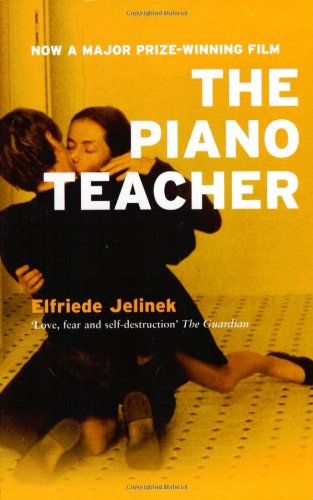
Book 158, Austria: Elfriede Jelinek’s "The Piano Teacher"

Kind of tricky to track down this book – the National Library had only one English-language copy in stock, and it was checked out. (Oddly enough, the Mandarin and Malay translations were still available.)

Had to go down to my old stomping grounds of NTU to check out the copies they had on reserve there as compulsory syllabus readings, in between Thomas Mann’s Death In Venice and WG Sebald’s... something or other.


And damn. Now I know why the censor-happy National Library won’t keep multiple copies in stock. Never mind that this is a work by a Nobel Prize Laureate, the greatest Austrian writer of her generation; a work made into a landmark critically acclaimed work of Franco-Austrian cinema.

The truth is, this book is sick, in the best way possible. Oh, the perspective’s technically third person, but it goes under your skin… It begins with a portrait of the twisted relationship between the 36-ish-year-old piano teacher Erika Kohut and her Mother; they live together in a tiny flat and the Mother refuses Erika any luxuries whatsoever, flying into a rage when she spends money on a dress to make herself look pretty, pretty girls are sluts, etc., all she wants to do is keep Erika as her tool to earn enough money for her old age so they can live together in a bigger condo, and all this good-for-nothing daughter does is waste her pay on frivolities…

So we hate the mother, and we’re rooting for Erika, and even more so when we learn that Erika was groomed to be a great concert pianist from her girlhood, her mother and her grandmother consumed by dreams of fame and success that brought them to Vienna, the city of music. But somehow Erika screwed up a critical recital and has had to live her life as an angry repressed spinster piano teacher at the Vienna Conservatory…

…and it turns out she’s kind of an awful person as well, deliberately kicking or pinching people in crowded trolleybuses, stalking through the Turkish district to look at girlie peepshows or Prater fairgrounds to catch couples doing it in the grass (there’s some horrible things said about Turks and Yugoslavs in the process; hope that’s the character speaking and not the author)…

… and there’s a young, blond, athlete of a piano student named Walter Klemmer, and he’s hot for her, and she’s hot for him, but he’s asserting his god-given male entitlement and worship of his own 7-inch cock on the world, flirting with every young girl, and she won’t do with that, and so she hurts other people, she hurts herself especially, she hurts her mother too, and she hurts Klemmer, in a series of psycho nonconsensual BDSM sequences in the conservatory toilets, broom closets and her mother’s sacred bedroom…

In a way, it’s a feminist’s nightmare: a woman writing about women who are hysterical, steely in public but desiring domination and punishment in private, women who are wildly weak. Women like the heroines of Greek tragedies. Xiao bitches, as Singaporeans would say.

And it is written so damn well. Aiyah, I’ll just leave it at that. Wonder how on earth I can learn from this prose style. (Rather pleased that NTU students are reading it… how does it change their lives?)


View Around the World in 80 Books!!! in a larger map

Representative quote: Erika holds Walter Klemmer at arm's length. She pulls out his dick, which he has already slated for deployment. It only needs the finishing touch, for it is already prepared. Relieved that Erika has taken over this difficult task, Klemmer tries to push his tach down all the way. Now Erika has to resist him with her entire weight so she can remain upright. She holds Klemmer's genital at arm's length while he fumbles about randomly in her vagina. She lets him know that is he doens't stop, she'll leave. She softly repeats her threat several times, because her suddenly superior will has a hard time getting through to him and his rutting fury. His mind seems fogbound with angry intentions. He hesitates. Wondering whether he's misunderstood something. Neither in the history of music nor anywhere else is the suitor simply barred from events. This woman has not a spark of submission. Erika starts kneading the red root between her fingers. She demands a privilege, but refuses to grant it to the man. He must go no further with her.

Next book: Imre Kertész's Fateless, from Hungary.

Sunday, September 21, 2014

Book 157, Liechtenstein: "Liechtenstein: A Modern History" by David Beattie

Sometimes doing this blog is more of a ritual than anything else...

 So, Liechtenstein. Principality of 35,000 people. How many writers amongst them? One prominent one, in fact: Prince Hans Adam II himself, who's scribbled out a rather well regarded text called The State in the Third Millennium.

In retrospect, I should've ordered myself an ebook version, because what I ended up with instead was dry dry book on history and constitutional law and economy:


Was there anything worth remembering from my couple of hours skimming through this book? Well:

• a Roman soldier’s helmet has been discovered on Liechtenstein's territory, bearing his name (not mentioned) but not, alas, his legion,

• during the Middle Age witch-hunts, out of a population of 3,000 people in the principality, 300 were tortured and executed,

• the many Jewish immigrants involved in the banking industry fled before WW2, which was a shame because they would have been pretty safe. Liechtenstein never capitulated to the Nazis, remaining resolutely neutral, avoiding an Anschluss (Hitler once grumbled that he never wanted to hear words Liechtenstein and Switzerland again “because the people there hate me") and a Nazi putsch,

• after the war, Communist Czechoslovakia insisted that the Liechtenstein royal family were Germans and had to hand over their land in their territory, when in fact they were only kinda culturally German the way many German Czechs like Kafka were,

• during the 1968 referendum, separate votes were held amongst men and women to decide whether or not to allow women’s suffrage. Most men – and most women - voted against it. (This kind of direct democracy is quite feasible in such a small country.)

• it's naturally hard to figure out what holds the country together culturally (a third of the residents are non-citizens, though they're mostly Germans and Austrians), but a lot of it's the royal family,

• also, the country's "economic miracle" is thanks not only to banking (the author was very forgiving of the whole tax avoidance and money laundering thing), but also to high industrialisation - they had an early hydroelectric dam, plus manufacturing bases for false teeth.

Yeah, I think that's about it. Most of the book was really fawning over the princes - and yeah, that's all of them on the cover, from Karl I who bought the area in 1608 to Hans Adam who's still there right now. The author's a former British ambassador to Switzerland and Liechtenstein. Maybe he had a crush of Hans, who is quite the silver fox.

There was also a bit about the Princes' extensive art collection, which has been on show at the Met and Singapore (he once sold a Franz Hals to help with state finances, not that there's any public debt now). And in fact I was thinking of reading one of these art catalogues for this entry, but I felt, well, it's kinda awkward when the princes and the art aren't actually housed in Liechtenstein itself.

For a nice fun intro to this country, I'd recommend the chapter on the microstate from George Mikes's Switzerland for Beginners. Not that reading it was a total bore - interesting resonances for a Singaporean to read about this weird little mega-rich nation's survival, prosperity and uncertain future.


View Around the World in 80 Books!!! in a larger map

Representative quote:
“In 2006 the Pinricpality of Liechtenstein will commemorate the 200th anniversary of its full state sovereignty. It is younger than the USA but older than the modern states of Belgium, Greece, Italy, Germany and many others. In the heart of Europe, it is the diversity of Europe. Its people, its traditions, its institutions and its economy give it much to hope for. Amid their justified celebration of the past and heir optimistic anticipation of the future, many Liechtensteiners will reflect on the much-quoted words of Peter Kaiser, their first historian, the country’s representative at the German National Assembly in Frankfrut in 1848-1849 and one of those who defined Liechtenstein identity:

'If we understand our advantage correctly, we may present ourselves as a small nation that endangers nobody but commands respect from all. Life is short; but an honourable name remains and serves down to the latest posterity for an example and for emulation.'”

Next book: Elfriede Jelinek's The Piano Teacher, from Austria.