Saturday, February 2, 2013

Book 115, Micronesia: "The Island of the Colorblind" by Oliver Sacks

Got an extension on my playwriting project! So I don’t have to feel absolutely guilty about updating here. FYI, we’re now moving into the territory of the subaltern who cannot speak: a region where there are incredibly few internationally available books actually written by citizens/residents of the countries described. 

This, of course, is problematic, but for now I’m going to revel in the opportunity to write about Oliver Sacks, famed neurologist and author of classics such as The Man Who Mistook His Wife for a Hat. (I haven’t read any of his other books, mind you – just read about them on Boing Boing. But I’ve watched his TED talk!)


Seems I oughta read his other books. Sacks is one of those effortlessly eloquent British science boffins who’s not only passionate about his field but about life itself, and the words we use to describe it – in his preamble to this account of his neurological research voyages to the Pacific, he details his early love for explorer narratives: Captain Cook, Magellan, Dampier, Melville, even Professor Challenger and Dr Moreau.

There isn’t even that much science stuffed in here, especially in Book I, which involves his trip to the island of Pingelap in Micronesia, where a 19th century tsunami has left an island inbred enough to harbour a significant population of achromotopes (folks who are completely colourblind, not just the common red-green condition. Only rods in their retinae, no cones).

Easy enough to understand – the story therefore focuses on the pleasures (and occasional displeasures) of flying towards and living on this isolated tropical isle of imported spam and phosphorescent algae; also an unofficial anthropological study of what it means to be an achromotope (they call it “maskun”), aided by the experiences of Knut Nordby, a Norwegian psychologist and fellow achromotope who gasps in delight at finally finding his own tribe, as it were: a population of people who grow up understanding the condition of being oversensitive to light yet being mentally acute in every other way, able to spy the dimmest stars and night and tell which bananas are ripe, not from the colour, but from texture and smell.

There’s more science stuff in Book II: Cycad Island, which talks about a separate trip to Guam to investigate a form of quasi-Parkinson’s disease called lytico-bodig, whose cause has not yet been fully determined (though there’s a high chance it’s to do with eating food baked from the seeds of the cycad plants, which grow in abundance). Because of the medical mystery remaining here, there’s lots of explaining to do.

Consequently or nevertheless, it’s Book I: The Island of the Colourblind that’s more joyous to read – after all, it’s about a community of people who’re technically physically disabled but have little trouble rising above this, versus a story of old folks randomly going paralysed or catatonic (don’t worry too much: no-one born after 1962 seems to get lytico-bodig).

Wonderful little segue as well, when Sacks leaves Pingelap for the larger Micronesian island of Pohnpei, where he and his friends explore the thousand-year old ruins of the civilization of Nan Madol, which I only learned about last year from the forum discussion pages of Civilization V, and how it makes him consider:


Never heard of any of these before. How amazing, no, to excavate these obscure histories? Moments like these, the world seems so fantastically big.


View Around the World in 80 Books!!! in a larger map

Representative quote: Knut took out the cowrie necklace which Emma Edward had given him on Pingelap and, turning it over and over in his hands, started to reminisce about the trip. “To see an entire community of achromats has changed my entire perspective,” he said. “I am still reeling from all of these experiences. This has been the most exciting and interesting journey I will ever make in my life.”

When I asked him what stayed in his mind above all, he said, “The night fishing in Pingelap… that was fantastic.” And then, in a sort of dreamlike litany, “The cloudscapes on the horizon, the clear sky, the decreasing light and deepening darkness, the early luminous surf at the coral reefs, the spectacular stars and Milky Way, ad the shining flying fishes soaring over the water in the light from the torches.”

Next book: Jonathan M. Weisgall’s Operation Crossroads: the Atomic Tests at Bikini Atoll, from the Marshall Islands.

Friday, January 25, 2013

Book 114, Palau: "Falling Blossoms" by Hiroshi Funasaka

Really shouldn't be wasting more time on my blog, given that there's still a script and several articles and a lesson plan I should be working on. But this reading list does give me direction, dammit, and those directions take me in awfully surprising places sometimes.

F'rinstance, I can't find a native author from the nation of Palau (independent in 1994, bitches!). But I do know that it's the site of one of the most horrific battles of the Pacific War, one in which the Japanese - rather than other Asian races - ended up doing the most suffering.


There are already established popular history books looking at this war from the American perspective. But who knew that Singapore had published a translation of a Japanese perspective - with a foreword from Yukio Mishima, no less! Seems Hiroshi Funasaka was Mishima's kendo instructor - even gave him the very sword that Mishima used to commit harakiri in 1970.

This book was first released in 1965 as 英霊の絶叫 (Eiri no zekkyo), which actually translates into "scream of remembrance". Indeed, it's this very angst, the rawness and bloodiness of the account that probably drew Mishima to the material. "This is not a novel, nor a literary work, nor even a kind of autobiographical record," he wrote. "It is the manifestation of his cries, the roar of his life proclaiming a long unnoticed reality.

We begin the story with Funasaka's visit to the island of Angaur in 1965, discovering the bones of his comrades still clutching helmets and swords and the flag of the rising sun - then back to 1944, when the Americans are attacking their base on the island while the soldiers strengthen themselves by singing songs of the sakura while the coconut trees around them explode with napalm and machine-gun fire. Over the course of the battle, Sergeant Funasaka gradually loses almost all of his men but three, then loses the functions of his legs and his right arm, then loses even those three comrades, and lies starving and dying of thirst and heat in a cave with the other Japanese, still loyal, still angry, still deadly: able to launch katana and pistol and grenade attacks on American soldiers by crawling up to them through the bushes.

It's awful stuff. And not just because of the gore - the Japanese soldiers are so hungry, they eat the maggots from one another's wounds - but because of the depth of the indoctrination; how Funasaka recounts his drive to exterminate the Americans from the island, regardless of their superiority of numbers and resources and firepower and technology, just because he believes it is shameful to survive, not to return with his friends as ashes in Yasukuni Shrine. (This stuff's narrated in the thick of it, so it's hard to tell till a few paragraphs later that this is an ideology he's actually abandoned now.)

But the hero of the story - at least according to Funasaka - is Corporal Forrest Crenshaw, the American GI who takes care of him after he's captured as a POW. A former truck driver, Crenshaw learned to speak Japanese in the barracks and made a concerted effort to reach out to this guy who was obsessed with accumulating enough matches to go out in a huge suicide attack, trying, trying to bridge their cultures without obligation. The story zips between past and present, so we see them still at loggerheads 20-somethings in one paragraph, and genteel successful 40-somethings visiting the shrines of Kyoto in another. And still trying to bridge differences, to make their ideals understood.

According to this text, Funasaka actually converted to Christianity in 1972 - Crenshaw had bugged him to accept the defeat of Japan as God's will - and I can't help noticing that this was seven years after the book's initial release and two years after Mishima's act of sepukku. Could Mishima have been inspired by the spirit of bushido in this book, missing in capitalistic Japan - and could Funasaka have been driven by this terrible action to absolutely repudiate his culture, turning instead to a foreign god to sever his connection to the Yamato spirit?

Idle speculation. Seriously, though, this book should be put back into print - a wonderful comparative resource for war buffs.


View Around the World in 80 Books!!! in a larger map


Representative quote: I am so close to death, my body is broken and filthy, I thought, but at least I should die with a clean heart. Hana ga sakura, minyen wa bushi. (A warrior among men is like the cherry blossom among flowers.) These are words which I love. Up to the moment I die, I want to live courageously, with a heart free from fear. This is the Way of the Warrior - to give one's life selflessly in the line of duty. I completely believe this. I was going to have to ignore the fact that I was going to die dirty, starving and full of bugs.

Next book: Oliver Sacks's The Island of the Colourblind, from Micronesia.

Saturday, January 19, 2013

Back from Myanmar!

But once again, I'm crazy-busy with Flying Circus Project. Almost finished with the Palau book though. Might be a good time to show off the books I've harvested!


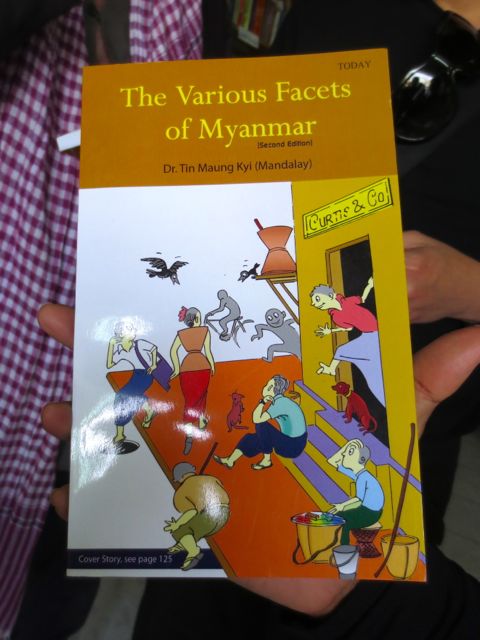
Not that many, all told - just this book from Mandalay popular historian U Sein Myint, plus a book of Burmese folktales I'm having trouble tracking down right now. More eventually!

Friday, January 11, 2013

Kindle's broken again.

In Yangon still, blogging for the Flying Circus Project. I'd been hoping to catch up on research about the country while I was here, reading Aung San Suu Kyi's Freedom from Fear and Thant Myint-U's Where China Meets India and George Orwell's Burmese Days. And then this happens:


Not even a year since the last time this happened (which was also my fault). Similar stories: was carrying Kindle in bag, opened bag to find the screen damaged. This time the Kindle was covered by a folder, though - evidently that's not enough protection. Can't look after anything properly.

Thursday, January 3, 2013

Book 113, Guam: "Attitude 13" by Tanya Chargualaf Taimanglo

I've just flown into Myanmar, where I'll be maintaining the Flying Circus Project Blog for the next two weeks. I'm terribly short of sleep, and I've just learnt that we're not gonna get the chance to meet Aung San Suu Kyi at the Freedom Film Fest.

So let's get this over with, shall we? (I want to invest in a nap now so I can live larger later.)


Honestly, Attitude 13: A Daughter of Guam's Collection of Short Stories isn't that great. The style has a strong whiff of the amateur and the plots tend to end anticlimactically. If I had to grade these, I might give a B+ if I were being kind (some are better than others, though: Chirika's Pepper Plant, which won the author a prize with Latte Magazine, isn't half bad).

But the content is what saves the day. Taimanglo's exploring what it means to be a Guamese Chamorro woman in the 21st century - no longer sarong-clad natives to be studied by anthropologists, but college students in Honolulu, expatriates in Seattle, army officers serving their terms of duty in Afghanistan while their daughters wail for them on their home islands, 88 year-old marathon runners in nursing homes with spiky pink and blue hair. Also explored is the condition of being biracial: the author is Chamorro-Korean, and she's described what it's like to be labelled a Jap in school and denied recognition of your true island heritage in the clumsily titled Yes I Am. And also a rather nice fantasy piece at the beginning: an encounter between a washed-ashore mermaid and a jeep-driving, zori-wearing, culturally deracinated Guamese girl in today's world. (Yes, there are stories about boys and men too, but it's clearly womanhood that takes centrestage.)

I suppose I'm drawn to this cultural testimony - not just because I love how foreign vocabularies collide with English: chenchule', pica, buñuelos aga', dinugan, donne', finadene', Hafa Adai - but also because so many texts from Oceania are written by outsiders. Immigrants, colonists, anthropologists, wayfarers - they have the resources to talk about these cultures, not the natives themselves.

Taimanglo happens to be an emigrant, though - she's lived in San Diego and now she's a military spouse in Washington, if the Internet's to be believed. Well, better brains draining out and speaking out than brains staying mute under scrutiny, I suppose.

Damn, I need sleep. Later!


View Around the World in 80 Books!!! in a larger map

Representative quote: I left the movie theater and the cold Washington air embraced me. It was almost midnight and I was out with my fiancé. This was the 18th movie I watched with a date. You can feel happy for me. This was my own doing. I didn't get to the age of 35, engaged and still a virgin, by accident. I am a Goddess on purpose. I am a beautiful Chamorro woman, on purpose. My fat is no longer my shield. 

Next book: Hiroshi Funasaka's Falling Blossoms, from Palau.

Wednesday, December 26, 2012

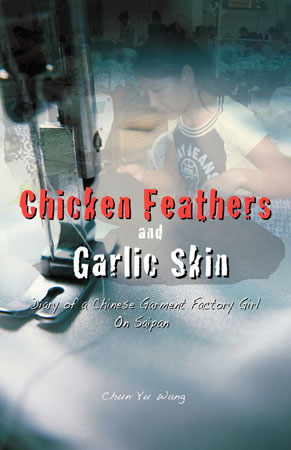
Book 112, Northern Mariana Islands: "Chicken Feathers and Garlic Skin" by Chun Yu Wang

Happy Boxing Day! Oh, I know it's still Christmas for some of you guys in the Western Hemisphere, but I'm well in the East, both physically and literarily. In fact, I've drifted all the way out to the Pacific, back to Oceania, where there's an obscure US territory called the CNMI, full of Chamorro-speakers, known primarily for its nearby trench.   


What most folks don't know is that the biggest island of the Marianas spent the first decade of the 21st century trying to get into the industrial age, importing loads of low-cost Chinese and Filipina women to work in garment factories so they could turn out Osh Kosh B'Gosh products printed "Made in the USA".

Hence the story above: a true-life tale of a 25 year-old Wuxi woman who went to Saipan to spent nine years of her adult life breaking her back over sewing machines. It's a weird kind of memoir: one of those situations in which a guy tries to make the subaltern speak (the initiator and editor of the book is the Jamaican-American-Saipanese journalist Walt F. J. Goodridge).

But Wang (yes, her surname is Wang, not Chun) is no hick either: she left her video-game playing husband in her home country because factory work in the Marianas was marginally better-paying, and took enough English courses to be able to translate her Mandarin manuscript to Goodridge, one-to-one.(He was fascinated by the Chinese idioms she used - the title, of course, is a transliteration of 鸡毛蒜皮 - even though these sound a tad hackneyed, even clichéd, to bilinguals.)

Frankly, the book isn't a must-read. It's an interesting look at the world of contemporary Chinese migrant labour, showing their aspirations and their sweat and their abuse from crooked overseers and their losses from burglars and accidents at home and worthless husbands and cops who claim they'll get them a green card and then disavow ever having received any payment.

Of course Americans are shocked by the suffering. But as a Singaporean, who's descended from and surrounded by migrant Chinese labour, I'm often thinking, "Meh. I've heard worse."

Which is horrible of me of course - recent events have thrust these marginalised workers into the spotlight, and we have to do something about it, if only to show that we're a society that treats people with humanity. But specifically regarding this book: Wang had her own home, free English lessons and the ability to quit her nasty factory jobs and search for new (usually equally bad) ones. Blue-collar foreign workers in Singapore just don't have those rights.

The interesting thing about a situation like this is that it shows how the oppressed masses aren't necessarily just victims. Wang and many other workers protest, walk out, steal and shag around to get what they want. And even when all the factories close (towards the end of the 2000s, costs rose and competitors like Vietnam became more attractive), Wang and her sisters realised they wanted to stay on, because they'd experienced freedom from their families and their obligations on this tiny, tropical island, and even if their sons were waiting for them at home, the only way to live for themselves was to be bad mothers, staying alive in the foreign sun.

Also - unrelated to workers' rights - one does get the sense that Wang isn't a particularly nice person. In her home, and at virtually every workplace, she's fighting with people, she's dissatisfied. Wherever you go, there you are, as they say.


View Around the World in 80 Books!!! in a larger map

Representative quote: Little by little, over the years and because of my trusting and kindness, I have lost most of my money. In all the years I worked, and all the money I earned, I accomplished nothing. In China, we would say, I added frost to snow. Adding frost to snow means "engaging in a futile, meaningless action that adds no visible benefit." That's what all my years of work on Saipan have been.

Next book: Tanya Chargualaf Taimanglo's Attitude 13: A Daughter of Guam's Collection of Short Stories, from Guam.

Thursday, December 20, 2012

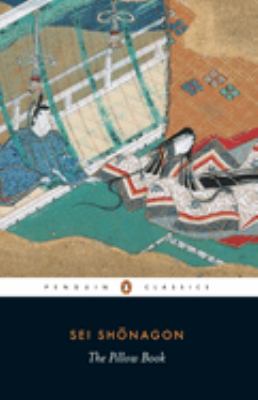
Book 111, Japan: "The Pillow Book" by Sei Shonagon


I’m back in Singapore! ILGA and the Scandinavian winter were amazing, consciousness-expanding experiences – I’ve written about some bits of ‘em on the ILGA Blog, and I might upload my e-mails to my folks to my personal site, The Paradise of Flowers and Fruit. Doing this project turned out to be pretty useful for socialising too - if I met a guy from Samoa, why, I could just mention that I'd read Albert Wendt and we'd have something to talk about straight off.

As for The Pillow Book, oh my: it took me all holiday to read. Surprising, considering how lightweight it is as a text, but Kindle for Mac had me clicking the screen all the time for the endnotes – it’s not a conducive medium to skimming at all.

But it was rather nice, absorbing these Japanese aesthetics of nature and seasonal change while trundling through the snow-covered mountainscapes of Norway. As much as Sei delights (this is a word used often) in the floral colours of court dress, she’s also in love with the images of winter: the snow on a gentleman visitor’s cloak, a lady holding a lighted coal to a letter to read it in the darkness.

Much has been made of the lists in this book – refined and elegant things, things that make your heart beat fast, things that make you nostalgic – but as translator/annotator Meredith McKinney notes, the literary form was quite established by 994, when Sei received the gift of paper which formed The Pillow Book. In fact, she deviates from standard lists, distracted by personal memories and commentaries.

And so much of this text is made of memories: little episodes in court that show off the pageantry of Emperor Ichijo and Empress Teishi, that are evidence of her wit as she bests the male courtiers in their games of quoting the Chinese classics – though a refined woman was not supposed to be able to read Chinese; thus her exhibitionism was necessarily veiled by sly self-effacement.

And what a strange world for women this was: where it was proper for court ladies to remain behind screens when addressing men, yet extra-marital affairs were not frowned upon. (A disproportionate number of these East Asian texts I’m reading are by women; have you noticed?)

Of course the whole work’s made more poignant because you know this gilded world was not to persist: Teishi fell from favour and died two days after childbirth, after which Sei left the court and by tradition died an impoverished crone; a couple of centuries later and the empire was transformed into the wartorn battlefield of The Tale of the Heike.

But for a while, this beauty, this perfection. And how grand that these moments of delight were captured well enough to remain on the shelf of world literature, perennial amidst the changing seasons.


View Around the World in 80 Books!!! in a larger map

Representative quote: 
[71] Rare things – a son-in-law who’s praised by his wife’s father. Likewise, a wife who’s loved by her mother-in-law.

A pair of silver tweezers that can actually pull out hairs properly.

A retainer who doesn’t speak ill of his master.

A person who’s without a single quirk. Someone who’s superior in both appearance and character, who’s remained utterly blameless throughout his long dealings with the world.

You never find an instance of two people living together who continue to be overawed by each other’s excellence and always treat each other with scrupulous care and respect, so such a relationship is obviously a great rarity.

Copying out a tale or a volume of poems without smearing any ink from the book you’re copying from. If you’re copying it from some beautiful bound book, you try to take immense care, but somehow you always get ink on it.

Two women, let alone a man and a woman, who vow themselves to each other forever, and actually manage to remain on good terms to the end.

Next book: Chun Yu Wang's Chicken Feathers and Garlic Skin: Diary of  Chinese Garment Factory Girl on Saipan, from the Marianas.