Wednesday, August 3, 2011

Book 72, Seychelles: "Seychelles Global Citizen" by James R. Mancham

Just back from a three-day holiday with my boyfriend in Kuching, Sarawak! Picked up four collections of folktales, drawn from the Bidayuh, Melanau, Orang Ulu and Iban peoples – all for the price of RM 35 = S$14.24. Once again, SCORE.

In the meantime, I finished the autobiography of Seychelles’s first chief minister and president, which I purchased for US$12.69 = S$15.33, used, on a last-minute impulse via Amazon and had delivered via my little brother Yixian:


And honestly? It’s not that good a buy. Though Mancham isn’t a bad writer, per se, he’s in dire need of an editor. There’s the makings of a great story in his life, but his insistence on including every last detail of his experiences and impressions, causing anecdotes to be occasionally grouped by theme rather than sequence, his refusal to hold back on his condemnation of his usurper France-Albert René until the coup’s actually happened, and the way he falls back on his favourite damn quotations and clichés – winds of change, après moi le deluge, there is enough in the world for everyone’s need, but not for everyone’s greed – ah, all this could have been solved with the use of a few hours and a stout red pen, but none of that happened here, nosiree.

Still, the book’s terribly good as a reference text (especially considering the dearth of info on this guy’s life on Wikipedia). Mancham starts with his Chinese-French background and his father’s enterprising history and his Oxford education; then the world of statecraft: how he developed the Seychelles as a tourist destination by bringing in an international airport and numberless celebrities (Princess Margaret, Peter Sellers, Yul Brynner, the Shah of Iran), ensuring all the while that the image of the islands as an untouched paradise would not be spoiled, that the locals would not resent the outsiders since they, too, were allowed to enter the hotels and dance in the ballrooms.

And perhaps most interestingly, how impossible it was for the nation to point out that its citizens did not want independence: the majority voted for a closer relationship, even union with the UK every time (a situation like Réunion’s with France was what they had in mind), and yet the African lobby in the UN and the UK’s sheer exhaustion with keeping up an empire meant that the Crown was simply not prepared to maintain its colony. So, to Mancham’s chagrin, the nation was free.

Which would all have been very well except that he was pressured into forming a coalition government with René, who’d already been placed under suspicion since his Tanzanian-backed followers had been detonating bombs across the country. René of course repaid his kindness by overthrowing him in a bloody coup a few years later and exiling him and his family from the nation for 15 years. Under René, the nation pursued socialism, suppressed freedom of speech, operated as a one-party state, imprisoned dissenters (there had not been a single political prisoner before this period, not one) and imposed a brainwashing national service for both young men and women. (Wikipedia notes that infant mortality also went down during this administration, and attained several #1s for development in Africa, which might not actually be that hard to accomplish.)

Ugh. Pretty obvious who the good guy and bad guy is in this story, no matter how boring the good guy is at times. Mancham also mentions how big an admirer he is of Lee Kuan Yew, and how he was accosted in Takashimaya Shopping Centre recently by “three Chinese gentlemen” who wished him to play Santa Claus at an upcoming children’s party. (Mancham says he would’ve said yes, only he was flying out. A real bon-vivant sort of guy, the kind who understands what tourists value.)

I’m thinking of donating this book to the National Library – no use for me to keep it, since no-one else’ll read it, and currently the only book they’ve got on Seychelles is Christopher Lee's Seychelles: Political Castaways, dated 1976, just before the coup in 1977. Already tried to get them to stock it for me, but they claimed it was out of stock (evidently, buying from a second-hand dealer is beneath them.)

So how do I convince them to take it off my hands? Honestly, it belongs in the reference section, not the Book Crossings bin.


View Around the World in 80 Books!!! in a larger map

Representative quote:
Far too often in life those close to me have accused me of being an unshakeable optimist. In the present doom and gloom, while anxiety makes common mortals sweat profusely, those still wearing a smile may be taken for cranks or provocateurs, yet as the poet pointed out, night is always followed by day and storms often herald rainbows.

Next book: Paradise by Abdulrazak Gurnah, from Tanzania.

Thursday, July 28, 2011

Book 71, Mauritius: "The Prospector" by JMG Le Clézio

Yep, yet another Nobel Laureate! Mind you, Le Clézio was born and bred in France, but his dad's from Mauritius and he holds dual French-Mauritian citizenship and he occasionally lives on the island too. So, yeah, he counts. (Still feel guilty I'm not doing Joseph Tsang Mang Kin's The Hakka Epic, though.


As for the book, which is Le Clézio's "crowning achievement" - well, I honestly spent most of it being puzzled over why he won that Nobel. Not because it's badly written - far from it! - but the fact is that the content is far from revolutionary. It's basically a historical novel, telling the story of a poor white colonial kid named Alexis L'Étang living from the late 19th to early 20th centuries. All the necessary exotica's thrown in there: shipwrecks, jungles, plantation life, hurricanes, a sexy and mysteriously wise island girl, worker revolts and a stint in the trenches of World War One.

True, it's written quite beautifully: lush but distanced descriptions of nature and remembered folklore. But the modernist project here is quite subtle: no breaking the form as Orhan Pamuk or Luis Rafael Sánchez do. And remember, the Nobel Committee usually selects someone who's either a political or a poetic revolutionary. Where's the beef?

I only started to get a sense of transcendence when Alexis returns from the war and returns to his obsessive project of attempting to excavate the treasure of the Unknown Corsair, so he can buy back the land his uncle stole from his father: the unforgotten Eden in Boucan Valley, where the tree of knowledge was planted, where he swam with his black companion Denis in the sea. The grand, relentless, desperate search for gold, guided by ancient maps and symbols, seemed to be an allegory for the the writer's craft in uncovering literature from his soul.

And yet the story ends with Alexis accepting the futility of it all. So either Le Clézio's an extreme pessimist or my exegesis fails.


View Around the World in 80 Books!!! in a larger map

Representative quote:
In the evenings, while the twilight deepens, I sit in the sand on the dunes and dream of Ouma and her metal-coloured body. I make a drawing of her with a sharp piece of flint on a basalt block near where the reeds start. But when I want to write the date I realize that I don't know what day or month it is. For a moment I think of running to the telegraph office as I did before, to ask: What day is it? But then I realize that it wouldn't mean anything to me, that the date is of no importance.

Next book: James Mancham's Seychelles Global Citizen, from the Seychelles (duh).

Monday, July 25, 2011

Library Book Sale!!

I'm only two-thirds through The Prospector - not because it's long or dull, but because I've been busy rehearsing for and performing in our theatre-live poetry-dance-multimedia production, The City Limits.

So, to keep you amused, I'll show off my stash from this weekend's National Library Book Sale:


Ain't they purty? And all of them cost $2 each, beat that.

Top row: Mervyn Peake's Gormenghast, Victor Pelevin's Omon Ra, Paul Jordan's The Atlantis Syndrome.
Middle row: Ben Tal-Shahar's Happier, Octavio Paz's The Labyrinth of Solitude (English edition!!!), J Minter's Take It Off.
Bottom row: Jim Crace's Being Dead, A Samad Said's Ballad of the Lost Map, DGE Hall's A History of Southeast Asia.

No way I'll finish them anytime soon; some of them never (the History of Southeast Asia was published in 1981, and it seems useful only as an occasional reference tome; worth the small change.)

But honestly, the sale is a great source of texts - it's where I got my Zimbabwe book from, fr'instance.

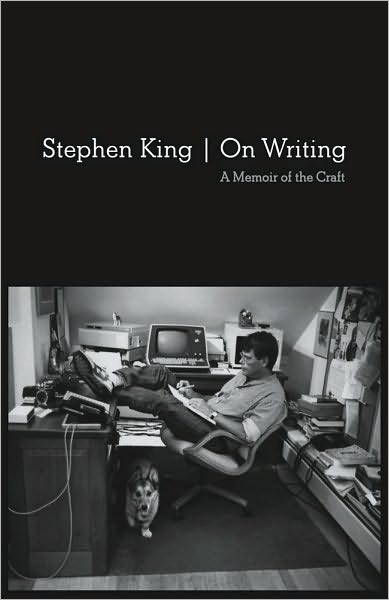
In other news, I'm concurrently reading Stephen King's On Writing:


And Catherine Lim's Miss Seetoh in the World.


Bibliopalooza! Will update again shortly.

Sunday, July 17, 2011

Lord have mercy.

A couple of days ago, Frank Chipasula e-mailed me about my Malawian poetry post.

Tonight, I discovered Nestor Amarilla is following me on Twitter.

The world's getting too small...

Thursday, July 14, 2011

Book 70, Réunion: "The Last Colony" by Michael Steane

Don't buy this book. Seriously. It cost me US$0.99 via Amazon Kindle and I still feel like it wasn't worth the money. As Dorothy Parker said, "This is not a novel to be tossed aside lightly. It should be thrown with great force."


But of course The Last Colony: An Experience of Reunion Island isn't a novel; it's a memoir, written by a British electric technician who spent three years there as an English teacher en route to migrating to Australia. A bit like With Sword and Chain in Lusaka, only in this case the author's an utter nobody, who can't even write that well - he even admits as much in his intro, when he apologises for how disjointed the book is, utterly contrary to the advice he used to give his students.

Truth is, I can deal with the disjointedness. It's actually pretty interesting to read the details Steane gives about culture on the island: the drunkenness, the high prices, the overlapping of Islam, Catholicism and Hinduism, the mendacious marabout shamans from mainland Africa, the violent crime, the beauty of the Creole girls, the skills of the pickup artists and the scandals and corruption of the politicians.

What I can't deal with is:

1) The fact that most of the book is about his struggle with French bureaucracy, and how contrary to the principles of the newly inaugurated European Union all this is (he migrated in '91 and couldn't find a job because he was British and jobs were reserved for Frenchies). Truly, he's got nothing good to say about the French - he claims their greatest contribution to civilisation was giving Henry VIII syphilis thus leading to the English Reformation. Reading an anger-filled screed against foreign civil servants is not much fun.

2) Really odd grammar. He's made the conscious decision to narrate most of the book in present tense, despite the fact that most of the events are long behind him, thus necessitating frequent shuttlings between present and past tense. Combined with the jumbled sequence of events - well, really, there's no story in the end. No recurring characters, barely any dialogue - it doesn't have to be genuine: A Trip to the Beach made up half its sequence and it still leaves you with a sense of joy in life.

Gah, the guy just can't write well or just isn't trying. Couldn't even tell "principle" apart from "principal". Don't think that was a typo.

What's really weird is the fact that he confesses to having really loved certain aspects of the island: the gorgeous nature, the volcanoes, the children, the ladies (not one of whom has her character elaborated upon - did they just not stick around long enough to find out?). He even closes the book with a bunch of tips on tourist attractions. But after having read such an irritable travelogue, who would want to visit?


View Around the World in 80 Books!!! in a larger map

(I'd want to, actually. The Indian Ocean Regional Poetry Slam is held there, and Singapore's sending a representative there following our own slam finals on 21 July. Benjamin Chow deserves to go as our best champion, but it'd be so freaking cool to attend!)

If you're looking for alternatives to this book, there's a whole tradition of littérature réunionnaise you can look up yourself, but none of it seems to have been translated into English.

Representative quote: Farewell Reunion. Forgive me for my anger. Forgive me for the book I am going to write.

Next book: J.M. Clézio's The Prospector, from Mauritius.

Monday, July 11, 2011

Welcome to the world, South Sudan!

Goody! Another nation to read in this project! Now internationally recognised and all!


Unfortunately, I'm also reading about the history of Sudan in Richard Dowden's Africa: Altered States, Ordinary Miracles, and after hearing what SPLA has done to its own people in the past, I can't be too optimistic about the nation's immediate future.

Still, the prior situation of South Sudan was quite untenable. Maybe there's a path towards long-term development now. Boo yeah!

Now, when is Google Maps gonna update itself?


Tsk tsk.

Sunday, July 10, 2011

Book 69, Madagascar: “24 Poems” by Jean-Joseph Rabearivelo

Unfortunately I can’t get my paws on the recent English translation of this guy’s poems, Translated from the Night. This bunch forms just a thin volume – more of an illustrated pamphlet, really – and was published by les Amis de Rabearivelo in Ibadan, 1962. (It’s only in the National Library’s reference section because of good ol’ Edwin Thumboo’s donation. That’s a good laureate!)


Rabearivelo’s historically important because he’s widely viewed as Africa’s first modern poet. This is why folks doing a reading project like this should pick his work instead of trashy, viciously reviewed novels like The Sapphire Sea.

But he’s also aesthetically important because he’s really a rather good poet. True, I’m reading the stuff in English rather than in French/Malagasy, but there’s a dreamlike grace and vibrancy to his images that you don’t see everywhere – complete beauty and ambivalence of feeling, yet clear strength.

Oh, and he’s clearly a nature poet. Barely a breath of the city in these pieces: some Christian/Muslim village life, a black glassmaker, an artist who plucks bamboo to shape it into zithers in town.

This is nature in a very European sense, though: not jungle but a sedate, stellar, almost astronomical view of lianas and birds and pomegranate bushes, kissed with passionate dispassion by the sun. (Astronomical is quite right; there’s a lot of talk of stars and moonbeams and the movement of the Earth: he calls the Southern Star the white bull, as the Arabs do.)

Some cool modernist paintings in this edition too, by M.E. Betts: they look like what Picasso might make with Chinese ink, only they’re black and white and from Africa, so maybe they’re something quite other.

Sorry, not much else to say. Teeny-tiny book!


View Around the World in 80 Books!!! in a larger map

Representative quote:

X

There you stand
erect and naked
you are a lime tree and remember;
but truly you are the child of this fertile shadow
that feeds on lunar milk;
slowly you take the shape of a pillar
on this low wall over which dreams of flowers drift
and the perfume of a relaxed summer.

To feel to believe that roots sprout at your feet
and move and twist themselves like thirsty snakes
towards some underground source
or that clench the sand
and make you part of it, you, living one,
unknown tree, unnamed tree
that develops fruit
which you must pluck yourself.

Your crown,
in your hair dishevelled by the wind,
conceals a nest of transcendant birds,
and when you will come to sleep in my bed,
and I will recognise you, my errant brother,
your touch, your breath, and the odour of your skin
will provoke the rustling of mysterious winds
even to the frontiers of sleep.

Next book: Michael Steane’s The Last Colony: An Experience of Reunion Island from Réunion.