Thursday, May 31, 2012

An apology to South India

I'm still working on Kalidasa, the 4th century playwright and poet, and he's pretty damn interesting. But my conscience has been bugging me a little over my choice, so I've gotta make a post about the cool folks I didn't feature.

You see, when the West discovered Indian culture, they mostly went gaga over Northern Indian culture: the Vedas, Valmiki's Ramayana, the Kama Sutra, etc. This was literature written in Sanskrit, virtually the Ursprach of the Indo-European language family tree.
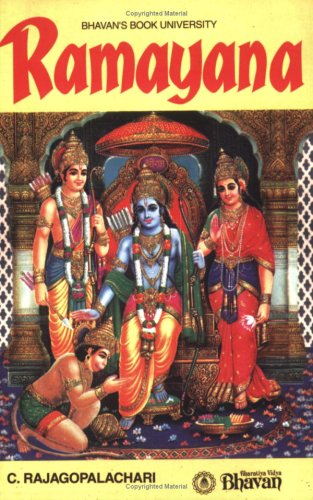

What's less publicised is the fact that Tamil literature is older and just as rich. In fact, the Tamils believe they were there first: they were the Dravidians of the great Indus Valley culture, the builders of Harappa and Mohenjo-daro, marginalised by the invading Aryan barbarians (although the last bit turns out to have very little actual historical evidence).

As the boyfriend of a Tamil guy, and as a citizen of a country where Tamil is an official national language (and which was once colonised by the Chola Dynasty), I feel a vague sense of duty to stick up for Tamil culture. That's why I read Thiruvalluvar's Thikkural and bought The Blaft Anthology of Tamil Pulp Fiction as soon as I heard about it. I've been bugged to read the Sangam texts too, and Kamban's 12th century version of the Ramayana, the Ramavataram.

In fact, I just received my copy of Shilappadikaram (சிலப்பதிகாரம், or The Ankle Bracelet) in the mail:


It's by the Jain monk/poet/prince Ilango Adigal, and it apparently features a sequence where the widow Kannagi hurls her breasts at the kingdom of an unrighteous king and they turn into grenades and explode! Whoa boy, that's some freaky Japanese shit right there. My friends also assure me that Tamil culture was much more interested in female perspectives than those Sanskrit snobs.

Contemporary Indian culture is still hella Nordocentric, of course: Bollywood and Salman Rushdie and Slumdog Millionaire and The Best Exotic Marigold Hotel and even bloody Octopussy are still all about Delhi-Agra-Rajasthan-and-now-Mumbai; never mind Chennai and Madurai and Mahabalipuram (and Mysore and Bengaluru, I suppose, they're in Kannada-speaking Karnataka but they're also lovely places).

Of course these internal subdivisions are evident in every country; no book is completely representative of the nation it's from. But just wanted to say, you know? Just wanted to say.

UDPATE: Look what Blaft Publications tweeted about this post!


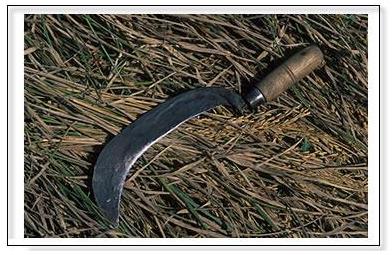
This, by the way, is what an aruval looks like:

Yikes.

Wednesday, May 23, 2012

Book 97, Bangladesh: "Selected Short Stories" by Rabindranath Tagore

As you know, Tagore was an amazing poet: made the Europeans swoon with his Gitanjali. (Left me a bit ho-hum, to tell the truth: I am not a truly mystical soul.)


I'm here to report that he was also a master of the short story form. These pieces are some of the first literary short stories ever written in Bengali, composed while he was looking after his ancestral states in East Bengal (now Bangladesh) in the 1890s, reflecting on the nature of Indian village life which he'd seldom encountered in Calcutta and Sussex. The intro says that he was only driven to write these 'cos the magazine editors wanted 'em - a lot of critics back then didn't like 'em, in fact; said they were unrealistic, overwrought.

The way I see it, they're wonderful admixtures of poetry, realism and fantasy - and, yes, fantasy: he has Poe-like horror pieces like The Hungry Stones and Skeleton; fables like Wishes Granted in which a fictional Goddess of Desires descends to make a boy and his father swap places. Even in the social realist pieces, there's that wonderful sense of destiny and fate and spirituality looming over everything - the heartbreaking reappearances of vanished sons in Little Master Returns, Wealth Surrendered, Son-sacrifice, and the curse averted in The Gift of Sight...

Oh and I should warn you that Tagore is prepared to do horrible things to his characters. No Dickensian jolly opportunities for reform here; instead the Catherine Lim-esque ironies bounce back on these folks and ruin the very purpose of their lives. This is the Kaliyuga, after all: the age of the fallen. But speaking of ages, it's incredible to think these are tales from two centuries ago: the concerns are identical to those of South Asia today: religious divides, caste, bride prices, oppression of women, a culturally denatured generation of middle-class intellectuals. It's only when they mention that they're riding horse carriages rather than Tata Nanos that you realise how ancient this is.

Interesting thing about my earlier concerns about whether this is a Bangladeshi text, since the characters aren't Muslim. There are indeed Muslims, but they're marginal, sometimes exotic figures - an ancient Mughal princess in False Hope, a murderous but kindly sweetmeat seller in Kabuliwallah, a secret mistress of a Brahmin land-owner in A Problem Solved. 

What makes this Bangladeshi for me is the call of the river Padma: the flooding waters that strand lovers on islands and swallow up firstborn sons. Floods are very Bangladeshi indeed.


View Around the World in 80 Books!!! in a larger map

Representative Quote: from Guest.

 Early monsoon clouds formed in the sky. The village-river had been dried up for weeks; there was water only in holes here and there; small boats lay stuck in these pools of muddy water, and the dry river-bed was rutted with bullock-cart tracks. But now, like Parvati returning to her parents' home, gurgling waters returned to the empty arms of the village; naked children danced and shouted on the river-bank, jumped into the water with voracious joy as if trying to embrace the river; the villagers gazed at the river like a dear friend; a huge wave of life and delight rolled through the parched village. There were boats big and small with cargoes from far and wide; in the evening the ghat resounded with the songs of foreign boatmen. The villages along the river had spent the year confined to their own small worlds: now, with the rains, the vast outside world had come in its earth-coloured watery chariot, carrying wondrous gifts to the villages, as if on a visit to its daughters. Rustic smallness was temporarily subsumed by pride of contact with the world; everything became more active; the bustle of distant cities came to this sleepy region, and the whole sky sang.

  Next book: Theater of Memory: The Plays of Kalidasa.

Tuesday, May 15, 2012

LAN FANG CHRONICLES, 18 May to 2 June

Obviously not done with Tagore yet.  In the meantime, I'd like to advertise that I'm one of the collaborators for a multimedia-installation-performance arty-interactive theatre experience called THE LAN FANG CHRONICLES!

It's being performed from this Friday onwards as part of the Singapore Arts Festival. Please come!


Director: Choy Ka Fai
Date: Fri 18 May-Sun 2 Jun, 7pm (3:30pm matinees on selected dates)
Venue: Ying Foh Kuan (Shuang Long Shan) 9 Commonwealth Lane, Singapore 149551
Tickets: $25 from Sistic


The Lan Fang Republic was the first democratic state in Southeast Asia. It began as an independent settlement of Hakka Chinese gold miners in Western Borneo, and it lasted from 1777 until 1884. It bears more than a few similarities to another struggling republic that we're familiar with.

This performance, taking place on the grounds of a Hakka Clan Association, uses both historical fact and fiction to bring this forgotten civilisation to life.

It's arisen out of a project by acclaimed multimedia artist and theatre director Choy Ka Fai, a marvellous fellow with whom I've collaborated on the theatre projects V.I.S.T.A Lab and Reservoir. An early version of this was previously presented as an installation/project at the Singapore Art Museum.

There are loads of cool collaborators in this - playwrights Zizi Azah and Robin, director Fared Janial, actors Pat Toh, Loke Meng Chue, Najib Soiman, Rizman Putra, Yak Aik-Wee, Bright Ong, Serene Chen and Nora Samosir. (They're not all on stage on the same nights, so you may want to come multiple nights!)
Here's a Vimeo preview, and more info from Ka Fai's website.

Come come come come!
P.S. We're also doing a talk at Library@Esplanade, this Saturday 2-3:30pm!

Monday, May 7, 2012

It's Rabindranath Tagore's birthday!

His 151st birthday, to be precise. And I'm reading his short stories!


He was born on 7 May 1861 and died on 7 August 1941, as I learned from Wikipedia. First Asian winner of a Nobel Prize, too.

And as you can see, he was a FOX. Like a cross between Jesus and Santa Claus, only Hindu. That's him acting in one of his plays, The Genius of Valmiki:


The truth is, I'm feeling pretty guilty about using Tagore for Bangladesh. He lived in British Bengal, and was born and died in the bit that's currently in India. Plus, he was Hindu, and wrote about Hindus, while Bangladesh is Muslim.

On the other hand, Bangladesh venerates him as a national hero and uses one of his songs as its national anthem. Tagore also happened to write most of his short stories while managing his ancestral estates in Shelaidaha, in present-day Bangladesh.

 I was pretty sure Mr Tagore was my best choice (there aren't, sadly, a lot of internationally famous Bangladeshi writers around today), until I realised I could do books by the inventor of microfinance and founder of Grameen Bank, Mohammad Yunus:


Also a Nobel Prize Winner! For peace, though. Does that count?

If any of you strongly believe I should ditch Tagore and read Banker to the Poor or Creating a World Without Poverty, do leave me some comments.

Friday, May 4, 2012

Book 96, Nepal: "Mountains Painted with Turmeric" by Lil Bahadur Chettri

Not much to say about this book, really. It's an iconic text of modern Nepali literature, mostly by virtue of having been written at a point where there was very little else in print - it actually got put on the lit curriculum of Tribhuvan University within a year of having been written!


Other interesting facts: its author was not in fact Nepali, but a son of Nepali immigrants into Assam - he'd just interviewed loads of hillside villagers when they came to his environs to trade. Also, this translation (with its rather silly title, drawn from a stray line of purple prose in the novella) was probably spurred on by the fact that the book was recently made into a rather successful movie, under its original title Basain. (The word means migration, referring to the fact that the protagonists all get the hell out of the village at the end of the story.)

 Other than that? It's hard to get excited about the book. It's got lush descriptions of village life, but it centres on characters who through little fault of their own end up screwed financially (in the case of the young impoverished farmer Dhané, who is forced off his land by bankruptcy and the landlord's buffalo destroying his crops) and literally (in the case of the virtuous young maiden Jhuma, seduced by a soldier then abandoned). Classic Marxist-influenced third world examination of how the rural economy is fundamentally unjust - shades of Ngugi's The River Between and Minfong Ho's Sing to the Dawn.

 Good translation, though. Lots of local feel, due to the fact that plenty of Nepali terms (e.g. specialised months of the year) have been left in - unobtrusive glossary at the end.

 
View Around the World in 80 Books!!! in a larger map


Representative quote: "The Creator? Is it the Creator who writes our fate?" Today for some reason his small brain was pursuing arguments that were full of hidden revolutionary facts. "Why would fate be so biased? The laborers who wear out their bones in sweat cry out for flour, while those who gather up their bones to suck have other pleasures. Is this what fate really is? No, the Creator is not so unjust! Fate is made by human arrangement. Fate depends on the good order of society, on cooperation in society, on the chances and facilities you can get in society." Today, if he had had even the smallest opportunity, if his society had cared to understand his plight, would his labors not have borne fruit? If society had not been so ready to mock Jhuma's small misdemeanor, would she have left the house today in such desperation? Was the fault hers alone? Was it not the fault of the soldier, who had taken advantage of an innocent girl to gratify his desires? But it is the helpless girl and her family who are punished by society. This was the sum of Dhané's argument with his conscience. Today his heart was rebelling.

  Next book: Rabindranath Tagore's Selected Short Stories, from Bangladesh.

Sunday, April 29, 2012

Book 95, Bhutan: "Treasures of the Thunder Dragon: A Portrait of Bhutan" by Ashi Dorji Wangmo Wangchuck

So this here is a book by the former Queen of Bhutan! (Former because her awesome-ass husband, Jigme Singye Wangchuck, abdicated in favour of his son in 2006. Ashi Dorji Wangmo is his first wife; the current king is the eldest son of him and his third wife. All four of his wives are sisters. Confusing, much?)


Sadly, this book reads precisely like a book written by royalty: i.e. by a person who is not obliged to pay attention to how books are supposed to be written. Its content is pretty good, but its structure is all over the place. The inner flap praises it "a captivating blend of personal memoir, history, folklore and travelogue". I call it a mess.

I'm being cruel, of course. It's not a bad read: you get to learn a load about Bhutanese heritage, from its blue poppies and golden langurs to the 2003 Duar War, where the King himself led volunteer troops to rout the terrorist cells hidden in the nature reserves. And honestly, Queen Ashi sounds like a pretty cool person to hang out with: the kind of gung-ho middle-aged lady who's always hiking up dangerous mountain trails to donate shovels and carrot seeds and solar panels to remote villages, blisters and altitude sickness be damned.

What frustrates me is the gaps. She tells us about her idyllic childhood in Nobgang and her boarding school life at St Helen's Convent in Kalimpong, India; but then it's straight on to her joint wedding with her sisters to the King: nothing about their courtship, nothing about her emotions, nothing psychological or problematic about the institution of polygamy.

And while she describes her wanderings, she mentions the challenges that Bhutan faces in its slow but measured stride towards modernisation - how thieves are breaking into the chortens and stealing their sacred jewels; how women are falling pregnant and going mad when abandoned by their Japanese tourist lovers; how the nation is becoming a population of jet-setters: young people going off to study in Oxford and old people going on pilgrimages in India or else seeking markets to sell their mountain raspberries and peaches.

And yet there is no sense of tension in her voice; she is absolutely convinced that everything will turn out okay; almost all the people she describes are happy, even if their families have been devastated by death and disease; the old woman with the goitre whom she volunteers to send to a a hospital insists that she wants to hold on to that lump of flesh that's been under her chin for fifty years, thank you very much. 

Everyone's so content; everything's so effing ZEN. Or at least the eye of the author makes it so. And while I'm delighted to think that the concept of Gross National Happiness might actually be working; that there is an alternative route to peaceful development other than the Lee Kuan Yew model; I can't help but feel that this implacability is the antithesis of modern literature; that good writing is born out of crisis.

Ah well. Long and short of it is that Bhutan still sounds an awesome place to visit. Wonder if they have cute openly gay boys there. Ooh, Google says there are a few.


View Around the World in 80 Books!!! in a larger map  

Representative quote: On the altar of my shrine room at home is a stone shaped like a chorten, given to me by an old lady in a village in Tongsa. She had found it in a riverbed and kept it on her own altar until the day I walked it into her home. Buffeted and sculpted by ice and snow, rocks and water, on its long journey down the Himalayas to a village in the heart of Bhutan, that stone is for me a symbol of the journeys I have made. An locked inside it, like treasures sealed in a chorten, are the seeds of journeys still to come - there are so many treasures of the Thunder Dragon that still wait to be discovered.
Next book: Lil Bahadur Chettri’s Mountains Painted with Turmeric, from Nepal.

Sunday, April 22, 2012

Two European films I have tangential relationships with

I've decided to do Bhutan before Nepal, and Treasures of the Thunder Dragon took me a little longer to pick up from the library. So I'll observe today with a plug for two European films.

1) The first one is Irish/British/Singaporean - Joe and Christine Lawlor's Civic Life: Tiong Bahru, documenting what's currently Singapore's hippest neighbourhood. The whole film's just been uploaded to Vimeo! (Sorry if the embed isn't working... don't know how to fix it on my display.)


TIONG BAHRU from Desperate Optimists on Vimeo.

2) The second one is My Name is Janez Janša, and it's by the three Slovenian artists who had their names legally changed to be the same as that of the right-wing Prime Minister of Slovenia. I got filmed by two of the Janezes at the last Flying Circus Project, in Cambodia. (This is why their lineup looks so multiethnic.)


My Name Is Janez Jansa (excerpt #11) from aksioma on Vimeo.

I've been informed by them that the film needs funding, because it's under attack by their government. Support it by donating money over here.