Friday, December 26, 2014

My Book of the Year

Just a quick little entry to mention that I submitted a nomination for Book of the Year at the Singapore Poetry Website.

There's 26 different respondents - check 'em out. Weirdly enough, though some of us nominated foreign books, most of us (me included) stuck to choosing stuff by our fellow countrymen. Patriotism, or parochialism? Or just plain old nepotism?

Ah, what the hell. I just went with what touched me most.


Thursday, December 18, 2014

On Queer Singapore Lit!

Confession: I haven't started reading War and Peace. I've downloaded it onto my Kindle and dipped into the reader-friendly preface (carting this thousand-page tome around in hard copy did not seem to be a wise decision), but what's been occupying my intellectual space recently has been the literature of Singapore.

Specifically, the queer literature of Singapore. I've been invited to contribute an article for an academic journal on the subject. And even though there are multiple wikis about it, and numerous essays (including one I wrote as part of the introduction of GASPP: a Gay Anthology of Singapore Poetry and Prose), I've found them to be woefully incomplete.


For instance, if you want to talk about the first queer Singaporean work, then you run into some murky ground. Most people say it was Chay Yew's short play, As If He Hears, in 1988.

But then what about the highly successful 1987 play Army Daze by Michael Chiang, which features a flamboyantly effeminate ensemble character, Kenny Pereira, with a heartstring-tugging monologue about how much his parents are forcing him to be a real man? What about Wei Tongque's Mandarin short story Mei Jiang/媚将, which won the Golden Point Short Story Competition in 1986? What about the codedly queer poem gaudy turnout by Arthur Yap, published in 1977? And what about James Eckhardt's Singapore Girl, a memoir of a young American's passionate love affair with a Singaporean transwoman, scribbled down in 1975 and left unpublished until 2007? And what about the weirdly homoerotic Michael and the Leaf of Time by Gregory Nalpon, which could've been written anytime between the 1950s and the author's death in 1978 - and which wasn't published until 2013?


Should we incorporate these works into any kind of queer Singaporean canon, given that they're either oblique or written by straight people?

Even after queer people started writing openly queer books, there's weird gaps in the academic record. These two books, for example were mainstream publishing successes:


But today they're not only out of print - you can't even find them in the National Library's reference section. I had to get a Temporary Readers' Permit for the National University of Singapore Central Library to hunt those two down.

(They're Joash Moo's Sisterhood: The Untold Story - a collection of short stories inspired by the lives of transwomen, published 1990; and Bonny Hicks's Discuss Disgust, a semi-autobiographical novel, published 1992. I'm not sure if the second book has queer content, but Hicks was quite open about her bisexuality in her 1990 memoir, Excuse Me, Are You a Model?)

And of course there's all the unpublished plays, and all the new books published in the last four years, and all the new live poets who're gracing the stage, being loudly and proudly lesbian (or bisexual, or pansexual, or queer), as so few Singaporean writers were before.


Basically, there's a lot of ground to cover. And I am fiendishly late with getting started on the actual writing.

Story of my life. Tolstoy will have to wait.


Wednesday, December 10, 2014

Book 163, Belarus: "King Stakh's Wild Hunt" by Uladizimir Karatkevich

Somehow the National Library never processed my request for Nancy Richler's Your Mouth Is Lovely, which left me stranded in terms of Belarusian lit. (Richler is Canadian, anyway, and the story might take place in Russian Siberia. :/)

My options included Nechama Tec's Defiance, a non-fiction work about a Jewish resistance army during World War Two (available in the library) and Vladimir Kozlov's Number Ten: A Novella In Translation (available for 99 cents on Kindle).

Luckily, I managed to Google up a free pdf of this:


And I'm glad I chose it. I knew from the description it was gonna be kinda up my alley: a bit of a fantasy thriller about a modern man facing down the phantom of a cursed king, riding for eternity. But in fact, the background's a little more complex than that.

This book was written only in 1964, but it's a Gothic novel - the events take place in the autumn of 1888, with the first-person protagonist Andrey Bełaretski recounting the events as a 96 year-old man. He's an ethnographer (which I hadn't really thought was much of a profession in Europe in the nineteenth century) and his mission is to venture into remote parts of Belarus and document the dying legends, folktales and epics of his people to publish back in Minsk.

So you see we've got a theme of identity formation going on: the rise of a nationalist bourgeois class who want to go back to their peasant roots to understand what their culture is. Unfortunately, that culture is kind of horrifying - we've got horribly impoverished gentry (descended from the Polish, it seems) starving in their broken-down castles and burning their antique furniture for warmth, and thousands of muzyk (that's the word they use for serfs) who're living on even less. 

Andrei's pretty gloomy about all this at the beginning of the book. Then he gets lost in an undisclosed area of his country during an expedition, almost dies from falling into a swamp (a quagmire, they call it), and seeks refuge in the rain in the castle of Marsh Firs, where he's greeted by the Countess - an ugly little 17 year-old thing named Nadzieja Janouskaja, who's plagued by the doom of her noble line, unfamiliar with concepts of sunshine and friendship, and convinced that she, as the twelfth and last of the Janouski dynasty, is fated to die from the curse of King Stakh, whom her ancestor betrayed in his uprising many generations ago.

And of course our modern, Minsk-educated ethnographer pooh-poohs it all, and is determined to discover a rational explanation for why he hears the invisible footsteps of the Blue Lady outside the corridor, not to mention the apparition of the Little Man, and all the other strange phenomena out of folklore that have come out of the mouths of goodwives to haunt him in real life.

As the tale unfolds, however, we realise this is more than a Dracula story, for the main players are actually the various impoverished nobles who are battling over the lands she stands to inherit - some good at heart, like young pure-minded suitor Sviecilovic; some evil, like the impetuous Varona, and some with plenty to hide, like Nadzieja's garrulous uncle, the huge, supremely jovial Rubatouk.

And [SPOILER ALERT!!!] we soon see that this is a book of the Soviet era indeed, because the phantoms are indeed revealed to be the work of jealous nobles, and our working-class descended hero is able to use his wits and strength to defeat them, with the aid of a peasant uprising, complete with pitchforks and a gruff hunter named Ryhol who's able to smack some sense into him every time he wants to take *pity* on one of these leeches of society. (It's kind of like a Scooby-Doo episode - the real monsters aren't the undead, but simple money-grabbing mortals, who'll cloak themselves in masks and darkness to fool the superstitious into believing they cannot be defeated.)

But there's a fairy-tale ending after all - Nadzieja grows in beauty and maturity throughout the story (though she's pretty passive even by the end), enough for Andrej to fall in love with her and marry her and live happily ever after, which frankly made me a little cross, because everything in the novel had been indicating that the story ended in tragedy. Did Karatkevich do this for the censors, the pleasure of his readers, or because his moral compass bade it so? I do not know. [SPOILERS END.]

If you wanna check out this book, it really is loads of fun - a bilingual PDF is for some reason available here, so you can check the English against the Belarusian (which I did not know was a language up till now).

Oh, and by the way, I can't figure out how to embed Google maps properly, so it's already zoomed in on the region I'm talking about. Any advice?


Representative quote: 
"Nothing," she answered dryly. "But it's too late. Everything comes too late in the world. You are too much alive. Go to your people, to those who are alive, who go hungry and can laugh. Go and conquer. And leave the graves to the dead."

"But aren't you my people?" I exploded. "And these people, frightened and hungry, aren't they my people? And Sviecilovic, whom I shall have to betray, isn't he of my people? And these god-forsaken swamps where abominable things occur, aren't these swamps my land? And the children crying at night, when they hear the hoofs of the Wild Hunt, trembling with fright all their lives, aren't they my brethren's children? How can you even dare suggest such a thing to me?"

Next book: Leo Tolstoy's War and Peace, from Russia.

Tuesday, December 2, 2014

On comics.

I'm not done with King Stakh's Wild Hunt yet - turns out travelling for work purposes leaves you with a lot less random reading time than travelling for leisure.

So I'm just gonna seize this opportunity to talk about comics. For starters, here's a few of the graphic novel series which I finished in the earlier half of this year:


Mind you, I wasn't introduced to these comics recently. I got into comics all the way back in the nineties, with Neil Gaiman's Sandman and The Books of Magic. Then Alan Moore's League of Extraordinary Gentlemen got published, and what with me being such a literature nerd, I followed it religiously (I'm still thoroughly digging his Captain Nemo series now) and began scouring New York comic shops for his other works - From Hell, Top Ten, V For Vendetta, Promethea, Supreme - plus other lauded graphic novels like Lenore, Zero GirlSnake 'n' Bacon's Cartoon Cabaret...

(You'll notice, strangely enough, that I wasn't hooked in by conventional superhero comics, but by literary ones. Does that make me more of a nerd, or less of one?)

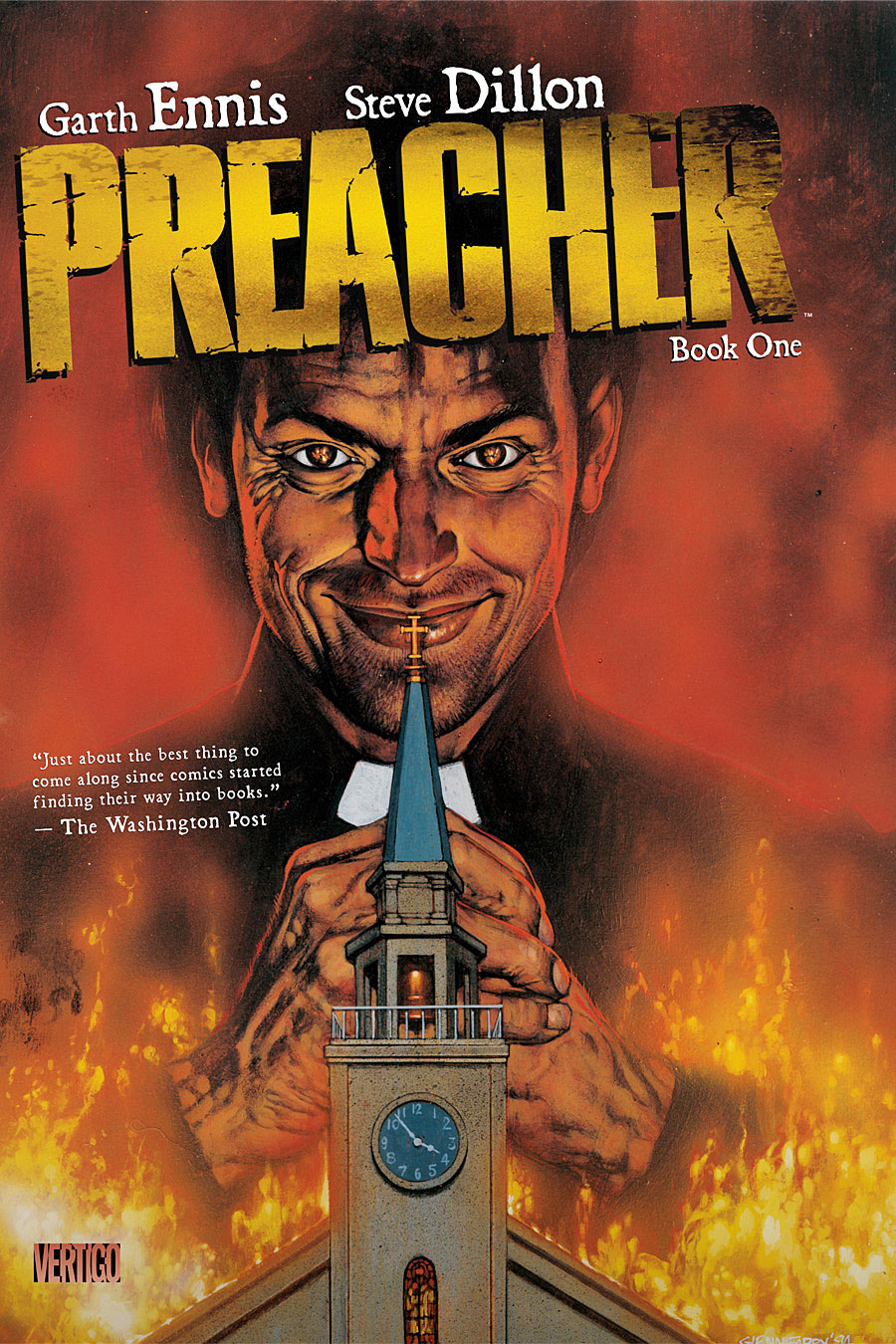
Along the way I started reading the above titles: Warren Ellis's Transmetropolitan and Planetary; Garth Ennis's Preacher. But I never got to the end of them, 'cos they were multi-volume, epic stories which would've cost megabucks to buy and ship all the way to Singapore, and the National Library never managed to stock all of them either. (Methinks the high levels of violence may have turned them off. Kudos to them for having a graphic novel section at all, though.)

It was only when I was at UEA that I got round to stopping by the Norfolk and Norwich Millennium Library (which I first investigated because I wanted to borrow textbooks instead of buying them for classes). Turned out they had a wealth of graphic novels, ready on display on the first floor, which was the only bit of the library that was open on Sundays.

So I started finishing the epics. Fantastic stuff. Didn't pick up any new series while I was there, sadly. Old dogs, new tricks?

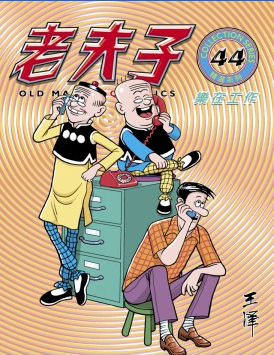
One reason I'm bringing this up is that I'm frankly a little ashamed of the fact that I'm not including graphic novels and comics on this reading journey. I'm not sure how it happened. Perhaps it's because comics as we know them aren't really a universal art form - though I did grow up with Old Master Q / 老夫子 comics in my mum's hair salons, and my childhood and adulthood love of Lat's Kampung Boy is so profound that I listed it as THE Malaysian text to read in my Read the World Proportionally list.


I suppose my limitation is because there's no nation (not even Malaysia) that regards a comic as its greatest literary achievement, and most comics are fairly easy to digest anyway. There isn't the same kind of intellectual heft in reading Maison Ikkoku as there is in reading War and Peace (which I'll be getting to,  soon).

I do try to keep up with the non-Western graphic novel form, though, at least with regards to how it's developing in my neck of the woods. I've bought every one of the Liquid City anthologies of Southeast Asian comic artists, for instance:


And I freaking love Troy Chin's The Resident Tourist:


Otherwise, alas, I'm mostly following nerdy American webcomics. But if there's other international graphic novelists you wanna point me towards, I'm all ears. :)

Monday, November 24, 2014

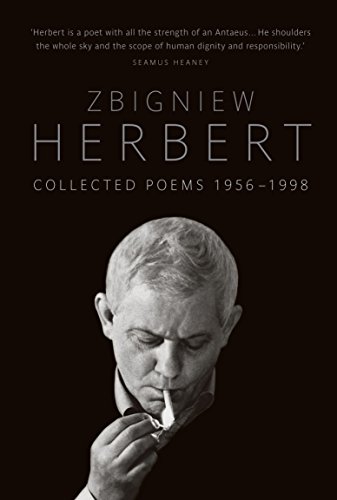
Book 162, Poland: "Collected Poems: 1956-1998" by Zbigniew Herbert

One of my favourite poets in the whole wide world is Polish!

I discovered the works of Nobel Lit Prize Winner Wisława Szymborska as a secondary school kid, back in the nineties – loved them so much; huge influence on me, etc. Unfortunately, her output wasn’t huge, so there wasn’t an extra tome of her works I could check out for this project. And I’d already used Czesław Miłosz - Poland’s other Nobel Lit laureate – for my Lithuania book.

Fortunately, there are lots of famous Polish poets. Such as this guy:


I’d heard his name bantered about amongst my friends, so I figured, yeah, why not read something of his? (Yeah, yeah, he was born in Lwow, which is now part of Ukraine, but it was Polish while he was a kid.)

This was the library’s only volume of his works – ye compleat edition, running to 571 pages. But mirabile dictu, it’s good. So good. (I’d considered abandoning it for Adam Zagajewski’s Eternal Enemies, a convenient, skinny little codex, but when I leafed through that, I found myself longing for the lambent voice of my man Herbert.)

We’ve nine different volumes of his poetry packed into this tome:

Chord of Light (1956)

Hermes, Dog and Star (1957)

Sudy of the Object (1961)

Inscription (1969)

Mr Cogito (1974)

Report from a Besieged City (1983)

Elegy for the Departure (1990)

Rovigo (1992)

Epilogue to a Storm (1998)

So we get to follow this man from a post World War to a post-Cold War era; from youth; from the age of 32 to 78. And over the five decades we see his voice develop, shift from focus to focus, intensify and mourn himself.

And it is the same voice throughout – a melancholy, erudite voice, haunted both by the horrors of his own Communist (and pre-Communist) society and the ghosts of classical history. He invokes Hermes, Apollo, Athena, Marsyas, the Minotaur, Elektra, Claudius, Marcus Aurelius, Nefertiti – also Mary Queen of Scots, George Orwell and the Emperor Meiji, come to think of it – but not in a show-off-how-smart-I-am way, but to invoke archetypes of eternal drama to show that the tyranny and torture of his land (of all lands) have ever been thus.

Loads of specific references to his childhood and his Polish contemporaries, too, which were a little harder to get. He calls himself Mr Cogito (therefore he is?) in the latter half of his career, documenting what he sees as his loserly life. But fundamentally, he’s engaged in the same Szymborska-esque mission of mourning for the entire world, for the whole of history.

That hits me, you know? This is poetry that makes me want to write more poetry. To join in the chorus as a testament. Gah.

(Though I personally do like Szymborska better still, because she also finds joy in the senselessness of the universe. But it’s not a competition. Is it?)


Representative quote:

I probably like his prose poems best, but this piece spoke of nation in a way that resonates a lot with me.

TAIL OF A NAIL

For lack of a nail the kingdom fell
- our nannies’ wisdom teaches us – but in our kingdom
there haven’t been nails for a long time nor will there be
neither those handy little ones used for hanging pictures
on a wall nor the big ones with which coffins are sealed

but in spite of this and perhaps precisely because of it
the kingdom endures and even gains others’ admiration
how is it possible to live without nails paper and string
bricks oxygen freedom and whatever else you like
evidently it is possible because it endures and endures

people in this country live in houses and not in caves
factories smoke in the steppe trains cross the tundra
and on the cold ocean a ship blows its bleating horn
there is an army and police a seal an anthem a flag
on the surface it’s just like the rest of the world

it is only on the surface because this kingdom of ours
is not a creation of nature or a creation of humanity
seemingly enduring built on the bones of mammoths
in reality it is weak as if suspended between
the act and the thought existence and nonexistence

a leaf and a stone fall so do all things real
but ghosts live a long time stubbornly despite
sunrise and sunset revolutions of celestial bodies
on the disgraced earth tears and things fall

Next book: Uladzimir Karatkevich's "King Stakh's Wild Hunt", from Belarus? Or Vladimir Kozlov's "Number Ten: A Novella In Translation"? Not sure yet.

Sunday, November 16, 2014

Book 161, Czech Republic: "Rossum's Universal Robots" by Karel Čapek

And thus begins my third set of 80 books! This blog's title is getting more and more inaccurate. (Will I actually get to Book 240? Doubtful, but let's see!)

I actually never got round to finishing Kafka's The Castle, because it didn't seem to be going anywhere interesting (and from the intro, I actually know it doesn't go anywhere at all, since the manuscript's unfinished.)

But I did get round to reading one of the great works of Czech drama - the first text in which the word "robot" appeared, in fact. 


It actually took me a while to decide which book to go with:

The Castle
1. is written by a more iconic writer
2. is in German 
3. is a novel (I've written about loads of them)
4. was actually inspired by the sight of a specific Czech castle.

R.U.R.
1. is written by a less iconic, but still famous writer
2. is in Czech
3. is a play
4. takes place on an unnamed island, accessible by steamer... perhaps not even in Europe...

In the end, my friends instructed me to go with the book that I actually enjoyed. Still feeling guilty, though.

But really, R.U.R. is fascinating. It takes place in the future - the physiologist Rossum (meaning "reason") is said to have retreated to said island in 1920 (the year the play was written), and invented the synthetic protoplasm for robots in 1932. He's interested in using the protoplasm to play God, more or less, creating grotesque semblances of dogs and humans. It's his son who comes up with the idea of turning these homunculi into efficient substitutes for labour. The entire cast of the play are the inheritors of said project, coming a generation later: the scientists and engineers on the island who're trying to perfect the design and marketing of the robots in the global market.

Plays set in the future are often a little dodgy - even George Bernard Shaw wasn't too successful with it - but this works. Perhaps because the device of the robots is so striking (of course it was novel then, but even now, when robot uprisings are a dime a dozen in print and on screen, the idea of seeing one on stage is still uncanny). 

Yet it's also because the tale is so deeply human - even to the point of farce. Its soul is a woman named Helena Glory, the daughter of President Glory (president of what, we're never told). She comes to the island as a fresh young twentysomething, eager to liberate the robots, whom she feels are being exploited. But she finds them too soulless to understand their condition, and is instead wooed by the very persistent CEO Harry Domin... as well as all the other engineers, who are for some reason all male (hey, it was 1920) and are all passionately, immediately, in love with her.

Ten years pass and surprise surprise, Glory's married to Domin. But now there's something off about the robots: we discover from whispers among the engineers that they've led a bloody revolt to exterminate humans - they had the capability after the nations of the world started using them as soldiers. And though they try to shield Glory from the news - they tell her that their getaway boat is actually a pleasure craft, presented to her on the anniversary of her arrival - they're actually shit-scared.

And it turns out that everything is (or may be) her fault. She's the one who demanded that the engineers improve the robots' intelligence, so she would stop feeling so scared and alienated by them. And she's the one who decides to burn Rossum's original manuscripts, which contain the formula for creating the robots - and is the engineers' only bargaining chip, their one chance of survival.

So Helena is Helen of Troy, Pandora, Eve - the woman to be blamed for everything. The introduction to this volume notes that there's actually notes there's a similar figure in the earlier Czech legend of the Golem: the foolish rabbi's wife who insists on using the Golem to help her with everyday chores, only to discover that she cannot control its power.

And yet Helena doesn't come off as an awful person - she might be dumb, but she's the stand-in for the audience in the show; the only main character who actually has normal human emotions beyond a thirst for progress and wealth and control. And (as with Eve) it turns out to be something of a happy fall in the end, as her improvements to the robots perhaps provide new hope for the renewal of the planet in the post-apocalyptic age...

Ah, I know I'm talking more about the human element of the play than the sci-fi stuff or the way the whole thing's a metaphor for the oppression of workers under capitalism (which really is a big thing, and fascinating in its own right). But mostly I'm intrigued by how the piece actually works as a genuinely entertaining play. 

Lots of humour, by the way - as I might have been able to guess from reading Čapek's other famous work, War With the Newts. Also highly recommended. Also check out Vítězslav Nezval's Valerie and Her Week of Wonders, and of course Kafka's Metamorphosis and The Great Wall of China...

Ahhh, the Czechs have loads to offer. Good for them!


View Around the World in 80 Books!!! in a larger map

Representative quote:

HELENA: But that's appalling, Busman!

BUSMAN: How right you are, Mrs Domin. I too used to have a dream. A Busmanesque dream about a new world economic order; an all-too glorious ideal, I'm ashamed to admit. But while I was working here on the balance sheet, it dawned to me that history is made not by great dreams, but by the petty needs of all respectable, mildly crooked and selfish people, that is, everyone. the only thng that idas, lovs, plans, heroisms, all those airy-fairy things are fit for is to be turned into the stuffing of a figure to be displayed at some Museum of the Universe and labelled; Ecce homo. Full stop.

Next book: Zbigniew Herbert's The Collected Poems, from Poland

Saturday, November 8, 2014

Speakeasy #16: Featuring George Szirtes and Ng Yi-Sheng

I've got another event coming up next next Wednesday! It's a duo poetry recital organised by my friend Pooja Nansi:


Speakeasy #16: Featuring George Szirtes and Ng Yi-Sheng
Date: Wednesday, November 19
Time: 8:00pm
Venue: Artistry, 17 Jalan Pinang, Singapore 199149
Website: https://www.facebook.com/events/836486609705776/

A refugee from the Hungarian Uprising of 1956, George Szirtes moved to England as a child. His first book of poetry, The Slant Door (1979), was joint winner of the Faber Memorial Prize. In 2004, he won the T.S. Eliot Prize for his 12th book of poems, Reel. He was shortlisted for the prize again in 2009 (The Burning of the Books) and 2013 (Bad Machine). His translations of Hungarian writings have won various awards. He is a Fellow of the Royal Society of Literature (UK) and the Széchenyi Academy of Letters and Arts (Hungary).

Ng Yi-Sheng is a poet, fictionist, playwright, journalist and activist. He is the youngest winner of the Singapore Literature Prize (for his debut poetry collection, last boy). His second collection, Anthems (2014), consists of slam poetry works. His other publications include the bestselling non-fiction book, SQ21: Singapore Queers in the 21st Century, and a novelisation of the Singapore gangster movie, Eating Air. He also co-edited GASPP: A Gay Anthology of Singapore Poetry and Prose and Eastern Heathens: An Anthology of Subverted Asian Folklore. He has recently completed his MA in the University of East Anglia’s creative writing programme.

I'll also have a couple of my poems in the new anthology, A Luxury We Cannot Afford. (It's poems inspired by Singapore's old political patriarch.)


A Luxury We Cannot Afford + SingPoWriMo 2014 Anthology Launch
Date: Sunday, November 23
Time: 4:00pm
Venue: Arts House
Website: https://www.facebook.com/events/728439027239028/