Tuesday, May 15, 2012

LAN FANG CHRONICLES, 18 May to 2 June

Obviously not done with Tagore yet.  In the meantime, I'd like to advertise that I'm one of the collaborators for a multimedia-installation-performance arty-interactive theatre experience called THE LAN FANG CHRONICLES!

It's being performed from this Friday onwards as part of the Singapore Arts Festival. Please come!


Director: Choy Ka Fai
Date: Fri 18 May-Sun 2 Jun, 7pm (3:30pm matinees on selected dates)
Venue: Ying Foh Kuan (Shuang Long Shan) 9 Commonwealth Lane, Singapore 149551
Tickets: $25 from Sistic


The Lan Fang Republic was the first democratic state in Southeast Asia. It began as an independent settlement of Hakka Chinese gold miners in Western Borneo, and it lasted from 1777 until 1884. It bears more than a few similarities to another struggling republic that we're familiar with.

This performance, taking place on the grounds of a Hakka Clan Association, uses both historical fact and fiction to bring this forgotten civilisation to life.

It's arisen out of a project by acclaimed multimedia artist and theatre director Choy Ka Fai, a marvellous fellow with whom I've collaborated on the theatre projects V.I.S.T.A Lab and Reservoir. An early version of this was previously presented as an installation/project at the Singapore Art Museum.

There are loads of cool collaborators in this - playwrights Zizi Azah and Robin, director Fared Janial, actors Pat Toh, Loke Meng Chue, Najib Soiman, Rizman Putra, Yak Aik-Wee, Bright Ong, Serene Chen and Nora Samosir. (They're not all on stage on the same nights, so you may want to come multiple nights!)
Here's a Vimeo preview, and more info from Ka Fai's website.

Come come come come!
P.S. We're also doing a talk at Library@Esplanade, this Saturday 2-3:30pm!

Monday, May 7, 2012

It's Rabindranath Tagore's birthday!

His 151st birthday, to be precise. And I'm reading his short stories!


He was born on 7 May 1861 and died on 7 August 1941, as I learned from Wikipedia. First Asian winner of a Nobel Prize, too.

And as you can see, he was a FOX. Like a cross between Jesus and Santa Claus, only Hindu. That's him acting in one of his plays, The Genius of Valmiki:


The truth is, I'm feeling pretty guilty about using Tagore for Bangladesh. He lived in British Bengal, and was born and died in the bit that's currently in India. Plus, he was Hindu, and wrote about Hindus, while Bangladesh is Muslim.

On the other hand, Bangladesh venerates him as a national hero and uses one of his songs as its national anthem. Tagore also happened to write most of his short stories while managing his ancestral estates in Shelaidaha, in present-day Bangladesh.

 I was pretty sure Mr Tagore was my best choice (there aren't, sadly, a lot of internationally famous Bangladeshi writers around today), until I realised I could do books by the inventor of microfinance and founder of Grameen Bank, Mohammad Yunus:


Also a Nobel Prize Winner! For peace, though. Does that count?

If any of you strongly believe I should ditch Tagore and read Banker to the Poor or Creating a World Without Poverty, do leave me some comments.

Friday, May 4, 2012

Book 96, Nepal: "Mountains Painted with Turmeric" by Lil Bahadur Chettri

Not much to say about this book, really. It's an iconic text of modern Nepali literature, mostly by virtue of having been written at a point where there was very little else in print - it actually got put on the lit curriculum of Tribhuvan University within a year of having been written!


Other interesting facts: its author was not in fact Nepali, but a son of Nepali immigrants into Assam - he'd just interviewed loads of hillside villagers when they came to his environs to trade. Also, this translation (with its rather silly title, drawn from a stray line of purple prose in the novella) was probably spurred on by the fact that the book was recently made into a rather successful movie, under its original title Basain. (The word means migration, referring to the fact that the protagonists all get the hell out of the village at the end of the story.)

 Other than that? It's hard to get excited about the book. It's got lush descriptions of village life, but it centres on characters who through little fault of their own end up screwed financially (in the case of the young impoverished farmer Dhané, who is forced off his land by bankruptcy and the landlord's buffalo destroying his crops) and literally (in the case of the virtuous young maiden Jhuma, seduced by a soldier then abandoned). Classic Marxist-influenced third world examination of how the rural economy is fundamentally unjust - shades of Ngugi's The River Between and Minfong Ho's Sing to the Dawn.

 Good translation, though. Lots of local feel, due to the fact that plenty of Nepali terms (e.g. specialised months of the year) have been left in - unobtrusive glossary at the end.

 
View Around the World in 80 Books!!! in a larger map


Representative quote: "The Creator? Is it the Creator who writes our fate?" Today for some reason his small brain was pursuing arguments that were full of hidden revolutionary facts. "Why would fate be so biased? The laborers who wear out their bones in sweat cry out for flour, while those who gather up their bones to suck have other pleasures. Is this what fate really is? No, the Creator is not so unjust! Fate is made by human arrangement. Fate depends on the good order of society, on cooperation in society, on the chances and facilities you can get in society." Today, if he had had even the smallest opportunity, if his society had cared to understand his plight, would his labors not have borne fruit? If society had not been so ready to mock Jhuma's small misdemeanor, would she have left the house today in such desperation? Was the fault hers alone? Was it not the fault of the soldier, who had taken advantage of an innocent girl to gratify his desires? But it is the helpless girl and her family who are punished by society. This was the sum of Dhané's argument with his conscience. Today his heart was rebelling.

  Next book: Rabindranath Tagore's Selected Short Stories, from Bangladesh.

Sunday, April 29, 2012

Book 95, Bhutan: "Treasures of the Thunder Dragon: A Portrait of Bhutan" by Ashi Dorji Wangmo Wangchuck

So this here is a book by the former Queen of Bhutan! (Former because her awesome-ass husband, Jigme Singye Wangchuck, abdicated in favour of his son in 2006. Ashi Dorji Wangmo is his first wife; the current king is the eldest son of him and his third wife. All four of his wives are sisters. Confusing, much?)


Sadly, this book reads precisely like a book written by royalty: i.e. by a person who is not obliged to pay attention to how books are supposed to be written. Its content is pretty good, but its structure is all over the place. The inner flap praises it "a captivating blend of personal memoir, history, folklore and travelogue". I call it a mess.

I'm being cruel, of course. It's not a bad read: you get to learn a load about Bhutanese heritage, from its blue poppies and golden langurs to the 2003 Duar War, where the King himself led volunteer troops to rout the terrorist cells hidden in the nature reserves. And honestly, Queen Ashi sounds like a pretty cool person to hang out with: the kind of gung-ho middle-aged lady who's always hiking up dangerous mountain trails to donate shovels and carrot seeds and solar panels to remote villages, blisters and altitude sickness be damned.

What frustrates me is the gaps. She tells us about her idyllic childhood in Nobgang and her boarding school life at St Helen's Convent in Kalimpong, India; but then it's straight on to her joint wedding with her sisters to the King: nothing about their courtship, nothing about her emotions, nothing psychological or problematic about the institution of polygamy.

And while she describes her wanderings, she mentions the challenges that Bhutan faces in its slow but measured stride towards modernisation - how thieves are breaking into the chortens and stealing their sacred jewels; how women are falling pregnant and going mad when abandoned by their Japanese tourist lovers; how the nation is becoming a population of jet-setters: young people going off to study in Oxford and old people going on pilgrimages in India or else seeking markets to sell their mountain raspberries and peaches.

And yet there is no sense of tension in her voice; she is absolutely convinced that everything will turn out okay; almost all the people she describes are happy, even if their families have been devastated by death and disease; the old woman with the goitre whom she volunteers to send to a a hospital insists that she wants to hold on to that lump of flesh that's been under her chin for fifty years, thank you very much. 

Everyone's so content; everything's so effing ZEN. Or at least the eye of the author makes it so. And while I'm delighted to think that the concept of Gross National Happiness might actually be working; that there is an alternative route to peaceful development other than the Lee Kuan Yew model; I can't help but feel that this implacability is the antithesis of modern literature; that good writing is born out of crisis.

Ah well. Long and short of it is that Bhutan still sounds an awesome place to visit. Wonder if they have cute openly gay boys there. Ooh, Google says there are a few.


View Around the World in 80 Books!!! in a larger map  

Representative quote: On the altar of my shrine room at home is a stone shaped like a chorten, given to me by an old lady in a village in Tongsa. She had found it in a riverbed and kept it on her own altar until the day I walked it into her home. Buffeted and sculpted by ice and snow, rocks and water, on its long journey down the Himalayas to a village in the heart of Bhutan, that stone is for me a symbol of the journeys I have made. An locked inside it, like treasures sealed in a chorten, are the seeds of journeys still to come - there are so many treasures of the Thunder Dragon that still wait to be discovered.
Next book: Lil Bahadur Chettri’s Mountains Painted with Turmeric, from Nepal.

Sunday, April 22, 2012

Two European films I have tangential relationships with

I've decided to do Bhutan before Nepal, and Treasures of the Thunder Dragon took me a little longer to pick up from the library. So I'll observe today with a plug for two European films.

1) The first one is Irish/British/Singaporean - Joe and Christine Lawlor's Civic Life: Tiong Bahru, documenting what's currently Singapore's hippest neighbourhood. The whole film's just been uploaded to Vimeo! (Sorry if the embed isn't working... don't know how to fix it on my display.)


TIONG BAHRU from Desperate Optimists on Vimeo.

2) The second one is My Name is Janez Janša, and it's by the three Slovenian artists who had their names legally changed to be the same as that of the right-wing Prime Minister of Slovenia. I got filmed by two of the Janezes at the last Flying Circus Project, in Cambodia. (This is why their lineup looks so multiethnic.)


My Name Is Janez Jansa (excerpt #11) from aksioma on Vimeo.

I've been informed by them that the film needs funding, because it's under attack by their government. Support it by donating money over here.

Saturday, April 14, 2012

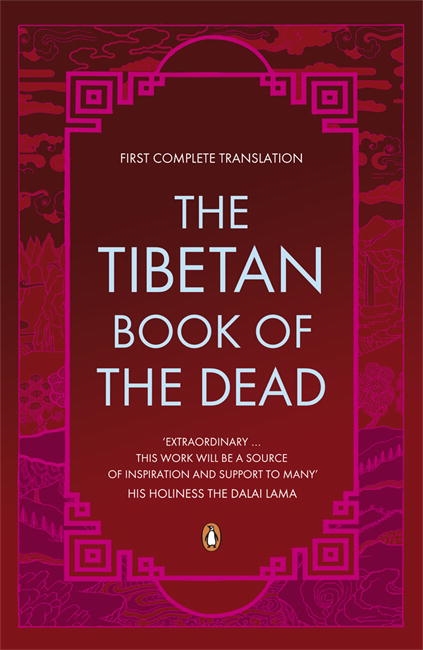
Book 94, Tibet: "The Tibetan Book of the Dead"

Cor. This was a bloody good read, way more interesting than the Quran or the Lotus Sutra or the Bible (most bits of the Bible, anyway). I was gonna say it was easy to see why it became a Western cult classic, then I remembered that for the longest time what the hippies and the beats were perusing was a single portion of this volume: The Great Liberation By Hearing.

This baby I’ve been lugging around is the first full translation, based on the three volume manuscript from the library of the Kyabje Dudjom Rinpoche, completed by the scholar Gjurme Dorje with support by HH the Dalai Lama. Check it!


And what makes this book so awesome? Well, first of all, it’s brilliantly random: as crazy if not crazier than the palimpsest hotchpotch of the Old Testament. It consists of prayers, philosophy, catalogues of deities, medical instructions for determining the date of imminent death, magical rituals for forestalling said death, a detailed practical guide to ensuring enlightenment or at least rebirth as a higher being following said death, and even a masked drama demonstrating the posthumous fates of a butcher and a pious merchant, as Yama Dharmaraja, sage of hell beings, judges them by weighing the white pebbles of their good deeds against the black pebbles of their sins. (Yes, shades of the Egyptians, which is why the English title of this book stuck instead of its proper name, The Bardo Thodol.

Second of all (a phrase my boyfriend insists is ungrammatical) it is so damn *sensual*, so psychedelic that one wonders what the prophets were smoking, or if mountain air just predisposes one toward incredible visions. It’s bizarre, after reading the fairly square first chapters, which concentrate on the usual Buddhist exhortations to renounce worldly attachments, to be told of the copulating, blood-drinking, sexually dimorphic rainbow-coloured buddhas and bodhisattvas and gatekeepers and herukas that inhabit the cardinal portions of one’s skull: Gauri, white-in-colour, carrying a human corpse as a cudgel; fox-headed Srgalamamuki, black in colour, eating entrails; yak-headed Manauraksasi, brownish-white and holding a vajra; sow-headed Varahi, blackish green, holding a noose of fangs; scorpion-headed Amrta, reddish yellow, holding a lotus; three-faced six-armed Vairocana, brandishing a wheel, an axe, a sword, a bell, a ploughsare and a blood-filled skull, joyously and indivisibly embraced by Buddhakrodhesvari; and Samantabhadra and Samantabhadri, the Buddha-body of Reality.

Oh yes, and trying to foretell your death by staring at the sun or your shadow or the tinges of blood in your urine, and channeling your powers of concentration so that should you topple unexpectedly from a mountain, your soul will escape your body from the correct orifice. Madness!

And also the gentle comfort it must give one to imagine one’s body at a funeral, surrounded by loved ones repeating prayers into one’s ear directing the soul to higher realms.

Yes, this is the kind of religious text I like: more imaginative than preachy; the kind I don’t have to take absolutely seriously and expands my imagination rather than limiting it. O Child of Buddha Nature, may you read many more books as weird and wonderful as this!


View Around the World in 80 Books!!! in a larger map

Representative quote:
There are, altogether, nine different pathways through which consciousness transference can occur, and these are associated with persons of superior, average and inferior capacity. The aperture of the crown fontanelle is the pathway through which [consciousness] departs to the pure [realm of the] sky-farers. Given this, [it is said that] one will attain liberation f awareness exits through the [crown fontanelle]. Since this is the supreme pathway, it is extremely important that one trains in directing one’s mental focus towards this [aperture]. Furthermore, if consciousness is transferred through the pathway of the eyes, [it is said that] one will be born as a universal monarch, and if it is transferred through the left nostril, one will obtain an unimpaired human body. These are the three optimum apertures associated with those of superior [capacity].

One will, however, be born as a yaksa if [consciousness is transferred] through the right nostril, or as a god of the world-system of form if [it is transferred] through the ears, and as a god of the world-system of desire if [it is transferred] through the navel. These are the three medial apertures [associated with those of average capacity]. Lastly, one will be born as an animal if [it is transferred] through the urethra, as an anguished spirit if [it is transferred] through the sexual passage, and as a hell being if it is transferred through the rectum. These are the three inferior apertures [associated with those of inferior capacity]. Given that there are such very great consequential differences between the various apertures through which consciousness transference may occur, there wil be inestimable benefits in directing one’s awareness to the crowd of the head, at the time of death.

Such is the forceful consciousness transference. SAMAYA!

Next book: Lil Bahadur Chettri’s Mountains Painted with Turmeric, from Nepal.

Friday, April 6, 2012

Another chart: books by gender.

I'm only about a third of my way through The Tibetan Book of the Dead, but it's good stuff - poetic prayers invoking both the male and female entities of the Buddhist pantheon: buddhas, bodhisattvas, gatekeepers, you name it.

Which is a good enough lead-in for a pie chart about the genders of the authors I've been reading for this project, as promised in an earlier post.

So far, I've read 93 books:

61 are by men.
29 are by women.
Two have both male and female authors, namely A Trip to the Beach and Voices.
One is allegedly of divine authorship, The Quran.

Create a graph

This is actually pretty heartening: it suggests that one third of the writers I'm reading are women, which is way higher than I expected given that a whole bunch of these books are by their nations' most celebrated writers and/or kinda old.

It's also worth noting that my South Asia reading list has actually been completely male-dominated so far, which might tip the balance in favour of men. I'll finally get to a female South Asian writer (and there are plenty!) when I cover Bhutan.