Wednesday, December 25, 2013

A Christmas gift from the Quasi-Boyfriend

Merry Christmas! I’m just back from a family vacation in Penang, and surprise, surprise, I’m only halfway through Waverley

Anyhow, I got to hang out with Mohan while doing some last-minute shopping yesterday. (I’m calling him my quasi-boyfriend because I’m not entirely sure where our relationship’s headed.) But we’re still giving each other presents – he sent me an awesome ice cream maker for my birthday, for example, which has boosted his boyfriendly credentials no end.

And since we decided to exchange gifts a trifle prematurely this afternoon, I can report that he’s done well once again, proffering a work by the 2013 Nobel Literature Prizewinner Alice Munro:


It is of course a little crazy that it’s this Canadian lady, not the formidable and phenomenal Atwood, who’s won the prize. But as someone who’s currently working on a short story collection, I can’t complain if the genre of the short fiction gets a boost.

My gifts to Mohan were similarly literary: a discount copy of the early American gay novel The City and the Pillar by Gore Vidal and a copy of Orlando, the Marmalade Cat: A Seaside Holiday, by Norfolk writer/illustrator Kathleen Hale. He somewhat spoilt the trend by also giving me a slushie-maker.


(Honestly, I’m touched, but I have no great love for slushies. Not sure how I’ll make use of it.)

I’ve also made use of the Yuletide season by composing a list of the best of what I’ve read in world literature thus far – it’s only natural, after all, to use this site as a space for recommending books rather than assessing them one by one. Too late for gift recommendations this year – but perhaps it’ll be valid for many more years to come!

Tuesday, December 17, 2013

Bonus Review: "1819" by Isa Kamari

I'm back in Singapore! And it's high time to get moving on what I was asked to do a couple of months ago: review Isa Kamari's translated novels. I spoke about Song of the Wind two months ago, but in the past few days, I've neglected Scottish literature in favour of 1819, originally published in Malay in 2011 under the title Duka Tuan Betakhta (Your Sorrow Reigns). ("Tuan" can mean either "lord" or "you" in a super-polite way, so I'm iffy about that translation.)


This one's another historical novel, centred around the British colonization of Singapore in said year and its later effects. Every Singaporean kid studies this: how Sir Stamford Raffles arrives in the land with a heroic vision to develop it as a free port, and how he succeeds in his aim by double-crossing the Malay princes into giving him rights to the land. It's all presented in a rather dispassionate way - it's clear as day that he was doing some dirty dealing, but we're not inspired to patriotic fury over it.

I've seen a number of artistic interpretations of this story - children's books, Asiapac comics, Robert Yeo's play The Eye of History and Haresh Sharma's play Singapore, even a TV serial/movie I remember seeing as a kid. I've been party to this too - I wrote a play called The Last Temptation of Stamford Raffles, rebelling against the "civilising", "ordering" forces that the Brits sought to impose on us. A lot of my research actually relied on The Golden Sword by Nina Epton, a 1969 British novel about Raffles's life.

1819 gives us something new. It's a dramatisation of those times from a thoroughly Malay perspective: that is, it's drawing its historical materials primarily from Malay resources.  This means that alongside  British East India Company colleagues Colonel William Farquhar and Dr John Crawfurd, as well as colonial stooge sellouts like the Temenggong Abdul Rahman, Sultan Hussein and the scribe Munsyi Abdullah, we've got the Muslim saint Habib Noh, the silat warrior Wak Cantuk and the treacherous, queen-shagging royal advisor Abdul Kadir. These are figures who do not appear *at all* in our mainstream textbooks - whom even well-meaning non-Malay Singaporean history buffs like myself are ignorant of.

(That being said, I found out a bunch about Habib Noh and his miracles at a walking tour to his tomb, organised by the NUS Museum a few years ago. You should totally go there.)


I'd urge all Singaporeans to read this book, because the stories in here are incredibly important. They challenge the platitude that Singapore was "a sleepy fishing village" before colonisation, as well as the idea that the Malays were unified or led by noble Sultans (the nobles are opium-addled obese fools and the Malays of the Johor-Riau Empire are in a clandestine war with the Bugis). And we should learn about the miracles of Habib Noh and the murderous amok spree of Wak Cantuk, because they paint a picture of the strangeness and fractiousness that happens when societies go through rapid cultural changes, just like what we're experiencing today.

Now, I don't want to give you the impression that this is a wonderfully readable book - it's not, again due to cultural and aesthetic translation gaps. There's a ridiculous amount of historical *telling* that happens, especially in the first few chapters, as Isa is super-anxious to divulge all the details of history that he's gleaned. Even when it's plopped into dialogue, it's really heavy-handed. The Brits are cartoon villains who cackle at their nefarious plots, and the "common man" is represented by this buffoonish trio of kampung kids named Sudin, Ajis and Ramli, who gossip and piss in their sarongs in that silly distracting way that foolish peasants do in Shakespearean plays. Doesn't work, really - the average joe ends up looking dumb when he has the capacity for nobility.

And if we're gonna impose political agendas on this - and why shouldn't we? - I've also gotta point out that the constant name-calling of Abdul Kadir as a "half-breed bastard" because he's half-Indian is never challenged, not even by Munsyi Abdullah, who was 100% Tamil himself. (Abdullah seems to be a stand-in for the author himself - an intellectual who knows he has the brains to lead the Malay community, only he's been co-opted to the institutions, and only wants to be known as a writer anyway.)

Plus, there's way too little herstory in here - there's only passing reference to the wives of the players, and no acknowledgment that they too had influence on the development/devolution of Singapore: Sophia Raffles, Farquhar's half-Malay half-French concubine Nonio Clement, and the adulterous queen Tengku Perabu (okay, she does get a bit more screen time, because she's instrumental to the downfall of the Sultanate, but very little agency's portrayed). No appearance of that great independent businesswoman Hajjah Fatimah, either, even though she fits right into the time period. But I can't ask an author to be feminist, can I, especially after I've criticised his portrayals of women in his other books.

And the truth is, the imperfections of this book frustrate me to the degree that I want the right to adapt or expand the book to incorporate my own perspectives and historical tidbits - maybe this doesn't belong in a book, really; it should be its own TV serial on Suria or Channel Five, when Mediacorp actually grows a pair.

You see, the stories in this book - tales of betrayal, magic, revenge, cultural genocide - deserve a place in the wider collective imagination. There's only a limited number of eyeballs it can reach in print form, especially with this particular translation. What we need is a transcreation, that adapts with the aim of creating a work of art that stands by itself...

And I suppose I should volunteer to do such a thing, if only I'd the time. What I'll be up to instead is stealing a whole bunch of historical details from this for my own fiction.

Thanks, Isa! Will get round to reading that last book, Rawa, soon - just after my Scottish book. :D

Monday, December 9, 2013

Book 139, Northern Ireland: "Death of a Naturalist" by Seamus Heaney

One of the great things about having access to a university library is the fact that I can read a lot of poetry in its original collections, not in Compleat Works or Selected With Annotations stuff. I kinda wanna see how a writer's oeuvre was originally presented to the public, warts and all.

The Spirit Level is of course widely available - but after I'd picked it up, I realised:

1) I might've read it before, back when I first started getting curious about Heaney.

2) It wasn't actually written while Heaney was living in Northern Ireland (where he did in fact spend the first thirty-three years of his life).

3) I just wasn't connecting with the poems. 

Call me shallow, but the pieces in The Spirit Level all seemed messy and disperse and referring to incidents and people I wasn't familiar with, which is in itself not an unfamiliar sensation during this project. But I do want to honour great writers by saying nice things about their work, and to have a good time reading myself.

So I've decided to go back to the volume that started everything off: Heaney's very first collection, published by Faber and Faber back in 1966:


It's easy to like Death of a Naturalist. Most of these poems are these wonderfully earthy things, reflecting on what it means to be a poet who's grown up in the country as the son of a farmer, hence you've got schoolkid classics like Digging, wherein he imagines himself digging with his pen into his heritage, just as his forefathers dug with their spades for potatoes. Also the scary frogspawn of the titular poem, his mother's dairy alchemy in Churning Day, the tragedy of a child's death in Mid-Term Break, the assumption of adulthood and responsibility around the horse-plough of Follower. And of course the weird Thomas Wyatt-esque loss of innocence in Blackberry-Picking, another piece we kept on seeing on our literature worksheets, and which someone told me actually referred to the Eucharist.

All very sensual, all very real, all very lovely on the ears and accessible. In fact, quality actually goes sideways towards the end of the book when we just start getting fluffy love songs and nature poems, whose depth can in no way compare to the stuff in the first half. But if I'd wanted depth, I'd have gone with The Spirit Level, no? My own damn fault for being stupid and impatient.

Since we're on the topic of Northern Ireland, however, we've gotta mention The Troubles. And though the violence only peaked in the seventies (during which time Heaney wrote works like Wintering Out, which I personally find a tad forgettable), we do actually have a threatening yet thoroughly human figure of a Protestant activist whose "fist would drop a hammer on a Catholic" in The Docker. "Oh yes, that kind of thing could start again", the poet says, and sure enough it did.

Things have been peaceful enough since the nineties, thank god, and I'm planning to visit Belfast next year. Still, it did drive Heaney to Dublin, where he spent the rest of years until his death in April (which I shamefully didn't remark upon in this blog). What's the relationship between Northern and Republic of today? I've heard of people switching nationalities just to get their university fees slashed. Will find out through travel, not literature, I dare say.

Anyhow, Singapore's experiencing troubles of its own right now. Not sure how I could (should?) turn that into literature.


View Around the World in 80 Books!!! in a larger map

Representative quote: 


"From A Potato Digging"
III.

Live skulls, blind-eyed, balanced on
wild higgledy skeletons
scoured the land in "forty-five,"
wolfed the blighted root and died.

The new potato, sound as stone,
putrefied when it had lain
three days in the long clay pit.
Millions rotted along with it.

Mouths tightened in, eyes died hard,
faces chilled to a plucked bird.
In a million wicker huts
beaks of famine snipped at guts.

A people hungering from birth,
grubbling, like plants, in the bitch earth,
were grafted with a great sorrow.
Hope rotted like a marrow.

Stinking potatoes fouled the land,
pits turned pus into filthy mounds:
and where potato digger are
you still smell the running sore.

Next book: Sir Walter Scott's Waverley, from Scotland. Or shall I do Robert Burns?

Sunday, December 1, 2013

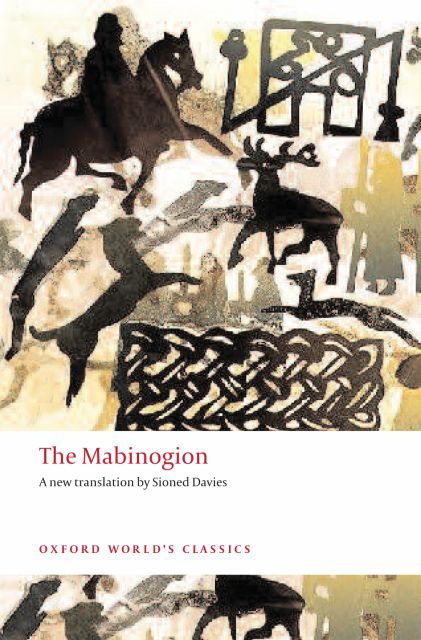
Book 138, Wales: "The Mabinogion"

I know, I know. I said I was going to do the UK as a single entity, not as the four separate nations of England, Wales, Scotland and Northern Ireland. But somehow I gave in to temptation and had a peek at Welsh literature - and it occurred to me that quite apart from the popular opinion of my friends (which was that I should indeed read four separate books), there is simply a lot of good writing from each of these lands, and I might as well avail myself of them while I'm in the British Isles. And anyway, didn't I do Macau as if it was its own country?

I had a choice of texts, too. At first I was skimming through Dylan Thomas's memoir-cum-short story collection, Portrait of the Artist as a Young Dog. Got through half of it in an evening, too. But then I flipped through the first few pages of this baby, and I was hooked:


The Mabinogion is a series of eleven Celtic tales, dated between 1382 and 1410, translated from Welsh to English in the nineteenth century by Lady Charlotte Guest. The first four of these are 'The Four Branches of the Mabinogi': ancient, primal tales of kings and witches and savagery that will f*cking blow your mind.

Lemme tell you what happens in the Fourth Branch, to give you a taste of these nuts. There's a guy called Math son of Mathonwy, and he can't live unless his feet are in the lap of a virgin. (No explanations. Just go with it.) But then his nephew, Gilfaethwy falls in love with said virgin, a gal named Goewin, who's the fairest maiden of her generation. So he and his brother Gwydion come up with a  plan. They approach Math with a plan: they wanna team up with him to capture these strange creatures who've never been seen before on the island of Britain who taste better than beef (they're pigs, I think). 

They dress up with eleven other men as poets, and go to the court of Pryderi, son of Pwyll. They offer in exchange for the pigs twelve stallions with golden saddles and bridles, and twelve hounds with golden collars and leashes, which Gwydion made out magic, because that's a thing. And they get the pigs, but when they get back to Math, they tell him, oh no, Pryderi is after us because the magic's worn off and he now knows he's been cheated. Math and his armies flee to another cantref (province) where the pigs are being held, and meanwhile Gilfaethwy rapes Goewin on her master's bed.

Then there's a huge war between Math and Pryderi over these pigs, and when peace returns and Math returns to his castle to lay his feet in Goewin's lap again (he didn't die because the rules don't apply when he's at war), she says, sorry, I'm not a virgin anymore. And Math gets crazy mad at Gwydion and Gilfaethwy, and says they'd better not show their faces up here again. And they don't. For several years. But then they do turn up, 'cos Math banned anyone from giving them food or drink, and they come to the court, and Math takes his magic wand, and turns Gwydion into a stag and Gilfaethwy into a hind. And he curses them to live and mate with each other like wild animals, and return within a year.

And they do return after a year, and they've got a little fawn with them. Math keeps the fawn, but he turns Gilfaethwy into a wild boar and Gwydion into a wild sow. And they go off and mate with each other for a year, and they come back with a wild piglet, which Math keeps. Then he turns Gwydion into a he-wolf and Gilfaethwy into a she-wolf, and they go off and mate with each other for another year, and come back with a cub. And Math say, okay, you guys have been punished by having to have incestuous cross-gendered sex with each other for three years, here are your fawn and piglet and cub who've turned back into boys and I've had baptised. Oh yes, and I need another virgin please. So they suggest their sister Aranrhod, and Math makes her walk over his magic wand, and she immediately gives birth to a yellow-haired boy, which makes her flee in shame...

And that's just the beginning of the tale of the hero Lleu Llaw Gyffen, who is said yellow-haired boy, cursed by his mother to never have a name, never have weapons, never get married, et cetera, all of which he manages to overcome by outsmarting her.

Talk about magical realism - these stories just rattle off impossible things in crazily compressed language and expect you to deal. There's Bendigeidfran, who deals with a demolished bridge in a battle by lying across a river and letting his men walk over him (because suddenly he's a giant!), a massacre in Ireland that leaves no-one alive but five pregnant women, whose sons eventually grow up and repopulate the island by having sex with each other's mothers, a giant and an even bigger giantess who can only be got rid of by luring them into an iron house and heating it until it's white hot (and even then they manage to flee by breaking down a near-molten wall), talking immortal salmon and stags and eagles, murderous shieldmakers and shoemakers, a hero who tries to hang a pregnant field mouse despite being dissuaded by a cleric, a priest and a bishop (she turns out to be the queen of an enemy king who turned his army into mice to eat up all the grain in the fields), a princess made of flowers, a cauldron that reanimates the dead, Welshmen stranded in England who maintain their language by cutting out the tongues of their English wives, so their children will speak only Welsh...

Trippy. Things actually get a little more standard and formulaic in the book's second half, which is dominated by Arthurian romances - all these Welsh knights fulfilling their destiny in the court of Arthur and Gwenhwyfar (yes, that's how they spell Guinevere), and every knight more handsome and noble and strong, and every maiden more beautiful than the last. But it's still gloriously mad, and by the time we get to the piss-soaked stable and unexplainable ravens and gwddbwyll games (it's a board game of some kind) and half-red half-white half-black horses of "Rhonabwy's Dream", we're pretty much spent.

Anyhow: while I'm in Great Britain, I'm gonna milk it for all it's worth.

Also of note: this is where Lloyd Alexander got his Prydain series from! I grew up on that stuff. There's even a forgotten Disney movie based on the books, The Black Cauldron. I know: Disney did a Welsh princess before a Scottish princess. Odd, huh?


View Around the World in 80 Books!!! in a larger map

Representative quote: 
           ‘I want the birds of Rhiannon, they that wake the dead and lull the living to sleep, to entertain me that night.’
           'It is easy for me to get that, though you may think it's not easy.'
           'Though you may get that, there is something you will not get. The cauldron Diwrnach Wyddel, the steward of Odgar son of Aedd, king of Ireland, to boil food for your wedding guests.'
           'It is easy for me to get that, though you may think it's not easy.'
           'Though you may get that, there is something you will not get. I must wash and shave my beard. I want the tusk of Ysgithrwyn Pen Baedd to shave with. It will be no use to me unless it is pulled from his head while he's alive.'
           'It is easy for me to get that, though you may think it's not easy.'
           'Though you may get that, there is something you will not get. I will not enturst the keeping of the tusk to anyone except Caw of Prydyn. The sixty cantrefs of Prydyn are under him. He will not leave his kingdom willingly, nor can he be forced.'
           'It is easy for me to get that, though you may think it's not easy.'
           'Though you may get that, there is something you will not get. I must dress my beard to be shaved. It will never straighten out until you get the blood of the Very Black Witch, daughter of the Very White Witch, from Pennant Gofid in the uplands of hell.'

Next book: Seamus Heaney's "The Spirit Level", from Northern Ireland.

Monday, November 25, 2013

POETRY THINGY #4 featuring STEPHANIE DOGFOOT, JERROLD YAM, and special appearance by NG YI-SHENG.

I'm hosting a poetry event with London-based Singapore-culture-dissemination group Platform 65. Come come!

POETRY THINGY #4 
feat Stephanie Dogfoot, Jerrold Yam and Ng Yi-Sheng
Date: Wednesday 4 December
Time: 7pm
Location: Woolfson & Tay Bookshop, 39 Bear Lane, London SE1


Platform 65's Poetry Thingy is a series of casual poetry + music open-mic sessions featuring poetry, spoken word, and live music by Singaporean artists. Each event features a headline artist (or two), but the mic’s open to everyone! Bring your friends, your poems, and your songs.

____________________________________________________

█ STEPHANIE DOGFOOT

Stephanie Dogfoot, also known as Stephanie Chan, is a poet and sometime law student from Singapore, currently based in London. In 2010, on a summer holiday home, she won the Singapore Slam Championships and represented Singapore in the Indian Ocean Slam Championships on Reunion Island in December that year. In 2012, she won the Farrago UK Slam Championships and represented the UK in the European Slam championships in Antwerp (where she came 2nd runner-up). In June 2013, she represented the UK in the Poetry Slam World Cup in Paris and got into the semi-finals.

She performs and organizes spoken word nights around London, sometimes other parts of the UK, and (when she gets to go home) Singapore. She has also performed at the Glastonbury Festival, Small World Festival, Nozstock Festival, the Poetry Cafe, Southbank Centre, various squats in London, and many cities around the UK from Birmingham to Oxford to Aberdeen.

http://stephdogfoot.wordpress.com/

█ JERROLD YAM

Jerrold Yam (b. 1991) is a law undergraduate at University College London and the author of poetry collections Scattered Vertebrae (2013) and Chasing Curtained Suns (2012) by Math Paper Press. His poems have been published in more than seventy literary journals and anthologies across twenty countries. He has won first prize and three honorable mentions in the National University of Singapore’s Creative Writing Competition 2011, first prize in the British Council's History and the City Competition, and is the youngest Singaporean to be nominated for the Pushcart Prize. He has been featured at Interrobang, London Book Fair and Singapore Writers Festival, among others. His poems have recently been translated to Spanish.

Jerrold will also be launching 'Scattered Vertebrae' at Poetry Thingy #4, with a short discussion moderated by Ng Yi-Sheng.

http://jerroldyam.com/

█ NG YI-SHENG

Ng Yi-Sheng is a full-time writer of poetry, fiction, non-fiction and drama. Since 2006, he has curated the annual LGBT literary event ContraDiction, and also co-edited "GASPP: a Gay Anthology of Singapore Poetry and Prose". His books include "SQ21: Singapore Queers in the 21st Century" and "last boy", which won the Singapore Literature Prize. He is currently pursuing an MFA in Norwich, UK.

____________________________________________________

Directions: Woolfson & Tay Bookshop is 5min walk from Southwark Tube station. (Follow the orange Tate Modern lamp-posts onto Union Street, turn left onto Great Suffolk Street, and turn left again once you see The White Hart pub.)

Buses: 45, 63, 100, 381, RV1.

** Open-mic slots up for grabs! For enquiries, send Platform 65 a private mesage on FB or email cui@platform65.org.

Sunday, November 17, 2013

Syllabi!

I could’ve and maybe should’ve finished Anecdotes of Destiny by now (it’s excellent) but I’ve got to finish a report on Val McDermid’s The Mermaids Singing, so nothing this week yet.
Still, this is a pretty good time to give you an idea of the courses I’m taking.


1. CREATIVE WRITING WORKSHOP
This involves ten of us taking the prose course critiquing each other’s fiction, under the guidance of acclaimed novelist Andrew Cowan, who gives us about fifteen minutes of Yoda-like advice before every class.

2. THE WRITING OF CRIME/THRILLER FICTION
This one is under crime novelist Henry Sutton, who’s got a weekly reading list for us of:

Raymond Chandler's The Big Sleep
Jim Thompson's The Killer Inside Me
Patricia Highsmith's The Talented Mr Ripley
John le Carré's The Spy Who Came in from the Cold
Per Wahlöö and Maj Sjöwall's Roseanna
Elmore Leonard's Get Shorty
Val McDermid's The Mermaids Singing
Martin Amis's Night Train
Lee Child's The Affair
Denise Mina's The End of the Wasp Season

In addition, we’re each completing a 5,000-word work before next term starts – and it can be fiction, an essay, or a combination thereof. So far, everyone’s workshopping crime/thriller fiction ideas, which is pretty much what we signed up for.

3. THROUGH THE LOOKING-GLASS: NONSENSE AND MODERN WRITING
Plus, I'm auditing an undergraduate class with Thomas Karshan, just for fun. Have a look at the title, have a look at the texts:

Assorted pre-19th century nonsense including excerpts from the Bible, Shakespeare and Donne
Lewis Carroll's Alice in Wonderland and Through the Looking-Glass (plus Edward Lear's poetry)
Emily Dickinson's poetry
Wallace Stevens's Harmonium
Mervyn Peake's Titus Groan
James Joyce's Finnegan's Wake
W. H. Auden's poetry
Sylvia Plath's Ariel
John Ashberry's Collected Poems

A lot more to say about all this, of course. But I'll save that for future filler weeks. :)


Saturday, November 9, 2013

Book 137, England: "Henry IV" (Parts One and Two) by William Shakespeare

UPDATE: The country marker for this post was later changed from the United Kingdom to England, due to a decision to cover each of the four nations of the UK separately.

It's been a bloody long time since I finished a book while actually located in the nation that book was written - in fact, that moment was probably three years ago, when I started this blog in Singapore.

And truth be told, the last pages of these plays were read in a country that might not even want to be part of the UK anymore. I'm spending Reading Week in Scotland, zipping between Edinburgh, Glasgow, Stirling, St Andrews, holding prolonged conversation with my local informant Scotticus (no, that really is his name) about devolution and the likelihood of secession from the union. In the process, I've learned a bit about how separate this land is - they don't just have their own parliament and banknotes, they've also got a sense of an independent culture - Scotticus didn't even study Shakespeare in English lit! The school did Philip K. Dick instead, which I can't say is an awful choice.


Anyhow: Shakespeare. I know he isn't the most British of writers - he set most of his plays in Italy, for crying out loud - so I'd been thinking about doing Dickens instead, or perhaps a great novelist like George Eliot or Zadie Smith whom I've never actually finished a book by.

But I've been swayed a little by watching Simon Schama's Shakespeare: This England on the plane - piqued by his assertion that Shakespeare was great because he represented the genuine, earthy voices of the pub and the market that still make England England today. In particular, the voices of Falstaff and Mistress Quickly and Doll Tearsheet from his seldom staged duology, Henry IV (Parts One and Two).

Falstaff I'd heard of, of course - he's supposed to be one of the great characters of Shakespeare, popping up again in The Merry Wives of Windsor, which in turn became a Verdi opera. In the Henry plays, he's the wayward father figure whose drunken carousing and mischief-making is viewed as a corrupt force on the young Prince Harry, the future warrior king Henry V. And yet you're supposed to find him a lovable buffoon, a jovial rascal, a character so popular that he promises to come back for further excitement in an epilogue after Part Two (in fact, he died offstage in the first act of Henry V, purportedly because the original actor, William Kempe, had a huge falling out with Shakespeare and left the Lord |Chamberlain's Men to go on a Morris-dancing marathon for London to Norwich).
I didn't actually like Falstaff all that much. One reason, of course, is that reading Shakespeare is hard - even with the Arden footnotes, which are academic rather than explicatory - which dampens the enjoyment of a text. But it's also because he isn't a member of the proletariat: he's a knight who happily exploits the poor, whether by loading the innkeeper Mistress Quickly with credit he can't pay off or by accepting bribes from peasants who don't want to be conscripted into the army and retaining the pay of the poor schmucks who actually get killed in battles. Plus, his whole big prank at the beginning of Part One is a highway robbery. What is this guy, a sociopath?

What makes Falstaff rather more likable, however, is the fact that his rambunctious world of prostitutes and thieves is so much less nasty than that of the kings. There's the gloomy eponymous Henry IV, who feels guilty about his usurpation of Richard II (this is where we get the "uneasy lies the head that wears a crown" line), and Prince John, who reneges on his courtly promise to the rebel leaders to do no them no harm, and of course Prince Harry himself, who's supposed to be on a huge coming-of-age voyage, graduating from his wild boyish days to heroic responsibility, but who actually seems to have had the whole teen rebellion thing planned out in a Machiavellian way from his first appearance:

"So, when this loose behavior I throw off  
And pay the debt I never promised,
By how much better than my word I am,  
By so much shall I falsify men's hopes;"

And then at the duology's end, when he's crowned, he refuses to even recognise the fat old man who's Falstaff, and has his old innkeeper Mistress Quickly whipped. Oh, and he acts like a complete dick to Falstaff all through. What a turd bucket.

So really, it's the rebels I have more sympathy with - Henry Hotspur, in Part One, is something of your classic tragic hero, battling against both royal Henries and dying honorably on the battlefield (though his slaying is falsely claimed by Falstaff, who's a coward and liar on top of everything else). The Archbishop of York's got some great lines in Part Two as well. Plus, in their insurrection, they've actually teamed up with the Scots and the Welsh - they're more of a united kingdom than the king's, thank you very much.

Oh, and Doll Tearsheet's got some great speeches too. She's a doxy: Falstaff's paramour, whom he's promised marriage to, and she's tender and loving to him, but she's a sharp-tongued virago to everyone else. Just do a search on her lines in the full text of Part Two. Bad-ass.

Ah, but as Mohan told me, there's no way I'm able to really grok these plays until I've seen them in performance - even on video. And didja know, Orson Welles did a condensed film version? Even Gus Van Sant's My Own Private Idaho is supposed to be a 20th century gay hooker reinterpretation of the tale.

Odd how no-one stages the history plays - other than Richard III, which is arguably to be classed with historical tragedies like Julius Caesar or Macbeth. Richard II's had a recent revival, of course, but King John and Henry VIII and the trilogy of Henry VI plays have kind of ended up on the historical/literary trash heap. Maybe it's because of the way historical fact gets all wound up into these stories, weighing them down with these interminable speeches and milquetoast queens, while legendary stuff like King Lear allows so much more room for the imagination.

Who knows? Anyway, good to get the UK out of the way. I'll return to Scotland if the referendum says over half the population wants independence. I respect self-determination, y'all.


View Around the World in 80 Books!!! in a larger map

Representative quote:
King: Harry the Fifth is crown'd. Up, vanity
Down, royal state. All you sage counsellors, hence.
And to the English court assemble now,
From every region, apes of idleness.
Now, neighbour confines, purge you of your scum.
Have you a ruffian that will swear, drink, dance,
Revel the night, rob, murder, and commit
The oldest sins the newest kind of ways?
Be happy, he will trouble you no more.
England shall double gild his treble guilt;
England shall give him office, honour, might;
For the fifth Harry from curb'd license plucks
The muzzle of restraint, and the wild dog
Shall flesh his tooth on every innocent.
O my poor kingdom, sick with civil blows!
When that my care could not withhold thy riots,
What wilt thou do when riot is thy care?
O, thou wilt be a wilderness again.
Peopled with wolves, thy old inhabitants!


Next book: Isak Dinesen's Anecdotes of Destiny, from Denmark.