Showing posts with label medieval. Show all posts

Sunday, December 1, 2013

Book 138, Wales: "The Mabinogion"

I know, I know. I said I was going to do the UK as a single entity, not as the four separate nations of England, Wales, Scotland and Northern Ireland. But somehow I gave in to temptation and had a peek at Welsh literature - and it occurred to me that quite apart from the popular opinion of my friends (which was that I should indeed read four separate books), there is simply a lot of good writing from each of these lands, and I might as well avail myself of them while I'm in the British Isles. And anyway, didn't I do Macau as if it was its own country?

I had a choice of texts, too. At first I was skimming through Dylan Thomas's memoir-cum-short story collection, Portrait of the Artist as a Young Dog. Got through half of it in an evening, too. But then I flipped through the first few pages of this baby, and I was hooked:
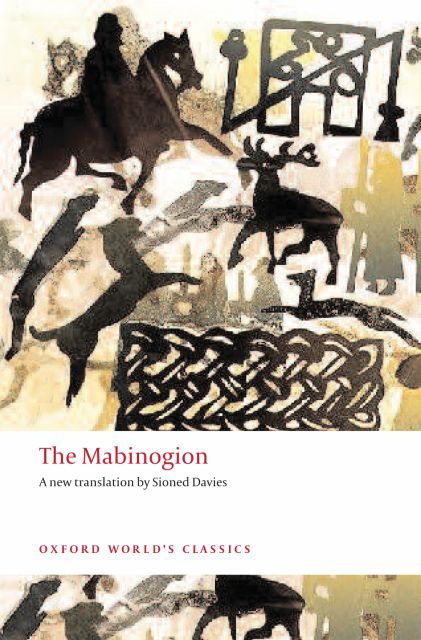

The Mabinogion is a series of eleven Celtic tales, dated between 1382 and 1410, translated from Welsh to English in the nineteenth century by Lady Charlotte Guest. The first four of these are 'The Four Branches of the Mabinogi': ancient, primal tales of kings and witches and savagery that will f*cking blow your mind.

Lemme tell you what happens in the Fourth Branch, to give you a taste of these nuts. There's a guy called Math son of Mathonwy, and he can't live unless his feet are in the lap of a virgin. (No explanations. Just go with it.) But then his nephew, Gilfaethwy falls in love with said virgin, a gal named Goewin, who's the fairest maiden of her generation. So he and his brother Gwydion come up with a  plan. They approach Math with a plan: they wanna team up with him to capture these strange creatures who've never been seen before on the island of Britain who taste better than beef (they're pigs, I think). 

They dress up with eleven other men as poets, and go to the court of Pryderi, son of Pwyll. They offer in exchange for the pigs twelve stallions with golden saddles and bridles, and twelve hounds with golden collars and leashes, which Gwydion made out magic, because that's a thing. And they get the pigs, but when they get back to Math, they tell him, oh no, Pryderi is after us because the magic's worn off and he now knows he's been cheated. Math and his armies flee to another cantref (province) where the pigs are being held, and meanwhile Gilfaethwy rapes Goewin on her master's bed.

Then there's a huge war between Math and Pryderi over these pigs, and when peace returns and Math returns to his castle to lay his feet in Goewin's lap again (he didn't die because the rules don't apply when he's at war), she says, sorry, I'm not a virgin anymore. And Math gets crazy mad at Gwydion and Gilfaethwy, and says they'd better not show their faces up here again. And they don't. For several years. But then they do turn up, 'cos Math banned anyone from giving them food or drink, and they come to the court, and Math takes his magic wand, and turns Gwydion into a stag and Gilfaethwy into a hind. And he curses them to live and mate with each other like wild animals, and return within a year.

And they do return after a year, and they've got a little fawn with them. Math keeps the fawn, but he turns Gilfaethwy into a wild boar and Gwydion into a wild sow. And they go off and mate with each other for a year, and they come back with a wild piglet, which Math keeps. Then he turns Gwydion into a he-wolf and Gilfaethwy into a she-wolf, and they go off and mate with each other for another year, and come back with a cub. And Math say, okay, you guys have been punished by having to have incestuous cross-gendered sex with each other for three years, here are your fawn and piglet and cub who've turned back into boys and I've had baptised. Oh yes, and I need another virgin please. So they suggest their sister Aranrhod, and Math makes her walk over his magic wand, and she immediately gives birth to a yellow-haired boy, which makes her flee in shame...

And that's just the beginning of the tale of the hero Lleu Llaw Gyffen, who is said yellow-haired boy, cursed by his mother to never have a name, never have weapons, never get married, et cetera, all of which he manages to overcome by outsmarting her.

Talk about magical realism - these stories just rattle off impossible things in crazily compressed language and expect you to deal. There's Bendigeidfran, who deals with a demolished bridge in a battle by lying across a river and letting his men walk over him (because suddenly he's a giant!), a massacre in Ireland that leaves no-one alive but five pregnant women, whose sons eventually grow up and repopulate the island by having sex with each other's mothers, a giant and an even bigger giantess who can only be got rid of by luring them into an iron house and heating it until it's white hot (and even then they manage to flee by breaking down a near-molten wall), talking immortal salmon and stags and eagles, murderous shieldmakers and shoemakers, a hero who tries to hang a pregnant field mouse despite being dissuaded by a cleric, a priest and a bishop (she turns out to be the queen of an enemy king who turned his army into mice to eat up all the grain in the fields), a princess made of flowers, a cauldron that reanimates the dead, Welshmen stranded in England who maintain their language by cutting out the tongues of their English wives, so their children will speak only Welsh...

Trippy. Things actually get a little more standard and formulaic in the book's second half, which is dominated by Arthurian romances - all these Welsh knights fulfilling their destiny in the court of Arthur and Gwenhwyfar (yes, that's how they spell Guinevere), and every knight more handsome and noble and strong, and every maiden more beautiful than the last. But it's still gloriously mad, and by the time we get to the piss-soaked stable and unexplainable ravens and gwddbwyll games (it's a board game of some kind) and half-red half-white half-black horses of "Rhonabwy's Dream", we're pretty much spent.

Anyhow: while I'm in Great Britain, I'm gonna milk it for all it's worth.

Also of note: this is where Lloyd Alexander got his Prydain series from! I grew up on that stuff. There's even a forgotten Disney movie based on the books, The Black Cauldron. I know: Disney did a Welsh princess before a Scottish princess. Odd, huh?


View Around the World in 80 Books!!! in a larger map

Representative quote: 
           ‘I want the birds of Rhiannon, they that wake the dead and lull the living to sleep, to entertain me that night.’
           'It is easy for me to get that, though you may think it's not easy.'
           'Though you may get that, there is something you will not get. The cauldron Diwrnach Wyddel, the steward of Odgar son of Aedd, king of Ireland, to boil food for your wedding guests.'
           'It is easy for me to get that, though you may think it's not easy.'
           'Though you may get that, there is something you will not get. I must wash and shave my beard. I want the tusk of Ysgithrwyn Pen Baedd to shave with. It will be no use to me unless it is pulled from his head while he's alive.'
           'It is easy for me to get that, though you may think it's not easy.'
           'Though you may get that, there is something you will not get. I will not enturst the keeping of the tusk to anyone except Caw of Prydyn. The sixty cantrefs of Prydyn are under him. He will not leave his kingdom willingly, nor can he be forced.'
           'It is easy for me to get that, though you may think it's not easy.'
           'Though you may get that, there is something you will not get. I must dress my beard to be shaved. It will never straighten out until you get the blood of the Very Black Witch, daughter of the Very White Witch, from Pennant Gofid in the uplands of hell.'

Next book: Seamus Heaney's "The Spirit Level", from Northern Ireland.

Saturday, July 13, 2013

Book 130, Greenland: "The Vinland Sagas"

Apologies to the one (1!!!) person who voted on the blog poll – I’m not doing Eskimo Poems from Canada and Greenland after all. When I surveyed my friends on Facebook, the overwhelming majority of them wanted to hear about the Vinland Sagas.

And why wouldn’t they? I remember hearing about Leif Eiriksson as a kid back in the early 1990s, watching an American edu-tainment program called Encyclopedia: a bunch of Vikings singing about how one of them had discovered America in 1001 CE; a land he’d called Vinland because of the clusters of wild grapevines he found there.

Since then I’ve seen this theme explored in science writing, genealogical studies, speculative fiction. Philip Pullman even references it in His Dark Materials: in his parallel universe, Native Americans are called skraelings, suggesting that the Viking colony succeeded in creating a lasting Euro-American connection there, whereas in actual fact the settlement lasted only 200 years, colonists driven out by worsening weather conditions and angry natives and the general impossibility of managing an overseas empire like that from the reaches of teeny little Iceland.


But the topic of my investigations here is Greenland: discovered by Eirik the Red (Leif’s father) in 981 while fleeing blood debts in Norway, then Iceland. The Icelanders – famously literary folks, both in the past and the present - were fascinated by the notion of this wild western island, which yielded exports of walrus ivory, skins and furs: a snowy frostbitten land where the very act of survival was heroic. They therefore composed several sagas about the lives of people of Greenland. The two in this volume, Grænlendinga Saga and Eirik’s Saga, are only two of them.

There isn’t actually much detail about Greenland here – Eirik’s discovery is described in an oddly perfunctory manner, and many of the scenes taking place here are honestly rather dry compared to the tales of battling the skraelings in Vinland. Still, what does come across are characters and odd anecdotes. Eirik, for instance, is invited by his son to lead the expediton for Vinland, but he protests that he’s too old, and when he gets thrown off his horse on the way to the port he decides it’s a terrible omen, and stays put. Then there’s Bjarni Herjolfsson, who gets blown off course and spies Vinland (or at least Baffin Island and its environs) but is so uncurious that he decides not to check it out, even when urged to do so by his crewmen.

And get this: this is herstory as much as history, as the most vivid and intriguing characters are the women, not the men. Viking women are portrayed as more than just daughters and mothers: there’s Aud the Deep-Minded, an early settler of Iceland and a renowned ancestress; the prophetess Thorbjorg, dressed in a blue mantle and a black lambskin hood lined with white cat’s fur, who leads a circle of women in a ritual singing warlock-songs and is rewarded when she foretells the end of a famine.

And of course Gudrid, sometimes celebrated as the most widely-travelled woman of medieval Europe, who witnesses her first husband’s corpse rise and prophesy her good fortune (Viking zombies are freaky, but relatively benevolent), then goes with her second husband to Vinland and interacts with a mysterious dark-haired shadow woman during a skraeling trading encounter that ends in bloodshed, then finally comes back to Europe and does a pilgrimage to Rome and ends her days as an esteemed anchoress.

And perhaps most infamously, Freydis Eiriksdóttir (Leif’s only sister) who leads a colonization mission to Vinland, hogging the huts and resources for her men while edging out her brothers, then pretending to have been abused at their hands and ordering her husband to have her brothers and their men slaughtered or else she’ll divorce him. When all the men have been killed, her followers won’t kill the women and children, so she does this herself. She also faces down the skraelings by ripping her dress open and smacking the face of a sword against her bare breasts, freaking them out utterly. Did I mention she happened to be pregnant at the time? Why doesn’t every schoolkid learn about this lady?

Of course, the reason why these biographies are important is because of ancestry: the descendants of these pioneers were sponsors of the sagas, both in their composition and their retranscription. The introduction notes that the Icelanders were unique because they formed a republic, not a kingdom – it was they who pioneered the idea that a saga could describe the deeds of common men, not just of gods and kings.

One final note on Greenland - ironically, the Norse colony here would die out in 1500, just after Columbus’s more southerly discovery of the Americas. Now it’s a Danish colony, but it’s trending towards independence, since global warming is allowing the Inuit-Danish native population to finally grow their own damn food. Thank god someone’s going to benefit from the devastation.


View Around the World in 80 Books!!! in a larger map

Representative quote: Then they put to sea, and Karlsefni accompanied them as far as the island. Before they hoisted sail, Thorhall said:

‘Let us head back
To our countrymen at home;
Let our ocean-striding ship
Explore the broad tracts of the sea
While these eager swordsmen
Who laud these lands
Settle in Furudustrands
And boil up whales.’


With that they parted company. Thorhall and his crew sailed northward past Furdustrands and Kjalarness, and tried to beat westward from there. But they ran into fierce headwinds and were driven right across to Ireland. There they were brutally beaten and enslaved; and there Thorhall died.

Next book: Halldor Laxness’s Independent People, from Iceland.

Thursday, December 20, 2012

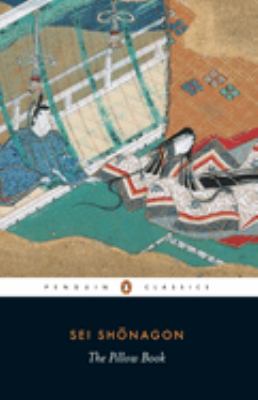
Book 111, Japan: "The Pillow Book" by Sei Shonagon


I’m back in Singapore! ILGA and the Scandinavian winter were amazing, consciousness-expanding experiences – I’ve written about some bits of ‘em on the ILGA Blog, and I might upload my e-mails to my folks to my personal site, The Paradise of Flowers and Fruit. Doing this project turned out to be pretty useful for socialising too - if I met a guy from Samoa, why, I could just mention that I'd read Albert Wendt and we'd have something to talk about straight off.

As for The Pillow Book, oh my: it took me all holiday to read. Surprising, considering how lightweight it is as a text, but Kindle for Mac had me clicking the screen all the time for the endnotes – it’s not a conducive medium to skimming at all.

But it was rather nice, absorbing these Japanese aesthetics of nature and seasonal change while trundling through the snow-covered mountainscapes of Norway. As much as Sei delights (this is a word used often) in the floral colours of court dress, she’s also in love with the images of winter: the snow on a gentleman visitor’s cloak, a lady holding a lighted coal to a letter to read it in the darkness.

Much has been made of the lists in this book – refined and elegant things, things that make your heart beat fast, things that make you nostalgic – but as translator/annotator Meredith McKinney notes, the literary form was quite established by 994, when Sei received the gift of paper which formed The Pillow Book. In fact, she deviates from standard lists, distracted by personal memories and commentaries.

And so much of this text is made of memories: little episodes in court that show off the pageantry of Emperor Ichijo and Empress Teishi, that are evidence of her wit as she bests the male courtiers in their games of quoting the Chinese classics – though a refined woman was not supposed to be able to read Chinese; thus her exhibitionism was necessarily veiled by sly self-effacement.

And what a strange world for women this was: where it was proper for court ladies to remain behind screens when addressing men, yet extra-marital affairs were not frowned upon. (A disproportionate number of these East Asian texts I’m reading are by women; have you noticed?)

Of course the whole work’s made more poignant because you know this gilded world was not to persist: Teishi fell from favour and died two days after childbirth, after which Sei left the court and by tradition died an impoverished crone; a couple of centuries later and the empire was transformed into the wartorn battlefield of The Tale of the Heike.

But for a while, this beauty, this perfection. And how grand that these moments of delight were captured well enough to remain on the shelf of world literature, perennial amidst the changing seasons.


View Around the World in 80 Books!!! in a larger map

Representative quote: 
[71] Rare things – a son-in-law who’s praised by his wife’s father. Likewise, a wife who’s loved by her mother-in-law.

A pair of silver tweezers that can actually pull out hairs properly.

A retainer who doesn’t speak ill of his master.

A person who’s without a single quirk. Someone who’s superior in both appearance and character, who’s remained utterly blameless throughout his long dealings with the world.

You never find an instance of two people living together who continue to be overawed by each other’s excellence and always treat each other with scrupulous care and respect, so such a relationship is obviously a great rarity.

Copying out a tale or a volume of poems without smearing any ink from the book you’re copying from. If you’re copying it from some beautiful bound book, you try to take immense care, but somehow you always get ink on it.

Two women, let alone a man and a woman, who vow themselves to each other forever, and actually manage to remain on good terms to the end.

Next book: Chun Yu Wang's Chicken Feathers and Garlic Skin: Diary of  Chinese Garment Factory Girl on Saipan, from the Marianas.

Saturday, April 14, 2012

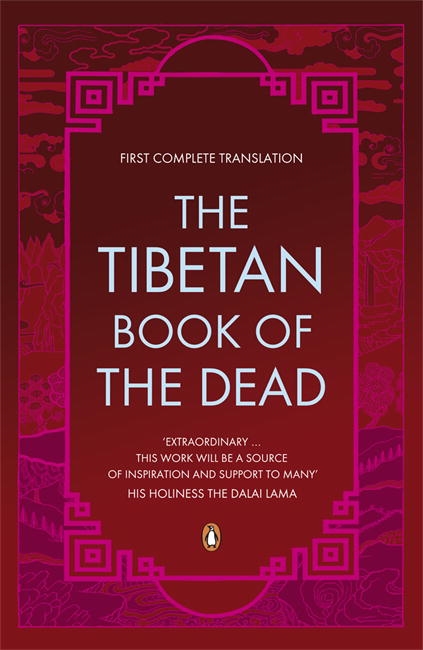
Book 94, Tibet: "The Tibetan Book of the Dead"

Cor. This was a bloody good read, way more interesting than the Quran or the Lotus Sutra or the Bible (most bits of the Bible, anyway). I was gonna say it was easy to see why it became a Western cult classic, then I remembered that for the longest time what the hippies and the beats were perusing was a single portion of this volume: The Great Liberation By Hearing.

This baby I’ve been lugging around is the first full translation, based on the three volume manuscript from the library of the Kyabje Dudjom Rinpoche, completed by the scholar Gjurme Dorje with support by HH the Dalai Lama. Check it!


And what makes this book so awesome? Well, first of all, it’s brilliantly random: as crazy if not crazier than the palimpsest hotchpotch of the Old Testament. It consists of prayers, philosophy, catalogues of deities, medical instructions for determining the date of imminent death, magical rituals for forestalling said death, a detailed practical guide to ensuring enlightenment or at least rebirth as a higher being following said death, and even a masked drama demonstrating the posthumous fates of a butcher and a pious merchant, as Yama Dharmaraja, sage of hell beings, judges them by weighing the white pebbles of their good deeds against the black pebbles of their sins. (Yes, shades of the Egyptians, which is why the English title of this book stuck instead of its proper name, The Bardo Thodol.

Second of all (a phrase my boyfriend insists is ungrammatical) it is so damn *sensual*, so psychedelic that one wonders what the prophets were smoking, or if mountain air just predisposes one toward incredible visions. It’s bizarre, after reading the fairly square first chapters, which concentrate on the usual Buddhist exhortations to renounce worldly attachments, to be told of the copulating, blood-drinking, sexually dimorphic rainbow-coloured buddhas and bodhisattvas and gatekeepers and herukas that inhabit the cardinal portions of one’s skull: Gauri, white-in-colour, carrying a human corpse as a cudgel; fox-headed Srgalamamuki, black in colour, eating entrails; yak-headed Manauraksasi, brownish-white and holding a vajra; sow-headed Varahi, blackish green, holding a noose of fangs; scorpion-headed Amrta, reddish yellow, holding a lotus; three-faced six-armed Vairocana, brandishing a wheel, an axe, a sword, a bell, a ploughsare and a blood-filled skull, joyously and indivisibly embraced by Buddhakrodhesvari; and Samantabhadra and Samantabhadri, the Buddha-body of Reality.

Oh yes, and trying to foretell your death by staring at the sun or your shadow or the tinges of blood in your urine, and channeling your powers of concentration so that should you topple unexpectedly from a mountain, your soul will escape your body from the correct orifice. Madness!

And also the gentle comfort it must give one to imagine one’s body at a funeral, surrounded by loved ones repeating prayers into one’s ear directing the soul to higher realms.

Yes, this is the kind of religious text I like: more imaginative than preachy; the kind I don’t have to take absolutely seriously and expands my imagination rather than limiting it. O Child of Buddha Nature, may you read many more books as weird and wonderful as this!


View Around the World in 80 Books!!! in a larger map

Representative quote:
There are, altogether, nine different pathways through which consciousness transference can occur, and these are associated with persons of superior, average and inferior capacity. The aperture of the crown fontanelle is the pathway through which [consciousness] departs to the pure [realm of the] sky-farers. Given this, [it is said that] one will attain liberation f awareness exits through the [crown fontanelle]. Since this is the supreme pathway, it is extremely important that one trains in directing one’s mental focus towards this [aperture]. Furthermore, if consciousness is transferred through the pathway of the eyes, [it is said that] one will be born as a universal monarch, and if it is transferred through the left nostril, one will obtain an unimpaired human body. These are the three optimum apertures associated with those of superior [capacity].

One will, however, be born as a yaksa if [consciousness is transferred] through the right nostril, or as a god of the world-system of form if [it is transferred] through the ears, and as a god of the world-system of desire if [it is transferred] through the navel. These are the three medial apertures [associated with those of average capacity]. Lastly, one will be born as an animal if [it is transferred] through the urethra, as an anguished spirit if [it is transferred] through the sexual passage, and as a hell being if it is transferred through the rectum. These are the three inferior apertures [associated with those of inferior capacity]. Given that there are such very great consequential differences between the various apertures through which consciousness transference may occur, there wil be inestimable benefits in directing one’s awareness to the crowd of the head, at the time of death.

Such is the forceful consciousness transference. SAMAYA!

Next book: Lil Bahadur Chettri’s Mountains Painted with Turmeric, from Nepal.

Wednesday, February 22, 2012

Book 90, Iran: "Deliverance from Error" and "The Beginning of Guidance" by al-Ghazali

This slim little volume took longer than I thought. But that's okay; I think I actually like Al-Ghazali. He's an oddly modern thinker, rationalist even in his irrationalities.


While the divine/human mind that wrote the Quran is obsessed with hellfire, Al-Ghazali's more interested in the very idea of the Truth. In Deliverance from Error, he explains that he's unwilling to accept proof via miracles: no point is proven through magic tricks of turning stones into gold or rods into serpents. He's smart enough to point out that the Faithful must not dismiss their ideas of infidel philosophers in the realms of natural science, logic, even ethics.

Of course he's silly sometimes: he claims the Greek thinkers are fundamentally flawed because they weren't Muslim; he warns that only the elites should be allowed to access their ideas. I fucking love his imagery here, though:

"It is only the simple villager, not the experienced money-changer, who is made to abstain from dealings with the counterfeiter. It is not the strong swimmer who is kept back from the shore, but the clumsy amateur; not the accomplished snake-charmer who is barred from touching the snake, but the ignorant boy."

Oh, and one of his counter-arguments for complete dependence on natural philosophy is the inductively proven usefulness of magic squares in aiding childbirth.

Yet it's these very imperfections which draw me in as a reader: the knowledge that this religious writer is fallible, is fundamentally human. He charts his own philosophical and spiritual development in this text, acknowledging that rationality can only take one so far and thus the necessity for mysticism - a paradoxical situation he has to live with.

And that fallibility, that very idiosyncrasy, is what makes his commandments in The Beginning of Guidance more charming than ridiculous. It's here that he lays out strict rules for ablutions before prayer, for going to the toilet (never in front of others, step into the room left foot first and exit right foot first, and wipe your cock an odd number of times on a stone).

It's here that he warns against lying, backbiting, cursing, and most important of all, hypocrisy. If every Muslim followed what he prescribed, they'd be saints even to our secular eyes - always turning the other cheek, never judging lest they themselves be judged. It's also here that he advocates moderation in all things, propriety at prayers and in conversation, and naturally respect for elders. It's like he's the reincarnation of Confucius or something.

So I've read two religious texts in a row! Never let it be said that I'm anti-faith, my dears.


View Around the World in 80 Books!!! in a larger map
Representative quote: Beware of association with the learned men of this time, especially those occupied with controversial topics and intellectual disputes. Beware of them; because of their jealousy they wait for you to fall into ill-fortune, imagine various things concerning you, and behind your back make signs with their eyes among themselves while enumerating your faults when they meet together so that sometimes in their anger they confront you with these faults during their rivalries. They do not forgive your faults or slips; nor do they hide your private matters which should be kept hidden. They make an account with you even in the most negligible matter, and they envy you inn everything, small or great. They instigate your friends against you by slandering, spreading false information, and lies. If they are pleased with you they show it through servile flattery; if they are angry with you they are quietly stupid. On their bodies they wear beautiful clothes, but their minds are wolves. This is a judgement based on clear observation of most of them except those whom God (exalted is He!) has protected. Companionship with them is a loss, and association with them is to be forsaken.

Next book: Khaled Hosseini's The Kite Runner, from Afghanistan.

Monday, January 2, 2012

Book 84, Saudi Arabia: The Quran

Happy New Year! So after over a month, I'm finally done with al-Quran Qadim!

Yessir, I knew I could've gone with easier choices like Rania al-Baz's Disfigured (socially significant and pretty well written), Rajaa Alsanea's Girls of Riyadh (revolutionary but badly written, according to most critics), and Jean Sasson's Princess (still don't trust its veracity). But I wanted something really iconic, a jewel of world literature. a book worth the boasting rights. Why not a book written (or transcribed) by the most influential man in history, a figure whose name I dare not utter without a pbuh and whose face I dare not upload at all?


And the truth is, there are several reasons why this wasn't an entirely good idea.

I still remember having to read bits of the book for my Contemporary Civilization class during sophomore year; we were guided by an Arabic-speaking Jewish girl who gushed over the sheer poetry of the text, and all the Americans oohed and aahed over how much more liberal and enlightened some of the laws are compared to Deuteronomy or Leviticus. Whereas I was distressedly thinking how all the Muslims I knew (especially in Singapore) were more liberal and enlightened than even that. (Yes, imprisonment for female adultery [an alternative reading of "stoning"] is less draconian than death, but in the 21st century?)

Still, I figured maybe reading the whole thing would give me some context. My friends recommended the rather beautifully archaic Abdullah Yusuf Ali translation for my enjoyment. And now I'm finished, I've ended up delaying my post for three days, so nervous am I about how to appear as both a critical humanist and a non-Islamophobe.

Yet at the risk of incurring the wrath and legal action of everyone in Singapore, I'm going to make a list of 4 reasons why reading the Quran alone isn't a great way to fall in love with Islam.

1. The surahs are super confusing.

The Quran, as you probably know, is a series of divine revelations: each one of them is meant to be a stand-alone insight into spirituality. So they're free to meander as they like from topic to topic, rather than staying focussed on a single issue - e.g. Surah 4, an-Nisa, is supposedly all focussed on women but after 25 verses it goes into more generalised, abstract ethics. Pretty difficult for study, no?

2. The stories are scattered all over the place.

The Book contains all these references to tales of prophets from the Old and New Testaments: Adam, Noah, Lot, Abraham, Moses, Zakariya, Mary, Jesus; also non-Biblical stories like Saleh and the Companions of the Elephant. But these are mostly told in fragments, so that you need a concordance or annotations to piece everything together - plus, a few key details are repeated in sura after sura, while others in the Biblical versions are left out. Thus you'll get pretty damn tired of the Pharaoh yelling at Moses, but no mention is made of the colourful variety of plagues he visited on Egypt. The versions of the stories in the Hebrew and Christian Bibles are patently more accessible and rounded out.

3. The order doesn't help.

I'm not complaining about chronological order here - I know it'd be next to impossible to trace their history, so I can't blame the original redactors for placing them in order of length. But currently, the surahs are arranged from longest to shortest. That's really frustrating for a novice reader: we have to plough through the long, bifurcating thought processes of Surahs 2 through 40 before we start seeing some surahs with the sheer, crystalline focus of secular poems. (Yes, there are wonderful poetic moments in longer surahs, but they get gobbled up in the range of topics covered.) Imagine if they were arranged from shortest to longest: then people would be hooked in by the concise poetry of the early suras and keep reading all the way to the end.

Hmmm. In retrospect, this might not be a good idea. Most of the laws are laid out in the longer suras; they're important.

4. And yes, I know this will be controversial: there's a lot of hellfire.

The Quran does mention tolerance and how Allah is all-merciful, but it's really hard for a non-believer to swallow this when so many of the suras (especially the longer suras) mention fire and punishment for us in some way. We're told we'll be cast into the fiery pit and forced to eat of the tree of Zaqqum; there are also constant invocations of prophets at Warners of the end of the world, when our very bones shall testify against us. It gets really exasperating. Maybe fear works as a conversion tactic for some people, but us freethinker skeptics? You'll catch more flies with honey than vinegar. (It was actually the act of reading the Old Testament that made me stop being a Christian ten years ago.)

Thus I do think it's understandable why some Muslims end up as terrorists, because the Quran contains so much condemnation of unbelievers and polytheists and those who ignore the Signs. While there are commandments for tolerance of other religions - People of the Book, that is - they make up a much smaller total portion of the book.

What does this mean? Well, basically that the Quran is a supremely slippery text, and it's not immediately accessible to outsiders; perhaps not even to insiders. It's quite different from most books of the Bible; in fact, it recalls the compilations of Zhuang Zi in some respects - how nonlinear and poetic it is, and how strange. Obviously Muslims pair it with the Hadith and the writings of religious scholars who've interpreted the Book.

It also means that the best strategy to make people conceive of Islam as a positive force in the world is for Muslims to be positive forces in the world themselves - boasting about the roots of your religion isn't going to be so effective when the roots are so tangled. Let's hope the bits of the Quran that are especially venerated from now on are the ones that celebrate tolerance, science, co-operation, social justice

As for me, I don't know what to think. Sure, I've got minor boasting rights for getting to the end of a book, but do I understand Islam any better than I did before? Damned if I know.


View Around the World in 80 Books!!! in a larger map


Representative quote: And such are the Parables We set forth for mankind, but only those understand them who have knowledge. (29:43)

Next book: Maha Gargash's The Sand Fish, from the United Arab Emirates