Showing posts with label american perspective. Show all posts

Wednesday, June 5, 2013

Book 126, Bahamas: "Triptych" by Wendy Coakley-Thompson

Didja know that one of Hemingway's posthumous novels (he was working on it when he died) is partially set on the island of Bimini in the Bahamas? Alas, Islands in the Stream is only available in the National Library's reference section, so I ended up going with full-on chick lit.


Wendy Coakley-Thompson was born in the US and works in the US, but she's ancestrally Bahamian, and spent a bunch of her childhood there. In her foreword, she talks about reading Robert Wilder's The Wind from the Carolinas, and yearning to read more fiction set in the Bahamas. "Little did I know that I would have to write that book myself!" she giggles.

And let's be frank - this isn't great literature. It's escapist writing. All the characters are Mary Sues: the Cuban hospital financier Jonathan Cruz, his gorgeous Bahamian surgeon wife Alexandra and his Afro-Cuban-Canadian psychology professor cousin Timothy Lamb. All wealthy professionals in their 40s or early 50s; Tyler-Perry-esque people of colour. All religious and (trying hard to be) virtuous. All living the life in the tropical paradise of Nassau. All of them ridiculously good looking, more so in middle age than in their youth, with crazy sex drives to boot.

So no, I'm not getting much of an insiders' view of the Bahamas (although people do seem to be pretty well off there: it's the second-highest Caribbean nation on the Human Development Index, after Barbados). A few mentions of Conchy Joes and fish stew and seagrapes and androsia and Camp Discovery. Not great prose, either - very transparent, needy, black and white. 

Was actually tempted to stop reading and head over the library's reference section, but then the story started to grip me a little. It's a sappy business, about Jonathan getting a brain tumour, and not being able to get it up anymore, and then letting his cousin sexually satisfy his long-suffering wife because he can't anymore. It's all described with lush urgency, and Tim actually deflowered Ally when they were in their teens, and they're longing for each other anyway, and there's a huge pot-fueled threesome (one realises that Coakley-Thompson chose "triptych" because it was a classier way of saying "threesome"), and then people start dying and crying, et cetera, and then Tim and Ally shack up in the end. That kind of story, but with the characters feeling bad about all the moves they make, beating themselves up religiously, but doing them anyway, because hey, they're red-blooded Caribbean middle-aged people, and they gotta bone.

Chick lit, like I said. But there's nothing wrong with a book like this existing. My only big problems are with the fact that Ally, a fully qualified surgeon, believes in homeopathy, and that there's no real justification for Jonathan never straight up *telling* her that he's fine with her bonking on the side. Oh, and maybe there's a little too much drama in the characters' background (rape! kidnapping! baby murder! a perfect wife killed by a car crash!).

And that's it for the Caribbean! Unless anyone can recommend a good book about Bonaire, Sint Eustatius or Saba. Now we're on to the rich developed world: North America... and, not long afterwards, Europe!


View Around the World in 80 Books!!! in a larger map

Representative quote: Before her mind could catch up, Tim leaned in and brushed his lips against hers. Every synapse in her body cried out for him. He kissed her repeatedly, and her pussy flooded. She felt her blouse opening and falling away. She felt her bra hooks opening, saw Jonathan toss her bra across the room out of the corner of her eye. Tim cupped her breasts, and she cried out. From behind hr, she felt Jonathan's hands pulling down her Capris and panties. She felt a draft of air across her bare buttocks. Instinctively, she raised her ass in the air. In her fog, she felt the tip of Jonathan's tongue invading her pussy, licking her vibrating clit with just the right pressure to make her lose it. Above her, she realized that Tim was stroking her head, her shoulders, her back, parting her ass cheeks to improve her husband's view. Tim's hands massaged her breasts, gently tweaking her sensitive nipples. The double onslaught was too much for her to handle. The orgasm snuck up on her, surprising her, shocking her raw. She collapsed face down onto the pillows, her breathing ragged into the soft cloth.


Next book: Ralph Ellison's Invisible Man, from the USA.

Tuesday, May 28, 2013

Book 125, Turks & Caicos Islands: "Food Plane Soup" by Ron-Luc Nickell

Once again, I've eschewed a domestically-written book: Charles Palmer's Living in the Turks & Caicos Islands: From Conchs [sic] to the Florida Lottery. Hard to access, and most indicators suggest that it's written very badly.

In its place, I've downloaded something from the Amazon Kindle shop: a memoir by a Texan guy who spent three months on the island in 2001. Sounds spurious? Perhaps so, but it's more than decent reading.


It's not unlike my own soon-to-be-published university memoir, Diary of a Stone Monkey. It's made up of a series of letters by a young Austin computer programmer who got retrenched in 2001, and ended up offering to be an assistant to a friend's retired dad on Grand Turk.

Nickell ended up staying on the island for three months. Rather than writing back about the pleasures of tropical living, he found himself gripped by culture shock. He was lonely, and hated the litter-filled streets and the noisy children and the bars and aerobics classes that played nothing but bad Jamaican remixes of 1980s American soft rock. He even got sick of the food - of course there was conch and coconut, but almost everything else had to be flown in on special market days, hence the title: food plane soup is the soup you make on the day the food plane arrives.

What makes this more than just a bag of whines is Nickell's writing style: a former film major, he's endlessly eloquent (and a little hysterical to the point of surrealism) in his acerbic descriptions of the world around him, And not in a neo-colonial way, either - he mocks himself, racked by flu and food poisoning and isolation, as much as he does the bad taste of Cockburn Town. And when 9/11 happens while he's off course, he's flabbergasted and disgusted at the US's draconian response (which would only get worse, over the course of the 2000s). Feels the tension in the air at immigration, when he finally checks back into the US, Greyhounding his way back home.

I'm still working on essays, so won't say much else. Brief and niche, but not a bad read at all, I'd say. His profile on Google+ suggests he's decent-looking, too, in a weird ageing hipster way.


View Around the World in 80 Books!!! in a larger map


Representative quote: My oft-lamented misgivings concerning the state of Caribbean Popular Music continue to amaze and confound me. In a revelation that surprises even me, I've found that the Cher song doesn't even come close to the aneurysm-invoking potential of the ubiquitous "If Loving You Is Wrong" remake. In fact, I find that I will happily take ten of the Cher songs over one listen of this never-ending travesty. And here's why: the Cher song is only played at the rec center. I cannot, however, escape the latter monstrosity. It's as if my ears have been forced open with clamps and granny's hearing aid megaphones jammed into each canal, whereby I'm subjected to a sort of Ludwig van/ultraviolence sensory onslaught and sent staggering out into the streets with the appearance of a ram that sleepily put his horns on backward one morning. The song oozes and slithers from every window, doorway, car stereo and bar loudspeaker on the island, seeping into my every pore and distressing the jangling nerve endings of my largest organ. Indeed, I am the unwitting victim in a "Conchwork Orange" nightmare. In my peripheral vision I spy a horse by the side of the road. Is she merely involved in the mastication of grass, or do I swear I see her mouthing along with the words? Suddenly, I get the distinct feeling I may snuff it.

Next book: Wendy Coakley-Thompson's Triptych, from the Bahamas.

Monday, May 20, 2013

Book 124, Cayman Islands: "The Firm" by John Grisham

So yeah, I tried reading Dr. Florence Goring-Nozza's One and One Is Two: Caribbean Thriller. First off: it's not a thriller: it's a dreary little self-centred memoir talking about how the Caymans were oh so nice before they became a rich international banking centre with no taxes. Second: it's incredibly badly written. Run-on sentences galore. No sense of self-awareness. What an idiot this author is - the doctorate, believe it or not, is from the Yale School of Divinity. Yep, she's a preacher. Sigh.

Of course I do favour the practice of reading from the national literatures of the nations I'm surveying, but this project is also about filling my brain up with the best lit the world has to offer. So why not a nice American thriller instead?


I haven't watched the 1993 film version of The Firm - rather mind-boggling to realise Tom Cruise has been an action star for twenty years now - but I have read Grisham's later novel The Runaway Jury, which I thoroughly enjoyed while in a backpacker inn, maybe in Tel Aviv or Brazil, not sure where.

The similarities between the two are striking. Thorough knowledge of the legal profession and practice, of course, but both also have young, handsome male protagonists on outlaw missions; invisible but kickass dames on the side, and a healthy distrust of big corporations - Runaway Jury is about a guy rigging a jury to convict a tobacco consortium in a class action lawsuit; The Firm is about a Memphis-based law firm that works for the Mob and ices every associate or partner that they think might blab to the FBI. Big money all over the place, destined to be brought down hard. Some relevance to the contemporary economy (which of course TV producers have attempted to take advantage of).

Honestly, one does develop a soft spot for Mitch McDeere early on in the book - a tall, athletic 25 year-old, born into poverty and crime but with the drive (and insomnia) to put himself through Harvard Law School, working in a convenience store to pay the bills, offered the job of his dreams with a six-figure salary and then suddenly discovering how deep in shit he is, with the firm (Bendini, Lambert & Locke is its name) blackmailing and surveilling and threatening to murder him on one side, and the FBI tailing and tantalising him and telling him that if he doesn't bend, he'll eventually be caught out and jailed forever, on the other. Oh, and he's got a pretty wife, too. Raises the stakes.

Some words about the movie, which I've read up about on Wikipedia. Tom is very pretty indeed in there, but I can't take him seriously in there after all the silly Scientology. Also, what irks me is how the ending's been made really happy, with all loose ends tied up and Mitch still able to practise law, not having broken his vow of client confidentiality, etc. The book's all about him as an individual on the run, breaking free of the bounds and escaping to... you guessed it: the Cayman Islands.

Nothing much to say about the islands themselves, except their status as a tax shelter, the snorkelling and diving, and I guess a bit of random info about the population of British whites and comfortable blacks (the book uses "Negros" on occasion, surprisingly) and pretty mulatto women and Jamaican Red Stripe beer and roast shark. Oh yeah, and the bit about the only KFC on the island catering to Americans, since no-one on the island actually rears any chickens - that was fun.

Some storytelling devices which I wouldn't have recommended my students, but I suppose I'd better digest them. It's not a bad thing to be able to write a bestseller, after all.

And I'm back in the Western Hemisphere again. Not an awful return trip, I suppose.


View Around the World in 80 Books!!! in a larger map


Representative quote: 
Avery wiped the sweat from his forehead. "This place has always attracted pirates. Once it was Blackbeard, now it's modern-day pirates who form corporations and hide their money here. Right, mon?"

"Right, mon," the driver replied.

Next book: Ron-Luc Nickell's Food Plane Soup: The Desert Island Letters, from the Turks and Caicos Islands.

Sunday, March 3, 2013

Book 117, Nauru: "Paradise for Sale: A Parable of Nature" by Carl M. McDaniel and John M. Gowdy

Um. A bit preachy, this one. Nor is Nauru really the point: it really is just being used as an exemplar of a nation ecologically destroyed by short-sighted capitalism.

Basically, it's a clumsy version of Jared Diamond's Collapse.

 
We've got three chapters about Nauru - the first about geological/biological history, the second about human history, the third repeating chapter two but with a more pointed environmentalist slant... And then four more chapters looking at the greater problem of how our culture pushes humans to live beyond their resources (see the Viking settlement of Greenland and the decline of the Rapa Nui civilisation on Easter Island; for alternative, sustainable cultures see the Australian Aborigines, the Kalahari !Kung and the Ladakhis of the Himalayas).

I mean, yeah, I get it. There's actually a little travelogue as a coda, because the authors felt bad that they'd written all this without really exploring the culture of Nauru today, so one of 'em stopped by for four weeks and wrote about how it was doing.

And how is it doing? Well, it's almost always been a nice place - it was called Pleasant Island by colonists; the remarkably non-violent native population of about a thousand was living happily off fish, pandanus and coconut and had very little worth exploiting until an Australian guy realised that a doorstopper rock from the island was actually made of guano-compounded phosphate, super-useful as a fertiliser to turn the deserts of his island nation into agricultural fields.

So the Ozzies and Brits and Kiwis came and plundered the hell out of Topside, the mountain of phosphate deposits in the centre of the island. But it wasn't until independence in the 1960s that the Nauruans began to demand a proper cut of this fortune, whereupon they became super-rich and super-fat on an imported diet of Spam. And with this embrace of capitalism and wealth there was a rapid loss of native culture too - no more of the Pacific idyll described by Time Magazine, instead everyone driving around in air-conditioned cars despite the fact that it'd take only four hours to walk around the whole island.

But the phosphate's running out - and it's the island's only resource. They never tried focussing on making it renewable (seems it's possible: if they'd allowed certain areas to lie fallow during independence in 1966 they might have been able to allow the bird poop to replenish itself indefinitely). And after a series of bad investments - including a flop of a West End musical, as the authors never fail to remind us - this ship seems sunk.

Odd thing is, when McDaniel and his wife visited, he found the people were still pretty happy, thriving with their happy-go-lucky culture despite the oncoming tsunami of doom. The authors claimed this is representative of the human condition: we still live on in hope despite the obvious signs that we've cut the gravel from beneath our feet and the big Malthusian end is nigh. But seriously, I thought, if the people are happy, can't you consider that there might be something a little off about your gloomy thesis?

Then I remembered: I actually met a Nauruan girl myself in Makassar, Sulawesi, last year, and she agreed - the whole island's full of unemployed young people, angry and confused at the future of prosperity they've been denied. This book was published in 2000: a dozen years later, the collapse has happened sure enough.

The authors claim the Nauruans never gave up their forager culture: phosphate made life easy even after modernisation so they never had to develop a Protestant work ethic. Seems a little colonial in outlook, but the greater truth is that the idea of constant economic progress is what's dooming Earth right now. Our civilisation is unsustainable. Now what?

Al Gore said in An Inconvenient Truth that in order to make people change their ways you have to inspire people with some promise of better things ahead. Not much of that here. Just dooooooooooom.


View Around the World in 80 Books!!! in a larger map

Representative quote: In North American publications some westerners express moral indignation at the Nauruans' plight: "Here was Nauru with a history of affluence. But having dug out all their island for the phosphate so stupidly, they stupidly spent their money as well. They need to take the blame themselves. They are in a lot of trouble because they have not saved for a rain day," and "Nauru's decline has to do with human nature. It's what happens when incentives are taken away and people don't have to work." But what is the reality of the Nauruans' situation? They did not bring Europeans to their island, nor did they create the market economy that physically destroyed the island and destablized their civilisation. These things happened as a result of two influential beliefs in Western culture: that native cultures are expendable for progress and that natural environments exist for the purposes of making money and supporting progress by feeding the growing market economy. The Nauruans had an enduring pattern of habitation prior to 1800; therefore, these failures should not be ascribed to them but to the market economy.

Nauru has served as a crystal ball in which to view the consequences of beliefs and actions prevalent in our market-based world. We can appreciate how difficult, if not impossible, it would be for the current population of Nauruans to live at this time on their island's impoverished biological and physical resources. It is certainly not prudent to denude the entire earth the way Nauru, Banaba, Beijing, London, Mangaia, Manhattan Island, Mexico City Moscow, Rapa Nui, and so many other places have been denuded.

Next book: Tony Wheeler's Time and Tide, from Tuvalu.

Saturday, February 23, 2013

Book 116, Marshall Islands: "Operation Crossroads: The Atomic Tests at Bikini Atoll" by Jonathan M. Weisgall

This book is bloody comprehensive. Every little detail of the events leading up to the 1946 atomic tests at Bikini Atoll laid out in tedious sequence.

Pardon my ennui - the text isn't badly written by any standard, but it dwells so much on political and military history, in particular the machinations between the competing parties of the US Navy and Air Force, that honestly wasn't terribly interested in a lot of chapters. Quite a bit of military drama though - almost like a sequel to Michener's Tales of the South Pacific.


I've learned a lot of new stuff, though - what a sensation those tests were, with J. Robert Oppenheimer and the other Project Manhattan celebrity scientists gone peacenik and speaking out against them, while the press drummed up fears that it might incinerate the atmosphere (or else prove the Navy obsolete, if the bomb drop ended up sinking all the decommissioned warships around the island). Americans had the words "atomic" and "project" on their lips all day, a French designer hijacked the word "bikini" for his explosive new swimsuit (that outdid the scantiness of an earlier competitor, the "atome").

And the sheer folly behind so much of it - people writing letters of complaint about the animals being tested (goats and pigs), wanting to salvage the not-very-old World War II battleships they'd fought on, the way the US government categorically denied the long-term ill effects of radiation, and then later claimed it was "a very pleasant way to die" (in spite of the fact that US physicists had died in agony protecting others from radiation during experiments). And what a bust so many of the tests were, with the inaccuracy of the bomb drops rendering the majority of the cameras and instruments useless, and other results covered up or destroyed, and journalists fooled by the muckup of the first test into thinking that the bomb wasn't very powerful at all...

Weisgall is, by the way, a lawyer representing the indigenous people of Bikini Atoll, who gave up their land willingly to the US for these tests based on the assurance that they'd be well looked after (they haven't been, of course; they starved on their first replacement island), and that they'd be allowed to eventually return. And they did return in 1978, but the radiation from surrounding nuclear tests had poisoned the soil, turning everything that grew on the island radioactive, from the coconuts to the crustaceans, impossible to live their idyllic island lives, so the island remains lush and untouched, a toxic paradise.

Oddly enough, Weisgall doesn't dwell on the Bikini people very much. The accounts of the atomic tests' other victims are better documented: the radioman of the Japanese tuna fishing boat Lucky Dragon, which got caught by unexpected fallout, the American sailor boys who swabbed the decks of the radioactive battleships, often shirtless and in shorts, unable to comprehend the problem of this invisible radiation that they couldn't scrub clean, and now dying in dozens from strange cancers which the Navy says it can't directly trace to the test sites (they do get medical treatment now; but only because veterans' benefits are more comprehensive now than post-World War II).

So yes, lots of stories. And I've learned plenty. Didja know footage of the Bikini tests was used in both Doctor Strangelove and the original Godzilla? But enough for now. Too many facts; would honestly prefer some literature.


View Around the World in 80 Books!!! in a larger map


Representative quote: Lore Kessibuki stood on deck for hours until the LST had cleared the Eneu channel and he could no longer see any of Bikini's islands. He then composed a song, both sad and hopeful, which remains the Bikinians' anthem today:

No longer can I stay; it's true.
No longer can I live in peace and harmony
And rest of my sleeping mat and pillow.
No longer can I stay on my island;
I must leave all the things there.
The thought overwhelms me and leaves me helpless.
My spirit has to travel, far away, lost
Until it is caught in a great current.
Only then can I find peace.

Next book: Carl N. McDaniel and John M. Gowdy's Paradise for Sale: A Parable of Nature, from Nauru.

Wednesday, March 14, 2012

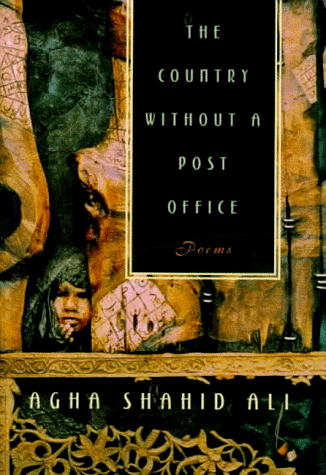
Book 93, Kashmir: "The Country Without a Post Office" by Agha Shahid Ali

News flash: I am sick. I've got one of those fevers that makes me feel hot and cold at the same time and I'm not getting anything productive done (updating this blog does not count as being productive). What makes this all the more ridiculous is that this is part of a cockamamie scheme I had to do non-UN-recognised states: Kashmir, Tibet, Palestine, Hong Kong, Macau, all in the hopes of pissing off some of my Indian and Chinese friends.


Plus, you've noticed that I decided not to do Salman Rushdie's Shalimar the Clown, didn't cha? I actually made that decision fairly early: I wanted someone genuinely Kashmiri, hell, and a highly praised Kashmiri-American emigré poet was just what the doctor ordered.

And seriously, Shahid is awesome. I picked up his posthumous book of ghazals, Call Me Ishmael Tonight, and I fell in love - then I realised this was a patchwork collection snatched from various bodies of work he'd published before. Didn't feel quite right.

So I pulled Rooms Are Never Finished off the shelves: a work mourning his mother, recording his journey from Amherst, Massachusetts to Srinagar to deliver her body for burial. Surprise, surprise: I did not like this one as much: way too many abstractions and allegories, real tragedy subsumed in Zainab's mourning over the martyrdom of Imam Husain and Radha crying out to the Dark Lord. Didn't help that Shahid had a penchant for extremely long poems, written in sections composed of prose poetry or terza rima or sapphics; only the ghazals and villanelles were a a breath of fresh air in between.

So I reserved The Country Without a Post Office from the repository used collection, and hallelujah, the anguish is way more direct and unfiltered: these pieces are written from 1991 to 1995, reflecting on the crazy bloodshed of that era. Thassa right: I combed through four books while enduring illness just for this bloody blog post.

Don't actually feel like analysing it now. Just wanna sleep.


View Around the World in 80 Books!!! in a larger map

Representative quote:

Ghazal

The only language of loss left in the world is Arabic -
These words were said to me in a language not Arabic.

Ancestors, you've left me a plot in the family graveyard -
Why must I look, in your eyes, for prayers in Arabic?

Majnoon, his clothes ripped, still weeps for Laila.
O, this is the madness of the desert, his crazy Arabic.

Who listens to Ishmael? Even now he cries out:
Abraham, throw away your knives, recite a psalm in Arabic.

From exile Mahmoud Darwish write to the world:
You'll all pass between the fleeting words of Arabic.

The sky is stunned, it's become a ceiling of stone.
I tell you it must weep. So kneel, pray for rain in Arabic.

At an exhibition of miniatures, such delicate calligraphy:
Kashmiri paisleys tied into the golden hair of Arabic!

The Koran prophesied a fire of men and stones.
Well, it's all now come true, as it was said in the Arabic.

When Lorca died, they left the balconies open and saw:
his qasidas braided, on the horizon, into knots of Arabic.

Memory is no longer confused, it has a homeland -
Says Shammas: Territorialize each confusion in a graceful Arabic.

Where there were homes in Deir Yassein, you'll see dense forests -
That village was razed. There's no sign of Arabic.

I too, O Amichai, saw the dresses of beauitful women.
And everything else, just like you, in Death, Hebrew, and Arabic.

They ask me to tell them what Shahid means -
Listen: It means "The Belovéd" in Persian, "witness" in Arabic.

Next book: "The Tibetan Book of the Dead", from Tibet.

Tuesday, February 28, 2012

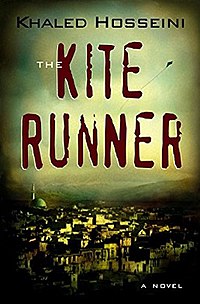
Book 91, Afghanistan: "The Kite Runner" by Khaled Hosseini

Wheeee!!! I'm finally back in the 21st century!!!

And in good old book club territory, too. Not kidding, despite my boyfriend's protestations that its commercialisation means this book isn't authentically Afghan. Stuff gets popular for a reason: I actually finished half of this 371-page baby just sitting at a mama shop just now.


This one's an emigrant's story of his lost country, not Julia Alvarez's story of the Dominican Republic and Carlos Eire's story of Cuba - there's even a similar focus on the gilded lifestyles of the pre-revolutionary aristocracy and their humiliation on becoming lower-caste American immigrants. Lovely immersive descriptions; the kind of stuff I wish us folks in Singapore were turning out.

The key dynamic is between our rich man's son protagonist Amir and his best friend/servant boy Hasan. And I'm not sure if I've ever read a story in which the main character acts so unforgivably cruelly towards another human being. This ends up being a novel about guilt, and ultimately redemption, as Amir returns to Kabul under the Taliban, witnessing its full horrors (and I was signing petitions against those guys BEFORE 9/11, thank you very much), and pulling off a climax that, while barely believable, is just intense enough to redeem everyone involved.

Weirdly enough, in the closing portions (I'm not going to reveal too much), one character becomes an allegory for Afghanistan's suffering and neglect: we all bear responsibility for not interfering more during the Soviet and Taliban occupations, and the crazily long dénouement is testament to the fact that way too much scarring has occurred; healing will take a hell of a long time and a hell of a lot of hope.

Yeah, that's all I have to say about this book, really. Except that it also made me think about Singapore's inhumanity to our own servant classes: foreign workers from the Philippines and Bangladesh and Indonesia who clean up our shit and build our houses.

(Also learned that Hindi music has always been popular in this country - we're definitely in South Asia now, kid.)


View Around the World in 80 Books!!! in a larger map

Representative quote:
"I became what I am today at the age of twelve, on a frigid overcast day in the winter of 1975. I remember the precise moment, crouching behind a crumbling mud wall, peeking into the alley near the frozen creek. That was a long time ago, but it's wrong what they say about the past, I've learned, about how you can bury it. Because the past claws its way out. Looking back now, I realize I have been peeking into that deserted alley for the last twenty-six years."

Next book: Mohammed Hanif's A Case of Exploding Mangoes, from Pakistan

Wednesday, November 23, 2011

Book 83, Oman: "The Sultan's Shadow" by Christiane Bird

Y'know, I actually own a book given out by the Omani Consulate - one of those propaganda, boo-yeah, look how prosperous we've become since the modernising force of Sultan Qaboos books. Received it as a door gift back when they'd just sailed the Jewel of Muscat to our shores.

But of course, I've chosen this book instead:


And guess what? Despite the National Library classifying it under "Oman", only a third of it actually takes place in the country - the story's focussed instead on the period after Sultan Seyyid Said and his descendants moved the capital of their empire from Muscat to Zanzibar, all the way down in present-day Tanzania.

But dear me, this book is terribly interesting. I should've read it before I started my East African journey, not after: it brings the world that Abdulrazak Gurnah describes to life; this Arab/Swahili/Indian/European world of slavery and debts and faraway colonial powers.

The author isn't just interested in communicating the cause-and-effect of history: she's fascinated by all the little stories and details of the era, which is why she meanders into side-tales of Ali bin Muhammad and the Zanj Rebellion (the greatest slave revolt in world history); of David Livingstone and Tippu Tip and Henry Morton Stanley; and of course of the Princess Salme, who eloped pregnant to marry a German businessman, turning her back on her faith and becoming the world's first-known Arab woman to write an autobiography.

Truth is, I think Christiane Bird extends the narrative a little too long: Salme ceased to be a sympathetic character for me quite early on (she was an apologist for slavery, among other character flaws), and the various threads of history told out of sequence do strain the mind a wee bit.

But now at least I have some understanding of what the East African slave trade entailed (the author objects to the term "Arab slave trade", given that we don't say "European slave trade"), and that old Oman truly was a glorious place with surprisingly enlightened leaders and a still rather tolerant form of Islam in its culture. That's education, baby.


View Around the World in 80 Books!!! in a larger map

Representative quote: Swahili clairvoyants were called in. Many lived in the most remote areas of the island, but they were tracked down by slaves and brought to the palace by boat, horseback, or foot.

Among them was a prophetess "of a quite unnatural corpulence," who claimed to have an unborn child inside her who could foretell the future. Arriving at the palace one afternoon, the woman told the worried family that her omiscient child, who had been living under her heart for years, could see from the tops of the mountains to the depths of the seas. And then, in a high squeaky voice, the "child" described three sailing ships, from the vantage point of the tallest mast, and outlined in detail what every single person on board was doing. Apparently, Seyyid Said was still alive and well. The family rejoiced and the prophetess ordered that a myriad of sacrifices be made. Gladly, the family obeyed, slaughtering animals and distributing meat, cloth, and rice among the woman's followers and the poor.

At the time, Salme and everyone else in the palace believed in the miraculous child. Only later, while living in Germany, did Salme realize that the woman was a ventriloquist.

Next book: The Quran, from Saudi Arabia.

Thursday, August 25, 2011

Book 74, Burundi: "Strength in What Remains" by Tracy Kidder

I've been trying to avoid books like this: non-fiction works by outsiders, i.e. histories, anthropologies, non-autobiography biographies. But there's no real danger of critical objectivity here: the Pullitzer Prizewinning Kidder intrudes upon the narrative constantly, registering his shock, acknowledging that he could not have survived the genocide in Burundi as his biographical subject has.


Also consider that Deogratias Niyizonkiza is a personal friend of Kidder's; that Kidder accompanies him on a trip back to the site of his refugee flight in Burundi and Rwanda (yes, this guy escaped the pogroms in his home country only to seek safety in Rwanda, just in time to watch the massacres breaking out all over again). Watches Deo wrestle with his demons, visiting the memorial sites of mass murder obsessively on a quest for catharsis which his own culture forbids - there's a saying in Kirindi that it's better to forget, that it's taboo to speak of the dead and things in the past, which means that healing is next to impossible.

Kidder really has a knack of getting under his subject's skin: having worked on biography I know how difficult it is to milk subjects for details about their lives, but he's mapped Deo's journey quite extensively, from his impoverished childhood in Butanza to his medical school years in Bujumbura to his survival of the genocide, his flight to Rwanda, his return to Bujumbura, his escape under false pretences to New York, where he somehow drew on the kindness of strangers to go from being a Gristedes delivery boy to a Dartmouth medical student, all the while haunted by horrible dreams which he could never tell himself weren't real, because that darkness and that blood, that baby he'd left starving as he crawled across the killing fields, well, they'd happened.

(The New York tale is particularly striking, and not just because I recognise the geography: the sheer effort of a few do-gooders to help him, versus his cultural pride and shame at having to accept charity, to the extent that he'd routinely sabotage their good works - god, how does good even make it in this world when there's so much room for misunderstanding?)

I'm tired and I'm not feeling particularly up for literary dissection, but yeah, this is a good book, just a little exhausting in its dedication to documenting the actual causes for the genocide (the fact that I'm reading Shamini Flint's Inspector Singh Investigates: A Deadly Cambodian Crime Spree, set at the Khmer Rouge war crimes tribunal, really doesn't help my mood. Genocide everywhere.)

But a final point: why the hell doesn't Kidder mention Deo's surname? I mean, he's promoting his Village Health Works clinic out the wazoo, and a little googling makes it clear that this guy exists rather than being a fictional construct. So why keep this detail cloaked? Does it help to fictionalise this man? Does it render him more sensational, more literary?

Wanna sleep.


View Around the World in 80 Books!!! in a larger map

Representative quote:

Deo remembered, from a previous trip, taking a walk here in Bujumbura with his beloved older brother, Antoine, and coming upon a corpse. This was back during the war. The body was laid out on top of a heap of garbage. Deo had yelled at the sight, frightened and appalled. His brother had looked at the corpse and said, "What's strange here?" Then he'd looked at Deo and said, "You've been away too long."

Next book: Paul Rusesabagina's An Ordinary Man, from Rwanda. Yeah, I'm keeping up with the genocide theme, curse your eyes.

Thursday, May 5, 2011

Book 59, Swaziland: "Sangoma: My Odyssey into the Spirit World of Africa" by James Hall

Yeah! Starting out on Africa now!

Don't know how genuine this memoir is - it's a personal account of being the first white person to undergo training to be a sangoma, or a Swazi shaman - but it is riveting. Unputdownable. Finished it in a single night.


Hall says he's not an anthropologist - the sangomas who trained him wouldn't have stood for that. His background's actually in Hollywood screenwriting.

He got drawn into the ritualistic business while doing a biography of South African music legend Miriam Makeba. She recognised his psychic talents when he kept finishing her sentences and told him he'd have to get into contact with his ancestral spirits and become a sangoma, or else they'd destroy him. So he somehow got the courage to sell off his vintage Cadillac and say goodbye to his whitebread Chicago family to spend two years in the Swazi homesteads, sharpening his mind through guessing games and medicinal vomiting. (Seriously.)

At this point I'm remembering my brother's accounts of the Tibetan lamas he met while on a student research trip, who'd pander to wide-eyed Westerners by claiming they were monks in previous lives and selling them overpriced amulets. Still, the account rings true. Hall describes his battle with rational sense, the bizarre state of trance as spirits speak through his body, the strangeness of having his miraculously newfound clairvoyance dismissed by Swazi patients who only want to know the cures for their bad luck.

But the multiculturalism of Hall's lidlotis does stretch the bounds of credibility a bit. He's possessed not only by his Italian-American grandmother, but also a Scottish farmer, a Swazi zebra hunter, a miscarried foetus, a 1930s American ad exec named Harry, a Native American shaman called White Feather and a Japanese girl called Winter Blossom (I kid you not).

Sure, he's more globally mobile than the average Swazi sangoma, so he's going to be picking up spirits willy-nilly, but jeezus, Winter Blossom?

Of course, all that mixed-upness is characteristic of Hall's very predicament: he was a white man being initiated into a spiritual craft usually practised by black women, mind you, not men. All this was happening in the late eighties, too, so he'd receive a copy of Time magazine and realise he'd been digging for roots while the Berlin Wall fell, and no-one had told him a thing.

Strange overlaps with another memoir, I've been reading, actually: Beyond the Blue Gate, by Singaporean political prisoner Teo Soh Lung. She was detained for almost the exact same period of time, and also went through a process of spiritual harrowing and struggle.

But pah; ignore all that. This book's much more Hollywoody: the guy even gets the girl (an older woman with a 17 year-old son, but still) and adopts an impoverished African child, and they live happily ever after in their own homestead. The author's even got his own Linkedin profile: no mention of whether he still practises as a sangoma, but he has started a film festival. Bully for him.


View Around the World in 80 Books in a larger map


I'd thought this book would be a good introduction to Africa: a rather lightweight contemporary outsider's view of an exotic culture. But it's ended up being a much fuller, more immersive tale of a man who became African. With any luck, this reading stint should have a similarly transformative effect on me.

Representative quote: Gogo Ndwandwe had been predicting it. MaZu and her bones had foreseen it. At night, more and more people were crowding the Indumba in order to witness it. And when it struck, I could not deny that it had happened. The lungs were mine, but not the will that used them, and though the strange howl that erupted from beneath the sheet came from my throat, it was not mine. Those who heard it swore to this fact.

Next book: Nadine Gordimer's Burger's Daughter, from South Africa.

Saturday, April 30, 2011

Book 58, Antarctica: "At the Mountains of Madness" by H.P. Lovecraft

Gah! Taking a bus to Kuala Lumpur in three hours, so this post is also going to be rushed. But what a treat, in the middle of this survey of serious world literature, to be able to get at some pulpy horror fiction! (That's why I'm doing this, Mohan, so shut your trap about how Antarctica isn't really a country.)


I'm only semi-familiar with the Lovecraftian canon: I've read a collection of short stories and been initiated into his twisted universe via spin-offs like the Campus Crusade for Cthulhu and Li'l Cthulhu. This here volume is supposed to contain his first systematic summation of how all his monstrosities fit into history and geography: the Elder Things, the Shoggoths, the Mi-Go, and the Star-Spawn of Cthulhu Him/Itself.

It's a ruddy good read - it's less than a hundred pages, so you can go slow, following Lovecraft's baroquely ornamented language (he sure does love the word "eldritch"!) in the guise of the geologist William Dyer's documentation of the doomed Miskatonic expedition. Folks say this author doesn't care much about plot, but the twist really hits me, just as it did in The Shadow Over Innsmouth.

*SPOILER ALERT!!!!!!!*

Dyer moans and groans throughout most of the narrative about the unspeakable and unbelievably ancient horror that is the city of the Elder Things. But once he starts exploring the city properly and examining its murals, he somehow gathers enough information to (improbably) piece together a cogent gazillion-year history of the race, focussed on how their artistry and knowledge declined over time, depriving them even of their means of escape from this planet on their space-traversing wings.

The real advent of their downfall, of course, is the rise of the very creatures they chemically evolved as semi-sentient labour: the blob-like, amorphous Shoggoths. They lead a revolt, gain some traction, get defeated, and then rise again by the end, even mastering some crude understanding of writing, and certainly possessing themselves of enough fury that they eviscerate any Elder Things they see in their path.

Dyer actually ends up *identifying* with the tentacle-headed aliens who slashed apart his fellow researchers, as they're by no means as barbaric and hideous as the Shoggoths (an opinion no doubt helped by the fact that one said Shoggoth is ravenously chasing him through a tunnel at the end).

Take a step back for a second and consider that Lovecraft is writing this in 1930s America. That's right: all this talk about slave uprisings and barbaric culture is precisely a reaction to the rise of black Americans and their contributions to mainstream culture: the Jazz Age, the Harlem Renaissance, Josephine Baker in the cabaret halls of Paree. There's a confirmation of this subtext in the introduction by China Miéville (which I thoroughly recommend). Creepy.

*SPOILERS END*

Miéville also talks about how the blank slate of the frozen continent serves as a screen on which writers can project their wildest fantasies. But evidently, the slate isn't so blank anymore - the story's had enough of an impact that paleontologist John Long's done a book titled Mountains of Madness: A Scientist's Odyssey in Antarctica . And inevitably, someday, someone's gonna get the funding to do a film version. (It almost happened!)

So when enough ice melts and Antarctica gets settled, this book is gonna be part of their heritage. Hell, they might even erect an Elder Things city theme park! Wouldn't you go there? Maybe in the summer.


View Around the World in 80 Books in a larger map

Yeah, the placemarker's thrown my whole map out of whack. I'll figure out how to fix it eventually.

Representative quote:
The effect was that of a Cyclopean city of no architecture known to man or to human imagination, with vast aggregations of night-black masonry embodying monstrous perversions of geometrical laws and attaining the most grotesque forms of bizarrerie. There were truncated cones, sometimes terraced or fluted, surmounted by tall cylindrical shafts here and there bulbously enlarged and often capped with tiers of thinnish scalloped disks; and strange beetling, table-like constructions suggesting piles of multitudinous rectangular slabs or circular plates or five-pointed stars with each one overlapping the one beneath. There were composite cones and pyramids either alone or surmounting cylinders or cubes or flatter truncated cones and pyramids, and occasional needle-like spires in curious clusters of five. All of these febrile structures seemed knit together by tubular bridges crossing from one to the other at various dizzy heights, and the implied scale of the whole was terrifying and oppressive in its sheer giganticism.

Next book: James Hall's Sangoma, from Swaziland. I think.

Friday, December 3, 2010

Book 38, US Virgin Islands: "The Governor-General's Lady" by Jean Heyn

I'm a little tired, so I'll give this book a speedy review. It's a lightweight historical romance novel by an obscure American author; not really the kind of thing I'd have picked up if I'd understood what it was properly before reserving it at NLB, nor the kind of thing I'd have checked out if there'd been any better options.


Still, it is informative: it's based on the life of real-life 19th century Virgin Islander icon Anna Heegaard, a descendant of slaves and Danish colonists who passed through the hands of many men before ending up with a comfortable fortune of property and the love of Governor-General Peter von Scholten (of course he had a wife and kids back in Copenhagen, though, so he couldn't actually marry her).

Scholten also ended up emancipating the slaves of the entire island, providing the thrust of the story after Anna's well set up for herself. I'd had no idea of how tricky the business of freeing the unfree was: the different stages in history as slaves began to buy (or whore) themselves out of bondage, some reaching middle-class status on par with the whites, while being forced to carry letters proving their free status for generations in case they were stopped in the street; first a ban on the import of new slaves, then a proclamation that all those newly born to slaves would be free, and the institution of slavery falling in neighbouring island after island, with petition after petition by the Governor to the Danish crown before the proper rebellion broke out, birthing the declaration of freedom.

It's pretty entertaining, too: some bodice-ripping sex scenes, even as Anna and Scholten age into their fifties, and lush descriptions of architecture and clothing, jalousies and coral earrings, and a bit of native dialect too. But it's not truly well written - there's amateurish adverbs and excessively painstaking narration of historical fact in between the saintly portrayal of Ms Heegaard herself as a paragon of history.

Ambitious stuff, nonetheless. Pulp isn't necessarily easy to do. Would that I could write something as sensational.


View Around the World in 80 Books in a larger map

Representative quote: His voice suddenly grew soft and sinister. "These are perilous times, Madam, when accidents easily occur. I swear to you that one way or another, if he sides with the blacks, you will find yourself alone on your hilltop, your home in ruins. And what will you be then? I ask you. Not the respected widow of a Virgin Islands governor. No indeed. You'll be nothing but an elderly black whore! I suggest you use your influence."

Anna clenched her fists in outrage. Her voice was icy cold and carefully controlled as she answered him. "You were quite right, Mr Grimes, when you said your visit need not be long. I suggest you leave at once. Good day, Sir." She turned her back on him. With head held high she walked toward her villa. Not once did she deign to look back.

Next book: Caryl Phillips's Cambridge, from St Kitts and Nevis.

Wednesday, November 24, 2010

Book 37, St Maarten: W. R. Groman's "Oasis of the Sea: Sint Maarten Sonnets"

Blogger has stats now, so I know what countries my readers come from (Singapore=453; USA=425; Brazil=22; UAE=13), and that my all-time most popular page is my review of the unknown, younger-than-me, just-published-this-year-on-Kindle-author Ze Lin Xiao from American Samoa.

Who'd've thunk? But now I'm gearing up for another hitstorm, because I'm reviewing another unknown, younger-than-me, just-published-this-year-on-Kindle-author, W.R. Groman from... well, I don't know where he's from, really.


He has a poetry blog, where he writes in both English and Spanish. He's one degree of separation from me via Facebook, so I know he's Brown '04 and Harvard grad school. But that's it in terms of biography. I could assume he's American, but who knows for sure? Ze Lin's Samoan, and she's at Stamford.

His poems are verbose, cerebral and weirdly archaic (they're Shakespearean sonnets after all; slant-rhymed, but still!). None of the expected paeans to the sun and the sea; instead we've got lizards and satyrs and dusty streets with discordant jazz music, but not in a social realist style either - no, the true nation of the 28 sonnets in this chapbook is Groman's head. He occasionally lights on a theme directly related to the setting: oil slicks, orange blossoms, Spanish vocabulary, black boatmen - but certain sonnets are simply about his mind wandering, trying to find its place in the universe between flesh and ether and "the panorama/of sand and lizards and children and streets/washed over by the goats' glaze and drama".

Honestly, I'm not engaged. There's no hook - the language is unexpected but not fresh, obscure but not musical, not magical. I can't find a good reason to follow him on his quest for truth.

Structurally, the poems are rather fine, of course: this isn't a Creative Writing 101 emo-fest, but real products of skill. Plus, I rather like the fact that he's dwelling on grunge rather than rose-tinted tourist brochure shots.

(What's rather odd is that he does pepper the text with rose-tinted tourist brochure shots of the beaches and landscapes of St Maarten. Very odd effect. It's like throwing in photos of the Lake District or Guilin into the folder notes of a Nine Inch Nails album. This is one of the clues that makes me think he's not an actual native of St Maarten... but who knows, really? Maybe he's estranged.)


View Around the World in 80 Books in a larger map

Small grumble, though: if I'd been thinking properly when I read A Trip to the Beach, I would've realised that only the southern half of this island is the Dutch country of Sint Maarten, part of the former Netherlands Antilles; the upper half is the French collectivity of Saint Martin, administered by Guadeloupe.

So by coming directly here from Anguilla, I'm actually violating one of my own rules about crossing other nations on the way between stops. Bugger. The god of literary blogging will forgive me, I'm sure.

I'm including one of the few poems in the the chapbook that I really like. I know the fair use claim is iffy here, so I'll take it down if he asks me.

Representative quote:
12

The rain has softened into fresh linen,
but these bloodshot eyes still remember,
on this island of goats, fruit and venom,
in this month six months before December:
the porch was on fire, the hammock singed
down, and the lovely light green almost grayed
away into nothing - a light bulb binged
and purged on its own power and sprayed:
This whole island is purgation, vomit-
even the waves spew forth firewaters,
and certain hooves dance on tails and dumb it
down, and the lights leak lies made of fathers:
This must be the oasis of the seas,
where sand and salt and steel forge reveries.

Next book: Jean Heyn's The Governor-General's Lady, from the US Virgin Islands.

Sunday, November 21, 2010

Book 36, Anguilla: "A Trip to the Beach" by Melinda and Robert Blanchard

Back south again to the Leeward Islands now! This book's another chance discovery: I was convinced the library didn't have any books on Anguilla for the longest time, simply because I kept misspelling it like the Arabic surname, Angullia.


View Around the World in 80 Books in a larger map

Discovered the error of my ways and settled down with the Blanchards' self-help book Live What You Love: Notes from a Passionate Life, which I was fully prepared to hate, since it's a about them being an American power couple fulfilling their dreams by opening their own restaurant on a Caribbean island and thus inspiring others to live out their aspirations too; something I suspected I'd find infuriatingly kyriarchical after reading a 19th century Bermudan slave narrative.

Not so. I actually enjoyed the book quite a bit. I'm sure another reader would find it seething with unexamined privilege, but I guess I needed that shot of positivity and gung-ho-ness; I appreciated the levels to which they really showed love for their Anguillian staff, flying them all the way to Vermont to ski with their friends; and of course I was drawn in by the descriptions of the food: from Belgian waffles and devilled eggs to jerk chicken and endless Caribbean lobsters.

What bugged me was that there wasn't much about the experience of living of Anguilla itself. Not the Blanchards' fault, though. More the National Library's fault for not having copies of their original memoir, describing how they'd set up their resto to begin with.

What's a bibliovore to do? BUY THE FLIPPIN' BOOK OVER AMAZON KINDLE STORE, that's what.


And yes, I'm glad I spent the US$9.29, because this book hits the spot: descriptions of gorgeous floury sand, turquoise beaches, a workable alternative political and economic system (allowing for far fewer social problems than the casino and crime-ridden neighbouring islands nearby), boat races, hurricane devastation, and loads and loads of talk about FOOD.

Conch chowder, calf's foot stew, guava and passionfruit ice cream, barbecued ribs, johnnycakes, baby green beans, fried plantains, cornmeal pap, Thai red snapper, mahimahi, banana bread, salt fish, portobello mushrooms, dorado, crayfish, veal chops, sweet potato wrapped in sea grape leaves, tuna steaks with coconut rice cakes, ginips, wahoo, gumbo, mango, rum: yum.

Yet at the same time the memoir reveals how simplistic it is to read their story as a "follow your dream" narrative, because the tale includes all the anguish the couple go through when things go wrong - everything's more expensive for a non-Anguillian to rent, customs is a bitch, everything but the seafood has to be airflown in from St Martin or Miami (seriously, the carbon footprint of a gourmet meal at Blanchard's must be horrendous), and Melinda keeps on crying. Seriously.

But the writing's casual, with everything described from Mel's point of view, so it's pretty bizarre how this weeping never leads to soul-crushing depression the way it would for me and many of my friends. Just a glance at the gorgeous palm trees or a fat lady shopkeeper friend makes everything better.

(Was going to write "fat black lady shopkeeper", but that just throws in a bunch of weird racial tension into this mix which isn't really there. The way the Blanchards tell it, they're pretty damn integrated into the island's society, and treat folks as equals, though they themselves are rather richer equals, who get to fly back and forth between Vermont and Anguilla willy-nilly.)

(And really, the most fascinating postcolonial reading of the book lies in Anguilla itself. It's a laid-back hick country that's scared of losing its exclusive charm and native economic benefits, and it's willing to make sacrifices to keep its way of life at the expense of huge tourist and tech investments. This isn't a lazy native inheritance but a system engineered by a generation of revolutionary founding fathers in the sixties, one of which dies in the book, refusing to let the island be sidelined by the political administration out of St Kitts and Nevis. And meanwhile the people are happy and healthy and live to the age of 85 with the bodies of bronzed thirty year-olds. An alternative utopia, indeed. Or so they say.)

Gah, this writeup's going all over the place. Bottom-line is: this book's a good read. Don't take it as literal fact, though: the authors admit that they condensed the stories of ten years and two restaurants into the space of maybe 24 months and a single shack on Mead's Bay. Caveat lector.

Representative quote: Anguillians had watched St. Martin lose its innocence. Over twenty short years, the arrival of giant resorts and casinos combined with a poorly managed immigration department had made it a haven for unemployment, crime, and a population that had lost control over its own destiny. "Not in Anguilla," Joshua always told me. "Daughter, we will never let that happen here," he would say. "Never."

Next book: W. R. Groman's Oasis of the Sea: Sint Maarten Sonnets, from St Martin.

Saturday, November 6, 2010

Book 32, Curaçao: "The Other Side of Blue" by Valerie O. Patterson

Yay for Curaçao, which is as of last month officially a country! (Turns out they actually have a larger population than Aruba.) Again, I'm afraid I couldn't find a work by a native Curaçoan (?), but this book will do just fine.


It's shelved under young people's fiction, which I generally eschew for the purposes of this project. But since I'm considering writing for young people, this is terribly useful: it points out to me that I don't have to write like JK Rowling to make it to the market, because you can even succeed with a first-person, present-tense coming-of-age-and-angst story from the viewpoint of an overweight 14 year-old daughter of a successful artist mother.

Yeah, it's pretty cool. Quite different from everything I've been reading: strangely earnest, coming from the viewpoint of someone so young, communicating the utter discomfort in one's body that so many young girls face. Paired together with the descriptions of the sea-and-sand-swept landscape, yummy Caribbean food and a mystery story about the death of the girl's dad.

What's a little annoying is the way the theme of "blue" keeps on being pushed - from the mother's tubes of ultramarine and Prussian blue paints to the protagonist's name, Cyan, and the name of their villa, Blauwe Huis, to the Curaçao liqueur and the blue taxis and the Casa Azul restaurant and the sea, always the sea.

(But I love the way the mother's so distant, and that competition with the daughter of the mother's fiancé - how one's own mother can turn into a wicked stepmother during remarriage. So 21st century, the erasure of traditional birth relationships.)


View Around the World in 80 Books in a larger map

I can't quite write something like this, though: it's too dependent on an understanding of the vulnerability and complexity of being a girl. Us guys are a little more thick-skulled. (Ooh, and those are the ABC islands up above - Aruba, Curaçao and Bonaire. We won't be stopping in Bonaire, even though it's the only one of the three anyone I know has visited: namely my sister, last year.)

Representative quote: From the studio windows, I notice the sea is the color of tumbled blue-green glass, roiled and unsettled. Last June after Dad died, his seat between Mother and me on the plane going home sat empty until just before takeoff, when a red-faced, sweating tourist weaved her way down the aisle and claimed it. She stuffed an oversized tote bag under the seat in front of her, leaving me to huddle against the window. As our plane rose into the sky, I couldn't take my eyes off the sea. I thought the color of the water might change with the light, but it didn't. It appeared deep blue, almost black, and dense as oil. No light penetrated the surface; we were left with the dark skin of the sea and no answers.

Next book: Luis Rafael Sanchez's Macho Camacho's Beat, from Puerto Rico.

Thursday, November 4, 2010

Book 31, Aruba: "An Island Away" by Daniel Putkowski

Yep, we're doing a detour from the Greater Antilles to the former Netherlands Antilles! And I say former, because regardless of what FIFA codes and World Wide Web drop-down forms indicate, the Netherlands Antilles no longer exist: on 10 October they were dissolved into the countries of Curacao and St Maarten, as well as the municipalities of Bonaire, Saba and St Eustatius.

So I've decided to cover a few of these countries on my tour. Aruba kind of qualifies because it was once part of the Netherlands Antilles (gosh, it's irritating typing that out over and over again) but gained autonomy back in 1986.


And honestly, I'm rather glad I made this detour. Although it's written by an American author whose politics I find both ludicrous and dangerous (look at the Universal Healthcare horror novel he published last year), it's a thoroughly good read.

Though it's got loads of scenes from the viewpoints of guys drinking themselves silly in bars, and the expected snapshots of tourists and luxury hotels and gorgeous beaches, the heart of the tale is the rake's progress of Luz, a Colombian prostitute trying to get by a sanely and classily as she can in the red-light district of Rembrandtstraat. Hawser Press claims that the book reveals how prostitution cannot be called a victimless crime, but of course it's more complex than that - the women in the story are abused by some, but use their intelligence to survive and even prosper, coming out with far more dignity and power than their pious sisters and mothers sitting at home in Bogotá, praying to be rescued by their wayward menfolk.


View Around the World in 80 Books in a larger map

Great characters too: the young shipwrecked American tugboat captain Beck, the hard-partying fifty-something Sam, the rotten-toothed but polyglot beggar Frankie, the evil procuress Marcela and the backstabbing whore Inez. But be forewarned: the book's thick. Didn't quite register for me at first 'cos I bought the Kindle version.

Representative quote: "You know what some of the Americans say?" Inez asked as if Luz had a dozen American friends. "They say the only thing better than Colombian cocaine is Colombian pussy. That's what they think of us. Coca y cuca."

Next book: Valerie O. Patterson's The Other Side of Blue, from Curaçao.

P.S. And yes, I changed the template of the blog. Realised the old pattern wasn't very easy on the eyes. Like this one much better - I'm riding on the waves from nation to nation, looking through the window literature. Something liddat.

Friday, October 29, 2010

Book 30, Dominican Republic: "How the García Girls Lost Their Accents" by Julia Alvarez

You know what? I'm just not that impressed by this book. I know it's a best-seller and is included in loads of high school syllabi (something that's not too likely to happen to myself), but after reading truly fresh, epic voices like Janet Frame and Albert Wendt and even Alvarez's fellow refugee-American Carlos Eire, I can't get excited by the writing here.


True, it's structurally interesting: it's divided into three sections, tracing the lives of the four daughters, Carla, Sandra, Yolanda and Sofia, from 1989-1972 (adult life), then 1970-1960 (adolescence in America), then 1960-1956 (childhood in Santo Domingo). Each section's further divided into stories focussing on episodes in the girls' (or an individual girl's) life/ves. We creep back further and further into history, through the immigrant experience and the trouble with the dictator Rafael Trujillo, kinda like psychoanalytic regression, or the movie Memento, though there are no grand dénouements, as I'd hoped.

And some of the stories are good - the world seen through the eyes of a child (or a psycho lady) is generally pretty interesting. I liked Yoyo's tale of the WASP college boy named Rudy Elmenhurst III, and Sandi's perspective on going to a floor show in a Spanish restaurant in NYC, one year after fleeing the regime.

But the whole doesn't cohere. So what? Yes, Latin America is a bizarre place, and ethnic assimilation is hard. I get it. Was this really not talked about very much when the book made its splash in 1999?


View Around the World in 80 Books in a larger map

It's good, but I'm generally spoiled for quality on this tour. You could read better. I'm sure as hell gonna.

Representative quote:
Probably, if she had thought a moment about it, she would not have done what she did next. She would have realized her father had lost brothers and friends to the dictator Trujillo. For the rest of his life, he would be haunted by blood in the streets and late night disappearances. Even after all these years, he cringed if a black Volkswagen passed him on the street. He feared anyone in uniform: the meter maid giving out parking tickets, a museum guard approaching to tell him not to get too close to his favourite Goya.
On her knees, Yoyo thought of the worst thing she could say to her father. She gathered a handful of scraps, stood up, and hurled them in his face. In a low, ugly whisper, she pronounced Trujillo's hated nickname: "Chapita! You're just another Chapita!"

Next book:
Daniel Putkowski's An Island Away, from Aruba.

Saturday, September 11, 2010

Book 23, El Salvador: “Salvador” by Joan Didion

I’m feeling guilty for reading yet another book by a canonical American author instead of a local writer. (So many writers in Singapore are beginning to diss this term that I’ve decided to embrace it: it was local literature that accepted me in the first place and I’m not going to shift terms because of some PC agenda to make it sound better for curriculum programmers.)

Truth is, I could’ve borrowed something by salvadoreño novelist Horacio Castellanos Moya: our National Library stocks three books by him and his style reads really well. Reason I didn’t was:

a) Dance With Snakes, the novel I wanted (and the novel that launched him to fame), was checked out by another reader, and when I went the day it was returned the book was still in transit,

b) I was getting tired of novel after novel; we haven’t had a memoir since East Timor, and I don’t want to read I, Rigoberta Menchú for Guatemala when there’s another guy I could read who won his Nobel Prize for Literature, thank you very much, and was actually honest about his work being fiction,

c) I’ve been curious about reading Didion ever since Justin Bond made fun of her in a cabaret show of his I saw in Manhattan. And The Year of Magical Living seems a little trite.


Addendum to (b) is that I really wanted to know what had happened in this damn country for once. Broken by civil war in the ‘70s and ‘80s, and boy, does Didion make it sound like a basket case in her journalistic report (commissioned for Time magazine, I believe). No real heroes of independence, she says, and even the great precolonial civilisations of Mesoamerica and South America only barely touched the tiny country. The traditional way to make wicker, according to an interviewee, is to import it from Guatemala.

But of course, the very point of visiting the country for two weeks during a period of civil war and American-funded dictatorship is that no-one knows what the fuck is going on. All she can do is report the haze of events: the constant killings of young men in the street, the mendaciousness of the ministries, the cluelessness of the embassy, the alienated distance of news agencies, the ever-present atmosphere of danger, the irony that the only earthquake-reinforced building in San Salvador (the American Embassy) was the only one to suffer real damage during the quake, because the others were flimsy enough to ride it and the people were like, well, power’s out again, let’s turn on the generator.

No-one even knew what the population was. When 110% of eligible voters voted in the elections, they just decided to change the record of the number of eligible voters so it became 80% turnout.

Oddly, Didion doesn’t even conjure up rage against the right-wing dictator Roberto D’Aubisson because of the impossibility of gathering concrete evidence (other than widespread assent) that he is behind these killings of families and young men and indigenous villages; doesn’t even get us angry at the Reagan administration’s funding of D’Aubisson as a Cold War tactic because she portrays the US as being actually concerned with stopping the killings, and then being accused of “blackmail” by local politicians when they talk about the possibility of withdrawing it… you read it and you think, oh, it’s all fucked up, no wonder they sent all the other reporters to Beirut and Iran-Iraq instead.

But this sort of southern indifference to preciseness, the very antithesis of the agenda of a norteamericana journalist, and the lack of a real culture replaced by images of American and Mexican pulp - La Bamba in the desolate disco and teenage blonde lovers on the photo albums containing images of the dismembered dead. It’s a real downer. Maybe a little ethnically skewed, too. Really should read Castellanos Moya for his perspective. He speaks about the war’s aftermath.


View Around the World in 80 Books in a larger map

Interesting thing, though: Didion also notes that Gabriel García Márquez’s Autumn of the Patriarch is probably based specifically on Salvadoran dictator General Maximiliano Hernández Martínez, that after living in El Salvador she understands that it he is not a magical realist but a social realist, that the history of Latin America is written as a non-rational tragedy because it is tragically non-rational to begin with. But things have changed, right?

Representative Quote: Even la verdad, the truth, was a degenerated hrase in El Salvador: on my first evening in the country I was asked by a Salvadoran woman at an embassy party what I hoped to find out in El Salvador. I said that ideally I hoped to find out la verdad, and she beamed approvingly. Other journalists, she said, did not want la verdad. She called over two friends, who also approved: no one told la verdad. if I wrote la verdad it would be good for El Salvador. I realized thati had stumbled into a code, that these women used la verdad as it was used on the bumper stickers favored that spring and summer by ARENA people. “Journalists, Tell the Truth!” the bumper stickers warned in Spanish, and they meant the truth according to Roberto D’Aubisson.

Next Book: Miguel Ángel Asturias’s Men of Maize, from Guatemala.