Showing posts with label 1940s. Show all posts

Monday, April 21, 2014

Book 148, Latvia: "Selected Poems" by Aleksandrs Čaks

So the copy of this book I found at the UEA Library is pint-size. Small as the palm of my hand, and published back in 1979, when Latvia was still part of the Soviet Union! Still, it's got a decent number of poems in it, along with a helpful intro, so it should serve our purposes for discussion.

Some background: Aleksandrs Čaks (how do you pronounce that last name?) was born in 1901 and was active mostly in the 1920s and '30s, influenced by revolutionary Russian poets like Mayakovsky. Prior to him, pretty much all Latvian poetry had centred on the countryside: he diverted attention instead to the capital city of Riga instead, its income divide, its beauty and its squalor, and its later recovery from the ravages of World War Two.

The Soviets investigated him in 1949, which was ironic, because he'd always thought socialism was cool. He died in 1950. :(

But the poems themselves!


Oddly enough, most of these are horny-boy love poems - they're pieces written to beautiful bourgeois women, complaining that they won't look at him since he's a penniless poet, and are instead gonna go shag handsome aristos in tail coats instead. 

There's some wonderful leaps of the imagination in these love-songs, as in "My Ensemble of Cockroaches", in which he promises to "go to Tibet as an ass" for his love, and says he's bought her twelve cockroaches to give her a thrill, while she just smiles and keeps filing her nails. But there's a certain kind of romantic earnestness in all of them that doesn't chime well with my cynical sensibilities.

Ah, but it's not all affairs of the heart. There's descriptions of the city - as in "City Night", where he tells of "old tyres and perished rubber lie about lie firewood in the yard/and send their smell aloft on every breeze...At times the watchman, loudly sighing, unlocks/with jangling keys/for people late at night returning here,/and now and then/a car goes rushing by, a tea-rose shining either side in front,/and with a red carnation at its rear." He's got a lovely human sketch in "The Sailor With Patent Leather Shoes", and a hymn to the revival of the city after the war in "Riga". Loads and loads of things about trams.

A few poems about nature, too, oddly enough. He describes in "Nature", one of the last poems in this collection, how "There came a summer/When my heart felt prodigiously strange,/And I left for the country... For days on end/I wandered through meadows and forests/Drinking from puddles/Feeding on bilberries,/And the soles of my feet grew coarse like the bark of an oak..."

But perhaps it's just a metaphor? A number of the pieces here are just ways of speaking about the creative process. Will leave you with one such piece.


View Around the World in 80 Books!!! in a larger map

Representative quote:


THREE BOOKS

I published a beautiful book
on eternity
    art
        and the sol,
I published it, but
all the bookshops
in unison
sternly
rejected
my book.

Did I plunge into grief?
No!

I published another,
written with frvour -
a book
on brotherhood,
    helping one's neighbour,
        the grandeur of cutlure,
            and the future of man.

In vain
did I look for it, though,
in the bookshop's windows,
among novels sumptuously bound,
modernistic inkstands
and lean-limbed stars of the screen,
in vain.
And then,
When I entered the shop
and asked for my book
which I wrote with such fervour,
the salesgirl, fragrant
like a noble cigar
and with gentle madonna-liek featured,
smiled:
"Mister, this isn't a charity
nor a society for the protection of animals."

And then,
on that foggy autumnal evening
when under the lime-trees on boulevards
no longer the flowers
but streetwalkers
scented the air,
when cars rushed out of the dark,
two shimmering suns on their fronts,
I,
coming home,
pulled off my boots and threw them out of the window,
and sold my coat to the landlady
in lieu of rent for my room,
and sat down
and
started to write:
    "Practical hints
        for men who rob the exchequer,
            murders,
                couples living in sin,
                    inexperienced writers,
                        students who fail their exams,
                            drivers of cars,
                                and people awkward at dancing."

Twenty tycoons
fought as bitterly over my book
as over a government grant.

And when it was published
thousands
of bright
lights
proclaimed its title
to all the nation.

Side by side
with world-famous Dunlop tyres,
excitign Houbigant powder
and Chlorodont toothpaste,
n every corner and hoarding,
in every showcae,
there loomed before you
my face
shrunken and lean
from sleepless nights
and meals only eaten in dreams.

The publisher's agents
promoting my book
shouted:
"Three cheers!"

Seeing my picture,
idlers and schoolboys
wondered: "Is he a yogi,
has he broken all hunger-strike records,
is he wanted for murder,
or is he a boxer, a Japanese
who'll be fighting Jack Dempsey?"
While all the girls sighed:
"He is the saviour, ah, of our souls!"

But
a progressive
tobacco firm
put on the market
a high-grade cigar
made of their poorest tobacco
and gave it my name.

Next book: Czesław Miłosz's Beginning with My Streets: Essays and Recollections, from Lithuania.

Tuesday, April 26, 2011

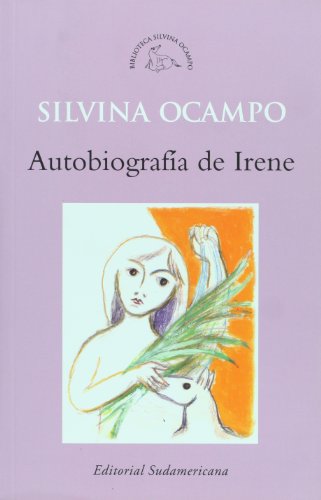
Book 57, Argentina: "Autobiografía de Irene" by Silvina Ocampo

I'm actually feeling kinda sick, so I'll try to do this quickly. But but but HOORAY, we're done with South America!

And what a pleasant way to go out (I'm honestly feeling guilty about crossing borders and doing Uruguay before Argentina, but it would've sucked to leave the continent with Ariel). This is a collection I actually picked up in Buenos Aires, by one of Borges's lesser-known and barely translated contemporaries.

I've blogged all about this funky lady here.


And hurrah: the funky lady does indeed write well. The pieces in this book have the same realm of paradoxical, paranoiac phantasy as the works of Borges or her husband Adolfo Bioy Casares. But they're tenderer, less strictly logic-based - and as much as women continue to appear as objects, they're also subjects.

There's the beautiful Flavia, whose three alternative reactions to the ministrations of her psycho husband Claudio Emilio is the key to Epitafio Romano. There's Kêng-Su, who goes utterly mad when pursued by a vengeful, literate butterfly in La Red. Even El Impostor, which is mostly focussed on its dual male protagonists Heredia and Maidana, involves the agency of the love interest María in its film summary version (why that's in there, I have no clue). And of course, there's the titular story, about a precognitive woman, serenely relieved on her deathbed of the mind-bending contradictions of her gift.

And come to think of it, even Fragmentos del Libro Invisible begins and returns to the womb of the prophet's mother. Yeah, you're getting an idea of how beautifully mad this book is, aren't you? Don't think it's translated yet, but the Spanish is pretty lucid (especially if you have a smartphone translation dictionary at your side).


View Around the World in 80 Books in a larger map

Enough of South America then! You realise that this is only the second continent, after Oceania, that I've actually completed? Lots more to come.

Representative quote:
Pasé por muchas puertas transparentes, como de hielo, en cuyas transparencias se veían ciertos colores que los mortales no alcanzan a ver; por muchas puertas altísimas, silenciosas, cubiertas de follajes, de frutos y de pájaros cuyas alas trémulas irradiaban luz en las maderas labradas. Pasé por muchas puertas horribles - algunas eran diminutas, algunas tenían una mano de jierro o de bronce, a un lado, o la cabeza de un león mordiendo un aro en el centro - antes de hallar el otro mundo en un paisaje complicado, entre edificios y objetos heterogéneos, entre camas, cuadros, armarios, arcos, estatuas, columnas, glorietas, miniaturas, látigos, sistros, tabernáculos, aureolas, espadas, baldaquines, linternas mágicas, barajas, astrolabios, cariátides, mapamundis.

Next book: H.P. Lovecraft's At the Mountains of Madness, from Antarctica.

Sunday, September 19, 2010

Book 24, Guatemala: "Men of Maize" by Miguel Ángel Asturias

Whoa. I wanna write like this.

The dense, fructiform imagery of the prose; the recurrence of folk myths and pre-colonial iconography amidst the master's tongue; the epic consolidation of five hundred years' history into maybe twenty years' narrative time; the seamless blending of realism and magic and poetry.

And all this twenty years before One Hundred Years of Solitude. (Sorry, Gabo keeps creeping into the picture. But that was another continent, and besides, the wench is entering dementia.)


It's shocking that so few people know about Asturias, despite his Nobel Prize, despite his life of political involvement and modernismo and exile in Argentina, despite the fact that his son actually took on the name of Gaspar Ilóm, a character from Men of Maize, and became a pro-indigenous rights freedom fighter against the genocidal government during the civil war.

(I only know about him 'cos I did my Spanish immersion in Quetzaltenango, where one of my short texts was by him: a wonderful little fable about a Jesuit trying to trick a tribe out of human sacrifice by forecasting an eclipse only to end up gutted on the obsidian slab due to the fact that they'd calculated its coming centuries ago, thank you very much.)

This book reads like a post-colonial Ulysses - kudos to the translator, Gerald Martin, who's transliterated onomatopeia and resorted to weird neologisms and had to figure out all these local plant names, amate and atole and ceiba and chayote and chichita and chilacayote and chilate and copal - glossary in the back for the perplexed.

Only difference is, instead of feeling like the guy's being onanistic with the lexicon, you feel that real third-world Marxist sorrow of being removed from your cultural roots and your means of production: he keeps hammering home the same damn eponymous point that in the old days the Indians grew maize as a sacred crop for food, and they grew just what they needed, but turning it into a capitalist plantation crop just destroys the earth and makes everyone poor.

Plus this division of the book into chapters named after people who mystically disappear: Gaspar Ilóm, María Tecún, the Deer of the Seventh Fire (i.e. the curandero) and the Coyote-Postman - yes, nagualism i.e. transformation of men into their spirit animals is a huge theme in this book. From the Indian warrior fighting back the colonial planters to the Ladino postman arguing with the Chinese storekeeper over the shawl of his runaway wife. Each generation loses some connection to the past, as well as some of that thick wonderful poetry that infused the beginning, turning instead to Wild West saloon talk, which is still pretty fascinating, nonetheless.

And yet the Coyote-Postman Señor Nicho falls into the world of magic in the end, meeting the firefly wizards and the curandero who became a deer and Gaspar Ilóm himself while in animal shape/trance, and all the figures from the previous stories reappear in the flesh or in legend, María Tecúm become an etiology for the spirited rock that lures people to plummet over the edge of the mountains, the soldier who sold his soul to the devil now plagued with a hernia, hanging out with Machojón's ever-loyal fiancée who grows old waiting for his return in his reeking sombrero as she sells butchered pigmeat in her hole in the wall.

Amazing stuff. Sad thing is, the copy of this book isn't even on the shelves of the library: you've got to delve into Repository Used Reference and pay a reservation fee to get at it. That ain't right.

(Though it is cool to see the date-due stamp chop paper still on the inside. FTW!)


View Around the World in 80 Books in a larger map

Representative quote: Not even the ash of his cigar will fall. Hands of darkness brandishing daggers will force him to suicide. But it will be only his shadow, a skin of shadow among the yuccas. The bullet will burst in his temples, he will fall to the ground, but other dark hands will lift his body, they will mount him on his horse, and will begin to shrink him horse and all until he is the size of a piece of sugar candy. The close-knit throng of yuccas will wave their daggers, daggers stained red with fire right up to their hilts.

Next book: Zee Edgell's Beka Lamb, from Belize.


Friday, June 18, 2010

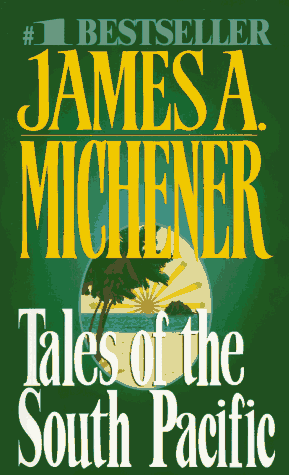
Book 7, Vanuatu: "Tales of the South Pacific" by James A. Michener

Yesssss!!! I’m finally here!

This book was one of the reasons I started on this readiing journey: watched “South Pacific” the movie in December 1997 and watched the live musical in April 2010 and loved ‘em both. It helped that there were reviews like this one, talking about how the musical was fundamentally about the defeat of racism.


View Around the World in 80 Books in a larger map

So it was weirdly disconcerting to find myself wading into a piece of fiction that's anchored firmly in the world of racism:

"Right now I can see it. Some sawed-off runt of a Jew in Dachau prison. Plotting his escape. Plotting to kill the guards. Working against the Nazis. One little Hebrew. You probably wouldn't invite hm to your house for dinner. He smells. So futile. One little Jew. But by God, I'm for him. I'm on his side, commander."


But in fact, it's clear by the end that Michener is against racism. It's not just the famous set-to-music short stories in this collection that are proof of this: Lt Joe Cable tortured over the taboo of marrying the Tonkinese girl Liat on Bali-Hai; Ensign Nellie Forbush refusing, then agreeing to marry the miscegenating French plantation owner Emile Debecque.

Check out the final story, "A Cemetery at Hoga Point": the main character whom the narrator encounters is a Negro man (yes, that's how he's described) talking in classic drawlin' Southern dialect about how there wont be a good man to replace the old Commander Hoag, killed in Guadalcanal: instead, they've got loud-mouthed bully commander in his place who calls people niggers and kikes and grease balls (that's what the Italian boys get called).

Remember, the book came out in 1946. KKK was just starting to enjoy a post-war revival. Interracial marriage was illegal in many states.

And yes, we do have a tale of a happily married interracial couple: the naval officer Tony Fry and the half-French half-Javanese lady Latouche Debecque (an elder daughter of plantation owner Emile, who also surreptitiously runs the whorehouses). They actually get married, no freaking out or nothin'. No need for a lawyer: they have a Buddhist ceremony.

But I shouldn't let the themes detract from the prose. This book deserves its Pullitzer: its best stories are really riveting, and the structure - short fictions with recurring characters, so that we truly feel as if we've gained a glimpse into the many realities of life in the New Hebrides in World War II - is something I'd really like to try for myself someday.

And yes, there's sex and violence. (Sadly, every time Bloody Mary says "fuck", it's transliterated as "soandso" in italics. 1946. What can you expect? And speaking of Bloody Mary, it's intriguing how nativeness is feminised here - not a single indigenous/Asian immigrant man among the characters.)

Hmm, not a very coherent post today. Haven't even begun to talk about the geographical range this book covers: Noumea, Norfolk Island, Guadalcanal (Solomon Islands), Fiji even, maybe.

But the most memorable of the tales happen in Vanuatu - a name of an independent nation that' isn't mentioned once in the text. And it's Vanuatu that gets to advertise to tourists that the island of Ambae is the original Bali-Hai.

Huh. I've been pretty lucky, so far: every single book I've read so far has been a winner in some way or another. Let's see what happens as I move on.

Representative quote:
(this one's about the old Tonkinese souvenir vendor, Bloody Mary, in "Fo' Dolla'")

"Stand up like a man, and tell them to go to hell, Mary," the old, tough Marines would tell the old, tough Tonk. Mary would grin, not understanding a word of what they were saying, but after they came to see her for many days in a row the old miracle of the subdued races took place again. The yellow woman learned dozens of white words but the white men learned not one yellow word.

Next book: Sudesh Mishra's "diaspora and the difficult art of dying" from Fiji