Friday, April 26, 2013

Book 122, Niue: "Savage Island" by Basil Thomson

Every now and then, I'm intensely grateful for good writing. It doesn't need to be transcendent: something engaging in some way, something fun, is quite sufficient.

This week, I'd thought I was plum out of luck as I was flipping through an epub version of W.G. Lawes of Savage Island and New Guinea, a miserable hagiography of an early missionary in the Pacific, published in 1909 by the Reverend Joseph King. The title had sounded like a swashbuckler's story - how was I to know it'd be so long and dull? 

I was halfway through when I decided to ditch the bugger and turn over to this other virtual archived text, dating even earlier, to the year 1902:


And boy oh boy, I'm glad I did. Basil Thomson was a civil servant with the Colonial Office - in fact, this book describes an official visit to Niue to arrange for its formal annexation as part of the British Empire, as well as a stop at Tonga to formalise its status as a British Protectorate. But he was also a professional writer, and consequently he knew how to render his descriptions of exotic realms so amusing that even an ardent postcolonialist like myself is delighted at his words.

You see, unlike Rev. Joseph King, Thomson actually accords individual personalities to the people of the Pacific. Of course, he's laughing when he describes the fashion for fatness among the women, and King Tongia's pompous folly in dressing himself in hoop skirts and military hats - a flavour of that half devil and half child colonial mindset of the time. Yet he also acknowledges that these guys have a culture, and real motivations for what they do - e.g. the king had no small talent for being able to convince the elders that they needed a king at all after no-one had occupied the role for 80 years...

Of course, one of the reasons Thomson can afford to make light of the situation is that everything's peaceful. I hadn't known much about this side of colonial history: how some countries would, of their own accord, join the British Empire for the sake of protection, to avoid more destructive invasion and exploitation by the Germans or the French. This is why Tonga, for instance, has been able to hold on to its royal family, one of the few surviving systems of monarchy in the realm.

And then the whole matter of being modern - how these Pacific people, who had been part of a freaking Stone Age civilisation just a couple of generations ago, were now aware of the greater world around them, were consuming its cultural artefacts (Christianity, icons of Queen Victoria, whom they called Vika) and even building themselves Western-style houses. And then their participation in world trade - the Niueans are characterised as the most hardworking of Polynesian races, being actually eager to work overseas, to the detriment of their local industries of growing coconuts and weaving hats out of pandanus leaves. (Seems they've done pretty well for themselves since then - ten years ago, they became the world's first nation to be completely covered by free Internet wifi.)

Add to this the usual staples of colonial travel memoirs: documentation of the flora and fauna (they had crazy plagues of flies and hornets), some notes on national custom and myth (oral history for Niue only goes back 500 years, suggesting that they split off from some other island civilisation before then). Some notation of the music and dance of the islands, too, before a rather abrupt ending.

But once again, I'm bloody glad that this peripatetic journey is bringing me to books that are actually worth digging up and reading. It's not just about going around the world: it's about not having a miserable time doing it.


View Around the World in 80 Books!!! in a larger map

P.S. Why "Savage Island", you ask? Seems that when Captain Cook visited in 1774, the Niueans were one of the few Pacific peoples to refuse to engage in dialogue with him, answering him instead with spears and darts. Smart folks!

Representative quote: "The procession was headed by a dozen men in slop clothes and villainous, billycock hats set at a rakish angle. They all carried spears and paddle-shaped clubs in either hand, and a similar rabble brought up the rear. In the middle of this grotesque bodyguard walked the king and queen, both in petticoats, as befits the sex to which they belonged, for if the queen was a young woman, the king was assuredly an old one. To their united ages of ninety-four His Majesty contributed seventy-six, but what he lacked in youthful elasticity he made up in con- descension, for she had been but a beggar-maid or what corresponds therewith in Niue, where beggary is unknown when he had played Cophetua to her a few months before our visit. She wore a wreath of roses, he the soldier's helmet with the cock's plume, which was all that the officious Samoan teacher would leave him of his military uniform, and from which he refused to be divided, although it assorted ill with his petticoat. To tell the brutal truth, His Majesty was unsexed by the garments that had been chosen for him, and his appearance justified the remark of a friend who, holding the photo- graphs of Their Majesties in his hand and con- fusing them, exclaimed, "Why, the queen's got a beard!"

Next book: Arthur Grimble's A Pattern of Islands, from Kiribati.

Saturday, April 20, 2013

Book 121, Tokelau: "A Way With Words: Language and Culture in Tokelau Society" by Ingjerd Hoëm

On the plus side, we're finally reading something else by a female author in the Pacific region. On the minus side, she isn't native - she's from Norway. On the even more minus side, she's an anthropologist.

Yesiree, here's one of those dry, brain-numbing, jargon-filled texts (purism? doxic?) that I'd never waste my life reading if I wasn't doing this godforsaken project. It's even marginally about linguistics, which my PhD student sister has proven to be a headache of a pseudoscience, why oh why etc.


But really, this wasn't so bad - except for the bulk of the second half, which consisted of Hoëm consulting every person she could about the meanings of specific Tokelauan terms, from uluifa (spirits that possess people) to fatupaepae (a female authority figure), just to show the imbalance and instability of information between genders and classes. Major snoozefest.

You see, Tokelau's an odd place.  It's a territory of New Zealand, consisting of three atolls, with a combined population of 1,411 (that's today's figures, but the country's always dealt with overpopulation through emigration). Despite that teensy number, they've got a number of feuds and village dialects, exacerbated by the fact that missionaries converted some of them to Catholicism and some to Protestantism (the Catholics allowed more of the indigenous culture to survive, for which I suppose they deserve some thanks).

In the '80s, when the author was conducting her fieldwork, the Tokelauans had only recently adopted a written form of their native language and begun teaching it in schools. They'd previously been using English and Samoan - so they had the weird situation of kids being fluent in a traditional language, their twenty-something year-old parents recommending that they follow their elders for even greater mastery of the tongue, and of course the elders jabbering away in Tokelauan that was infected with Samoan words to begin with...

And that's just the background. The messy politics of how language is used is bewildering: characterised as the shyest of the Polynesian peoples, Tokelauans hold their fono (their ceremonial meetings) in near silence, wary of contradicting people and making enemies, sometimes postponing the most serious issues of each Women's Council or Council of Elders to the next fono, just so no-one's feelings will be hurt. 

(The example given was sorting out a feud so that one island's parents would stop barring their kids from attending school. As an Asian person I believe school is bloody important and they should've just trod on each other's feelings. But that's why I'm not an anthropologist.)

Details of the use of gossip as a sanctioning device, the strange disruptive appearances of older women as clowns, invading official events to mock the hierarchies that keep them bound (yet this is part of the culture that keeps them bound). And the syncretic lyrics of the fatele song and dance shows.

Yet believe it or not, the Tokelauans feel dreadfully insecure about their culture - they feel they're hybrid, westernised folk (many of them have studied or worked in NZ; there's a steady exchange of unruly offspring between Tokelau and the migrant families in Samoa and New Zealand). They even envy the Maoris for the strength of their identity, never mind that Maori culture has been reduced to a superficial display of hakas and carven masks in the midst of a mainstream pakeha culture. (In Tokelau, they call them palagis).

But aren't we in Singapore the same? Weirdly cultured and problematic and unsure if we can be proud of what we have? 

Ah, but Yi-Sheng, the world does not exist for the sake of your reflections. Here's a fatele text.


View Around the World in 80 Books!!! in a larger map

Representative quote:
Fakalogo atu

Fakalogo atu kite leo e sau
Tena e sau
sau mai i ko
pati tokoto ko te toeina
ko te uto kua tini, tini, tini O.

Listen to the sound coming
That is coming
coming from there
applauding [while] lying down, the Elder
The young sprout of the germinating coconut [i.e. the young people] have finished, finished, finished.

Next book: Reverend Joseph King's WG Lawes of Savage island and New Guinea, from Niue.

Friday, April 12, 2013

Sorry, no Tokelau yet!

Been busy marking, writing miscellaneous new articles... and organising lit nights!


Tonight was Young and True, an NTU non-fiction reading - seven students from my non-fiction class went up shared their work at BooksActually. Great buzz, attentive audience (and the truth is, with a floorspace that small, *any* attendance feels like a crowd), and some very moving work.


This weekend's gonna consist of marking and finishing up my MFA application to East Anglia. Wish me luck!

Thursday, April 4, 2013

Bangkok books?

So I'm back from the ILGA Asia Conference in Bangkok! Will be writing a Fridae article about it, too. But it wasn't much of a holiday - didn't even make it to Chatuchak Weekend Market. Too busy blogging during the conference, and attending the ASEAN SOGI Caucus in the two days afterwards.

Thus, the only book I acquired during that sojourn was this:


The English title seems to be Violated Lives: Narratives from LGBTIQs and Internatioanl human Rights Law. I got it free from a table where goodies were being handed out.

Yes, it's mostly in Thai, but the annex is bilingual, and it covers the Yogyakarta Principles (and can I say right now how proud I am as a Southeast Asian that a landmark document on sexual orientation and gender identity rights was crafted in my own neighbourhood?).

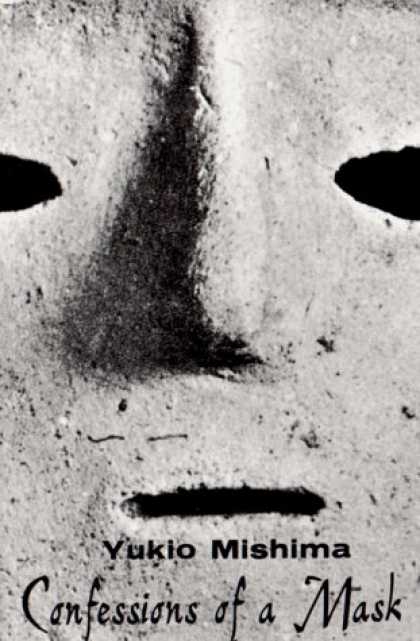
What I actually spent most of my time reading, however, was this:


I'm doing an article on classic gay Asian lit now (not gay Asian American lit, thank you very much), so of course I've got to peruse Yukio Mishima's landmark tortured-gay-man-in-the-closet novel, Confessions of a Mask. 

Oh god, but I don't know if I should recommend it to the average reader. It's so dark and twisted and upsetting, perhaps even dangerous for the insecure gay man. And honestly, his other works, like his Noh Plays and The Sailor Who Fell With Grace From the Sea, are more transcendent and beautiful, presenting psychosis on a platter rather than being immersed in it.

I'll probably list it, anyway, due to its historical importance. Must live with the possibility that one of my future readers will end up committing hara-kiri because of me.

Too many deadlines now to even think of heading down to the library to read my Tokelau book, by the way. Maybe I can squish it in towards the end of next week.

Wednesday, March 27, 2013

Book 120, Wallis and Futuna: "Futuna: Mo Ona Puleaga Sau", eds. Elise Huffer and Petelo Leleivai

I need to be frank about the folly of this project. You know how much I spent on this book? US$36, which is S$45, thank you very much. Shipped here all the way from the University of the South Pacific in Suva, Fiji, which, come to think of it, is probably closer to my part of the world than New York.


It's not even a great read, though it's purportedly the first book ever to be written by Futunans: 12 authors (though though I'm counting 11, plus the female editor maybe), and each of them are writing about different aspects of the island's history and culture: the mythology, the 18th century civil wars, the traditional architecture, the kava-drinking ceremony.

Pretty dry and disconnnected, though it does admittedly read much more beautifully in French than English. (Although this book's title is in Futunan, the contents were written in French, and are accompanied by an English translation. The sub-subtitle is "Les deux royaumes/the two kingdoms", since the island's divided into the kingdoms of Alo and Sigavé, both of which are administered from Wallis Island way in the northeast, which itself is administered by France. Why didn't I read the whole thing in French? Because life is short, I'm afraid.)

There is interesting stuff in here, though. Look at the legendary origins of the monarchy: a visit by the handsome fisherman Faniutasi to the world of the gods, where he weds a heavenly princess and comes back Futuna to rule as the island's first divinely ordained king, only he sleeps around with another gal and the princess leaves him, leaving the two mortals to sire the Saufekai, aka the Cannibal King, whose dynasty wreaks havoc on the valley.

And did the king have any kids with the princess, you may ask? Yeah, sure, he was abandoned and adopted and named Ufigaki. And then this happens:

"When he became an adult, he began to work wonders but everybody hated him instead of loving him. He eventually disappeared, sinking voluntarily into the earth."

You could base an entire soap opera on this tale. But no, we've gotta move on to another essay on emigration to New Caledonia, or monarchic hierarchy, or the transition from being a protectorate to an overseas territory. Yawn.

Another complaint: in the cultural sections, there's way too much Futunan jargon for readers to keep up with. I can only remember than ago means saffron; how am I supposed to digest a sentence that follows, describing the process of the Lautilo evaluating how many workers, tama and kumete he'll need?

But of course, this is a book that's created for the sake of academia, not for pleasure-seeking fools like myself. The lives and cultures of other people do not exist for my amusement.


View Around the World in 80 Books!!! in a larger map

Representative quote: Tous ces produits artisanaux sont vendus sure place par les du pays. Les clients les achètent pour les offrir à leurs amis. Ils se vendent bien à Wallis, car seul Futuna possède les matières premières. On les exporte également à Tahiti pour les expositions artisanales. C'est une source de revenus pour la plupart des personnes qui essaient d'en exporter le plus possible en métropole ou à l'étranger. Ces produits font la plus grande richesse du pays. Cependant, beaucoup envisagent de ne plus vendre les siapo, tapa et produits artisanaux à l'extérieur afin d'attirer clients et touristes étrangers qui viendraient découvrir nos richesses. Ce serait une occasion de faire connaître notre île au monde entier.

All these handicrafts are sold locally. Customers buy them as gifts for their friends. Handicrafts also sell well in Wallis because the raw materials are only found in Futuna. They are often exported to Tahiti for handicraft fairs. They are a source of income for many people who try to export as many as possible to France and overseas and are the country's greatest treasures. However, many people are contemplating not selling siapo, tapa and other handicrafts overseas so that they can attract customers and tourists to Futuna. The latter would then discover our treasures. For us, it would be an opportunity to make our island known to the world.

Next book: Ingjerd Hoem's A Way with Words, from Tokelau.

Sunday, March 24, 2013

Book 119, New Caledonia: "Penelope's Island" by James McNeish

Eastern Heathens has been launched, and it looks fabulous, hurrah! We're planning a Kinokuniya event in 20 or 27 April - no confirmation yet, so stay tuned.

Also, we’re back in the world of good ol’ epic novels: stories of revolution and betrayal, cultures clashing, men and women caught between loyalties and choosing ultimately to do what is right.  And all from a country most of us had no bloody idea existed!


(The author’s a Kiwi, though. Seems he likes to do these stories set in the Pacific islands.)

The Penelope in the title's the narrator - a nature photographer who ends up improbably marrying a Caldoche, one of the white New Caledonians descended from French penal colonists (yeah, it was France's Australia for a while). She herself happens to be Jewish-Hungarian-British by way of Canberra, which seems even more probable. But there's a method to the madness, as we'll soon discover.

The crazy thing is, the guy Penelope marries - a not-very-employed outdoorsman named Felix - is pretty racist, kicking around the house servant Baptiste for no reason, saying awful things about the Kanaks (the natives of the island) as they try to fight for independence. Violent streak, too - shoots his pet deer without a qualm when he hurts his girl, wants to shoot their dog too at a whim. So the reader's thinking getoutgetoutgetout this racist bastard's gonna destroy you.

And then what happens? Well, first we have the Mayor, Dominique, coming by a lot. He's the first Kanak man to hold the post, and Felix treats him civilly, never mind that he's Baptiste's half-brother. Then we gradually realise that Felix is different: he's not as racist as his fellow Caldoches, wasn't even raised among them: was left for useless with his club foot and raised instead among the Kanaks, leaving him with a culture split halfway between deserving white privilege and actually getting precious few of those privileges till this Brit girl married him.

And when the independence movement breaks out - and it really did happen the way the book describes it, it seems, in 1984, with election boycotts by the Kanaks, takeovers of the land, city by city, and the Caldoches retaliating violently, guerrilla-style ambushes on civilians in cold blood, and not even facing trial for their murders - well, Felix has to take sides. Penelope knows she's on the side of the natives, what with her British sense of fair play and her actual memories of having to flee her land as a little girl in WWII. But when Felix changes - seeing what's happened to Baptiste and his other Kanak "friends" - well, he's forced to realise that the business of being a French settler/colonist is just too much bloody-minded awfulness than he can take. And he does what he can for the side of independence.

I suppose it's not giving away too much to note that New Caledonia remains a French Overseas Protectorate, and that they're still doing pretty badly under French colonial rule. Doesn't sound as racially segregated as it used to be, but rural poverty pulls them down, and there doesn't seem to be that same connection to their skull-templed roots as there was in the eighties, when this book was written. (The publishing date is 1990, but it sure doesn't feel like a nineties book - it's got the heaviness and sorrow and anger of the sixties or seventies.)

But back to the title - why use Penelope at all? Why not describe the story of Felix from his own perspective, or else the tribulations of the Kanaks themselves?  Well, in the wake of Chinua Achebe's death, it seems important to consider the relationship between literature and politics, especially when your readers are people living far, far away from the politics you're describing. As privileged, First World folks, we can only understand the way of the Kanaks through the eyes of white people. We can't even understand their oppressors. We've got to find a third party, someone similarly privileged, and bring her close to oppressors, and watch them transform.

Strategies for empathy. Fiction itself.


View Around the World in 80 Books!!! in a larger map


Representative quote: At first I didn't see him because of the mist. He appeared before me like a wraith. Baptiste had a sense of the dramatic and I was not surprised to see him - he would turn up unexpectedly, when he wasn't working for Felix, and often at odd hours. He wore his old khaki shirt and his legs, beneath the skirted pareo, were wet. He's come through the coffee fields, I thought. A scent of gardenia, from the dripping coffee flowers, clung to him.

"Madame," he said, keeping his eyes lowered - and then, for a man who seldom spoke more than a phrase or two at a time, he delivered himself of an oration.

He said that, if we left, the crops would perish. The coffee would die, the valley would be laid waste and the crabs run to the river and be drowned. There would be a great fire. The house would fall down. The crabs would come out from beneath the foundations, the river would rise, the bamboos turn from silver to red and everything would end in the river.

Next book: Futuna: Mo Ona Puleaga Sau, Aux Deux Royaumes, the Two Kingdoms, from the Wallis and Futuna Islands.

Saturday, March 16, 2013

New Book: "Eastern Heathens", an anthology of subverted Asian folklore!

I know we're not really due for another segue, but Eastern Heathens is FINALLY going into print!


What is it? Well, it's an anthology of stories inspired by Asian folklore - there's realism, fantasy, historical fiction, oriental steampunk, horror, comedy, sex... and I'm one of the editors! Mind you, it's mostly drawn from the inspiration and the sweat of my co-editor Amanda Lee Koe - and from the contributors. (I tried submitting a story, but we agreed it wasn't good enough.)

We sent stuff to the print shop yesterday and we're holding the launch next Saturday, at the Arts House, aka The Old Parliament House. It's part of the Literally 9 festival to celebrate the arts centre's ninth anniversary. Alfian Sa'at, Cyril Wong and newcomer Bryan Cheong should be reading! I'm hosting, methinks.

Venue: Arts House, Living Room
Date: 23 Mar 2013
Event Timing: 6.30-7:30pm
Free admission
Facebook page: https://www.facebook.com/events/442375729179327/?fref=ts

The authors, btw, are:

Bryan Cheong (Singapore)
Hoa Pham (Australia)
Cyril Wong (Singapore)
Jeannine Hall Gailey (USA/Japan)
Alfian Sa'at (Singapore/Malaysia)
Amanda Lee Koe (Singapore)
Jon Gresham (Australia/Singapore)
Anila Angin (Singapore)
Chan Ziqian (Singapore/Poland)
Jennani Durai (Singapore)
Li Huijia (Singapore)
Abha Iyengar (India)
Zeny May Recidoro (Philippines)
Jason Erik Lundberg (USA/Singapore)

Seeya there!