Wednesday, August 27, 2014

Gah! I've gone and lost my book!

I was reading this yesterday on the train:


Later I checked my bag for it and found it was gone. I think I mislaid it somewhere in Bugis Junction. Am quite pissed because it was full of juicy gossip about the late Princess Grace of Monaco and her ridiculously wealthy and privileged and dysfunctional family, plus the absurd casino-driven dictatorship where they make their home.

It also happens to be a National Library book, and their last copy. Ah, but I shouldn't feel bad for them. Plus, I've noticed they've started monitoring our borrowing record and using it to recommend books to others online. Creepy.

Tuesday, August 19, 2014

Further IndigNation events!

I'm in Singapore now! And since I haven't picked up my Monaco book from NLB, so I'm gonna promote a few more literary events at IndigNation!

For starters, this Sunday we're having a queer feminist performance poetry event!


Mass Hysteria: Relapsed
Sunday August 24
3pm and 7pm
The Arts House, Play Den

Attention: Health Notice

Mass Hysteria has spread beyond detention and secondary school graduation. There are no expiry dates, no LUGs, but some spectres continue to haunt.

Shrugging off uniforms and habits, the queerdos set their sights on the world outside, to re-act and negotiate the hysterical and the historical, great tropes and expectations, memory and homophobic violence, nightmarish dyke drama and the life cycles of lezbo love.

Come quantify the insanity. Come queer the jealousy. Just come.

*********************************************
Featuring words and performances by:
Ad Maulod, Germaine Yeo, Mrylyn Tn, Rak Shakalaka, Sage Lee,Stephanie Dogfoot, Vanessa Victoria and music by: Illi Syaznie

Organizers:
AMOK Collective and Sayoni

Also, our closing event: A Minor ContraDiction!


A Minor ContraDiction:  Indignation SG 2014 Closing Night
Saturday August 30

7:30pm
The Reading Room

To bring Indignation to a close, take a peek into the future of Singapore’s queer literary community as present you with a night of readings and performances by some of Singapore’s most dynamic emerging LGBTQ voices. Raw. funny, honest, angry and hopeful, these young writers will show you what it means and how it feels to grow up queer in 21st century Singapore.

Organizers:
Ng Yi-Sheng, Stephanie Dogfoot, Vanessa Victoria, Eugene Tan

Saturday, August 9, 2014

Book 154, France: "In Search of Lost Time, Vol I: Swann's Way" by Marcel Proust

Boy oh boy. I still can't figure out if I made a mistake with this one. I mean, I could've read an action-packed classic novel for this segment - Victor Hugo's The Hunchback of Notre Dame, Alexandre Dumas's The Three Musketeers, Gaston Leroux's The Phantom of the Opera - and no-one would've thought less of me for it.

But instead, I decided I had to go with the major work of world literature I was least likely to get around to reading otherwise. But the one I chose was only one volume of the seven-volume In Search of Lost Time, and not even the most acclaimed volume, either (which I believe is In the Shadow of Young Girls in Flower). 

Still, it is the one with the famous madeleine scene in it!


TBH, the book's not bad, if you know you're diving in for some experimental writing - you can put up with the long sentences and the endless introspection and the utter lack of plot, and enjoy the sketches of the ridiculous grandmothers and maidservants and aunts, not to mention the absurdly lovestruck M. Swann and his coquettish peacock of a lover/wife Odette, who may or may not be cheating on him, we have no idea. The most beautiful prose pops up in the section Names of Places, when he's reflecting on the many towns and landscapes he might have chosen to visit as a child had his health been better:

"...between Bayeux, so lofty in its noble coronet of rusty lace,w hose highest point caught the light of the old gold of is second syllable; Vitré, whose acute accent barred its ancient glass with wooden lozenges; gentle Lamballe, whose whiteness ranged from egg-shell yellow to a pearly grey; Voutances, a Norman Cathedral, which its final consonants, rich and yellowing, crowned with a tower of butter; Lannion with the rumble and buzz, in the silence of its village street, of the fly on the wheel of the coach; Questambert, Portorson, ridiculously silly and simple, white feathers and yellow beaks strewn along the road to those well-watered and poetic spots; Benodet, a name scarcely moored that seemed to be striving to draw the river down into the tangle of its seaweeds; Pont-Aven, the snowy, rosy flight of the wing of a lightly poised coif, tremulously reflected in the greenish waters of a canal; Quimperlé, more firmly attached, this, and since he Middle Ages, among the rivulets with which it babbled, threading their pearls upon a grey background, like the pattern made, through the cobwebs upon a window, by rays of sunlight changed into blunt points of tarnished silver?"

But I'm also rather lucky that I was concurrently reading David M. Halperin's incredibly insightful book How To Be Gay, that examines how there is a gay culture of irony and beauty-worship despite activist claims that this is mere stereotype. Halperin points towards Proust's work as an exemplar of his ideas - how, even in the early reaches of the 20th century, even in a work that does not explicitly declare its author's sexuality, we still have this tale of a terrible longing to be loved by one's mother (Proust's mum believed that over-excessive displays of love were unhealthy, and tried to restrict her warmth, clumsily) and the sheer camp surrounding the depictions of the absurd men and (especially) women of upper middle-class French society. Hell, even his childhood crush on a girl called Gilberte doesn't redeem him orientation-wise.

Nonetheless, I do think reading Hugo or Dumas would have been better for my writing. Another day!


View Around the World in 80 Books!!! in a larger map


Representative quote: The reality that I had known no longer existed. It sufficed that Mme Swann did not appear, in the same attire and at the same moment, for the whole avenue to be altered. The places that we have known belong now only to the little world of space on which we map them for our own convenience. None of them was ever more than a thin slice, held between the contiguous impressions that composed our life at that time; remembrance of a particular form is but regret for a particular moment; and houses, roads, avenues are as fugitive, alas, as the years.

Next book: John Glatt's The Ruling House of Monaco : the Story of a Tragic Dynasty, from Monaco.

Friday, August 1, 2014

ContraDiction: Ten Year Series on Fri 1 Aug, 8pm

Almost forgot to post about this! TONIGHT is the opening of the tenth ever IndigNation Queer Pride Festival in Singapore, and it's taking the form of an evening of LGBT writing and music, at the Arts House!!!

ContraDiction: Ten Year Series
Fri 1 Aug, 8pm
The Arts House, Chamber
http://indignationsg.wordpress.com/2014/07/26/opening-event-contradiction-10-years-series/

This is gonna be an event featuring some of the most prominent names in queer Singapore writing: Ovidia Yu, Cyril Wong, Joel Tan, Tania de Rozario, Adrianna Tan, Iris Judotter...

I won't be there, alas. In the UK now, back home in two weeks. Which means I'll be involved in other IndigNation events. 

Check out the full calendar here:

http://indignationsg.wordpress.com


Friday, July 18, 2014

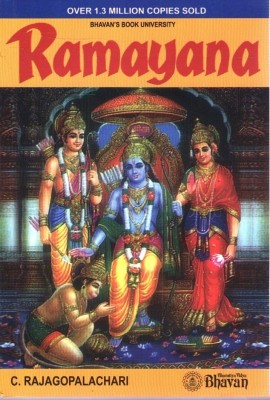
Random review: C. Rajagopalachari's "Ramayana"


I'm in Ireland! And I haven't made much progress on Proust, I'm afraid - been too busy finishing other books, including my friend Mark Chaiken's dissertation for our creative writing program. (Trippy heaven and hell cosmic apocalypse novel? Yessiree.)

I'll just take this opportunity to dwell on another book I've recently finished:


This is a short but fairly comprehensive 1957 retelling of the Ramayana legend - Rajagopalachari was a Tamil scholar who was also well versed in the Sanskrit classics: as such he's able to detail at points what happens in Valmiki's Ramayana and then compare it with Kamban's Ramavataram and Tulasidas's Sri Ramacharit Manas, while also dropping comment on modern interpretations of the characters. I believe the chapters were first published serially in a magazine - there's an avuncular voice here, as if he's a grandfather seeking to educate you as well as entertain you, and also to uplift you spiritually.

And yes, he is quite religious. He goes on about the incomparable glory of Rama with no sense of irony or restraint - though he does purposefully leave out the final sequence of the story, wherein Rama banishes Sita for supposed impurity, as he cannot reconcile this cruelty with the character of one so great. (Turns out that Valmiki didn't include it in his version, either. Rajagopalachari does concede that the story may predate Valmiki though... His take on the inviolate divinity of the texts themselves is a little puzzling.)

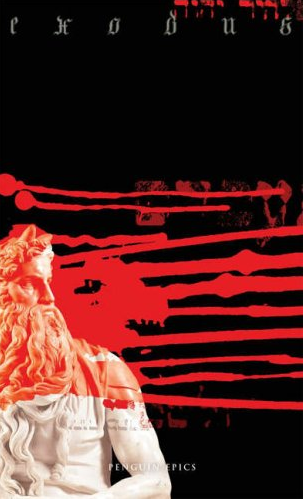
This book was my constant companion when backpacking through Greece, which made for some pretty crazy on-the-spot musings on comparative mythology - ever notice how the trope of the sinful city brought down by noble barbarians pops up in three different world mythologies: Hindu, Greek and Hebrew? Lanka is burnt up in the Ramayana as punishment for Ravana's abduction of Sita; Troy is decimated in the Iliad and the rest of the Trojan War Cycle because of Paris's abduction of Helen; Egypt's capital is brought down in Exodus because of the Pharaoh's refusal to let his Jewish slaves go.


I got all moody at one point and thought about Singapore's sins, and how we ought to be brought down for our abuses of the rights of migrant workers and prisoners. How we're all rich and civilized, and some of us are even fundamentally good, but the sins of our rulers will be the downfall of us all...

But then I finished the book and everything was better. Hare Rama!

Seriously, this is a good edition for beginners. Plus, it's printed in India for Indian readers, so it's cheap. :)

Wednesday, July 16, 2014

Censorship in Singapore

By now, you may have heard that Singapore's National Library Board has banned six books for not being "pro-family" enough. Said books were not sold or donated or archived; instead they are (or were) condemned to be destroyed by pulping.

Said books are:

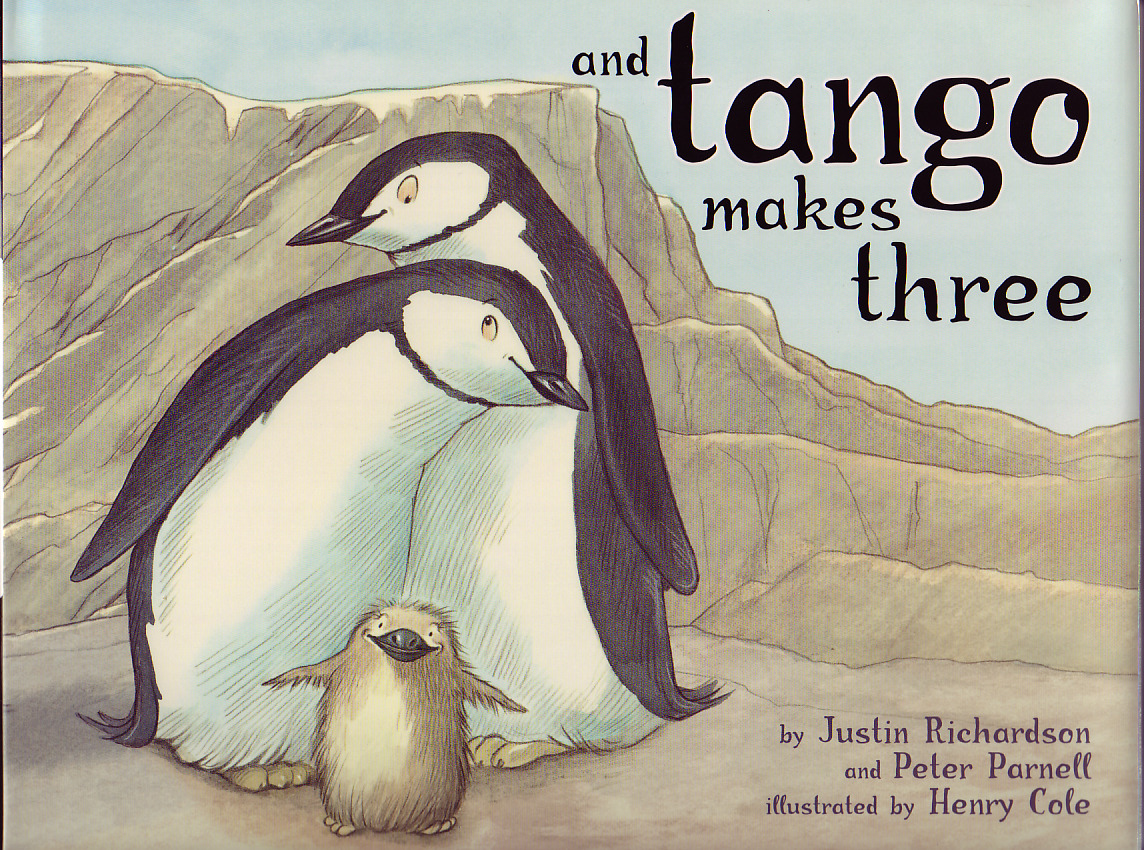
1) And Tango Makes Three by Peter Parnell and Justin Richardson:the real-life story of two male penguins raising a baby chick at the Central Park Zoo; 

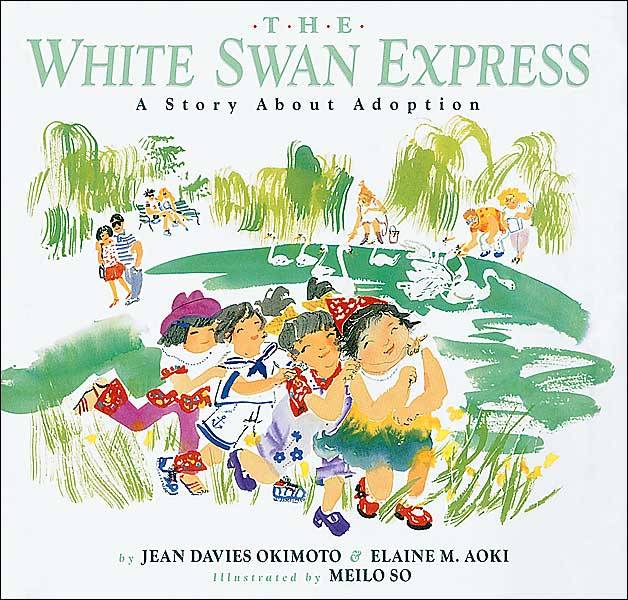
2) The White Swan Express: A Story About Adoption by Elaine M. Aoki: about an adoption agency in China, and the couples seeking to adopt children there, including a lesbian couple.

3) Who's In My Family: All About Our Families by Robie H. Harris: a survey of different kinds of families, including single-parent families and gay families.

4) It’s Not The Stork!: A Book About Girls, Boys, Babies, Bodies, Families And Friends by Robie H. Harris

5) It’s So Amazing!: A Book About Eggs, Sperm, Birth, Babies, And Families by Robie H. Harris

6) It’s Perfectly Normal: Changing Bodies, Growing Up, Sex, And Sexual Health by Robie H. Harris

The first three books were withdrawn based on complaints from the public; the last three were disappeared independently.

I'm too upset to say anything much about this. Sorry.

UPDATE: 

JUST IN: MCI Minister Yaacob Ibrahim has instructed the National Library Board to place two controversial children's books in its adult section, instead of pulping them.

That applies to the first two books, not the next four. And in the meantime, we've discovered that an Archie comic's been banned from sales by the MDA.


There's still a hell of a lot of work to be done.


Tuesday, July 8, 2014

Book 153, Luxembourg: “At the Edge of Night” by Anise Koltz

We’re at the last and the littlest of the Benelux countries now! Luxembourg’s got a weird history: its half a million inhabitants speak a mix of French, German and Luxembourgish (apparently almost a dialect of German), and its writers produce literature in all three languages.


Koltz, for instance, writes in French – as most of her fellow poets do. But she used to write in German before the death of her husband in 1971 (he was imprisoned during World War II, and she says he was a late victim of the Nazis). Plus, she still writes children’s books in Luxembourgish.

Critics even say Koltz’s French is very German-like – and certainly, in this bilingual compilation of her poetry from the 2000s, her French feels spare, almost schoolchild-simple. It’s full of these stark, Rimbaud-like invocations of hell - fire, bones, wolves, invocations of monstrous mothers and fathers and brothers.

But there’s no jumble – these are brief, devastating pieces of writing, focused on just a few images, like joined-up haiku. And it’s weird, because I don’t think I would advise my writing students to create stuff like this. The title of this collection, for example, comes from this poem

COLD

At the edge of night
my mother is seated
her clothes in tatters
two fangs
in her toothless mouth

She throws herself on me
and sucks out my marrow 

It’s a nightmare vision, but you can imagine an angsty adolescent writing it in a I-hate-my-mom kind of way. It does sound better in French, but doesn’t everything?

FROID

Au bord de la nuit
Ma mere est assise
ses vêtements en loques
deux crocs
dans sa bouche édentée

Elle se jette sur moi
et me suce la moelle

Some of her short stuff is fantastically clever and awesome, though:

LA TERRE

Quand tu marches
tu sens terre
s’agripper
à tes semelles

Elle n’oublie pas de t’oublier


THE EARTH

When you walk
you feel the earth
cling
to your soles

It doesn’t forget to forget you

Damn, reading this stuff makes me miss translation work. There’s a marvelous alchemy that happens when poetic language passes from one tongue to another.

The only longish poems here might be the ones from her 2003 collection Fire-Eater/L’avaleur de feu, dedicated to her husband René – though for all I know, these are just glued-together untitled fragments, separated by rows of asterisks and arranged in columns of Roman numerals. It’s hard to digest continuity when you’re reading two versions at the same time: facing pages, parallel texts.

My favourite piece in here is from that collection, btw. I’ve included it below:


View Around the World in 80 Books!!! in a larger map

Representative quote:

***

Ma mémoire est lourde
comme un vaiseau qui coule

J’ai vogué
dans toutes les parties du mond
les dieux m’égorgeaient
je les égorgeais –

Ecrivant dans leurs bouches
dans leurs entrailles
j’ai oublié la poésie –

je suis devenue poète

***

My memory is heavy
like a sinking ship

I have wandered
all over the world
the gods slit my throat
I slit theirs –

writing in their mouths
in their entrails
I forgot poetry –

I became a poet

Next book: Marcel Proust’s Swann’s Way, from France.